 How Much Are They Worth?
Celebrity fortunes, explained
How Much Are They Worth?
Celebrity fortunes, explained








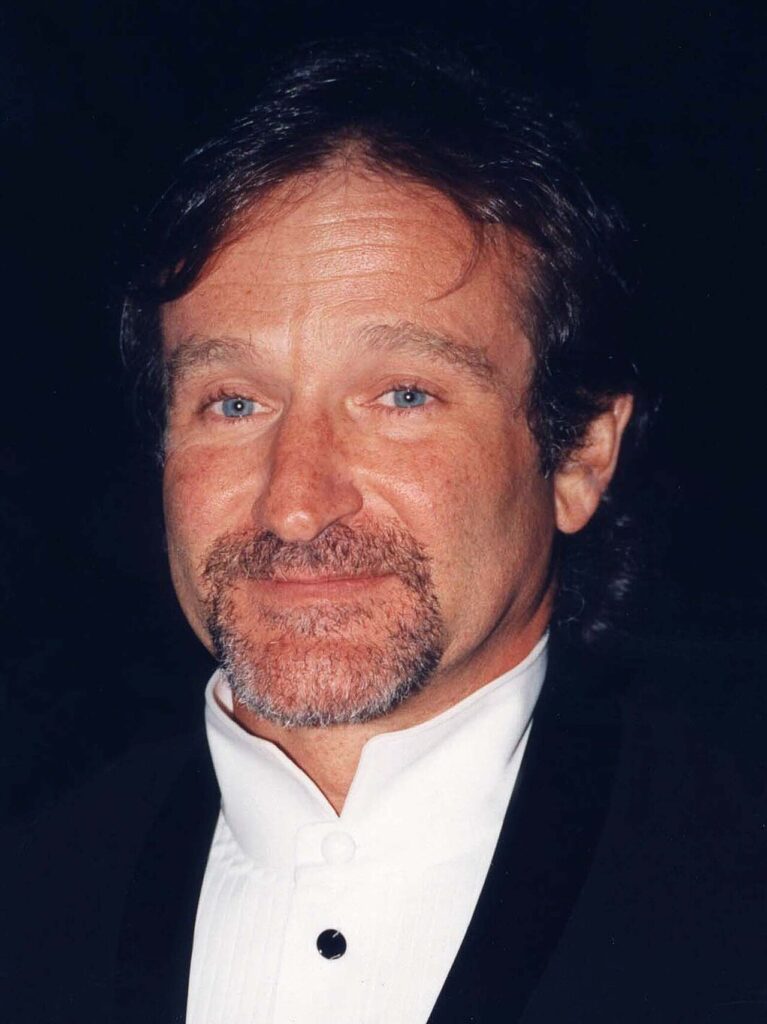
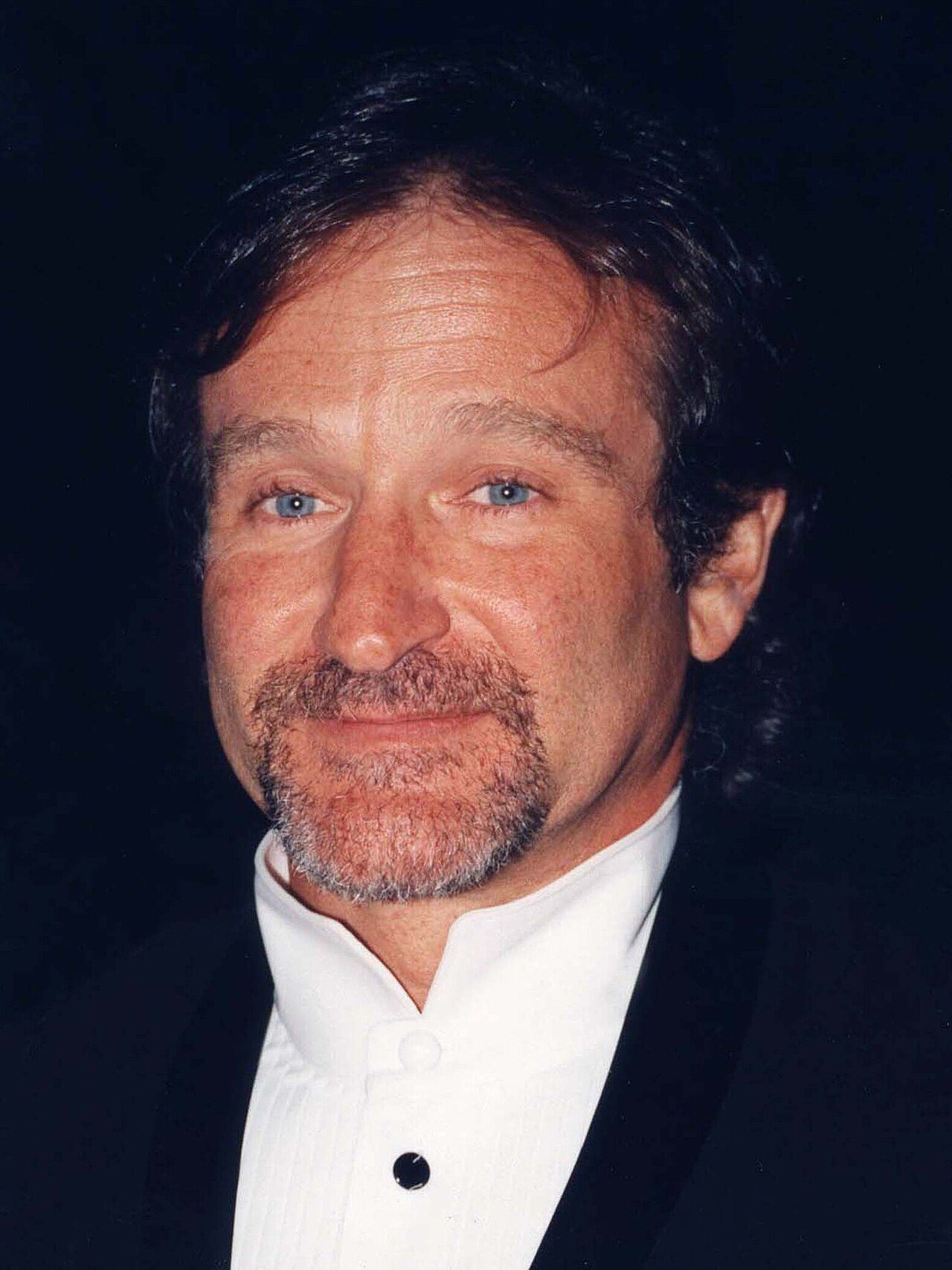
How did Robin Williams build this fortune?
The answer unfolds through the career, earnings, deals and assets behind the headline estimate.
Robin Williams before the fame
The background and early turning points that shaped Robin Williams’s route to prominence.
Robin Williams was born on 21 July 1951 in Chicago and became one of the fastest and most generous comic performers of his generation – a stand-up who could improvise for an hour and an actor good enough to win an Academy Award for sitting still. He died on 11 August 2014, aged 63.
His finances are distinctive for a reason that has nothing to do with how much he earned: he arranged his estate so that it would stop earning.
Williams was accepted into the advanced programme at Juilliard in 1973, studying under John Houseman alongside Christopher Reeve, and left in 1976 when Houseman told him there was nothing further the school could teach him. He went back to California and worked the Bay Area comedy clubs, starting at the Holy City Zoo in San Francisco.
That grounding in improvised stand-up stayed the steadiest part of his living. He returned to live work across four decades, and it was the income least dependent on anyone else’s decisions.
Robin Williams’s breakthrough years
The career decisions and defining moments that turned recognition into sustained earning power.
The break came from a guest appearance: in February 1978 Williams played an alien named Mork in an episode of Happy Days, and the audience response was strong enough that ABC commissioned a spin-off within months. Mork & Mindy launched that August and made him famous immediately (The Hollywood Reporter).
He won the Golden Globe for best actor in a television comedy for the role, the first of several (Golden Globes), and his run of television appearances through the following decades became a genre of its own (Rolling Stone).
What the acting paid him. Our estimate is that performing – film fees, television and stand-up – earned Williams roughly $200 million to $300 million gross across thirty-six years. The engine was a seven-year run at the end of the 1990s when a Robin Williams comedy opened wide as a matter of course and his quote sat in the $15 million to $20 million bracket only a dozen actors commanded. The workings are below. The assumption that carries the most weight is that top-of-market quote through that window and a much lower one either side of it, which is how his career actually ran.

What Robin Williams’s work can earn
Reported pay, contracts, royalties and performance income reveal how the fortune was funded.
Williams moved to film and sustained a career that few comic performers manage, alternating broad comedy with serious work: Good Morning, Vietnam, Dead Poets Society, Aladdin, Mrs Doubtfire, The Fisher King and Awakenings among them.
He won Actor in a Supporting Role at the 70th Academy Awards in March 1998 for Good Will Hunting, on the same night that Ben Affleck and Matt Damon won for its screenplay (Academy of Motion Picture Arts and Sciences). He had been nominated three times before.
Alongside the Academy Award, Williams collected multiple Golden Globes across television and film and Emmy recognition beginning with Mork & Mindy. His voice work as the Genie in Aladdin changed how animated features are cast, and is still cited as the point at which star voice casting became standard – a part he took for something close to scale, which says a good deal about how he chose work.
The recognition that says most about his standing came after his death, when a national auction house built a sale around his and his wife’s collection and gave the proceeds to the causes they had supported (Sotheby’s).

Robin Williams’s business beyond the main career
Endorsements, ownership interests and investments can keep compounding long after the initial breakthrough.
Williams took few endorsements in life and prohibited them after it. Forbes noted that the restriction removes precisely the income stream that makes deceased performers lucrative – the posthumous licensing that puts other estates on the highest-earning lists year after year. Williams chose to forgo it.
The practical consequence is that his estate has no endorsement line at all, in either direction, and any projection of future brand income for him is projecting something his own trust forbids for another thirteen years.
Williams was not a businessman in the way many of his contemporaries were, and there is no chain of restaurants or drinks brand to report. His one genuinely unusual financial act was structural.
His trust bequeathed the rights to his name, signature, photograph and likeness to the Windfall Foundation, a charitable entity established by his representatives, and restricted their commercial exploitation for 25 years after his death – until August 2039 (The Hollywood Reporter). No authorised advertisement, endorsement, hologram or digital insertion into a new film can use him until then. Estate lawyers described the provision as something they had not encountered: restrictions on types of use are common, a blanket time bar is not.

Robin Williams’s notable luxury item
A reported property or major asset offers a tangible glimpse of the wealth behind the public estimate.
His largest single holding was Villa Sorriso, a 653-acre Napa Valley estate with a 22,000 square foot house, an olive orchard and a horse barn. It was listed at $35 million and sold in January 2016 for $18.1 million to the Tesseron family of Bordeaux (Connecticut Post).
He also kept a home in Marin County and an unusually serious collection of art, film memorabilia and wristwatches, which came to auction in New York in October 2018 (Sotheby’s).
Robin Williams’s estimated net worth
Public estimates vary because private contracts, investments, taxes and liabilities are not fully disclosed.
How this estimate is calculated
Two things about Williams’s money are firmly documented: the publicity-rights restriction with its twenty-five-year term (The Hollywood Reporter), and the sale of the Napa estate for $18.1 million in January 2016 against a $35 million asking price (Connecticut Post). Posthumous licensing is set at zero rather than estimated, because his own trust forbids it until 2039. That decision is the largest single difference between his figure and those of comparable estates, and he took it deliberately.
The career earnings, line by line. Television first: four seasons of Mork & Mindy on a rate that climbed from newcomer scale to a lead’s money, a lifetime of guest work, and at the end a network comedy lead on The Crazy Ones – call television $10 million to $18 million. Film in three phases. Roughly a dozen pictures in the 1980s at $1 million to $3 million each gives $20 million to $35 million. Around fifteen in the 1990s, the late-decade run at $15 million to $20 million apiece, gives $130 million to $180 million. Some twenty-five films from 1999 onwards, many smaller and several taken near scale, at $2 million to $4 million each, gives $50 million to $90 million. Stand-up adds $15 million to $30 million across four decades of theatre and arena dates. The four lines total $225 million to $353 million, rounded above to $200 million to $300 million. Against that sum: roughly 45 per cent in combined federal and California tax, about 20 per cent to agents, managers and lawyers, two divorce settlements, and the running cost of a 653-acre ranch. Taking the network job in 2013 he said plainly that the settlements were why he was still working that hard, and the gap between what he earned and what he left is mostly that sentence.
Confidence: Partly documented — anchored to a confirmed property sale and a documented publicity-rights restriction, with career earnings given as our estimate.
Think you know Robin Williams? Take the quiz: Easy · Medium · Legendary
Williams co-hosted the first Comic Relief telethon on HBO in March 1986 with Billy Crystal and Whoopi Goldberg, and the three of them fronted eight editions between then and 1998, plus a further show for Hurricane Katrina relief in 2006. They also visited shelters and service organisations away from the cameras, which is the part that did not get televised (Variety).
The 2018 Sotheby’s sale of his and Marsha Williams’s collection carried that through: proceeds went to the Juilliard School, the Wounded Warrior Project, the Challenged Athletes Foundation and the Christopher & Dana Reeve Foundation (Sotheby’s), the last a direct nod to his friend from Juilliard.
Williams attracted remarkably little scandal across forty years in public. The scrutiny that did follow was administrative and came after his death: his estate plan, described as sound but not flawless, did not prevent a dispute between his widow and his children over personal property and the contents of the houses (CNBC).
The second recurring problem is misreporting. Figures published for his estate vary enormously, largely because commentators project posthumous licensing income onto an estate that has forbidden it.