
 How Much Are They Worth?
Celebrity fortunes, explained
How Much Are They Worth?
Celebrity fortunes, explained







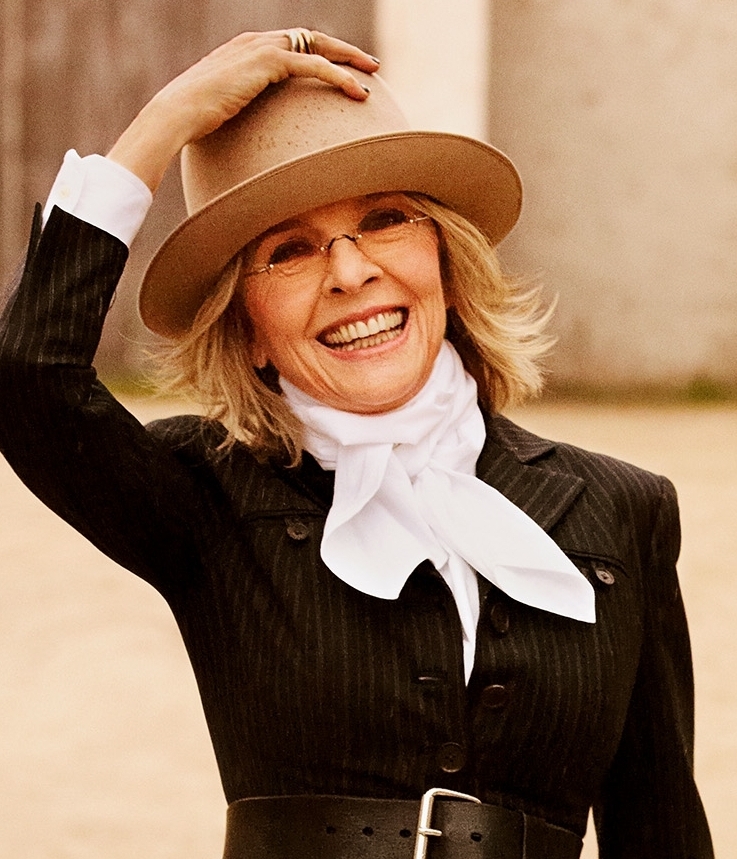
How did Diane Keaton build this fortune?
The answer unfolds through the career, earnings, deals and assets behind the headline estimate.
Before the fame
The background and early turning points that shaped Diane Keaton’s route to prominence.
Diane Keaton was born Diane Hall on 5 January 1946 in Los Angeles, the eldest of four children of a civil engineer father and a mother who won a local homemaker competition and photographed obsessively, a habit her daughter inherited. She took her mother’s maiden name professionally because another Diane Hall was already registered with Actors’ Equity. She studied drama briefly at college before dropping out to move to New York and train at the Neighborhood Playhouse, according to Wikipedia.
Keaton’s first significant work was on Broadway, understudying and then starring in Hair, and appearing opposite Woody Allen in Play It Again, Sam in 1969, which earned her a Tony nomination and began a working partnership that shaped both careers. Her film breakthrough came in 1972 as Kay Adams in The Godfather, the outsider through whose eyes the audience watches the Corleone family close in on itself, a role she reprised across the trilogy.
The breakthrough years
The career decisions and defining moments that turned recognition into sustained earning power.
Annie Hall, released in 1977, made her one of the defining screen presences of the decade. The performance won the Academy Award for Best Actress, and the character’s waistcoats, ties and men’s hats, drawn largely from Keaton’s own wardrobe, became one of the most copied looks in cinema history. It also established the register she would return to for fifty years: nervous, funny, articulate and entirely unlike the leading women Hollywood had been producing.
What the work can earn
Reported pay, contracts, royalties and performance income reveal how the fortune was funded.
Beyond the Oscar, Keaton received Academy Award nominations for Reds, Marvin’s Room and Something’s Gotta Give, and worked with Warren Beatty, Francis Ford Coppola, Nancy Meyers and Allen across a career spanning six decades. She also directed documentary and feature work, published several books on photography, architecture and her own life, and became a serious voice in Californian architectural preservation.
Keaton received the American Film Institute’s Life Achievement Award in 2017 and a Golden Globe for lifetime achievement, and remained a fixture of popular culture long after the Annie Hall years, largely through the later romantic comedies that introduced her to a new audience. Her death in October 2025 prompted an unusually broad outpouring of tributes, reflecting how many different generations had encountered her work.

The business beyond the main career
Endorsements, ownership interests and investments can keep compounding long after the initial breakthrough.
Keaton was a long-standing face of L’Oreal, an association that ran for years and was unusual in featuring an actress well into her sixties and seventies at a time when the industry rarely did so. Her endorsement work was otherwise sparing and generally connected to design, publishing or eyewear, reflecting a public persona built on personal style rather than mass-market appeal.
Keaton’s most successful business was property. She bought, restored and sold a series of significant Californian houses over four decades, treating the work as design practice rather than speculation, and published books documenting the results. She also worked as a producer, backing projects including Elephant, which won the Palme d’Or, and lent her name to a small number of carefully chosen commercial ventures.

Notable luxury item
A reported property or major asset offers a tangible glimpse of the wealth behind the public estimate.
Property formed the bulk of her estate. She bought a Bel Air house in 2002 and sold it in 2005 for 16.5 million dollars, and acquired a Laguna Beach property in 2004 for 7.5 million which she sold two years later for 12.75 million after restoration. Her final home, in Sullivan Canyon on the Brentwood side of the Pacific Palisades border, was bought for 4.7 million dollars in 2011 and rebuilt around 75,000 Chicago bricks and industrial steel to her own specification, finished in 2015. She wrote a book about the process, The House that Pinterest Built. She listed it in March 2025 at 28.9 million dollars; her estate relisted it after her death at 27 million, according to Robb Report.
Diane Keaton’s estimated net worth
Public estimates vary because private contracts, investments, taxes and liabilities are not fully disclosed.
How this estimate is calculated
Documented. The property trail, which is the most reliable part of any Keaton estimate because American county records are public. She bought a Bel Air house in 2002 and sold it in 2005 for 16.5 million dollars; acquired a Laguna Beach property in 2004 for 7.5 million and sold it two years later for 12.75 million; and bought her final Sullivan Canyon home for 4.7 million in 2011, listing it in March 2025 at 28.9 million. Her estate relisted it after her death at 27 million (Robb Report). She died on 11 October 2025 (Variety).
Estimated. Six decades of acting income, including the back-end participations attached to the later Nancy Meyers comedies, plus book royalties and producing credits. None of these is disclosed. Published assessments placed her at approximately 100 million dollars at her death.
Not verifiable. Any fee or participation figure; her investment holdings; and what the Brentwood house ultimately fetches, which materially affects the total because so much of the estate is unsold real estate.
Why this range. The property gains are documented and run into eight figures; the acting income is not. The range brackets the published assessment while allowing for the unsold house to settle above or below its asking price.
The working supports a range of $90 million to $110 million. The figure we publish is its midpoint.
Related on How Much Are They Worth: Robert Redford · Jacob Elordi · 10 of the Most Expensive Celebrity Homes and Estates
Think you know Diane Keaton? Take the quiz: Easy · Medium · Legendary
Keaton was a committed architectural conservationist, serving on the board of the Los Angeles Conservancy and campaigning to save historic buildings from demolition. She adopted two children, Dexter and Duke, as a single woman in her fifties, and never married, describing that as a deliberate choice rather than an accident. Her public image combined genuine eccentricity with an unusual lack of self-mythology.
The most persistent scrutiny concerned her continued public defence of Woody Allen against the allegations made by Dylan Farrow, a position she maintained despite considerable criticism and one that complicated her standing for part of the industry. In her final year, the listing of her Brentwood house prompted speculation about her health. Her family confirmed after her death on 11 October 2025 that she died of pneumonia, later recorded on her death certificate as primary bacterial pneumonia with no other significant contributing conditions, according to Variety.