
 How Much Are They Worth?
Celebrity fortunes, explained






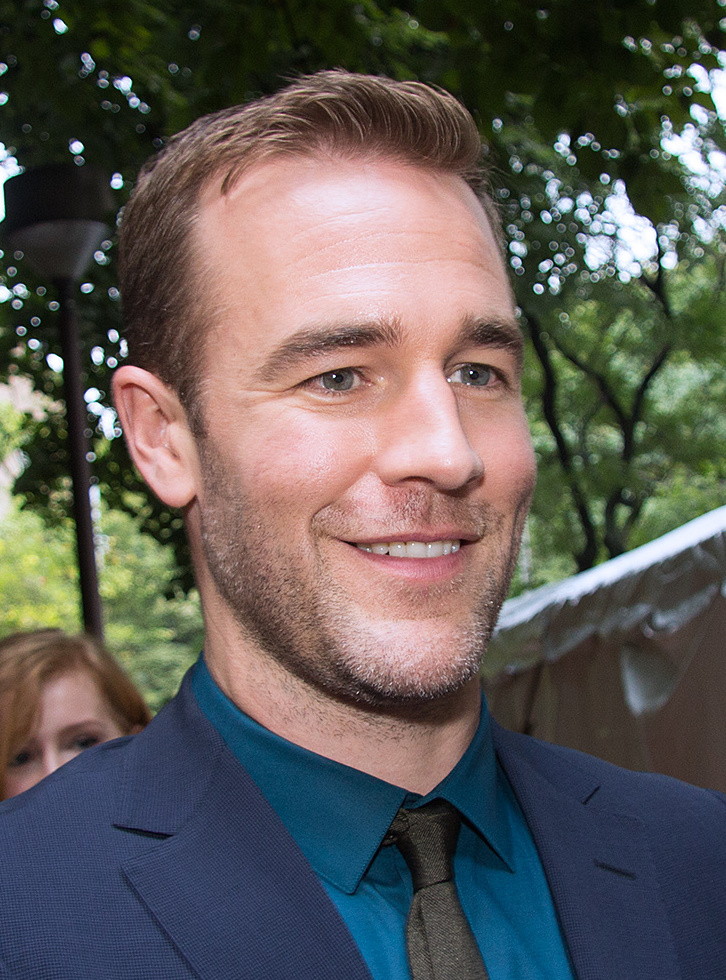
How did James Van Der Beek build this fortune?
The answer unfolds through the career, earnings, deals and assets behind the headline estimate.
James Van Der Beek before the fame
The background and early turning points that shaped James Van Der Beek’s route to prominence.
James David Van Der Beek was born on 8 March 1977 in Cheshire, Connecticut, the son of a former minor-league baseball player and a gymnastics studio owner. A concussion ended his own football ambitions as a teenager and pushed him towards drama; he was acting professionally off-Broadway before he finished school.
He is remembered as one of the most recognisable young actors in America at the turn of the millennium, and as a man who spent the next two decades taking that image apart with unusual good humour. He died on 11 February 2026, aged 48, survived by his wife Kimberly and their six children (NBC News, the Chicago Sun-Times).
His first credits were small: a 1995 episode of Clarissa Explains It All, the independent film Angus the same year, and stage work in New York. He was twenty when Kevin Williamson cast him as Dawson Leery, and he signed the contract that would define both his fame and his finances before the pilot had aired.
That contract is the financial hinge of the whole profile. In a 2012 interview on the Today programme he said of the show: “There was no residual money. I was 20. It was a bad contract. I saw almost nothing from that” (the Las Vegas Review-Journal). The WB was not one of the three legacy networks, and its output was treated as already syndicated for residual purposes, which is why a series that ran in repeats for two decades sent him very little after 2003.
James Van Der Beek’s breakthrough years
The career decisions and defining moments that turned recognition into sustained earning power.
Dawson’s Creek ran from 1998 to 2003 on The WB, and Van Der Beek played the title role across six seasons and 128 episodes. Varsity Blues gave him a genuine film hit in 1999. For a short window he was among the most bankable young actors in America, and the series produced one of the internet’s most durable images in his crying reaction shot, which he embraced for the rest of his life.
What the show paid is on the record in outline: the young cast started at about 35,000 dollars an episode in the first season and reached around 175,000 dollars an episode by the sixth (the Las Vegas Review-Journal). Applied across the 128 episodes with the raises stepped between those two points, that is our estimate of roughly 14 million dollars gross for the run, before the 20 to 25 per cent that agents, managers and lawyers take and before tax. Varsity Blues, an MTV Films production made for about 16 million dollars, would have paid its lead a fee in the low seven figures, on our estimate, and the film went on to gross more than 50 million dollars.

What James Van Der Beek’s work can earn
Reported pay, contracts, royalties and performance income reveal how the fortune was funded.
His post-Dawson’s career is a case study in an actor deliberately dismantling his own persona. He played a preening fictionalised version of himself in Don’t Trust the B—- in Apartment 23, a role he took, in his own words, when the Dawson’s Creek money ran out; appeared in Pose, CSI: Cyber and What Would Diplo Do?; and competed on Dancing with the Stars in 2019.
Put together, that is a working actor’s ledger rather than a star’s: two seasons of Apartment 23, thirty-one episodes of CSI: Cyber, guest arcs and a reality-competition fee. Our estimate of his acting gross across the whole career is 25 to 35 million dollars before commissions and tax, with Dawson’s Creek supplying roughly half of it and the twenty years that followed the rest.
He won a Teen Choice Award for Dawson’s Creek and was nominated for another for Varsity Blues; the show itself became a defining artefact of late-1990s television, and his performance in Pose in 2018 was the most warmly reviewed work of his later career. When he died, Forbes noted that his public campaign on early screening had changed how a generation of younger adults thought about a disease increasingly diagnosed in people under fifty (Forbes).

James Van Der Beek’s business beyond the main career
Endorsements, ownership interests and investments can keep compounding long after the initial breakthrough.
Endorsement money was small throughout. He fronted a Kraft Macaroni & Cheese campaign in the 2010s and did sponsored social-media work with his wife once the family became a following in its own right, but nothing that approached the income of the acting. On our estimate, brand and sponsored work contributed a few hundred thousand dollars a year at most in the last decade.
He never built a business in the conventional sense. The nearest thing to an enterprise was the family itself as a media presence: he and Kimberly documented their move from Los Angeles to a ranch in Texas in 2020 for a large social following, which produced modest brand income of the kind set out below rather than a company with a value.

James Van Der Beek’s notable luxury item
A reported property or major asset offers a tangible glimpse of the wealth behind the public estimate.
The principal asset was the Texas ranch outside Austin, bought when the family left Los Angeles in 2020 and described by him as a deliberate step away from the industry. Its equity is the largest single variable in this profile and is treated cautiously below.
The clearest signal about the rest came in December 2025, when he auctioned personal Dawson’s Creek and Varsity Blues memorabilia through Propstore’s Winter Entertainment Memorabilia auction, explicitly to fund his cancer treatment (Variety, Deadline). The sale ran from 5 to 7 December and raised more than 47,000 dollars (The Hollywood Reporter, NBC News). An actor selling his own props to meet costs is not the behaviour of a man with a large liquid estate.
James Van Der Beek’s estimated net worth
Public estimates vary because private contracts, investments, taxes and liabilities are not fully disclosed.
How this estimate is calculated
The documented inputs are the per-episode range (the Las Vegas Review-Journal), the memorabilia sale and the fundraiser, and each points the same way. Take the Dawson’s Creek gross of about 14 million dollars, remove 20 to 25 per cent in representation and roughly 40 per cent in federal and California tax on the remainder, and the series left him with 6 to 7 million dollars net, earned between the ages of 20 and 26 and, on his own account, with almost nothing added by residuals afterwards. The next twenty years of character work added, on our estimate, a further 6 to 9 million net.
Against that sits a family of eight supported for two decades, a Los Angeles house exchanged for a Texas ranch, and a multi-year course of cancer treatment which in the United States runs to six figures even with insurance. Our range takes the net career earnings, deducts two decades of living costs for a large family, and allows for the ranch equity as the main remaining asset. It assumes the ranch is worth more than any borrowing against it, and that the auction and the fundraiser reflected a shortage of liquid money rather than a nil estate.
A working actor who sold his own props to pay hospital bills, and whose friends then raised in a day what his most famous role never paid him in residuals, is a man the aggregator tables have simply never met.
The working supports a range of $3 million to $8 million. The figure we publish is its midpoint.
Confidence: Indicative — built from reported per-episode pay, his own account of the contract and two public signals of liquidity in his final months, with no filed figure for the estate itself.
Think you know James Van Der Beek? Take the quiz: Easy · Medium · Legendary
His last public work was advocacy. After making his diagnosis public in November 2024 he campaigned on early screening, speaking openly about symptoms he had initially dismissed, and that candour is a large part of how he is now remembered.
The public responded in kind. A GoFundMe set up by friends for Kimberly and the six children passed a million dollars within 24 hours of his death (The Hollywood Reporter) and more than 2 million dollars the following day, with Steven Spielberg and Kate Capshaw among the largest donors (Fox News). Designer Erin Fetherston, a close friend, described a sincere and urgent need after medical costs had left the family out of funds.
There was no scandal in the career. The scrutiny that followed his death was about the contract: how an actor who led a hit series for six years could leave a family in need, and whether the residual rules that treated The WB as already syndicated should have been allowed to stand. He answered the first himself in 2012; the second is now an argument inside the industry.