
 How Much Are They Worth?
Celebrity fortunes, explained










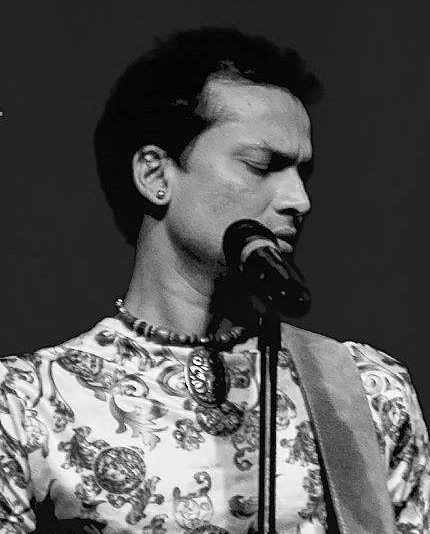
How did Zubeen Garg build this fortune?
The answer unfolds through the career, earnings, deals and assets behind the headline estimate.
Zubeen Garg before the fame
The background and early turning points that shaped Zubeen Garg’s route to prominence.
Zubeen Garg was born Zubeen Borthakur in Meghalaya on 18 November 1972 and grew up in Assam, where his father wrote lyrics under a pen name. He released his debut Assamese album, Anamika, in 1992 at the age of nineteen, and spent the next thirty-three years becoming the most recognisable voice in north-east India. He died on 19 September 2025, aged fifty-two, as NBC News reported.
The financial story of his life is unusual: an artist of enormous output whose market was a regional one, in an industry that bought songs outright rather than paying royalties. The figures below are almost entirely our own, built from what that industry paid.
Anamika was followed through the 1990s by albums including Maya, Asha and Pakhi, and by a working pattern that never changed: record constantly, release often, perform live wherever an audience would gather. Assamese popular music was then a cassette business with small budgets and large audiences, and he came to dominate it.
A recording fee in that market was a one-off payment, not an advance against royalties, and in the 1990s it ran to a few thousand rupees a song for an established name. Volume was the only route to a living, which is why a man came to record songs in the tens of thousands rather than the hundreds.
Zubeen Garg’s breakthrough years
The career decisions and defining moments that turned recognition into sustained earning power.
National recognition came in 2006 with Ya Ali from the Hindi film Gangster, which made him a household name across India and brought a Filmfare nomination for best male playback singer. All India Radio records a career total of more than 38,000 songs in 40 languages across thirty-three years.
Put a value on that and the scale of the catalogue cuts both ways. At an average recording fee across the whole span of around 12,000 rupees a song — low early, well into six figures of rupees for a major release later — 38,000 songs come to roughly 45 crore, about $6.5 million, with Hindi playback adding perhaps $300,000. That is our estimate, and it is the central fact of his finances: a body of work that would have made a Western artist with a hundredth of the output far richer, because those songs were bought outright and the ownership sits with producers rather than with him.

What Zubeen Garg’s work can earn
Reported pay, contracts, royalties and performance income reveal how the fortune was funded.
The stage was where the money actually was. For three decades he was the biggest live draw in Assam, headlining Bihu functions, festival nights and civic events across the state and the diaspora. On roughly sixty paid performances a year across twenty-five years, at an average fee of about 250,000 rupees, live work contributed around $5.5 million gross — a third more than the whole recorded catalogue.
Film was the third stream. He composed, acted, directed and produced across the Assamese industry, with Mission China in 2017 and Kanchanjangha among the best known; Outlook India describes him as singer, lyricist, musician, filmmaker and actor in roughly equal measure. Music direction, acting fees and producer participation across more than thirty films we put at about $3.5 million, taking our estimate of his gross career earnings to roughly $16 million.
The measure of his standing is how far it reached beyond the charts. All India Radio describes him as a cultural ambassador for the north-east, which is close to how Assam treated him: the voice expected at Bihu functions, civic occasions and flood-relief nights alike, and the biggest live draw in the state for three decades. Ya Ali carried that voice to a national audience in 2006.
His final film, Roi Roi Binale, written by him and starring him as a blind musician, opened on 31 October 2025. Koimoi recorded it passing Mission China, Dr Bezbaruah 2 and Kanchanjangha within three days on a budget of 5 crore, on its way to becoming the biggest Assamese release ever made. That gross belongs to its producers and distributors and forms no part of the figure below.

Zubeen Garg’s business beyond the main career
Endorsements, ownership interests and investments can keep compounding long after the initial breakthrough.
He endorsed regional brands throughout his career — tea, jewellery, consumer goods and telecoms selling into Assam and the north-east — and appeared in state campaigns on public-health and cultural themes.
Regional endorsement in India pays in lakhs rather than crores, even for the most recognisable name in a state. Our estimate is that brand work contributed $600,000 to $1.2 million across twenty years, which is real money in that market and a small line in a career total.
His business life was built around his own work rather than away from it. He ran a production house in Guwahati, produced films through it with his wife, Garima Saikia Garg, and released much of his later Assamese music himself — the one part of the catalogue where the rights may have stayed closer to home.
Producing is the only place in his career where he took a share of upside rather than a fee. Mission China, made for around 2 crore, returned roughly three times that; we carry his cumulative producing profits at $400,000 to $900,000.

Zubeen Garg’s notable luxury item
A reported property or major asset offers a tangible glimpse of the wealth behind the public estimate.
He lived in Guwahati, kept a connection to the family land at Kamarkuchi, and was known for a fondness for cars his audience treated as part of the persona. Property in Guwahati plus the Kamarkuchi land we carry at $1.5 million to $3 million.
Against that sits a recording archive of 38,000 songs, more than a thousand of which have been registered with the Indian Performing Right Society. Where the underlying rights rest with producers, that archive yields his estate very little; where they do not, it is a small but perpetual income. We treat it as an asset of modest and uncertain value rather than assigning it a number.
Zubeen Garg’s estimated net worth
Public estimates vary because private contracts, investments, taxes and liabilities are not fully disclosed.
How this estimate is calculated
Three streams make the career. Recording: 38,000 songs at an average of about 12,000 rupees each gives roughly $6.5 million, with Hindi playback adding $300,000. Live performance: sixty paid shows a year over twenty-five years at an average of 250,000 rupees gives about $5.5 million. Film: composing, acting and directing across more than thirty titles, plus producing participation, at around $3.5 million. Endorsements add $600,000 to $1.2 million. Our estimate for gross career earnings is therefore about $16 million.
Indian income tax at an effective 30 per cent leaves roughly $11 million net. Thirty-three years of living on that income, a large extended network supported from it, and an unusual volume of unpaid performance mean retention was lower than a Western comparison would assume; we take 35 to 50 per cent, giving $3.9 million to $5.5 million. Property at $1.5 million to $3 million completes it. The working supports a range of $4.5 million to $8.5 million, and we publish the middle.
The weakest number here is the average recording fee, because it is doing the work of 38,000 separate transactions spread across three decades and several industries. Move it from 12,000 rupees to 20,000 and the recorded catalogue alone adds $4 million to the gross; move it to 6,000 and it halves. The other open question is what the Garg estate recovers from the rights now being traced, which could turn a dormant Assamese archive into a real income.
Confidence: Indicative — the catalogue size, the awards and the film results are on the record, but every money figure in the build is our own reasoning from regional recording, performance and film rates.
He was, by any account of his career, a conspicuously generous performer. He played without a fee for flood relief, for community causes and for local institutions across Assam so often that it became a defining part of how the state saw him, and All India Radio describes him as a cultural ambassador and philanthropist for the north-east.
That generosity is a financial fact as well as a moral one. A performer who gives away a meaningful share of the shows he could have charged for accumulates less than his fame implies, which is one reason the figure below is smaller than his celebrity suggests.
He was an outspoken public figure who took positions on language, religion and Assamese identity that drew criticism over the years, and rarely softened them. His willingness to argue in public was part of why he was trusted locally and periodically attacked nationally.
The financial scrutiny has come mostly since, as his family and a group of archivists work to establish who owns what across a catalogue scattered among producers, distributors and labels. Indian copyright splits lyrics, composition and sound recording between different holders, which is why a body of work this large is so hard to value.