 How Much Are They Worth?
Celebrity fortunes, explained









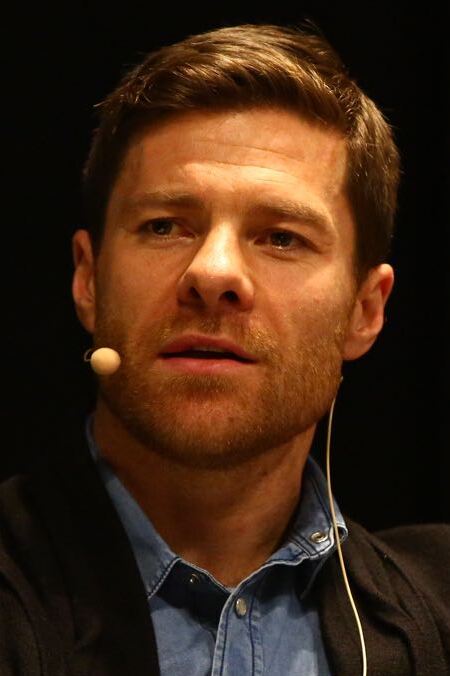
How did Xabi Alonso build this fortune?
The answer unfolds through the career, earnings, deals and assets behind the headline estimate.
Xabi Alonso before the fame
The background and early turning points that shaped Xabi Alonso’s route to prominence.
Xabier Alonso Olano was born on 25 November 1981 in Tolosa, in the Basque province of Gipuzkoa. His father Periko Alonso won two Spanish league titles with Real Sociedad and another with Barcelona, so the trade was already in the house and the first contract was never going to be a surprise.
He grew up in Antiguo, a district of San Sebastián, and joined Real Sociedad’s academy as a boy. A spell on loan at Eibar in 2000 hardened him, and he returned to take the Real Sociedad midfield at nineteen.
His four seasons at Real Sociedad, from 2000 to 2004, included the 2002-03 campaign in which the club finished second in La Liga, two points behind Real Madrid, with Alonso captaining the side at twenty-one.
Spanish first-division pay for a young home-grown captain at a mid-sized club in that era ran from €200,000 in a first professional year to around €1 million by the last. We put the four Real Sociedad seasons at €1.8 million to €2.6 million gross in total — real money for a man in his early twenties, and a fraction of what came next.
Xabi Alonso’s breakthrough years
The career decisions and defining moments that turned recognition into sustained earning power.
Liverpool signed him in August 2004 and he spent five seasons at Anfield, winning the Champions League in his first and scoring the equalising penalty in the final in Istanbul, then the FA Cup in 2006. Whatever Liverpool paid Real Sociedad for him went to the Basque club and formed no part of his income; a transfer fee is a payment between employers.
His own money was the wage. A first-team midfielder of his standing at Liverpool in that period started near £30,000 a week and finished nearer £70,000, which gives £11 million to £15 million gross across the five years, or about $18 million to $25 million. Real Madrid took him in 2009 and he stayed five seasons, winning La Liga in 2012, the Copa del Rey in 2011 and the Champions League again in 2014. Madrid’s pay for a starting midfielder then ran at €6 million to €8 million gross a year, so €30 million to €40 million for the period.

What Xabi Alonso’s work can earn
Reported pay, contracts, royalties and performance income reveal how the fortune was funded.
Three seasons at Bayern Munich from 2014 brought three Bundesliga titles and a DFB-Pokal, at €6 million to €8 million gross a year, or €18 million to €24 million in all. With Spain he won Euro 2008, the 2010 World Cup and Euro 2012; federation bonuses for those three tournaments add €1 million to €1.8 million.
The second career began in 2019 with Real Sociedad’s B team, worth €300,000 to €600,000 a year, and turned serious at Bayer Leverkusen in October 2022, where he inherited a side lying seventeenth. In 2023-24 they won the Bundesliga without losing a match, the first team in the league’s history to do it, and added the DFB-Pokal; the Bundesliga’s own account recorded a 51-game unbeaten run across all competitions, a European record. A coach delivering that is paid €3 million to €5 million a year, rising after the title, so €9 million to €14 million across the Leverkusen period.
He is one of a small group to have won the Champions League with two clubs and a World Cup in between, and his Leverkusen season put him on every shortlist for the biggest jobs in the game. the same source traced the arc from relegation firefighting to a league title in nineteen months.
That reputation is itself a financial asset in management, because a coach’s salary is set by the queue of clubs willing to pay a release fee for him. It is the reason his pay roughly doubled between Leverkusen and his next appointment.

Xabi Alonso’s business beyond the main career
Endorsements, ownership interests and investments can keep compounding long after the initial breakthrough.
He was an adidas athlete for most of his playing career, wearing the brand’s boots from his Real Sociedad years onwards, and appeared in Spanish campaigns for banking and telecoms sponsors attached to the national team.
A midfielder of his profile — respected rather than marketed, with no interest in the celebrity side — earns $600,000 to $1.2 million a year from that work at its peak, falling away after retirement and recovering modestly in management. Across the whole career we put endorsement income at $9 million to $17 million gross.
He has kept his commercial affairs narrow. What exists is a Spanish company structure holding his image rights and his investments, of the kind every player at his level operates.
His one notable outside interest is in football itself: he has put money into youth facilities and coaching infrastructure in Gipuzkoa, and holds the UEFA Pro Licence he completed in 2018, which is what made the coaching income possible at all. Treated as a business, that qualification has been the best-returning asset he owns.

Xabi Alonso’s notable luxury item
A reported property or major asset offers a tangible glimpse of the wealth behind the public estimate.
He owns property in San Sebastián and in Madrid, and held a house in Munich during the Bayern years. Family houses of that type in those three markets, bought on a footballer’s cash, carry values of €3 million to €6 million in the Basque Country and €4 million to €8 million in Madrid.
We carry his combined property equity at €8 million to €13 million, most of it unmortgaged, which is the usual pattern for a player who earned the bulk of his money before buying. The rest of the balance sheet is invested capital rather than visible assets.
Xabi Alonso’s estimated net worth
Public estimates vary because private contracts, investments, taxes and liabilities are not fully disclosed.
How this estimate is calculated
The documented part is recent. Reporting around the Real Madrid appointment put his salary at €7 million to €9 million a season, and beIN Sports set out what the exit cost: a payment of one year’s salary, because the contract limited the club to the first year if it moved him on inside it. The €12 million to €15 million Real Madrid paid Leverkusen to release him went to the German club, not to him. Every playing wage below is our own estimate from what each club paid at each position in each era.
The arithmetic. Real Sociedad, 2000 to 2004: €1.8 million to €2.6 million. Liverpool, 2004 to 2009: £11 million to £15 million. Real Madrid, 2009 to 2014: €30 million to €40 million. Bayern Munich, 2014 to 2017: €18 million to €24 million. International bonuses: €1 million to €1.8 million. Playing earnings: about $75 million to $97 million gross. Management: Real Sociedad B €1 million to €1.8 million, Leverkusen €9 million to €14 million, Real Madrid €7 million to €9 million including the settlement, or $19 million to $28 million. Endorsements: $9 million to $17 million. Career gross: $103 million to $142 million.
Agents take about 6 per cent and effective rates of 40 to 50 per cent applied across Spain, England and Germany, leaving roughly 45 per cent retained, or $46 million to $64 million, and two decades of compounding on the earliest of it lifts the total. The working supports $55 million to $75 million and we publish the midpoint. The input most likely to move it is the Madrid settlement: whether one year’s salary was paid out in full or compromised in the mutual agreement decides several million at the end of the calculation, and only the club and his lawyers have seen that figure.
Confidence: Partly documented — his Real Madrid salary band, the structure of his exit payment and the release fee are all reported, while seventeen years of playing wages are our own estimate.
His giving has run through Basque football and Basque institutions: pitches and academy funding in Gipuzkoa, support for Real Sociedad’s youth structure, and charity matches for causes in San Sebastián. He has avoided the publicised foundation route that many of his contemporaries took.
The public image has been consistent for two decades: articulate, multilingual, undramatic. It is why his first senior job came at a club prepared to hand a novice the rebuild, and why the queue formed so quickly afterwards.
He was prosecuted in Spain over the taxation of his image rights, accused of routing them through a company in Madeira and of defrauding the Spanish authorities of about €2 million between 2010 and 2012. He refused a plea bargain, maintained his innocence throughout, and was acquitted in a Madrid court in November 2019, as ESPN reported; the Supreme Court upheld the acquittal in 2023.
His Real Madrid spell ended on 12 January 2026 after seven months, by mutual agreement and a day after a Supercopa final defeat to Barcelona, as CNN reported. Reported friction with senior players accompanied it. The departure was a sporting failure rather than a legal or disciplinary matter.