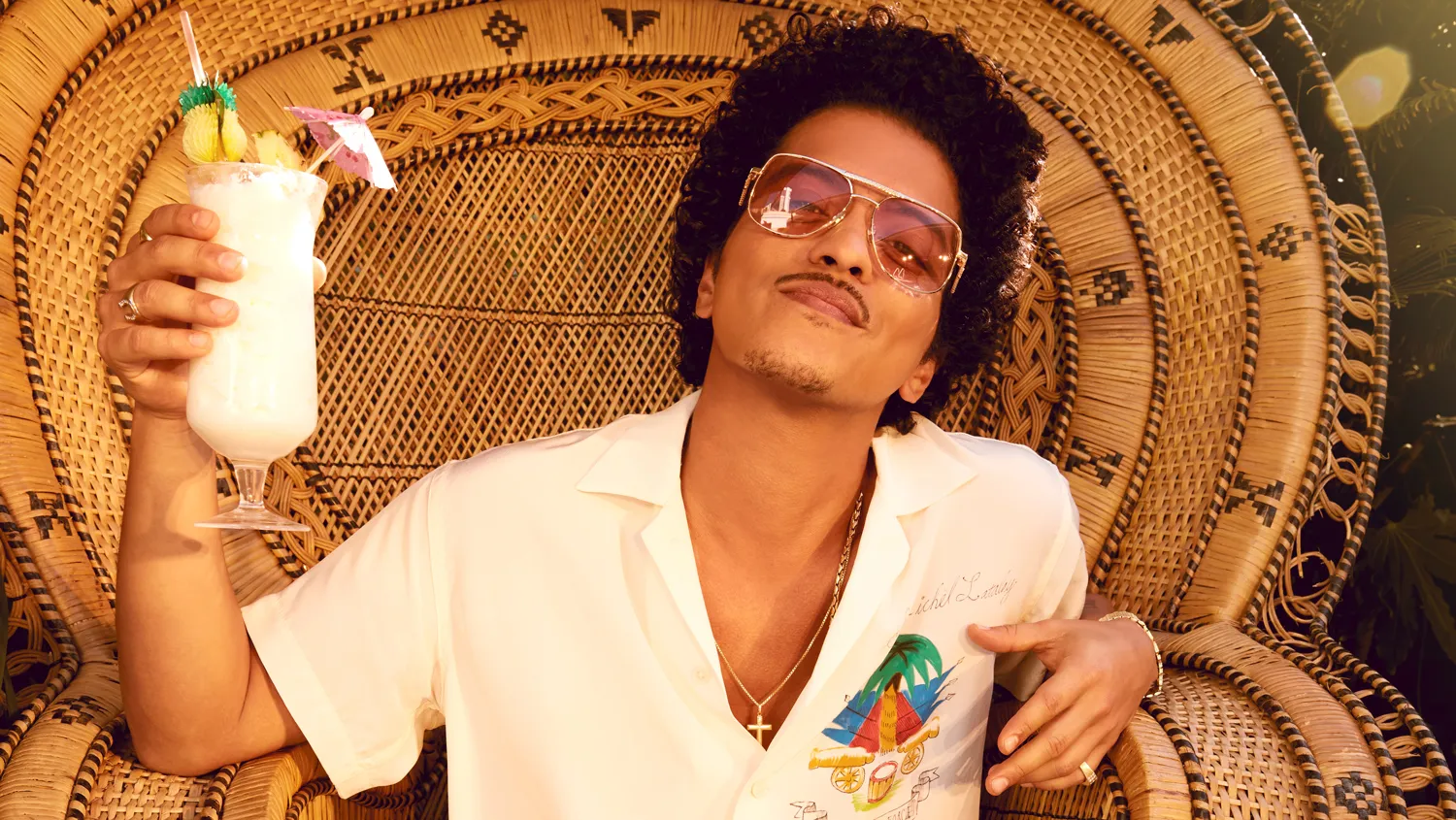
 How Much Are They Worth?
Celebrity fortunes, explained
How Much Are They Worth?
Celebrity fortunes, explained








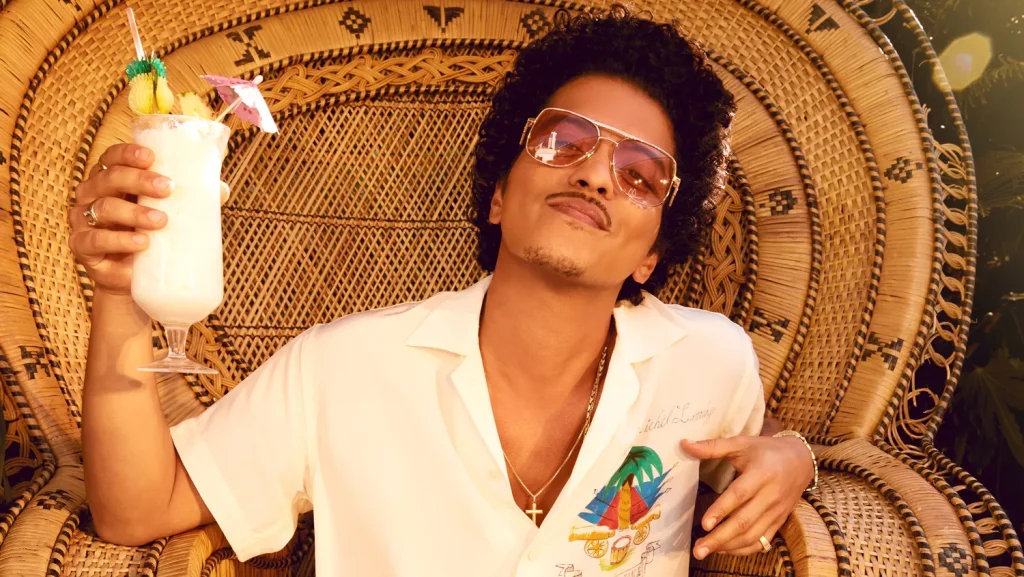
How did Bruno Mars build this fortune?
The answer unfolds through the career, earnings, deals and assets behind the headline estimate.
Before the fame
The background and early turning points that shaped Bruno Mars’s route to prominence.
Bruno Mars was born Peter Gene Hernandez on October 8, 1985, in Honolulu, Hawaii. His father, Pete Hernandez, is a percussionist of Puerto Rican and Ashkenazi Jewish descent, and his mother, Bernadette San Pedro Bayot, is a Filipino singer and dancer, and the two met while performing together in Hawaii. Mars grew up in a musical household and began performing at age four with his family’s band, The Love Note, quickly becoming a local novelty act known as “Little Elvis” for his Elvis Presley impersonation, a role that led to a childhood cameo in the 1992 film Honeymoon in Vegas. He later took the stage name Bruno as a nod to that childhood nickname and added Mars as a teenager, and graduated from President Theodore Roosevelt High School in Honolulu in 2003 before moving to Los Angeles to pursue a music career.
These details of his birth name, parentage and childhood performing career are documented on his Wikipedia biography page.
After relocating to Los Angeles, Mars signed a recording contract with Motown Records in 2004, but the label dropped him before any material was released. The Motown relationship did lead to a valuable connection, however, introducing him to songwriter Philip Lawrence, with whom he later formed the production and songwriting team The Smeezingtons alongside engineer and producer Ari Levine. As The Smeezingtons, the trio wrote and produced hit singles for other artists, including “Right Round” for Flo Rida, “Nothin’ on You” for B.o.B and “Billionaire” for Travie McCoy, establishing Mars as an in-demand songwriter years before he became a headlining act in his own right. He signed with Atlantic Records in 2009 and released his debut EP, It’s Better If You Don’t Understand, later that year.
His Motown signing, the formation of The Smeezingtons and his songwriting credits for other artists are documented by Encyclopaedia Britannica.
The breakthrough years
The career decisions and defining moments that turned recognition into sustained earning power.
Mars’s breakthrough came with his October 2010 debut studio album, Doo-Wops & Hooligans, which produced the number one singles “Just the Way You Are” and “Grenade” along with the top five hit “The Lazy Song,” and established his throwback pop and soul sound. His 2012 follow-up, Unorthodox Jukebox, added two more Hot 100 number ones in “Locked Out of Heaven” and “When I Was Your Man.” His profile rose further when he headlined the Super Bowl XLVIII halftime show at MetLife Stadium in February 2014 with his band The Hooligans and guest performers the Red Hot Chili Peppers. Later that year, his collaboration with producer Mark Ronson, “Uptown Funk,” became a career-defining smash, spending 14 weeks atop the Billboard Hot 100, the second longest run in the chart’s history.
The chart run and historical ranking of “Uptown Funk” are reported by Billboard.

What the work can earn
Reported pay, contracts, royalties and performance income reveal how the fortune was funded.
Mars returned to the Super Bowl stage in February 2016, joining Coldplay and Beyonce for the Super Bowl 50 halftime show at Levi’s Stadium. His third studio album, 24K Magic, released in November 2016, produced the hits “24K Magic,” “That’s What I Like” and “Finesse,” and at the 60th Annual Grammy Awards in January 2018 he swept all seven categories in which he was nominated, including Album of the Year, Record of the Year and Song of the Year, one of only a handful of artists in Grammy history to sweep the night’s top honors. In 2021 he teamed with Anderson .Paak to form the duo Silk Sonic, and their single “Leave the Door Open” won all four Grammy categories it was nominated in at the 2022 ceremony, giving Mars his third career Record of the Year win, a feat matched by very few artists.
The 2018 Grammy sweep for 24K Magic, including its Album, Record and Song of the Year wins, is documented by the Recording Academy.
Mars has sold more than 130 million records worldwide across his solo catalog and Silk Sonic, placing him among the best-selling music artists of his generation, and he has appeared repeatedly on Forbes’ list of the world’s highest-paid musicians, with the publication crediting his touring and Las Vegas residency income as major drivers of his annual earnings. His two Super Bowl halftime appearances, in 2014 and 2016, cemented his status as one of the defining mainstream pop performers of the 2010s, and in 2026 he was named Record Store Day’s official ambassador, a further sign of his enduring cultural standing heading into a new album release.
His Forbes ranking and touring-driven earnings are reported on his Forbes profile.
The business beyond the main career
Endorsements, ownership interests and investments can keep compounding long after the initial breakthrough.
Compared with some pop peers, Mars has kept a relatively narrow traditional endorsement slate, leaning more heavily on his own beverage and hospitality ventures for outside income. He did become the face of a 2024 advertising campaign for the Japanese discount retail chain Don Quijote, known in its marketing as Don Don Donki, starring in a television commercial built around the brand. He was also named Record Store Day’s official ambassador for 2026, curating an exclusive vinyl release tied to his new album cycle, a partnership that functions as both promotional and reputational endorsement within the music industry.
The Don Quijote campaign is reported by Asia Sponsorship News.
Beyond music, Mars co-founded the premium spirits brand SelvaRey Rum in 2014 alongside Seth Gold, Marc Gold and Robert Herzig, taking a hands-on role in redesigning the brand’s bottle, packaging and marketing and helping expand its distribution to more than 30 U.S. markets by 2021. In February 2024 he opened The Pinky Ring, a cocktail lounge and live-music jazz bar built in partnership with Bellagio Las Vegas, extending his business presence on the Strip alongside his long-running concert residency at Park MGM’s Dolby Live theater.
The founding and expansion of SelvaRey Rum are documented by Wikipedia, and the opening of The Pinky Ring is reported by Robb Report.
Notable luxury item
A reported property or major asset offers a tangible glimpse of the wealth behind the public estimate.
Mars’s primary residence is a Mediterranean-style estate in the Fryman Canyon area of Studio City, Los Angeles, which he purchased in September 2014 for 6.5 million dollars. The property spans roughly 9,033 square feet with seven bedrooms and eight bathrooms in a celebrity-heavy neighborhood. Before that, he owned a smaller single-story home on Mulholland Drive at the edge of Studio City and Hollywood Hills West, which he bought in 2012 for 3.25 million dollars and sold in 2015 for 3.3 million dollars once he had upgraded to the larger Fryman Canyon estate.
The purchase price, size and location of his Studio City home are documented by Zach Goldsmith Real Estate.
Bruno Mars’s estimated net worth
Public estimates vary because private contracts, investments, taxes and liabilities are not fully disclosed.
How this estimate is calculated
Mars’s estimated net worth reflects more than a decade of Grammy-winning album and single sales, one of the highest-grossing tours of the 2010s in the 24K Magic World Tour, and, increasingly, his exceptionally long-running Las Vegas concert residency, which anchored his income at Park MGM’s Dolby Live theater from December 2016 through its conclusion on December 31, 2025. Across its full run of 110 shows and roughly 574,000 tickets sold, the residency grossed a reported 197.2 million dollars, making it one of the most lucrative live-music engagements of the streaming era. Business income from SelvaRey Rum and The Pinky Ring adds a smaller but growing revenue stream on top of his performance earnings. Weighed against that is the persistent but unverified public speculation about large gambling losses, a claim MGM has explicitly denied and that no court record has ever substantiated, so it is treated here as unconfirmed rather than deducted from the estimate.
The scale of his Park MGM residency earnings is documented by Wikipedia, drawing on Billboard Boxscore data. Celebrity Net Worth lists a supplementary public estimate of 175 million dollars for Mars, used here strictly as a secondary reference point. Weighing his catalog and touring income, his residency earnings and his growing business ventures against the unconfirmed gambling-debt speculation produces a broad estimate in the same general range as that figure.
Mars has a track record of large, targeted charitable giving tied to his tours and to causes connected to his family background. In August 2017, during a stop on his 24K Magic World Tour in Detroit, he donated 1 million dollars to the Community Foundation of Greater Flint to support relief efforts tied to the Flint water crisis. In March 2020 he pledged 1 million dollars to the MGM Resorts Foundation to help support MGM employees who lost income during the early stages of the COVID-19 pandemic, reflecting his close business relationship with the company behind his Las Vegas residency. He has also supported the American Red Cross, Save the Children and DoSomething.org, and contributed to relief efforts in the Philippines, his mother’s home country, following Typhoon Haiyan.
The Flint water crisis donation is reported by The FADER, and the MGM Resorts Foundation pledge is reported by PR Newswire.
In September 2010, Mars was arrested at the Hard Rock Hotel in Las Vegas after hotel security found him with 2.6 grams of cocaine in a nightclub bathroom. He pleaded guilty to possession in early 2011 and was sentenced to a 2,000 dollar fine, 200 hours of community service and drug counseling as part of a plea deal. He completed and exceeded the required community service, and a judge dismissed the case from his record later that year after finding he had met and surpassed the terms of his sentence.
Separately, since around 2016 Mars has been the subject of recurring tabloid speculation that his long-running Park MGM concert residency was somehow tied to a large personal gambling debt. The rumor intensified in March 2024, when reports citing unnamed sources claimed he owed as much as 50 million dollars from high-stakes blackjack losses in Las Vegas casinos and was working off the debt through his residency earnings. MGM Resorts International publicly and repeatedly denied the claim, stating there was “no debt with MGM,” and no court filing or verified documentation of such a debt has ever surfaced. Mars himself addressed the rumor on stage during a 2026 tour stop, telling the audience he was debt-free, though he did not detail the extent of any past gambling losses.
The 2010 arrest and its resolution are reported by CBS News and Billboard, and MGM’s denial of the gambling debt rumor is reported by Variety.