 How Much Are They Worth?
Celebrity fortunes, explained






How did Curry Barker build this fortune?
The answer unfolds through the career, earnings, deals and assets behind the headline estimate.
Curry Barker before the fame
The background and early turning points that shaped Curry Barker’s route to prominence.
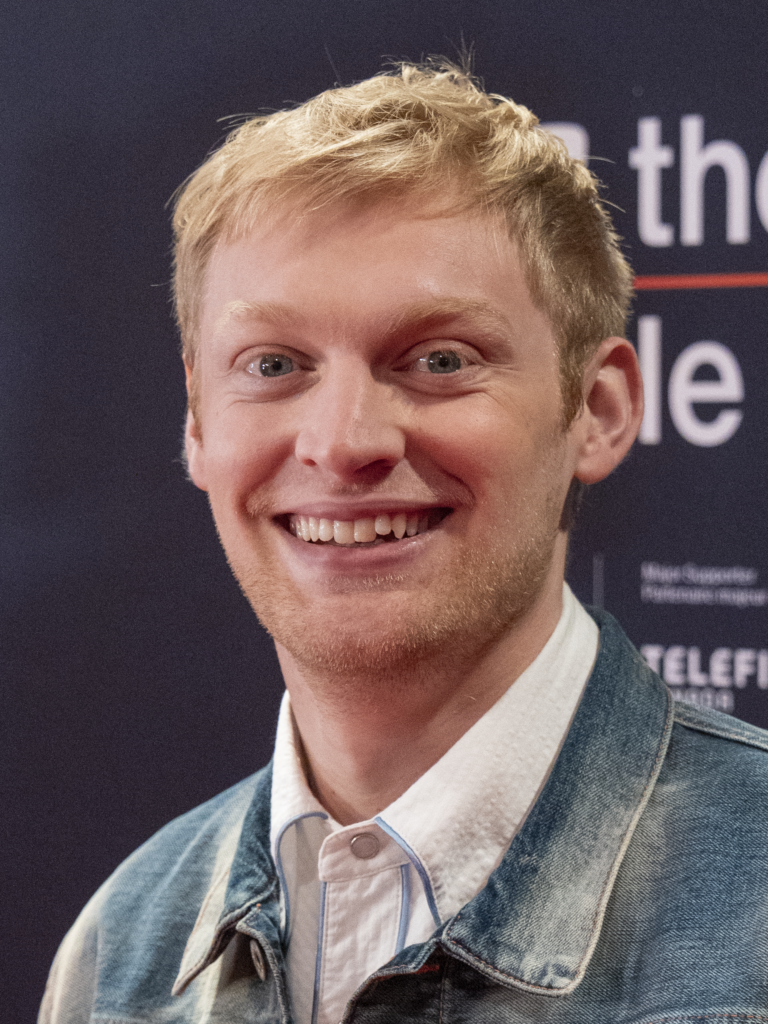
Curry Barker is an American writer, director and editor who was twenty-six when a film he made
for $750,000 became one of the most profitable pictures in modern American cinema. Born in 1999, he spent his early twenties on YouTube rather than in film school, and reached his
first studio negotiation already owning an audience.
His route in was the sketch channel that’s a bad idea, made with Cooper Tomlinson. It had
passed a million subscribers by the time Inverse interviewed him in May 2026, and he
credits it, not training, with teaching him pacing.
Channel work pays in increments — advertising, integrations, merchandise — split two
ways. What it bought him mattered more: practice, and a standing audience he did not have to rent.
His first feature came from the same economy. Milk & Serial, a found-footage horror
film about two YouTube pranksters, was written and directed by Barker on an $800 budget, a figure he
gave Inverse himself, and self-released free on YouTube in the summer of 2024, bringing
representation: The Hollywood Reporter reported his signing with UTA on the strength of it.
Curry Barker’s breakthrough years
The career decisions and defining moments that turned recognition into sustained earning power.
Obsession was shot in twenty days for $750,000, Barker writing, directing and editing,
with Michael Johnston and Inde Navarrette in the leads and Blumhouse producing. It premiered in Toronto’s Midnight programme in September 2025, and Focus Features bought it out of
the festival for a reported $15 million.
It opened in the United States on 15 May 2026 and then did what features almost never do: went
up. Deadline reported a second weekend of $22.4 million, thirty per cent above its
opening. It crossed $200 million to become Focus Features’ biggest release and by the
autumn had passed half a billion worldwide, the first wholly original film of the 2020s to manage it,
as Bloody Disgusting noted. Rotten Tomatoes has it at 95 per cent.
What the craft has paid him, and this is our estimate. He was the picture’s
writer, director and editor and not one of its producers, a distinction he drew himself when pay
became a public argument. Two kinds of money have to stay apart here. Earned, and both of these are our estimates too: a
combined writer-director fee on a $750,000 shoot we put at roughly a tenth of the budget, about
$75,000, and his half of the channel and Milk & Serial at roughly
$90,000 — about $165,000 in all. Modelled:
a share of the $15 million Focus purchase; at ten per cent that is $1.5 million, putting career gross
at $75,000 + $1,500,000 + $90,000 = $1,665,000, or about $1.67 million. That rate is
assumed rather than reported, so the page publishes on the ten per cent case and keeps the earned
$165,000 visible beside it.
What Curry Barker’s work can earn
Reported pay, contracts, royalties and performance income reveal how the fortune was funded.
The achievement is a ratio rather than a trophy. A $750,000 negative returning more than $500
million is some 670 times production cost, and Deadline reported it passing the global total of Blumhouse’s
Oscar-winning Get Out on the way.
It converted straight into contracted work. The Hollywood Reporter reported in June 2026 that Universal Film Group
and Blumhouse Atomic Monster had taken his next original horror feature in a rich eight-figure deal,
with Barker writing, producing and directing. He is separately attached to a reimagining of The Texas Chain Saw Massacre for A24, and
Anything but Ghosts, which he directs and appears in with Tomlinson, arrives in 2027. All three are worth more than everything he has earned so far, and none has reached him, so they
sit outside the figure below.
Recognition took the shape a cheap film with an expensive result tends to take. NBC News ran him as
a news story rather than a film story, and the trade press spent the summer of 2026 on the economics as much as the picture, quoting him:
“When we made ‘Obsession,’ we had no idea what was going to happen.”

Curry Barker’s business beyond the main career
Endorsements, ownership interests and investments can keep compounding long after the initial breakthrough.
His sponsorship income is channel income: brand integrations inside the videos, which at
that scale we take to be the larger half of channel revenue, divided with his collaborator.
What he has built is the channel and his own authorship. that’s a bad idea is a
two-person operation, valuable as income and as the thing that made the UTA signing and the Blumhouse
relationship possible. On Obsession he was writer, director and editor, which is why any share of the acquisition money reaches him as a creator’s participation rather
than an owner’s return.
The Universal and Blumhouse Atomic Monster arrangement is the first to carry a producer credit,
and that credit, rather than the fee attached to it, is the structural change.
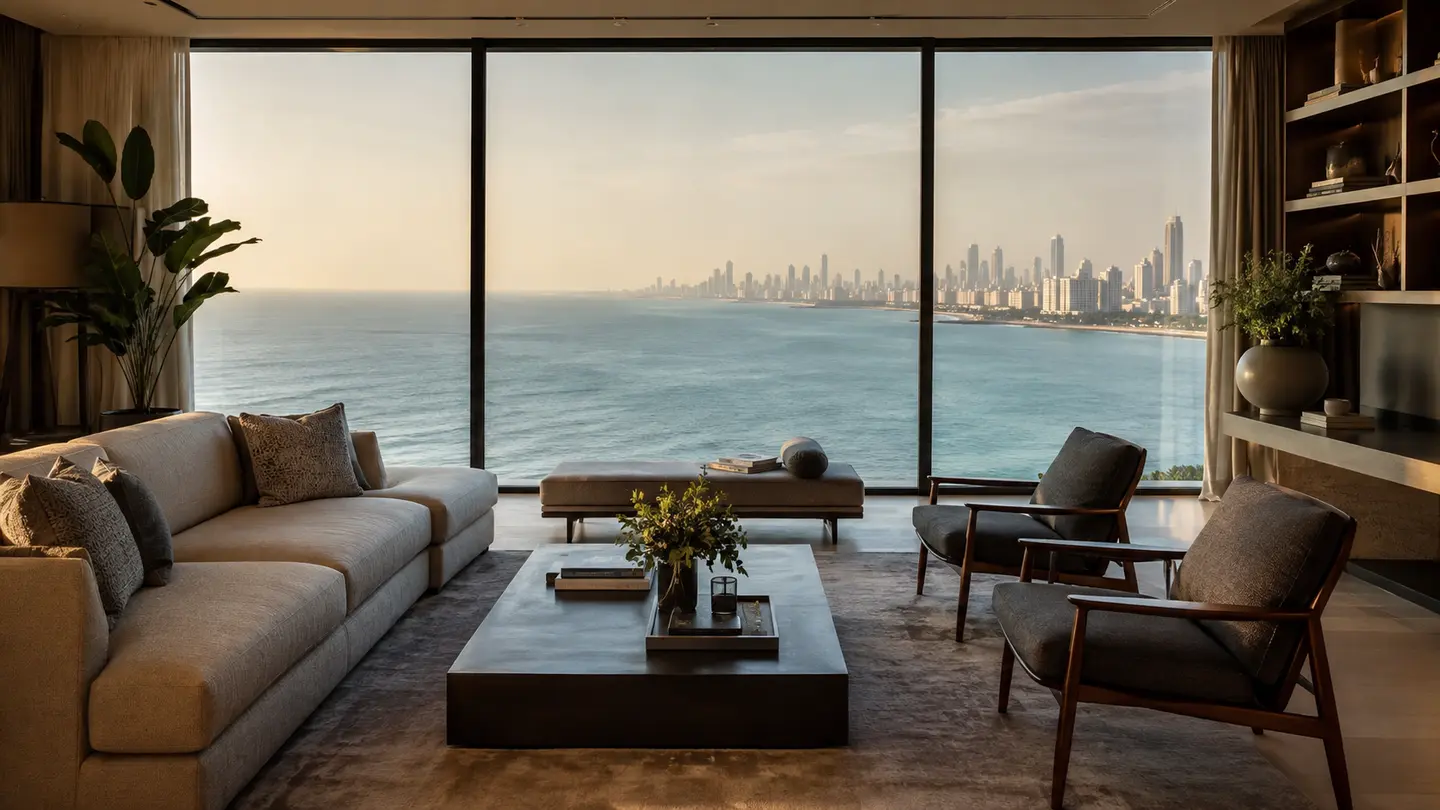
Curry Barker’s notable luxury item
A reported property or major asset offers a tangible glimpse of the wealth behind the public estimate.
His balance sheet reads as cash and contracts, not holdings. Under our model the money arrived across 2025 and
2026, taxed as personal service income with representation off the top: an agency at ten per cent, a
manager and a lawyer behind it. That leaves a retained figure under a million on the basis we publish.
Curry Barker’s estimated net worth
Public estimates vary because private contracts, investments, taxes and liabilities are not fully disclosed.
How this estimate is calculated
The basis we publish on. We publish the ten per cent participation case, and ten per cent is an illustrative
assumption rather than an established entitlement: he wrote the screenplay and directed the picture,
the two credits a buyer’s participation would attach to, but we have seen no term of this deal and
rely on no benchmark for deals like it. The scenarios below show what other assumptions do to the
figure, and earned money stays apart from the modelled share throughout.
The base calculation. Both earned components are estimates too. A combined writer-director fee we put at
eight to twelve per cent of a $750,000 budget: $60,000 to $90,000, centrally $75,000. Five years of the channel at one to
two million subscribers and about $3,000 a month — $180,000 over sixty months, split two ways
— gives $75,000 to $110,000, centrally $90,000. Earned gross is $135,000 to $200,000, centrally
$165,000. Representation at fifteen per cent and tax of about forty per cent on what remains keep a
little over half: $69,000 to $102,000, centrally $84,000. Call the earned range $70,000 to
$100,000.
The participation scenarios, and the one we publish on. The price is reported
at $15 million by Deadline; his cut varies. A flat bonus rather than points, and take $500,000 for it, adds $255,000 after representation and
tax, for roughly $340,000 all in. Ten per cent is
$1,500,000 gross, adds $765,000, and gives roughly $850,000. Fifteen per cent is
$2,250,000 gross, adds $1,147,000, and gives roughly $1.2 million.
So the earned side gives $70,000 to $100,000, and the ten per cent share adds $765,000, for
$849,000 — $850,000 on our step for figures between $100,000 and $999,999.
The scenarios span $340,000 to $1.2 million, and what we publish is the ten per cent
case inside that span rather than the span’s midpoint: a flat bonus would put him near $340,000,
fifteen per cent near $1.2 million. A trade report on the Focus purchase would settle it.
Confidence: Indicative — it rests on a modelled ten per cent share of the reported $15
million Focus purchase, on top of a writer-director-editor fee sized at a tenth of a reported
$750,000 budget and his half of the channel. That participation rate is assumed rather than reported:
a flat bonus instead would mean about $340,000, fifteen per cent about $1.2 million.
His public image is the amateur’s route taken seriously. In the pay discussion that followed the
film’s success he said he had “nothing but respect for the art department” and hoped other crew would
see the openings that had opened to him.
He has otherwise used the platform to point at collaborators, naming his cinematographer and
composer in interviews; on the giving side, that advocacy is what stands on the
record.
The one episode of real scrutiny was about money, and not his. In June 2026 Sally Choi, the
film’s art director, posted that she had been paid $300 a day on Obsession, about $6,741
after tax, on a picture then closing in on $300 million, adding that she had known the rate in advance. LADbible reported the exchange and his answer.
His answer was that he had been the director, not a producer, with little say over pay, and that
it is typical of the business that “the only people who [directly] benefit from its financial success
are the people who took on some sort of risk”. The reporting bears this out: the film was
financed outside him and sold by its producers.