 How Much Are They Worth?
Celebrity fortunes, explained
How Much Are They Worth?
Celebrity fortunes, explained









How did David Fincher build this fortune?
The answer unfolds through the career, earnings, deals and assets behind the headline estimate.
Before the fame
The background and early turning points that shaped David Fincher’s route to prominence.
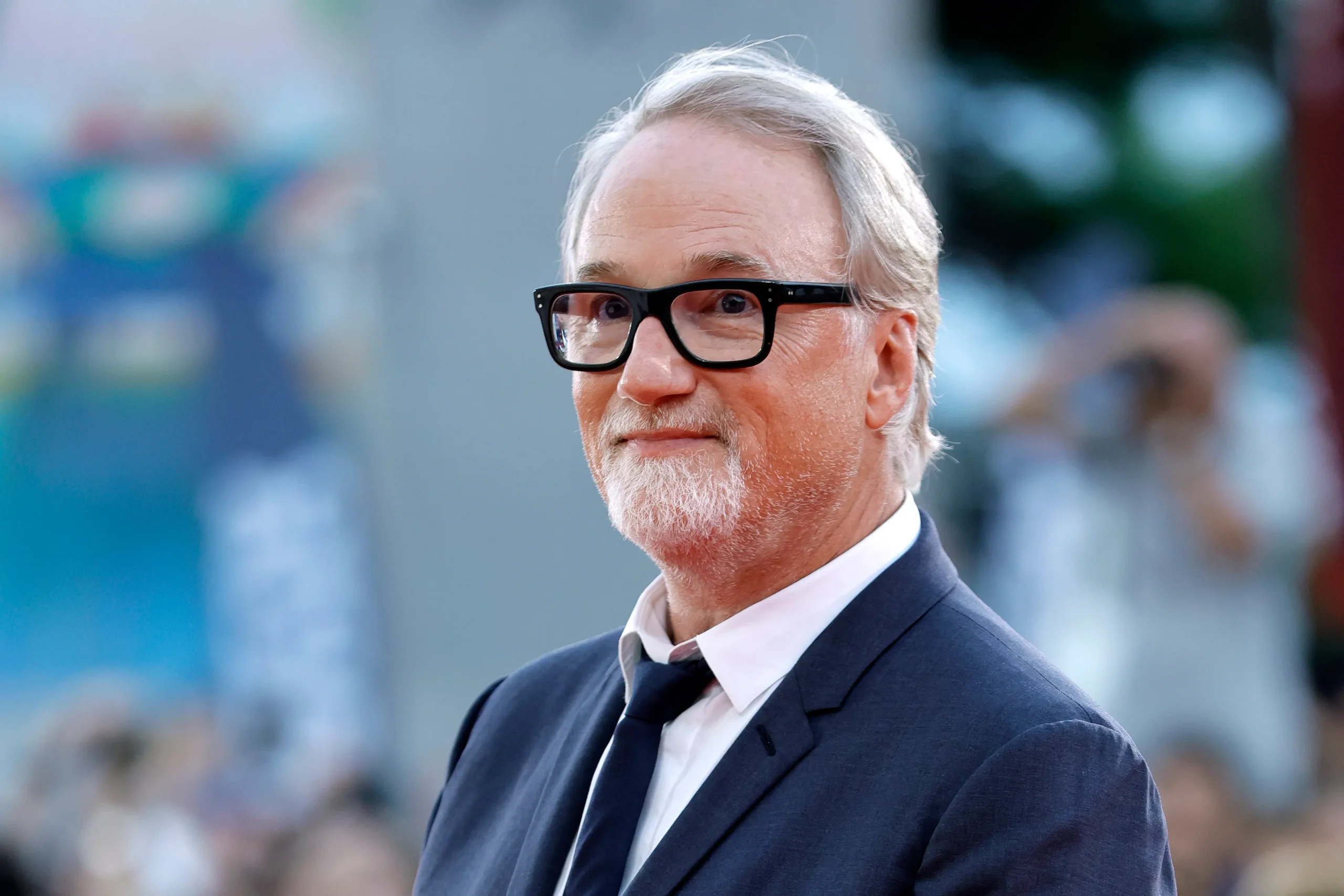
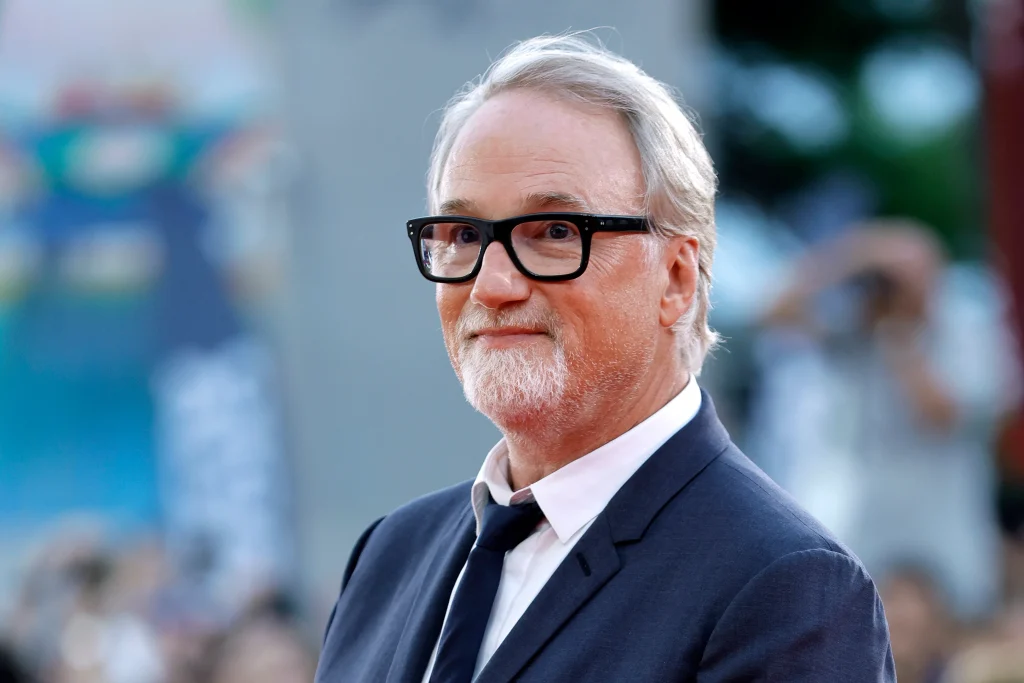
David Fincher was born on August 28, 1962, in Denver, Colorado, and grew up in San Anselmo, California, in Marin County, not far from George Lucas’s Skywalker Ranch, according to Wikipedia’s biography of Fincher. His father, Jack Fincher, was a screenwriter and a reporter for Life magazine, and his mother, Claire Mae, worked as a mental health nurse; that household put Fincher around storytelling and journalism early, and his father later wrote the screenplay for “Mank,” the 2020 film about screenwriter Herman Mankiewicz that Fincher made after Jack’s death. Fincher has said he became fascinated with filmmaking at age eight after watching a television documentary about “Butch Cassidy and the Sundance Kid,” and as a teenager in Ashland, Oregon, he worked as a movie theater projectionist and production assistant rather than pursuing a film-school route. He married producer Ceán Chaffin in 1996; she has produced nearly every film he has directed since. He was previously married to model Donya Fiorentino, with whom he has a daughter. None of this period generated meaningful income, and HMW treats Fincher’s finances as starting once he entered paid production work.
At nineteen, Fincher went to work at Industrial Light and Magic, where he served as an assistant cameraman on “Return of the Jedi” (1983) and “Indiana Jones and the Temple of Doom” (1984), according to Wikipedia’s account of his early career. He left ILM to direct television commercials and music videos, co-founding the production company Propaganda Films in 1986. Over the following years he directed commercials for brands including Levi’s, Nike, Pepsi, Coca-Cola, Revlon and Chanel, work he later said he “loathed” despite it being commercially lucrative. He found more creative satisfaction directing music videos, including Madonna’s “Vogue” and “Express Yourself,” both of which won him the MTV Video Music Award for Best Direction, and he later won a Grammy Award for Best Music Video for the Rolling Stones’ “Love Is Strong” in 1995. His feature debut, “Alien 3” (1992), was a famously difficult production marked by studio interference and a script rewritten during shooting; the film had a mixed reception and Fincher has since disowned it, a bruising start that nearly drove him away from feature filmmaking altogether.
The breakthrough years
The career decisions and defining moments that turned recognition into sustained earning power.
Fincher returned to features with “Se7en” (1995), a serial-killer thriller starring Brad Pitt and Morgan Freeman that grossed roughly $327 million worldwide and reestablished him as a bankable commercial filmmaker rather than a music-video director who had one bad experience in Hollywood. That success gave him the leverage to make “Fight Club” (1999), which underperformed on its initial theatrical release but grossed close to $101 million worldwide and went on to become one of the most successful home-video and cultural afterlives of any film of its era, a trajectory summarized in Wikipedia’s filmography overview. That pattern, a commercial hit followed by a film whose value grew over years rather than its opening weekend, set the template for the rest of his career: rising director fees for films that opened well, plus longer-tail home-video, television and streaming income once a title found its audience.

What the work can earn
Reported pay, contracts, royalties and performance income reveal how the fortune was funded.
Fincher’s first two Academy Award nominations for Best Director came for “The Curious Case of Benjamin Button” (2008), which received 13 Oscar nominations overall, and “The Social Network” (2010), for which he also won the Golden Globe Award for Best Director and the BAFTA Award for Best Direction, according to GoldDerby’s retrospective of his Oscar nominations. He received a third Best Director nomination for “Mank” (2020), which was nominated for 10 Academy Awards and won two. “Gone Girl” (2014), his last theatrical release before moving the bulk of his filmmaking to Netflix, grossed roughly $369 million worldwide and remains his highest-grossing directorial credit outside franchise ensemble work. Across his film career, Fincher’s directing credits have grossed a combined total well over $2 billion worldwide, a track record that underpins both his director fees and his leverage to negotiate the kind of overall deal he later signed with Netflix.
Fincher’s move into television built a different kind of recognition. Directing the pilot episode of Netflix’s “House of Cards” in 2013, he won the Primetime Emmy Award for Outstanding Directing for a Drama Series, becoming the first person to win a major Emmy for work made for an online streaming service, a milestone covered at the time by NPR. He was nominated again for directing the second-season finale of “Mindhunter” in 2018, with awards commentators noting that his Netflix work had made him a recurring contender in a category usually dominated by traditional network and cable dramas, according to GoldDerby’s coverage of that nomination race. That crossover from film auteur to television awards contender helped cement Fincher’s public profile as one of the defining directors of the streaming era, distinct from his earlier reputation as a director of dark theatrical thrillers.

The business beyond the main career
Endorsements, ownership interests and investments can keep compounding long after the initial breakthrough.
Fincher has not built a personal brand-endorsement business the way some entertainment figures of his fame have; there is no record in entertainment or business press of him serving as a spokesperson or brand ambassador in his own name. His closest equivalent is the commercial-directing work from earlier in his career, when Propaganda Films-era campaigns for Levi’s, Nike, Pepsi, Coca-Cola, Revlon and Chanel paid him as a hired director rather than as an endorsed personality, and by his own account he took that work mainly for the money rather than out of creative interest, per Wikipedia’s account of his commercial work. HMW treats that commercial-directing income as part of his early-career earnings rather than as an ongoing endorsement revenue stream, since he stopped directing commercials once his feature and television career took over.
Fincher’s most significant business relationship is his overall deal with Netflix. In November 2020, he signed a four-year, nine-figure agreement reported to be worth roughly $100 million covering new film and television projects exclusively for the platform, according to Variety’s report on the deal. In January 2024, he extended that arrangement for three additional years, pushing it through 2027, telling press that Netflix allowed him to “take the same type of risks” he had asked collaborators to take earlier in his career, according to World of Reel’s coverage of the renewal. Under that relationship and its predecessor arrangements, he has directed or executive produced “House of Cards,” “Mindhunter,” the anthology series “Love, Death & Robots,” the documentary series “Voir,” “Mank” and “The Killer” (2023). Unlike some director-peers, Fincher has not built a large outside media company; his business income is concentrated almost entirely in director, executive-producer and overall-deal fees rather than a diversified slate of outside ventures.
Notable luxury item
A reported property or major asset offers a tangible glimpse of the wealth behind the public estimate.
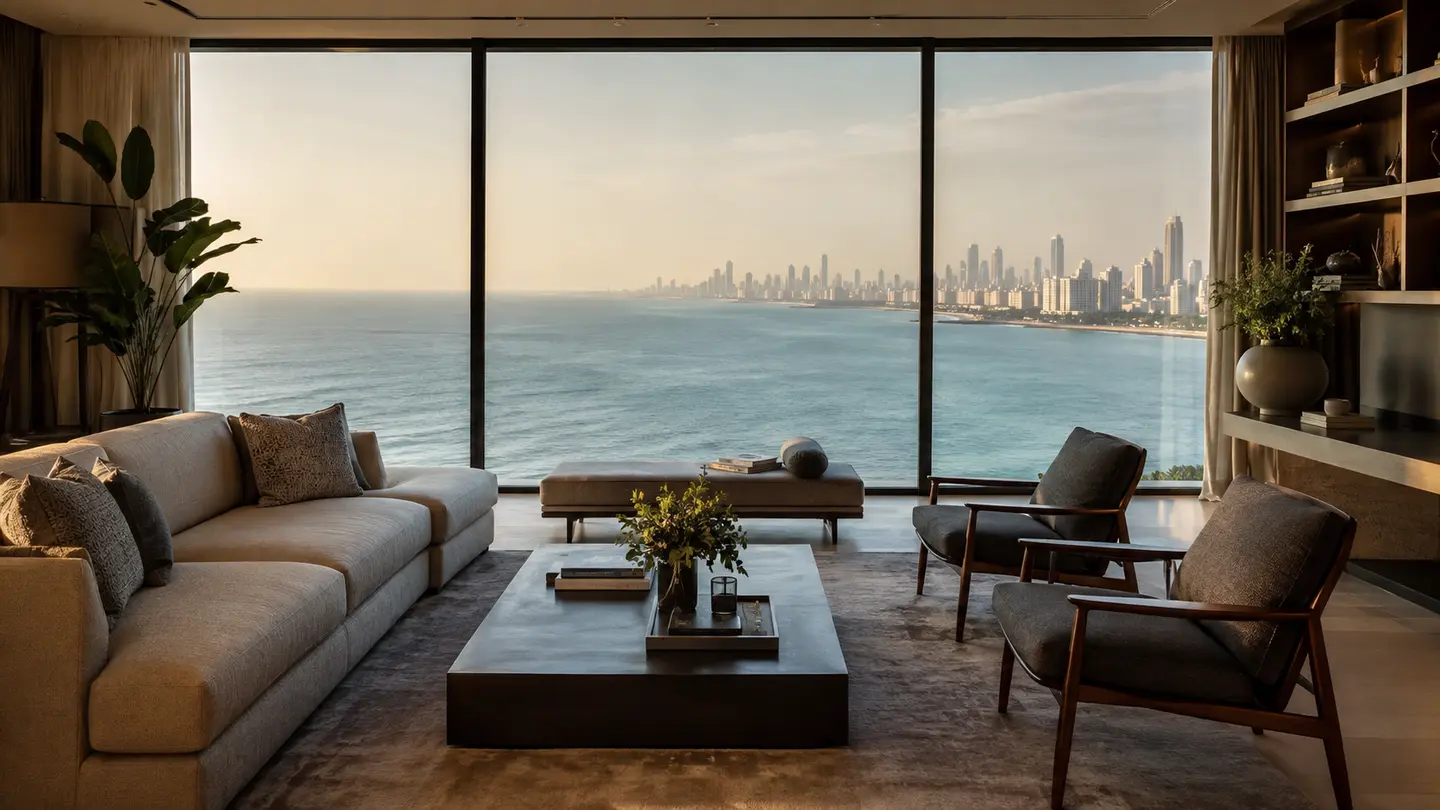
Fincher paid roughly $5.65 million for a three-bedroom, three-bathroom apartment at 7 Harrison Street in Manhattan’s Tribeca neighborhood in 2015, a building designed by architect Steven Harris that also counts filmmaker Steven Soderbergh among its residents, according to Realty Today’s report on the purchase and 6sqft’s coverage of the same building. On the West Coast, Fincher and Ceán Chaffin have owned a large estate inside the gated Laughlin Park enclave of Los Feliz, Los Angeles, since 1996, when they purchased it for roughly $3 million, and they added a second nearby Los Feliz property in April 2021 for about $2.8 million, according to Celebrity Net Worth’s secondary account of his real estate holdings. Combined, his known real estate represents a meaningful, largely illiquid share of his estimated net worth, separate from his ongoing directing and producing income.
David Fincher’s estimated net worth
Public estimates vary because private contracts, investments, taxes and liabilities are not fully disclosed.
How this estimate is calculated
HMW builds this estimate from Fincher’s directing and executive-producing income since “Se7en” rather than adopting a single third-party number outright. Commercial and music-video work from the Propaganda Films years is modeled as modest, hired-director income rather than backend-bearing work. Theatrical director fees rise through “Se7en,” “Fight Club,” “Zodiac,” “The Curious Case of Benjamin Button,” “The Social Network” and “Gone Girl,” with “The Social Network” and “Benjamin Button” also carrying awards-season value that supports higher subsequent quotes. Television income is modeled around his Emmy-winning “House of Cards” pilot fee, multiple seasons of “Mindhunter” as director and executive producer, and “Love, Death & Robots” as executive producer. The clearest documented figure is the reported nine-figure, four-year Netflix overall deal signed in November 2020 and extended in January 2024 through 2027, covered by Variety and World of Reel; HMW treats that figure as covering both personal compensation and production overhead rather than counting the full headline amount as take-home pay. Known real estate, the Los Feliz estate and second property plus the Tribeca apartment, is added as an illiquid asset floor. Celebrity Net Worth publishes a standing estimate of $100 million for Fincher, a secondary aggregator figure rather than a primary financial record; HMW treats that number as a directional anchor and widens it into a range that also reflects the un-itemized portion of the Netflix deal, ongoing executive-producer fees, and the absence of any large outside business beyond his filmmaking and television work.
This range reflects three decades of rising theatrical director fees, a landmark nine-figure Netflix overall deal renewed through 2027, Emmy-winning and Emmy-nominated television work, and a small but valuable real estate portfolio in Los Angeles and New York, offset by the reality that a meaningful share of his reported Netflix deal value covers production costs rather than personal income, and that his early commercial and music-video work, though prolific, paid far below the rate he commands today.
Fincher keeps a notably low public profile off the film set. He gives comparatively few interviews relative to his fame, is not a regular presence at galas or industry fundraisers, and no dedicated Fincher family foundation or headline charitable donation is documented in mainstream entertainment or business coverage. What public image he has is built almost entirely around his work and his reputation for meticulous craft, reinforced by long-form profiles such as The Ringer’s 2020 feature on his directing style, rather than on public advocacy, political activism or visible philanthropy. That is consistent with a director whose public identity is shaped almost entirely by his filmography rather than by a separate charitable or activist profile.
Fincher has no personal scandal on the public record; the scrutiny he attracts is almost entirely about his conduct as a director rather than his private life. He is widely described in profiles, including The Ringer’s 2020 feature, as an exacting, sometimes bullying presence on set who has driven actors to visible frustration: Jake Gyllenhaal reportedly grew frustrated during the making of “Zodiac,” and Robert Downey Jr. joked on the same production about wanting to harm him. Fincher’s requirement of dozens, sometimes over a hundred, takes per scene, reportedly around 200 for one setup with Amanda Seyfried on “Mank,” has been reported and explained by the director himself in interviews, including one covered by Far Out Magazine, in which he said the repetition was aimed at removing self-conscious performance rather than chasing unattainable perfection. Collaborators quoted in the same reporting note that Fincher reserves his harshest criticism for studio executives and senior crew rather than junior staff, and actors who have worked with him repeatedly describe the process as demanding but ultimately a valuable education rather than abusive.