 How Much Are They Worth?
Celebrity fortunes, explained
How Much Are They Worth?
Celebrity fortunes, explained
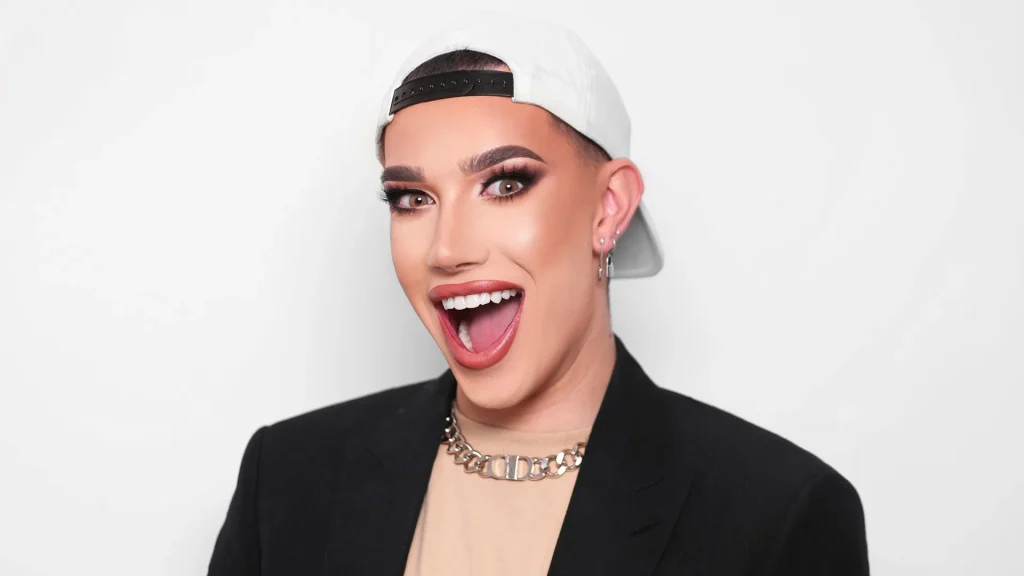
How did James Charles build this fortune?
The answer unfolds through the career, earnings, deals and assets behind the headline estimate.
Before the fame
The background and early turning points that shaped James Charles’s route to prominence.
James Charles Dickinson was born on May 23, 1999, in Bethlehem, New York, to Skip and Christine Dickinson. He grew up alongside a younger brother, Ian Jeffrey, who later became a model, and attended Bethlehem Central High School, graduating in 2017. Charles has said he came out as gay to his parents at age 12. According to his Wikipedia biography, he first learned makeup as a teenager after a friend asked him to do her makeup for a school dance, and spent time working locally as a freelance makeup artist years before he had any following online.
Charles started a YouTube channel focused on makeup tutorials in December 2015, slowly building an audience through consistent uploads and makeup photography on Instagram. His profile changed almost overnight in September 2016, when a tweet of him retaking his senior class photo, done up with a ring light and full makeup, went viral and was picked up by national entertainment outlets, according to Good Morning America’s profile of his rise. The image turned him into one of the most talked-about new faces in beauty just as major cosmetics brands were starting to look for male creators to work with.
The breakthrough years
The career decisions and defining moments that turned recognition into sustained earning power.
That viral moment led directly to Charles’ defining early milestone: in October 2016, at age 17, CoverGirl named him the brand’s first male ambassador, featuring him in campaign material alongside longtime CoverGirl face Katy Perry and debuting him in advertisements for the brand’s So Lashy mascara, as Time reported at the time. The appointment made international news as a breakthrough moment for gender norms in the beauty industry and instantly established Charles as more than a YouTube personality.

What the work can earn
Reported pay, contracts, royalties and performance income reveal how the fortune was funded.
Charles followed the CoverGirl breakthrough with a run of industry recognition, winning the Shorty Award for Breakout YouTuber in 2017 and the Streamy Award for Beauty in 2018, then adding the Teen Choice Award for Choice Fashion/Beauty Web Star that same year, according to his Wikipedia page. He went on to win the People’s Choice Award for Beauty Influencer in both 2018 and 2020, and picked up a second Streamy Award, Show of the Year, in 2020 for hosting and producing the YouTube Originals series “Instant Influencer.”
Charles’ CoverGirl debut generated a wave of mainstream press coverage well beyond the beauty world, with outlets including Good Morning America and ABC News running features on the previously unknown makeup artist turned campaign face. Coverage of the announcement, paired with the campaign alongside Katy Perry, was described at the time as “met with significant praise on social media,” according to ABC News. That crossover recognition carried Charles from beauty YouTube into general entertainment media, a jump few creators whose audiences were built entirely on tutorial content had made at that point.
The business beyond the main career
Endorsements, ownership interests and investments can keep compounding long after the initial breakthrough.
CoverGirl remained Charles’ most prominent endorsement relationship for several years after his 2016 debut, featuring him across mascara and foundation campaigns alongside Katy Perry, according to Good Morning America’s reporting on the partnership. That deal, combined with the Morphe collaboration, made Charles one of the highest-earning beauty creators of the late 2010s, though several sponsorship relationships, including his Morphe partnership, ended in 2021 in the aftermath of the controversies detailed below.
In November 2018, Charles launched a broader partnership with Morphe Cosmetics that included the 39-shade James Charles Artistry Palette, a companion Sister Collection of makeup, and a Sisters Apparel clothing line. The eyeshadow palette became one of Morphe’s best-selling products and sold out repeatedly through 2019, remaining the brand’s top seller even after multiple restocks, according to WWD. Charles built on the Morphe deal with a 2020 hosting and producing credit on the YouTube Originals competition series “Instant Influencer,” expanding his business beyond tutorial videos into a wider product and media portfolio.

Notable luxury item
A reported property or major asset offers a tangible glimpse of the wealth behind the public estimate.
In February 2020, Charles paid $7 million in an off-market deal for a newly built, roughly 9,800-square-foot home in Encino, Los Angeles, after previously renting a smaller property in the same neighborhood for about $15,000 a month, according to a Variety “Dirt” real estate report carried by Yahoo Entertainment. The six-bedroom, ten-bathroom house includes a home theater, wine cellar, mirrored gym, negative-edge pool, and a half-court sports court, and marked Charles’ first major real estate purchase.
James Charles’s estimated net worth
Public estimates vary because private contracts, investments, taxes and liabilities are not fully disclosed.
How this estimate is calculated
Charles has never published an itemized breakdown of his finances, so any figure is an estimate rather than a confirmed total. This estimate draws on reporting that put his earnings at roughly $10 million in his peak year of 2020, split between YouTube ad revenue and income from the Morphe partnership and other endorsement deals, according to Wealthy Gorilla, weighed against the sharp disruption to those income streams later that year and into 2021, when YouTube demonetization and the end of the Morphe deal cut off two of his largest revenue sources. Because reported income has varied significantly between his 2018 to 2020 peak and the years since, this estimate is cross-checked against multiple celebrity finance trackers, including Celebrity Net Worth (secondary source), rather than pulled from a single outlet.
Much of Charles’ public identity has centered on visibility for LGBTQ people and men in an industry historically built around women, and he has been open about coming out to his parents at age 12 and about using his platform to normalize men wearing makeup at a mainstream level rarely achieved before his CoverGirl deal, according to his Wikipedia biography. He refers to his fan base as his “sisters” and built a closely engaged, community-style relationship with his audience during his peak years, though his public image since 2019 has been shaped as much by the controversies below as by his industry firsts.
Charles’ highest-profile controversy began in May 2019, when fellow YouTuber Tati Westbrook posted a video titled “Bye Sister” accusing him of disloyalty over his promotion of a vitamin brand that competed with one of her own sponsors. Charles lost more than a million subscribers within 24 hours and roughly 3 million over the following weekend, a drop NBC News described at the time as the fastest subscriber loss in YouTube history. Charles regained some support after posting a rebuttal video, and Westbrook said in 2020 that other creators had influenced her account of events. A more serious controversy followed in early 2021, when several teenagers publicly accused Charles of sending them sexually explicit messages; YouTube removed him from its Partner Program and temporarily demonetized his channel over the allegations, according to ABC News. Charles posted a video titled “Holding Myself Accountable” in April 2021 acknowledging he had exchanged sexually explicit messages with two people under 18 who he said had told him they were 18, calling his own behavior “reckless” while continuing to deny allegations of grooming, as NBC News reported. Morphe ended its business relationship with Charles in the aftermath.