 How Much Are They Worth?
Celebrity fortunes, explained
How Much Are They Worth?
Celebrity fortunes, explained





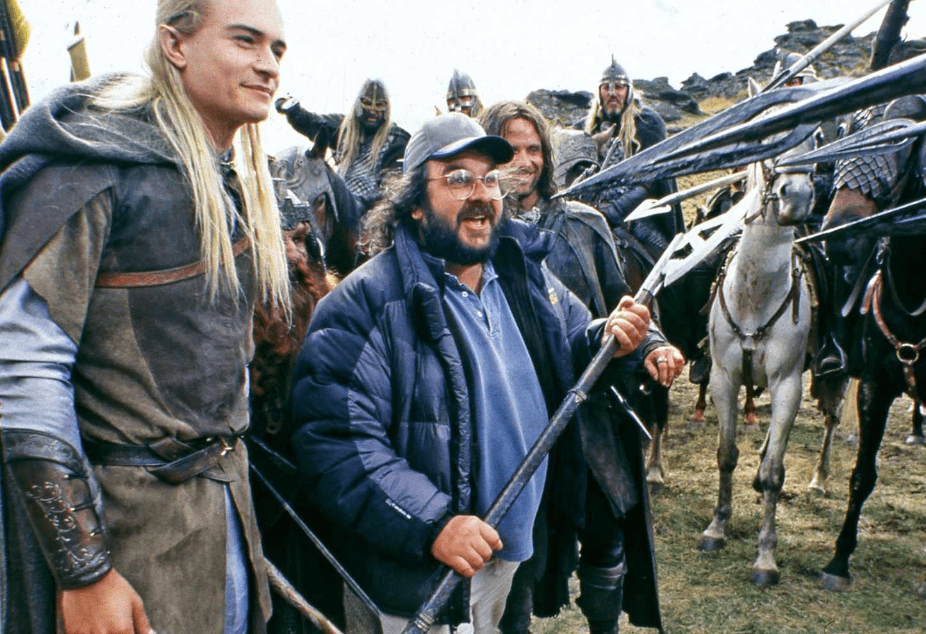
How did Peter Jackson build this fortune?
The answer unfolds through the career, earnings, deals and assets behind the headline estimate.
Before the fame
The background and early turning points that shaped Peter Jackson’s route to prominence.
Peter Jackson was born on October 31, 1961, in Wellington, New Zealand, and raised in the coastal suburb of Pukerua Bay, the only child of William “Bill” Jackson, a wages clerk, and Joan Jackson (nee Ruck), both English immigrants, according to his Wikipedia biography. An early fascination with the stop-motion effects in the 1933 film King Kong and the television series Thunderbirds led him to attempt his own amateur remake of King Kong at around age nine using a Super 8 camera his parents had given him.
Jackson left school at 16 to work as a photo engraver at the Wellington newspaper The Evening Post, spending seven years saving his wages toward film equipment while shooting amateur shorts on weekends, per Wikipedia. That patient, self-funded apprenticeship shaped the do-it-yourself production style he carried into his first features.
Jackson founded his production company WingNut Films in 1987 and spent roughly four years shooting his splatter-comedy debut Bad Taste on weekends while still working his day job, funding the film largely himself before it premiered at the Cannes Film Festival, according to Wikipedia. He followed with the puppet feature Meet the Feebles (1989), co-written with Stephen Sinclair and his partner Fran Walsh, and the zombie comedy Braindead, released internationally as Dead Alive (1992), which won Best Director and Best Screenplay at the New Zealand Film and Television Awards.
In 1993 Jackson joined the effects house then known as RT Effects as a partner alongside Richard Taylor, Tania Rodger and producer Jamie Selkirk, and the company was renamed Weta Workshop, giving Jackson an in-house effects studio for his increasingly ambitious productions, according to Wikipedia’s history of Weta Workshop. His 1994 drama Heavenly Creatures, based on a real 1954 New Zealand murder case, brought him his first Academy Award nomination, for Best Original Screenplay shared with Fran Walsh, and marked his breakout as a serious dramatic filmmaker rather than a genre specialist.
The breakthrough years
The career decisions and defining moments that turned recognition into sustained earning power.
Jackson’s first big-budget Hollywood feature, the supernatural comedy The Frighteners (1996), underperformed at the box office, but two years earlier producer Saul Zaentz had already begun steering him toward the film rights to J.R.R. Tolkien’s The Lord of the Rings, a deal finalized in 1997, according to Wikipedia. Jackson initially planned two films with Miramax before pivoting the project to New Line Cinema, which agreed to finance all three books as a single trilogy shot back to back, an unprecedented commitment at the time.
Principal photography ran from October 1999 to December 2000, entirely on location in New Zealand, on a combined budget of roughly $281 million for all three films. The Fellowship of the Ring (2001) opened to critical acclaim and Academy Award nominations for Best Picture and Best Director, though the moment was overshadowed for Jackson personally: his mother, Joan, died just three days before the film’s release.
What the work can earn
Reported pay, contracts, royalties and performance income reveal how the fortune was funded.
The trilogy’s final installment, The Return of the King (2003), won all eleven Academy Awards for which it was nominated, including Best Picture and Best Director, tying the record for most Oscars won by a single film and becoming the first fantasy film to win Best Picture, according to Wikipedia. Across the three films, The Lord of the Rings grossed approximately $2.96 billion worldwide, a return of more than ten times its production budget.
Jackson returned to his childhood obsession with King Kong (2005), a $207 million production, the most expensive film made up to that point, that grossed $556.9 million worldwide and won three Academy Awards for its sound and visual effects, per Wikipedia’s account of the film. He then directed The Hobbit trilogy (2012-2014), adapted from Tolkien’s earlier novel and expanded from two planned films into three, which together grossed $2.938 billion worldwide on a combined budget of roughly $700 million to $745 million, according to Wikipedia’s page on the Hobbit film series, giving Jackson two of the highest-grossing film franchises in cinema history.
New Zealand made Jackson a Companion of the New Zealand Order of Merit in 2002 and knighted him as a Knight Companion of the New Zealand Order of Merit in April 2010, according to Wikipedia. He received a star on the Hollywood Walk of Fame in December 2014, and in May 2026 the Cannes Film Festival awarded him an Honorary Palme d’Or “in recognition of his lifetime contribution to cinema,” per Wikipedia’s account of the ceremony.
Beyond his eleven Oscars for The Return of the King, Jackson’s body of work has collected three BAFTA Awards, a Golden Globe, and two Primetime Emmy Awards for directing and producing the Beatles documentary Get Back (2021), and industry figures cited on Wikipedia rank him among the five highest-grossing film directors in history, with films that have taken in a combined $6.5 billion worldwide.

The business beyond the main career
Endorsements, ownership interests and investments can keep compounding long after the initial breakthrough.
Jackson has no public record of the paid consumer endorsement deals common among entertainers in music or sport; no reporting turns up a car, watch, fashion or beverage campaign carrying his name or image. His closest equivalent has been technology advocacy rather than paid sponsorship: he shot The Hobbit trilogy at 48 frames per second, double the industry standard, and produced the short film Crossing the Line specifically to test the RED digital cinema camera during its early development, pushing exhibitors and manufacturers toward formats his own productions needed rather than promoting a third party’s product for a fee.
That pattern mirrors the technology-demonstration role several major directors play without entering into disclosed commercial sponsorship arrangements, and no reporting indicates Jackson has ever been paid to endorse an outside consumer brand.
Jackson’s business interests run through two effects companies that share a Wellington heritage but not an owner. He co-founded Weta Workshop in 1993 alongside Richard Taylor, Tania Rodger and Jamie Selkirk to build the physical props, costumes and creatures for his films, but he resigned as a director on December 31, 2015, and, per Wikipedia’s history of the company, “is no longer an owner of Weta Workshop,” which today remains privately held by Taylor and Rodger.
The separate business, Weta Digital, the trilogy’s digital-effects house founded the same year, stayed under Jackson’s control, and in November 2021 he sold its visual-effects tools division and roughly 275 engineers to Unity Software for $1.625 billion in cash and stock, according to Variety’s coverage of the deal. Unity later abandoned its push into Hollywood production tools, and in 2023 it handed the Weta Digital name and technology back to Jackson at no additional cost, letting him fold the software team back into his own visual-effects house, WetaFX, according to TheOneRing.net’s report on the reversal, a rare instance of a seller effectively keeping both the sale proceeds and the underlying business.
Notable luxury item
A reported property or major asset offers a tangible glimpse of the wealth behind the public estimate.
Jackson’s most publicly visible assets are not houses but aircraft. He owns a fleet of more than 40 airworthy World War I era warbirds based largely at Hood Aerodrome near Masterton, and chairs the 14-18 Aviation Heritage Trust that maintains them, according to Wikipedia. His personal collection forms the centerpiece of the Knights of the Sky exhibition at the Omaka Aviation Heritage Centre near Blenheim, which opened in 2006 using dioramas built by WingNut Films and mannequins by Weta Workshop, according to Omaka’s own description of the exhibit, which credits the display to “the personal collection of film director Sir Peter Jackson.”
Jackson also owns a Gulfstream G650 private jet, registered ZK-KFB, acquired in 2014 to replace an earlier Gulfstream G550, which was volunteered for the search for missing flight MH370 that same year, per Wikipedia. His broader New Zealand property holdings were estimated at NZ$150 million as of 2018, and he has separately bought Wellington heritage buildings to preserve them, including a former Seatoun church purchased for roughly $1.06 million and the building housing BATS Theatre on Kent Terrace, acquired with Fran Walsh in 2011 to secure the venue’s future.
Peter Jackson’s estimated net worth
Public estimates vary because private contracts, investments, taxes and liabilities are not fully disclosed.
How this estimate is calculated
The core of Jackson’s fortune traces to a single 2021 transaction: the sale of Weta Digital’s visual-effects tools division and engineering team to Unity Software for $1.625 billion in cash and stock, the deal that pushed him past billionaire status, according to Forbes’ profile of him. Historical filmmaking income adds a smaller but meaningful layer underneath that figure. Celebrity Net Worth, used here strictly as a secondary source, estimates Jackson earned around $180 million in fees and profit participation across the original Lord of the Rings trilogy, plus a King Kong deal it reports at $20 million against 20 percent of the box office, income that predates and sits separate from the Weta transaction.
Forbes’ real-time tracker weighs the cash and Unity stock Jackson received in 2021, his retained ownership of WetaFX after Unity’s 2023 exit from film-production tools, and his roughly NZ$150 million New Zealand property portfolio, alongside an extensive but hard-to-value aircraft collection. Because WetaFX is privately held and Jackson’s exact current stake in it is not fully disclosed, outside estimates vary by several hundred million dollars depending on how each tracker values the company; Celebrity Net Worth’s figure sits meaningfully below Forbes’, reflecting that valuation uncertainty rather than any factual disagreement about the underlying Unity deal.
This figure is grounded in Forbes’ real-time billionaire tracker, which lists Jackson’s source of wealth as movies and digital effects and places his fortune at $2 billion. Other trackers place the figure somewhat lower: Celebrity Net Worth, used here strictly as a secondary reference, estimates his net worth at $1.5 billion, while New Zealand’s National Business Review Rich List has in recent years placed Jackson and his partner Fran Walsh jointly around $2.6 billion. The spread across these estimates mainly reflects differing treatment of Jackson’s private WetaFX holding and property assets rather than any dispute about the scale of the 2021 Weta Digital sale itself.
Jackson donated NZ$500,000 to embryonic stem cell research in New Zealand in 2006 and has periodically funded heritage and arts causes closer to home, including his purchase of a threatened Seatoun church and his rescue of the BATS Theatre building, according to Wikipedia. Internationally, he contributed to the defense fund for the West Memphis Three, and in 2008 donated a multimedia display, Over the Front, along with replica World War I aircraft, to the Australian War Memorial.
Despite his fortune, Jackson has cultivated a famously unpretentious public image built partly around his habit of appearing barefoot in public, telling interviewers he simply finds shoes uncomfortable, a trait Wikipedia credits with helping “establish New Zealand’s global barefoot reputation.” His 2018 documentary They Shall Not Grow Old, which restored and colorized First World War archival footage for the conflict’s centenary, and his work directing Get Back, drew widespread praise for using his commercial success to fund painstaking archival preservation projects that would otherwise have gone unfunded.
Jackson’s most consequential dispute was a February 2005 lawsuit against New Line Cinema, in which he alleged the studio had not paid his full contractual share of gross receipts from The Fellowship of the Ring, particularly from merchandising and licensing revenue, and had refused to submit its books to an independent audit; the suit also alleged New Line gave some of its own affiliates favorable treatment in licensing deals, according to Rotten Tomatoes’ account of the filing. New Line co-chairman Robert Shaye responded publicly that Jackson would “never make any movie with New Line Cinema again,” and in November 2006 Jackson confirmed he would not direct The Hobbit while the litigation remained unresolved, per Wikipedia. The case settled on December 18, 2007, clearing the way for Jackson to serve as executive producer, and eventually director, of The Hobbit films.
Jackson drew separate criticism in New Zealand in 2019 after he contributed roughly NZ$30,000 to support Wellington city councillor Andy Foster’s mayoral campaign against incumbent Justin Lester, a race Foster won by just 62 votes after both men opposed a contested waterfront redevelopment at Shelly Bay, according to Wikipedia’s account of the election. Critics questioned the influence of a single wealthy resident’s donation on a closely contested local race, though no wrongdoing was alleged against Jackson.