 How Much Are They Worth?
Celebrity fortunes, explained
How Much Are They Worth?
Celebrity fortunes, explained









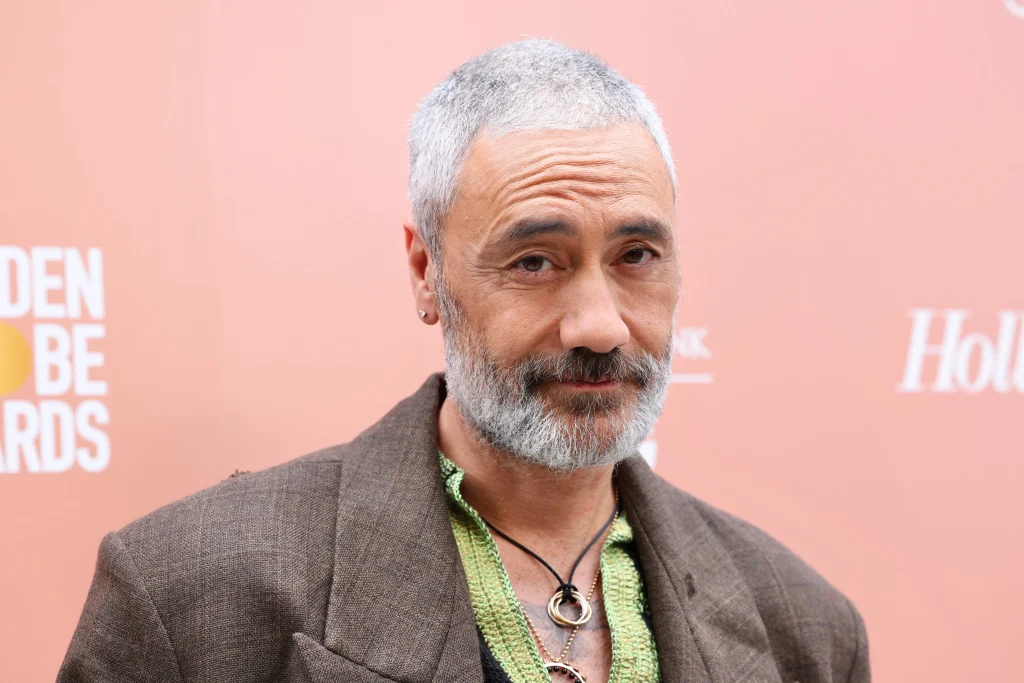
How did Taika Waititi build this fortune?
The answer unfolds through the career, earnings, deals and assets behind the headline estimate.
Before the fame
The background and early turning points that shaped Taika Waititi’s route to prominence.
Taika David Cohen was born on August 16, 1975, in Wellington, New Zealand. According to Wikipedia’s biography of Waititi, his father was of Māori and French Canadian descent, affiliated with the Te Whānau-a-Apanui iwi and working as an artist, while his mother, Robin Cohen, was a schoolteacher whose own grandfather was a Russian Jewish immigrant. Waititi has described himself as a “Polynesian Jew.” His parents separated when he was around five, and he was raised largely by his mother between Wellington’s Aro Valley and the small East Coast settlement of Raukokore. He attended Onslow College before studying theatre at Victoria University of Wellington, graduating with a Bachelor of Arts in 1997. That dual heritage and small-town New Zealand upbringing later became recurring material in his films, from “Boy” to “Jojo Rabbit.”
Waititi’s first public work was as a performer rather than a director. With Jemaine Clement, he formed the comedy duo The Humourbeasts and won the Billy T Award in 1999, and he appeared on screen in the film “Scarfies” the same year, according to a ScreenRant profile of his career. His pivot to directing came with the 2003 short film “Two Cars, One Night,” a low-budget black-and-white piece shot around a rural pub that earned him an Academy Award nomination for Best Live Action Short Film in 2005. That nomination, achieved without a studio or a feature credit to his name, is what allowed him to raise financing for his first feature. This was low-paid, self-directed work built on festival exposure rather than salary, and HMW does not treat it as a meaningful income period.
The breakthrough years
The career decisions and defining moments that turned recognition into sustained earning power.
Waititi’s feature debut, “Eagle vs Shark” (2007), was a small romantic comedy, but “Boy” (2010) became, at the time, the highest-grossing New Zealand-funded film ever released domestically. “What We Do in the Shadows” (2014), a vampire mockumentary co-written and co-directed with Clement, built his cult following further and later spun off into an FX television series he co-created. The real inflection point was “Hunt for the Wilderpeople” (2016), another New Zealand box office record-setter, which caught the attention of Marvel Studios. Waititi was hired to direct “Thor: Ragnarok” (2017), his first studio blockbuster, in which he also voiced the rock creature Korg. The film grossed roughly $854 million worldwide, according to Celebrity Net Worth’s profile of Waititi, instantly changing the scale of projects and fees available to him.

What the work can earn
Reported pay, contracts, royalties and performance income reveal how the fortune was funded.
Waititi wrote, directed and starred in “Jojo Rabbit” (2019), a satire in which he played an imaginary version of Adolf Hitler as seen through a young boy’s eyes. The film won the Academy Award for Best Adapted Screenplay at the 2020 ceremony, making Waititi, per Wikipedia’s account of the win, the first person of Māori descent to win an Oscar in a screenplay category. He also won a BAFTA for the same screenplay and a Grammy Award in 2021 for Best Compilation Soundtrack for Visual Media on the “Jojo Rabbit” soundtrack. On television, he co-created “Reservation Dogs” with Sterlin Harjo for FX on Hulu; Wikipedia’s entry on the series notes it was the first American series with an all-Native American writers’ room and directing slate, and it drew five Primetime Emmy nominations, a Golden Globe nomination and two Peabody Awards across its three seasons.
Waititi was named New Zealander of the Year in 2017 and was made an Officer of the New Zealand Order of Merit in 2020 for services to film, honors that reflect his standing at home as much as his Hollywood profile. In 2022 he was included on Time magazine’s list of the 100 most influential people in the world. His public presence has broadened beyond directing: he voiced the droid IG-11 and directed an episode of “The Mandalorian,” starred as Blackbeard in HBO Max’s “Our Flag Means Death,” and in 2025 appeared in a full-body duck costume as “Detective Lucky Duck” on “The Masked Singer,” where his unmasking surprised his wife, singer Rita Ora, who was a panelist that season, per Wikipedia’s biography. That willingness to send himself up on mainstream entertainment television has kept him visible well outside the film festival circuit that made his name.

The business beyond the main career
Endorsements, ownership interests and investments can keep compounding long after the initial breakthrough.
Advertising has become a significant and fairly transparent income stream for Waititi. He directed Coca-Cola’s 2020 Christmas advert through Wieden and Kennedy London, according to Campaign’s coverage of the ad, and he has since directed a Belvedere Vodka campaign starring the musician Future, per a summary of his endorsement work. His advertising output peaked around Super Bowl LX in February 2026, when he directed three separate commercials, an Xfinity spot reimagining “Jurassic Park” with original cast member Sam Neill, Pepsi’s “The Choice” (in which he also appeared, taking aim at Coca-Cola, the brand he had previously worked for), and a sequel to his 2025 Lay’s ad, making him the most-booked director of the entire broadcast; the New Zealand Herald reported he potentially earned close to $10 million combined from the three spots. On the studio side, Waititi has been candid that his Marvel fee mattered: he told interviewers his lawyer “got me a bloody good deal” on “Thor: Love and Thunder,” according to FandomWire’s report on the negotiation.
Waititi co-founded Piki Films in Auckland with producer Carthew Neal; the name means “jump” or “climb over” in Māori. According to Wikipedia’s entry on the company, Piki has produced or co-produced “Hunt for the Wilderpeople,” “The Breaker Upperers,” “Jojo Rabbit,” “Baby Done,” “We Were Dangerous” and “The Mountain,” alongside television projects including “Reservation Dogs,” “Our Flag Means Death” and “Time Bandits.” The company functions as both a commercial production house and a pipeline for New Zealand and indigenous filmmakers, giving Waititi producing fees and backend positions on projects he does not personally direct. He also has upcoming voice work as Willy Wonka in Netflix’s animated “Charlie vs. The Chocolate Factory” and is attached to the feature adaptation of “Klara and the Sun,” both of which extend his income beyond director and screenwriter fees into voice-acting and adaptation rights.

Notable luxury item
A reported property or major asset offers a tangible glimpse of the wealth behind the public estimate.
Waititi keeps most of his personal finances and property holdings out of the press, but one purchase is well documented. In 2018 he and then-wife Chelsea Winstanley bought a Studio City, Los Angeles home from television creator Marti Noxon for US$2.4 million (NZ$3.6 million), according to the New Zealand Herald’s report on the sale. The 1963 mid-century home, designed by architect Gerard Colcord, had sold to Noxon for just US$1.6 million the year before, and Waititi had previously leased a different Colcord-designed property next door. He and Winstanley listed the Studio City house for roughly $2.75 million to $2.8 million in early 2021 following their separation, per Celebrity Net Worth’s account of his finances. Beyond that transaction, no further real estate, vehicle collections or major asset purchases tied to Waititi are documented in mainstream property or entertainment coverage, which is consistent with a public figure who, unlike many of his Marvel co-stars, has not cultivated a car or watch collection as part of his public image.
Taika Waititi’s estimated net worth
Public estimates vary because private contracts, investments, taxes and liabilities are not fully disclosed.
How this estimate is calculated
HMW builds this estimate from documented career income streams rather than adopting a single third-party number outright. The base is a 2003 to 2026 filmography that runs from unpaid festival shorts through two Marvel tentpoles: Waititi’s fee structure moved from minimal indie director pay in the 2007 to 2016 period to studio-scale writer-director-actor compensation on “Thor: Ragnarok” and “Thor: Love and Thunder,” where he has said his representation secured markedly better terms the second time around. Layered on top is a fast-growing advertising income stream, led by the roughly $10 million he was reported to have earned directing three Super Bowl LX commercials in a single year, plus prior campaigns for Coca-Cola and Belvedere Vodka. Producing income through Piki Films, television compensation from “Reservation Dogs” and “Our Flag Means Death,” and voice-acting fees add further, harder-to-verify amounts. Celebrity Net Worth, a secondary aggregator source rather than a primary financial record, publishes its own standing net worth estimate for Waititi; HMW treats that published figure as a directional anchor rather than a final answer, widening it into a range that also accounts for the documented 2026 advertising surge, ongoing Piki Films producing income, and standard deductions for agency and management commissions, and blended US and New Zealand tax exposure. Undisclosed property beyond the 2018 Studio City home, and any value held jointly with Rita Ora, are excluded because they are not independently documented.
This range reflects a career built on modest indie-film pay for its first decade, followed by studio-scale Marvel compensation, a rapidly expanding and well-paid advertising directing business, and ongoing producing income through Piki Films, offset by the taxes, agency fees and living costs typical of a working, still highly active filmmaker rather than a long-retired one.
Waititi’s most consistent form of giving back is professional rather than financial: he uses his producing clout to open doors for other indigenous filmmakers. Through Piki Films and as an executive producer, he has backed indigenous-led projects including “Night Raiders,” “Frybread Face and Me” and “We Were Dangerous,” and per Wikipedia’s summary of his advocacy work, he has supported his cousin Tweedie Waititi’s project dubbing major Disney animated films, including “Moana” and “The Lion King,” into te reo Māori, and has pushed for indigenous hiring practices and traditional welcome ceremonies on his film sets. That combination of comic, occasionally irreverent public persona and consistent behind-the-scenes advocacy for Māori and Indigenous creators has become central to how he is written about, distinguishing his public image from a typical director-for-hire narrative.
Waititi has faced a genuine cooling in critical and fan reception rather than any major scandal. Rotten Tomatoes scores for his directing work have slid over time, from 93% for “Thor: Ragnarok” to 80% for “Jojo Rabbit,” 63% for “Thor: Love and Thunder” and 42% for “Next Goal Wins,” his lowest-rated film, a decline tracked by ScreenRant’s analysis of the backlash against him. Critics and fans have pointed to overexposure of his idiosyncratic comic style, public mockery of his own film’s visual effects, and accusations that he oversold the amount of LGBTQ representation in “Thor: Love and Thunder” relative to what appeared on screen. Waititi has also been unusually blunt about his commercial motivations, telling press that he took on Marvel work in part because “I was poor and I’d just had a second child,” a remark reported by UNILAD. None of this amounts to a legal or ethical scandal, but it marks a real shift from the near-universal acclaim of his early career.