 How Much Are They Worth?
Celebrity fortunes, explained
How Much Are They Worth?
Celebrity fortunes, explained










How did Wes Anderson build this fortune?
The answer unfolds through the career, earnings, deals and assets behind the headline estimate.
Before the fame
The background and early turning points that shaped Wes Anderson’s route to prominence.
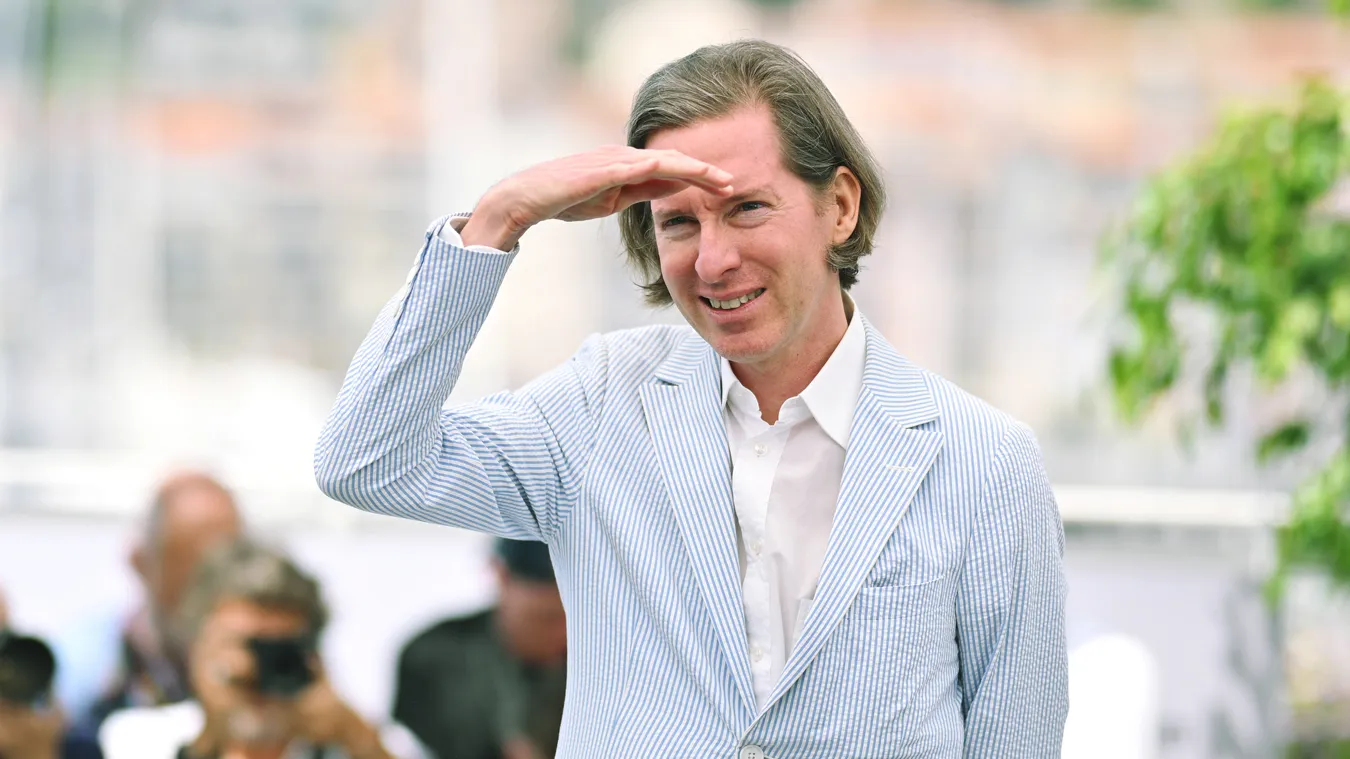
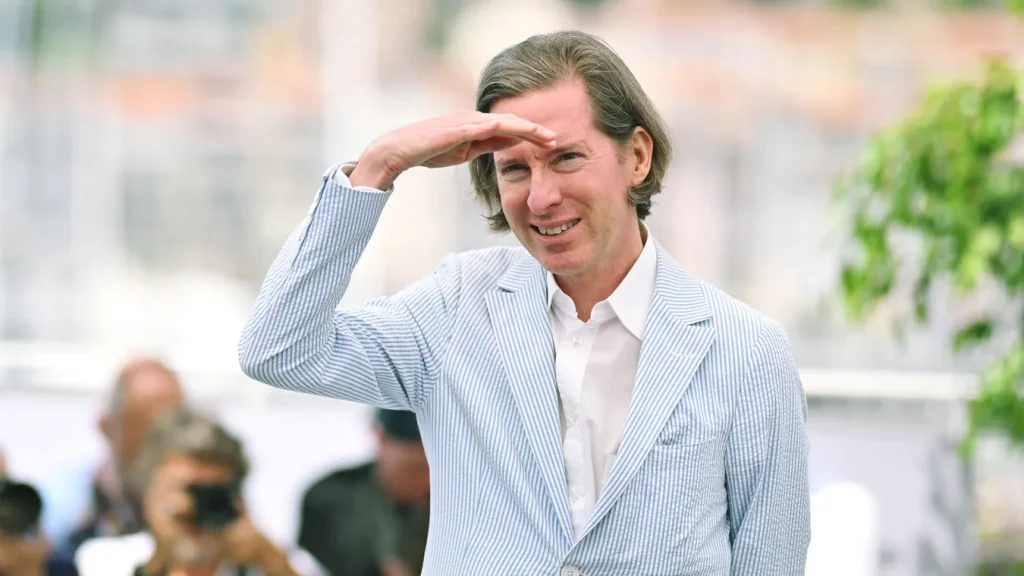
Wes Anderson is an American writer, director and producer whose career combines independently financed feature films, animation, streaming work and unusually elaborate advertising commissions. His economics differ from those of a director hired late in a studio production: Anderson normally originates or co-writes the material, directs it and produces it through American Empirical Pictures. The Academy’s record of the 2024 Oscars identifies his first competitive win, for the live-action short The Wonderful Story of Henry Sugar, after multiple earlier nominations. Awards help sustain fee levels and access to financing, but HMW does not assign a dollar value to a trophy or to Anderson’s distinctive visual brand.
Anderson met Owen Wilson at the University of Texas and developed their short Bottle Rocket into a 1996 feature. Britannica’s biography traces that collaboration and the subsequent move through Rushmore and The Royal Tenenbaums. The debut’s theatrical result was limited, but it began a long working relationship with producers, actors and craftspeople. HMW treats the first two features as low-fee career-building work, rather than applying his modern commercial rate retroactively. The model increases compensation only after The Royal Tenenbaums proved that his style could attract a meaningful specialty audience and earn screenplay recognition.
The breakthrough years
The career decisions and defining moments that turned recognition into sustained earning power.
The Royal Tenenbaums brought an Oscar nomination for Anderson and Owen Wilson’s original screenplay and became a commercial breakthrough. The later partnership with billionaire industrialist Steven Rales was equally important to the durability of Anderson’s career. Vanity Fair reports that Rales’s Indian Paintbrush has backed every Anderson film since The Darjeeling Limited and that Rales has taken producer credits since Moonrise Kingdom. This is access to patient financing, not Anderson’s ownership of Rales’s capital. HMW assumes Anderson earns writer-director-producer compensation and negotiated participation, while excluding the financier’s investment and any film rights owned by Indian Paintbrush or distributors.

What the work can earn
Reported pay, contracts, royalties and performance income reveal how the fortune was funded.
Anderson moved between live action and painstaking stop-motion with Fantastic Mr. Fox and Isle of Dogs, while Moonrise Kingdom and The Grand Budapest Hotel expanded his audience. The latter is the clearest financial benchmark: Box Office Mojo records approximately $174.6 million in worldwide ticket sales against a reported production budget near $25 million. Anderson wrote, directed and produced the film, so a backend payment is plausible. HMW nevertheless starts from estimated distributor receipts after cinemas, marketing and production recoupment, then assigns only a minority producer pool shared with other participants. It never treats the worldwide gross as his revenue.
The core sources are screenplay fees, directing fees, producer fees and conditional backend participation. Anderson often performs three of those jobs on one film, but contracts can package the compensation, so HMW does not simply add three top-market rates. The model assigns lower combined fees to early projects, rising amounts after Tenenbaums, and a mature writer-director-producer band from Moonrise Kingdom onward. It subtracts agent, lawyer, business-management and development expenses before tax. Residuals and catalogue participation are included only as a modest recurring stream because the ownership split among American Empirical, Indian Paintbrush, studios and distributors is not public.

The business beyond the main career
Endorsements, ownership interests and investments can keep compounding long after the initial breakthrough.
Advertising provides a meaningful higher-margin supplement between features. Anderson has directed campaigns or shorts for American Express, Prada, H&M, AT&T and other brands. In 2024, Montblanc hired him to direct and appear in a centenary campaign; Vogue reports that he also proposed the Schreiberling pen, of which 1,969 examples were planned at $2,500 each. Those retail sales belong to Montblanc, and no royalty was disclosed. HMW therefore assigns a project fee plus a conservative design participation allowance, not the product’s potential sell-through. Similar treatment is applied to his other commercials: production budgets pay crews and sets before creative profit.
American Empirical Pictures is Anderson’s production vehicle, but no public accounts reveal its cash, debt or catalogue ownership. Its value lies in development activity, producer fees and the ability to package recurring collaborators. Anderson’s Roald Dahl work illustrates that structure. Netflix’s official page for The Wonderful Story of Henry Sugar and Three More credits the four-story anthology, while Netflix separately confirms that it acquired the Roald Dahl Story Company in 2021. Anderson won the Oscar and served as writer, director and producer, but he does not own the underlying Dahl library. HMW includes project compensation and possible producer participation without adding any portion of Netflix’s acquisition value.
Notable luxury item
A reported property or major asset offers a tangible glimpse of the wealth behind the public estimate.
Anderson has spent long periods living and working in Paris and makes films across Europe, yet reliable public reporting does not establish a specific residence owned by him, its purchase price, current valuation or debt. HMW therefore includes no named mansion or speculative property portfolio. The same restraint applies to artwork, production props and personal investments. His private-company ownership is acknowledged, but American Empirical is not valued as if it owned every film bearing its logo. Unpaid development, overhead, currency movements and contingent compensation all create uncertainty. A cash reserve and diversified investments are modeled from retained earnings, while any undisclosed property is left inside the general asset allowance rather than presented as fact.
Wes Anderson’s estimated net worth
Public estimates vary because private contracts, investments, taxes and liabilities are not fully disclosed.
How this estimate is calculated
HMW builds a 1996–2026 cash-flow model across twelve feature films, the Dahl shorts and selected commercials. The first three features receive modest writing and directing fees; mature projects receive combined writer-director-producer compensation in restrained seven-figure bands, with animation adjusted for its longer production cycle. Backend is modeled only for financially successful releases, led by Grand Budapest: theatrical gross is first reduced to approximate distributor rentals, then budget and marketing are recouped, and Anderson receives only a small share of the remaining pool. Lower-performing films receive little or no backend. Advertising adds intermittent fees, not brand retail revenue. The Netflix shorts add a negotiated package payment with no Dahl intellectual-property value. From gross professional income the model deducts roughly 15% for representatives and unreimbursed development/business costs and about 40% for blended tax across relevant jurisdictions, followed by living expenses. Retained capital receives moderate long-term investment growth. American Empirical receives a conservative going-concern allowance, while undisclosed property, Indian Paintbrush’s capital and distributor-owned library value are excluded. This supports the final estimate below.
Anderson’s name now describes a recognizable design language, which helps sell tickets and attracts brands seeking a short film rather than a conventional advertisement. His films remain specialty-scale rather than global franchise releases. Asteroid City, for example, had an exceptionally strong limited opening but a much smaller total than Grand Budapest; IMDb reports roughly $53.9 million worldwide on an estimated $25 million budget. HMW uses the complete pattern—several modest theatrical performers and one standout—not the best result alone. This limits assumed backend income and recognizes that prestige films can require years of development even when the director works steadily.
The public record establishes credits, ticket grosses, production budgets, financing relationships, advertisements and the Netflix release. It does not reveal Anderson’s actual per-film fee, backend points, company balance sheet or tax residence in every year. Even commercially strong films do not necessarily trigger “net profits” under studio accounting. HMW tests participation using cash available after exhibitors, distribution fees, marketing and budget recoupment, then discounts again for other producers and talent. Commercial work is modeled project by project but kept below speculative top-director advertising rates. The absence of verified property data is treated as missing evidence, not an invitation to invent an asset.