
 How Much Are They Worth?
Celebrity fortunes, explained
How Much Are They Worth?
Celebrity fortunes, explained



How did Damien Hirst build this fortune?
The answer unfolds through the career, earnings, deals and assets behind the headline estimate.
Before the fame
The background and early turning points that shaped Damien Hirst’s route to prominence.
Damien Hirst is a British artist and entrepreneur whose fortune was built not only from expensive objects but from unusual control over their production and sale. As the best-known member of the Young British Artists generation, he turned recurring motifs—spot paintings, vitrines, butterflies, medicine cabinets and mortality—into a large studio practice. Tate’s Damien Hirst artist profile documents his emergence and major works. Financially, primary sales and retained inventory matter; auction resales between collectors ordinarily do not pay him.
Raised in Leeds, Hirst studied at Goldsmiths in London and organised the 1988 student exhibition Freeze, which attracted influential collectors and dealers. Charles Saatchi subsequently supported ambitious works, including animals preserved in formaldehyde. Goldsmiths’ Damien Hirst alumni profile identifies his education and role in Freeze. This network created access to capital and primary buyers, but the much higher prices those early works achieved later in the secondary market should not be treated as fresh income to Hirst.
The breakthrough years
The career decisions and defining moments that turned recognition into sustained earning power.
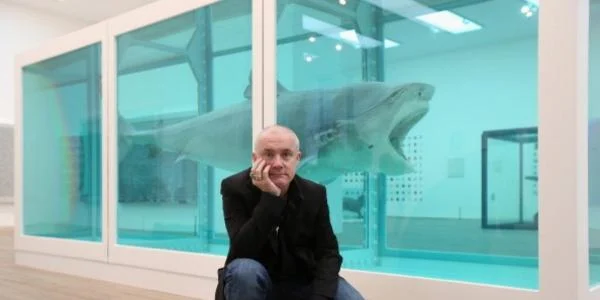
The Physical Impossibility of Death in the Mind of Someone Living, a shark in formaldehyde, became the defining image of Hirst’s early career. He won the Turner Prize in 1995, and international galleries sold new work to an expanding collector base. Tate’s record for the shark work provides institutional documentation of the object and its history. The breakthrough increased primary prices and studio scale; the prize itself was not the source of the later fortune.
What the work can earn
Reported pay, contracts, royalties and performance income reveal how the fortune was funded.
Hirst’s most revealing business event was Beautiful Inside My Head Forever, a 2008 Sotheby’s auction of newly produced work that bypassed his established gallery channel. The two-day sale achieved £111 million across 218 lots. Sotheby’s archive for Beautiful Inside My Head Forever records the landmark sale. Unlike an ordinary resale auction, this was primary inventory, so proceeds could flow toward Hirst and his operation—although auction fees, production, tax, staff and any guarantees substantially reduced the headline gross.
Hirst earns from new paintings and sculptures, editioned prints, direct sales, gallery sales, licensing and businesses associated with his art. His use of assistants enables output beyond that of a solitary studio, while imposing payroll, property and material costs. The direct Sotheby’s sale showed how avoiding a conventional dealer split could increase the artist’s share. ABC News’ contemporary report on the £111 million auction notes that the format bypassed galleries that could charge commissions approaching half of sale value.
The business beyond the main career
Endorsements, ownership interests and investments can keep compounding long after the initial breakthrough.
Hirst has sold prints and merchandise through HENI, created NFT-linked projects and applied his imagery to commercial collaborations. Results have varied, so this assessment does not capitalise every experiment as a successful business. HENI’s official Damien Hirst editions page documents primary edition activity. It establishes a recurring direct-sales channel but not net margin, as printing, fulfilment, platform, studio and tax costs must be paid.
Science Ltd manages Hirst’s practice, while Newport Street Gallery displays works from his Murderme collection. He has also operated restaurants, including Pharmacy 2, linking his art holdings to hospitality. Newport Street Gallery’s official history explains that Hirst founded the gallery to share his collection with the public. The collection may be extremely valuable, but it is illiquid, costly to maintain and distinct from the market value of works made by Hirst himself.
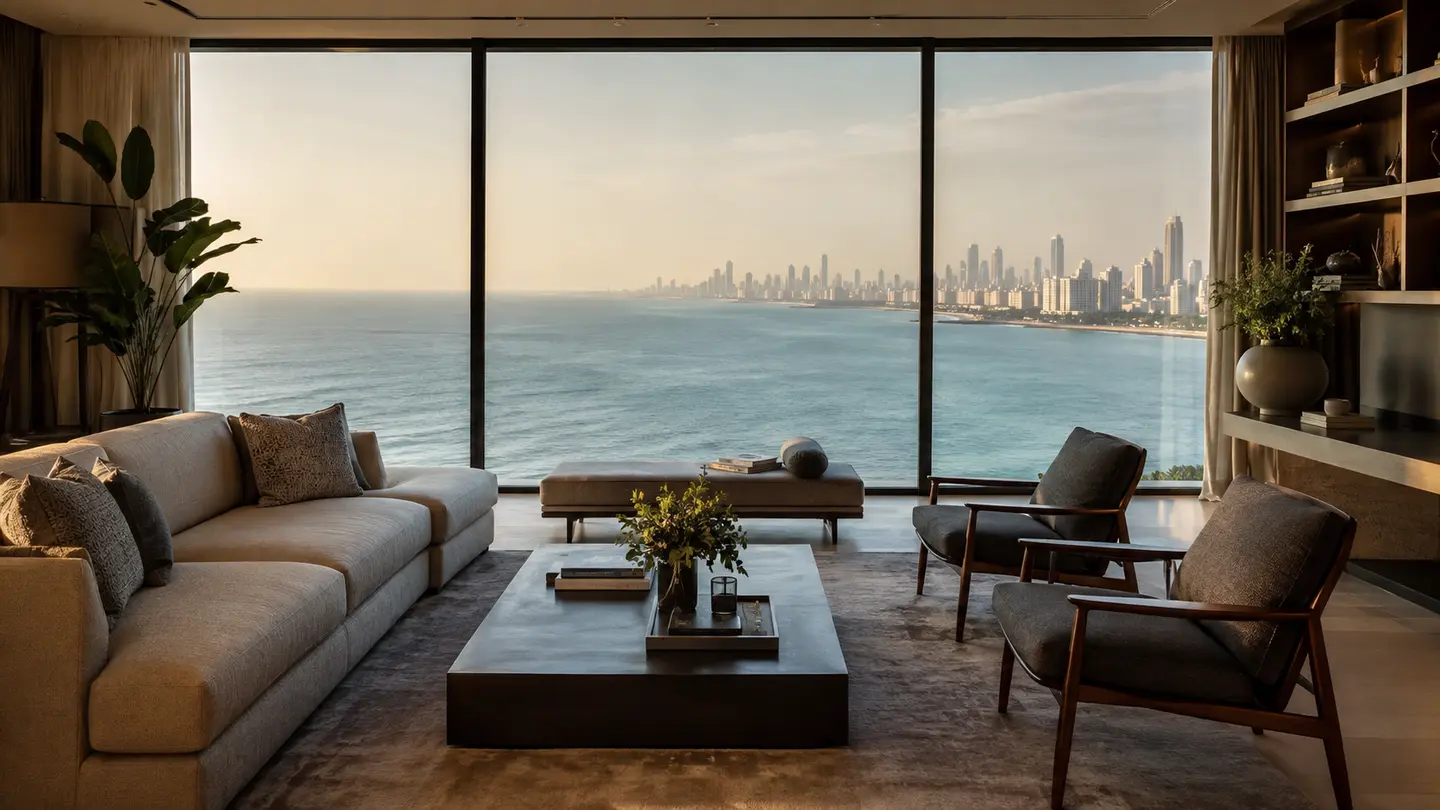
Notable luxury item
A reported property or major asset offers a tangible glimpse of the wealth behind the public estimate.
Reported assets include studio facilities, property and a large art collection, along with unsold Hirst inventory. His diamond-covered skull For the Love of God attracted an enormous announced valuation, but ownership and transaction structure have long been debated; it is not counted at its headline price. Hirst’s official page for For the Love of God identifies the work and materials. A realisable-value discount is applied to art because bulk sales, fees and taxes would depress proceeds.
Damien Hirst’s estimated net worth
Public estimates vary because private contracts, investments, taxes and liabilities are not fully disclosed.
How this estimate is calculated
The model assigns £260 million to £380 million of attributable lifetime gross receipts from primary art, editions, licensing and related ventures, including but not limited to the 2008 auction. After production, staff, gallery or auction charges, tax, philanthropy and consumption, an estimated £120 million to £190 million may remain. It adds £100 million to £180 million for discounted art inventory, collection assets, intellectual property, property, cash and investments, then deducts £35 million to £70 million for illiquidity, liabilities, double counting and market volatility. This produces an approximate £210 million to £300 million range, or about $280 million to $400 million at contemporary exchange rates.
Major exhibitions at Tate Modern, Palazzo Grassi and the Rijksmuseum kept Hirst visible beyond the boom years. His images also reach buyers through editions and lower-priced works, widening the customer base beneath museum-scale pieces. Tate Modern’s Damien Hirst retrospective archive confirms the scale of his 2012 exhibition. Museum attendance strengthens brand recognition but does not become personal revenue unless tied to sales, fees or licensing.
The 2008 primary auction supplies rare gross-sales evidence, and the continuing editions platform confirms active monetisation. Still unknown are gallery splits, production costs, tax, company debt, ownership of property and the amount of inventory retained. Secondary prices have also fluctuated, demonstrating that peak auction values are not a stable balance sheet. Phillips’ resale record for a 1998 Hirst painting illustrates the difference between a later collector transaction and income the artist actually received. Currency changes and the cost of preserving formaldehyde works add further valuation uncertainty.