
 How Much Are They Worth?
Celebrity fortunes, explained
How Much Are They Worth?
Celebrity fortunes, explained






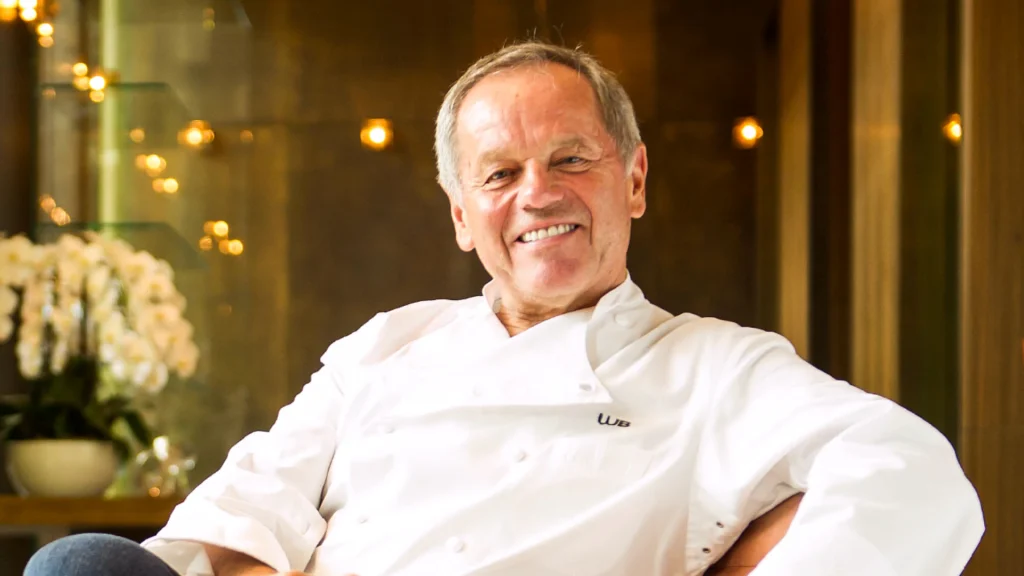
How did Wolfgang Puck build this fortune?
The answer unfolds through the career, earnings, deals and assets behind the headline estimate.
Before the fame
The background and early turning points that shaped Wolfgang Puck’s route to prominence.
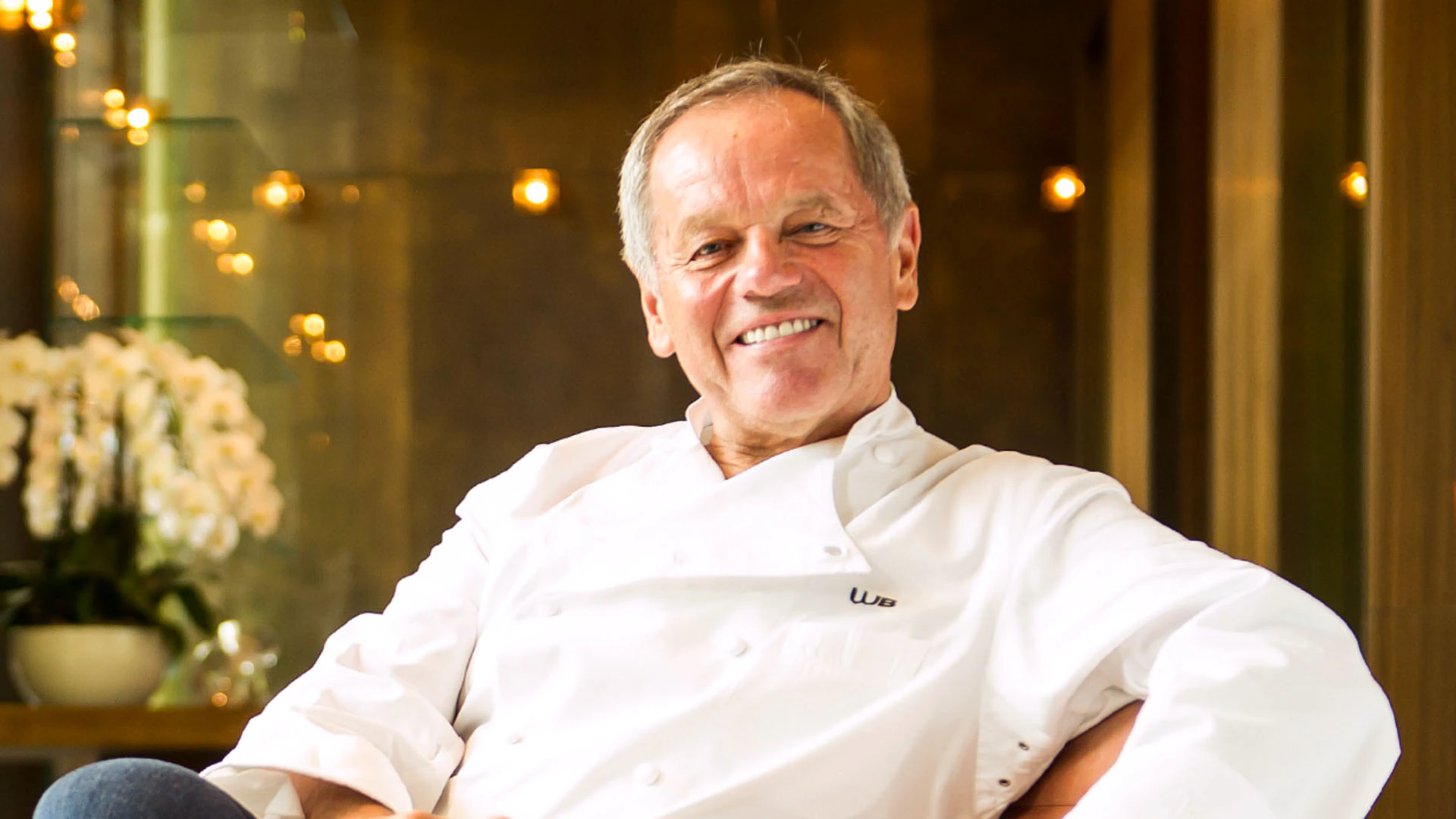
Wolfgang Johannes Puck was born on July 8, 1949, in Sankt Veit an der Glan, a small town in the Austrian state of Carinthia. He was born Wolfgang Johannes Topfschnig; after his mother remarried a man named Josef Puck, young Wolfgang took his stepfather’s surname, the name that would eventually appear on restaurant awnings around the world. He grew up with two younger sisters and a younger brother in a family of modest means, and has described his relationship with his biological father as distant.
Puck’s mother worked as a pastry chef, and it was in her kitchen that he first learned to cook. With her encouragement, he began formal culinary training at just 14 years old, leaving home to apprentice in European kitchens — an unusually young start that set the pattern for a career built on decades of hands-on kitchen work rather than culinary-school credentials. He would go on to marry three times: Marie France Trouillot (1975-1980), interior designer and Spago co-founder Barbara Lazaroff (1983-2003), and his current wife, Gelila Assefa Puck, a former fashion designer he married in 2007. Across those marriages he has four children.
As a teenage apprentice, Puck trained under the demanding French chef Raymond Thuilier at L’Oustau de Baumaniere in Les Baux-de-Provence, then took positions at the Hotel de Paris in Monaco and the legendary Maxim’s in Paris — a classical French pedigree shared by very few American chefs of his generation. In 1973, at age 24, he emigrated to the United States, spending two years cooking at La Tour in Indianapolis before relocating to Los Angeles in 1975.
In Los Angeles, Puck became chef and part-owner of Ma Maison, a French restaurant on Melrose Avenue run by restaurateur Patrick Terrail. Over the next several years he turned Ma Maison into the industry’s power-lunch destination, drawing studio executives and Hollywood regulars and building the reputation that made his name valuable in its own right. In 1981 he published his first cookbook, “Modern French Cooking for the American Kitchen,” and by 1982 a dispute with Terrail over ownership terms — Puck wanted an even 50-50 split on a new venture, Terrail wanted to keep 51 percent — pushed him to leave and open a restaurant entirely his own.
The breakthrough years
The career decisions and defining moments that turned recognition into sustained earning power.
Puck opened Spago on the Sunset Strip on January 16, 1982, with Barbara Lazaroff, the interior designer who would become his second wife. The restaurant was an immediate phenomenon — 21 Rolls-Royces reportedly jammed its small parking lot on opening night — and it pioneered the open-kitchen format and a California-cuisine style that blended French technique with Italian, Asian and local ingredients, most famously on Spago’s smoked-salmon pizza. Spago turned a $20,000 profit in its first month and quickly became the industry’s new power-dining room, drawing regulars including Barbra Streisand and Steven Spielberg. Spago relocated to Beverly Hills in 1997 and has been ranked among the top restaurants in the United States every year since 2004; it earned two Michelin stars in 2008 and again in 2009, before losing them when the Michelin Guide returned to Los Angeles after a decade-long hiatus.
Building on Spago’s success, Puck opened his first CUT steakhouse in Beverly Hills in 2006, later expanding the concept to Las Vegas, London, New York, Washington D.C., Singapore and Bahrain; as of 2026, CUT Beverly Hills and CUT Singapore each hold one Michelin star. His catering arm, Wolfgang Puck Catering, took over as official caterer of the Academy Awards Governors Ball in 1995 and has held the job every year since — Puck catered his 30th consecutive Governors Ball in 2025 and his 32nd in 2026, feeding roughly 1,500 A-list guests each year with dishes like smoked-salmon Oscar matzohs and his signature mini Wolfgang Puck pizzas. Alongside the restaurants and catering, Puck built a substantial television career: he won a Daytime Emmy for Outstanding Service Show in 2002, appeared as an “Iron Chef” opponent on “Iron Chef America” in 2004, and has guest-judged “Top Chef,” “MasterChef,” “Hell’s Kitchen” and “Beat Bobby Flay,” in addition to cameo appearances on “Frasier” and “The Simpsons.” A 2021 documentary, “Wolfgang,” chronicled his life and career for a wider streaming audience.

What the work can earn
Reported pay, contracts, royalties and performance income reveal how the fortune was funded.
Forbes’ 2012 “Top-Earning Chefs” feature put Puck’s annual earnings at roughly $20 million, drawn from a restaurant group that at the time already spanned about 20 fine-dining locations plus dozens of catering operations. That figure has not been publicly updated by Forbes in the years since, and no more recent official personal income statement for Puck has been published. A business-data aggregator estimate puts Wolfgang Puck Fine Dining Group’s annual revenue at approximately $338.2 million as of 2025 — a figure worth flagging clearly as company-level gross revenue, not Puck’s personal take-home income; restaurant revenue funds payroll, rent, food costs and reinvestment long before anything reaches an owner’s pocket.
Puck’s actual personal earnings today are drawn from several distinct streams rather than one salary: profit distributions from the restaurants he owns outright, his share of the catering business he now runs in partnership with Compass Group, licensing royalties from cookware, appliances and packaged food sold under his name, and appearance and production fees from television work. None of these streams has individually disclosed dollar figures in recent years, which is typical for a private, multi-decade restaurant business of this scale.
Puck’s television contracts have generally not been publicly disclosed by fee. His most substantial recent media agreement is with MasterClass, which produced “Wolfgang Puck Teaches Cooking,” a 16-lesson course built around recipes from Spago and CUT; as with other MasterClass instructor deals, the financial terms were not made public. Earlier in his career, his 2002 Daytime Emmy-winning “Wolfgang Puck” cooking show and his recurring “Iron Chef America” and reality-competition judging appearances (“Top Chef,” “MasterChef,” “Hell’s Kitchen,” “Beat Bobby Flay”) were built on standard unscripted-television appearance and licensing fees rather than a single headline contract.
On the business side, the most significant recent contract is Wolfgang Puck Fine Dining Group’s agreement to serve as the sole culinary operator for Four Seasons Private Residences Las Vegas, announced in 2025. The deal covers a signature Wolfgang Puck restaurant, a bar and lounge, poolside service and property-wide catering, with the residences and restaurant targeted to open around mid-2027; no financial terms of the multi-year agreement have been disclosed. His catering business itself operates under a long-running structural agreement with Compass Group plc, detailed further below, under which Compass provides scale and back-office infrastructure while Puck’s name and menus remain the product.

The business beyond the main career
Endorsements, ownership interests and investments can keep compounding long after the initial breakthrough.
Unlike athletes or actors who front third-party brands, most of Puck’s “endorsement” income actually comes from licensing his own name onto products manufactured and sold by retail partners — a subtle but important distinction. His cookware and small-kitchen-appliance lines, including pressure cookers and air-fryer ovens, have been sold for years through HSN and previously QVC under the Wolfgang Puck brand, with the retailers manufacturing and distributing the goods against a royalty rather than Puck fronting someone else’s product. A similar model applies to Wolfgang Puck-branded coffee pods sold in Chef’s Reserve, French Vanilla and other flavors, and to a line of USDA-certified organic soups sold at Kroger and other grocery chains, along with Wolfgang Puck-branded frozen pizzas built on his original hand-rolled Spago pizza recipes.
None of these licensing arrangements has a publicly disclosed royalty rate or annual value. Puck has largely avoided the kind of single marquee third-party endorsement deal common among athletes, instead building a portfolio of smaller, own-name product lines across cookware, small appliances, coffee and packaged grocery goods that collectively support his brand without any one deal dominating his income.
Puck’s businesses sit under the umbrella of Wolfgang Puck Companies, organized into three main divisions: Wolfgang Puck Fine Dining Group (Spago, CUT and other flagship restaurants), Wolfgang Puck Worldwide, Inc. (casual and fast-casual concepts including Wolfgang Puck Express airport cafes, Wolfgang Puck Bar & Grill and Wolfgang Puck Pizza Bar, plus the branded consumer-products business), and Wolfgang Puck Catering. Wolfgang Puck Express operates in major U.S. airports including Los Angeles, Chicago O’Hare, Las Vegas and Atlanta, as well as international locations, serving a scaled-down menu of his signature pizzas, salads and soups to travelers.
The catering business has the most significant outside-capital story: Compass Group plc, the world’s largest contract food-service company, first struck a strategic partnership with Wolfgang Puck Catering in 2004, and that relationship deepened over the following years into what Compass now describes as its acquisition of Wolfgang Puck Catering & Events, LLP — the exact date and terms of that ownership change have not been made public in detail. The partnership has fueled major growth, including joint ventures with Compass sister company Restaurant Associates and a national concession agreement with concert promoter Live Nation; Compass provides the operating scale and infrastructure, while Puck’s name, recipes and creative direction remain the product being sold. In January 2016, Puck launched the Wolfgang Puck Cooking School, an online recipe and meal-planning platform he described as “a live version of a cookbook,” unveiled at an MGM Grand Detroit event with plans to grow to roughly 1,000 recipes over three years. Most recently, in 2025, Wolfgang Puck Fine Dining Group was named the sole culinary operator for Four Seasons Private Residences Las Vegas, a first-of-its-kind residential food-and-beverage partnership set to open around mid-2027.
Notable luxury item
A reported property or major asset offers a tangible glimpse of the wealth behind the public estimate.
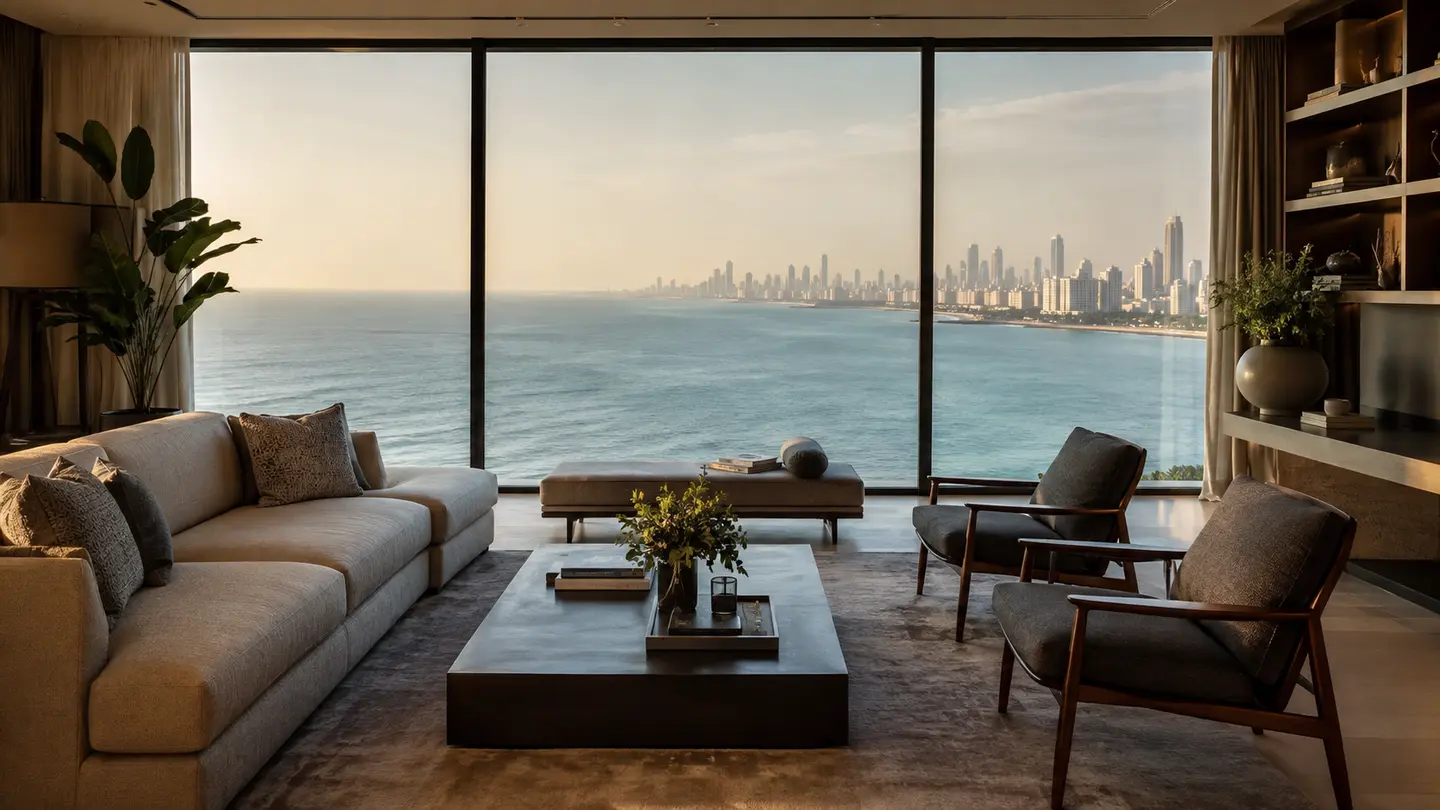
Puck and his wife, Gelila Assefa Puck, purchased a 12,289-square-foot, eight-bedroom, 11-bathroom Mediterranean-style villa in Bel Air in the fall of 2013 for $14 million, buying the property from Anthony Pritzker, an heir to the Hyatt hotel fortune. Before that, Puck owned a 6,025-square-foot, five-bedroom Spanish-style home in the Beverly Hills Flats, purchased in June 2003 for $3.675 million and listed for sale in 2015 at $8.495 million.
Beyond real estate, Puck’s major assets are largely tied up in his restaurant and catering businesses themselves — leaseholds and operating companies rather than owned real property — along with his stake in the Compass Group catering partnership. No significant art, car or yacht collection has been publicly documented for Puck, which sets him apart from many entertainment-industry net-worth profiles; his visible wealth is concentrated in real estate and in the businesses that carry his name.
Wolfgang Puck’s estimated net worth
Public estimates vary because private contracts, investments, taxes and liabilities are not fully disclosed.
How this estimate is calculated
This range is anchored by the most consistently cited aggregator figure for Puck — Celebrity Net Worth’s $120 million estimate — while allowing room on both sides for how widely other trackers diverge: TheRichest puts the figure closer to $75 million, on the low end, while the sheer scale of Wolfgang Puck Fine Dining Group’s business (estimated at roughly $338.2 million in annual revenue as of 2025) supports an estimate at or somewhat above the CNW figure once four decades of restaurant ownership, a catering partnership with the world’s largest food-service company, and a broad consumer-products licensing business are accounted for. Forbes’ last individually reported earnings figure for Puck — roughly $20 million a year, from 2012 — is now well over a decade old and reflects a smaller restaurant footprint than the one he operates today.
Two distinctions matter here. First, Wolfgang Puck Fine Dining Group’s roughly $338.2 million in estimated annual revenue is company turnover, not Puck’s personal net worth — that figure covers payroll, rent, food costs and reinvestment across dozens of restaurants before anything reaches an owner. Second, since 2004 Puck’s catering business has operated as a partnership with Compass Group plc rather than a wholly owned company, meaning a share of that business’s value belongs to Compass, not to Puck personally. Real estate is more concretely documented: Puck’s Bel Air home alone cost $14 million in 2013, and combined with his earlier Beverly Hills property, his real-estate holdings plausibly account for a meaningful double-digit-million share of his total wealth. No audited or independently sourced net-worth statement for Wolfgang Puck has ever been published, and the figure above should be read as an estimate built from aggregator tracking, disclosed business scale and known real-estate purchases, not a confirmed number.
| Year | Milestone |
|---|---|
| 1949 | Born July 8 in Sankt Veit an der Glan, Austria, as Wolfgang Topfschnig |
| 1963 | Leaves home at 14 to begin formal culinary apprenticeship in Europe |
| 1973 | Emigrates to the United States at age 24, taking a post at La Tour in Indianapolis |
| 1975 | Becomes chef and part-owner of Ma Maison in West Hollywood |
| 1981 | Publishes debut cookbook, “Modern French Cooking for the American Kitchen” |
| 1982 | Opens Spago on the Sunset Strip with Barbara Lazaroff, January 16 |
| 1995 | Wolfgang Puck Catering caters its first Academy Awards Governors Ball |
| 1997 | Spago relocates from the Sunset Strip to Beverly Hills |
| 2003 | Purchases a Beverly Hills Flats home for $3.675 million |
| 2004 | Wolfgang Puck Catering forms a strategic growth partnership with Compass Group |
| 2006 | Opens the first CUT steakhouse, in Beverly Hills |
| 2008 | Spago Beverly Hills earns two Michelin stars, retained through 2009 |
| 2013 | Purchases a 12,289-square-foot Bel Air villa for $14 million from Anthony Pritzker |
| 2016 | Launches the Wolfgang Puck Cooking School online platform |
| 2021 | Documentary “Wolfgang” is released, chronicling his life and career |
| 2025 | Caters his 30th Oscars Governors Ball; Wolfgang Puck Fine Dining Group named sole culinary operator for Four Seasons Private Residences Las Vegas |
| 2026 | Caters his 32nd Oscars Governors Ball; Wolfgang Puck Fine Dining Group reports estimated annual revenue of $338.2 million |
Among fellow celebrity chefs, Celebrity Net Worth’s aggregator network — cited here only as a labeled, secondary cross-check rather than a verified figure — credits British chef and television personality Gordon Ramsay with roughly $220 million, close to double the most commonly cited estimate for Puck, reflecting Ramsay’s much larger global television footprint across multiple long-running franchises. Emeril Lagasse, whose career followed a similar path from serious kitchen credentials into TV stardom and a branded cookware and food-products business, is credited with around $70 million, while Bobby Flay, primarily a Food Network personality with a smaller restaurant footprint than Puck’s, sits at roughly $60 million on the same aggregator network.
Puck’s position in that range reflects a genuinely different business model from the TV-first chefs above him and below him: rather than building his wealth primarily around a media personality, he built a multi-decade restaurant, catering and product-licensing empire first, in Los Angeles a full decade before he became a national television figure, and his television work has functioned more as marketing for that underlying business than as the business itself. As with the aggregator figures used throughout this comparison, none of these numbers should be read as verified; they illustrate the rough tier Puck occupies among his peers rather than a precise ranking.
Sources and references
- Wolfgang Puck — Wikipedia
- Wolfgang Puck, Top-Earning Chefs 2012 — Forbes
- Wolfgang Puck Net Worth — Celebrity Net Worth
- Wolfgang Puck Net Worth — TheRichest
- Hollywood Flashback: 40 Years Ago, Spago Changed Restaurants Forever — The Hollywood Reporter
- The Brilliant, Bitter History of L.A.’s Fabled Ma Maison — The Hollywood Reporter
- Wolfgang Puck Reflects on 30 Years of Catering the Oscars — Los Angeles Magazine
- Here’s What Wolfgang Puck Is Serving Hollywood Stars on Oscars Night — Robb Report
- Compass Group plc Acquires Wolfgang Puck Catering & Events, LLP — Acquest International
- Four Seasons Private Residences Las Vegas Announces Partnership With Wolfgang Puck — PRWeb
- Inside Chef Wolfgang Puck’s Beverly Hills Home — Forbes
- How Many Michelin Stars Does Chef Wolfgang Puck Have? — Fine Dining Lovers