 How Much Are They Worth?
Celebrity fortunes, explained
How Much Are They Worth?
Celebrity fortunes, explained

How did Jamie Oliver build this fortune?
The answer unfolds through the career, earnings, deals and assets behind the headline estimate.
Before the fame
The background and early turning points that shaped Jamie Oliver’s route to prominence.
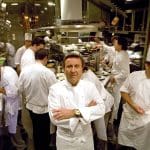
Jamie Oliver was born on May 27, 1975, in Clavering, Essex, England, and grew up above his parents’ pub, The Cricketers, where he began helping in the kitchen as a young child. He trained at Westminster Catering College and in France before working as head pastry chef at Neal Street Restaurant in London and later as a sous-chef at the River Cafe — the kitchen where he was eventually discovered.
Oliver was spotted while working at the River Cafe during filming of a documentary about the restaurant, which led to his own BBC series, “The Naked Chef,” premiering in 1999. The show’s casual, ingredient-focused style and fast-cut editing were a departure from the more formal cookery television of the era, and it made him an instant television star in the UK before his profile spread internationally through book and format sales.
The breakthrough years
The career decisions and defining moments that turned recognition into sustained earning power.
Oliver followed “The Naked Chef” with a long run of further BBC and Channel 4 series, including “Jamie’s Kitchen,” “Jamie’s School Dinners” — a 2005 campaign that pushed the UK government to overhaul nutritional standards in school meals — and “Jamie’s 30-Minute Meals.” In 2002, profits and public attention from “Jamie’s Kitchen” led him to found Fifteen, a restaurant in London built to train young people from disadvantaged backgrounds for careers in hospitality; sister restaurants later opened in Amsterdam and Cornwall. He was made a Member of the Order of the British Empire (MBE) in 2003 for services to the hospitality industry. On the publishing side, Oliver’s cookbooks have been released through Penguin Random House’s Michael Joseph imprint since “The Naked Chef,” a relationship that has produced more than 20 titles and sold over 41 million copies worldwide in 36 languages, with his full catalogue — including children’s titles and foundation-branded books — commonly cited as running past 40 books in total. He has continued releasing new television series and books into 2026, including “Jamie’s Feasts for a Fiver” on Channel 4 and the cookbook “Eat Yourself Healthy.”

What the work can earn
Reported pay, contracts, royalties and performance income reveal how the fortune was funded.
Very little of Oliver’s income arrives as a conventional personal salary. Almost all of it flows through Jamie Oliver Holdings (trading as the Jamie Oliver Group), the UK company that files his consolidated accounts each year, which makes those filings the most reliable public window into how his earnings actually move year to year. In the year to mid-2024 — the most recent accounts filed, reported in trade press in October 2025 — the group posted turnover of £28.5 million, up from £27 million in 2023 and £23.6 million in 2022, while pre-tax profit fell to £3.1 million, down from £3.5 million in 2023 and £7.7 million in 2022. Oliver and his wife, Jools, took a combined dividend of just £500,000 for that year, sharply down from £2.5 million in 2023 and £6.8 million in 2022. That swing illustrates how lumpy his “annual earnings” really are: they move with book and TV production cycles, licensing renewals, and restaurant performance, not a fixed paycheck.
Oliver has held a long-running string of UK television commissions, most consistently with Channel 4, spanning everything from “30-Minute Meals” to 2026’s “Jamie’s Feasts for a Fiver”; no reliable public source discloses his per-series or per-episode fee for these deals, so no figure is given here. His book contracts are better documented in scale if not in dollar terms: the multi-decade Penguin Random House / Michael Joseph relationship has produced more than 20 titles and over 41 million copies sold, though individual advance amounts have not been made public. Restaurant royalties come through licensing rather than ownership for most of his global footprint — overseas Jamie’s Italian and Jamie’s Deli outlets operate under franchise agreements that generated £3.7 million in franchise turnover for the Jamie Oliver Group in the 2024 financial year, separate from the revenue of his own UK restaurant.
The business beyond the main career
Endorsements, ownership interests and investments can keep compounding long after the initial breakthrough.
Oliver was the face of Sainsbury’s for eleven years, appearing in more than 100 adverts between 2000 and 2011; the partnership was reported to have earned him in excess of £10 million before it ended amid disagreements with the supermarket’s leadership over his campaigning against food high in fat, sugar, and salt. He has long licensed a range of non-stick cookware and kitchen appliances under his name through Tefal. In September 2018 he became the face of Tesco’s healthier and more affordable eating campaigns, a deal whose financial terms were not disclosed. From January 2016, Oliver entered a three-year recipe-box partnership with HelloFresh across the UK, Germany, the Netherlands, Belgium, the US, and Austria, under which he became a shareholder in HelloFresh and the company donated to his food charity per box sold; the cash value of that deal has not been made public.
Oliver’s highest-profile business venture was Jamie’s Italian, which opened its first site in Oxford in 2008 and expanded to dozens of UK locations plus international franchises, alongside the Barbecoa steakhouse and Fifteen London. By 2017-18 the group was in serious financial difficulty, and Oliver personally injected almost £13 million of his own money to keep it afloat; he made a further £4 million available in early 2019 while seeking outside investment or a buyer. No suitable deal emerged, and in May 2019 the Jamie Oliver Restaurant Group appointed KPMG as administrator. Twenty-two of the group’s 25 UK restaurants closed, including Fifteen London and Barbecoa, and roughly 1,000 jobs were lost. Oliver publicly blamed a “perfect storm” of high rents and business rates, rising food costs, the broader decline of the UK high street, Brexit-related uncertainty, and increases in the minimum wage; contemporary coverage of the collapse largely agreed those pressures were genuine industry-wide problems, not unique mismanagement. It is worth being direct about this: it was a real business failure that cost Oliver a substantial personal sum, distinct from his separately profitable publishing, TV, and licensing operations, which kept generating revenue throughout. Overseas Jamie’s Italian franchises, separately owned and financed, were not directly affected, and some — including in Dubai — continued trading. After four years without a UK restaurant, Oliver returned to the dining scene in November 2023 with Jamie Oliver Catherine Street, a roughly 130-cover restaurant in a Grade I listed building in Covent Garden. Company accounts show owned-and-operated restaurant income rebounding to £3.6 million in the 2024 financial year from just £336,000 the year before, though that remains a small fraction of the Jamie Oliver Group’s overall £28.5 million turnover, most of which still comes from royalties, endorsements, and licensing rather than restaurants.
Notable luxury item
A reported property or major asset offers a tangible glimpse of the wealth behind the public estimate.
Oliver and his wife are widely reported to have moved around 2019 to Spains Hall, a 16th-century farmhouse estate in Finchingfield, Essex, described in lifestyle press as a roughly £6 million, 70-acre property with a six-bedroom farmhouse, converted stables, a walled kitchen garden, and a swimming pool; the estate has also been used as a filming location for several of his more recent shows. As with most privately owned UK homes, the purchase price and exact terms have not been confirmed through land registry filings or another primary financial source, so that figure should be read as a press-reported estimate rather than a verified transaction value. No reliable public record was located of other major personal assets, such as a private jet, yacht, or significant art collection; if Oliver holds such assets, they have not been documented in credible public reporting.
Jamie Oliver’s estimated net worth
Public estimates vary because private contracts, investments, taxes and liabilities are not fully disclosed.
How this estimate is calculated
This range is built independently from Jamie Oliver Group’s public UK company accounts — turnover, profit, and dividends across several filed years — combined with the scale of his multi-decade publishing and TV career (more than 41 million books sold and over 25 years of continuous TV commissions), his ongoing stake in franchise and licensing income, and the reported value of his Essex property, all weighed against the well-documented roughly £17 million he personally put into trying to save his restaurant chain before its 2019 collapse. Because Oliver is a private UK taxpayer rather than a public-company executive with disclosed shareholdings, there is no single authoritative real-time source for his wealth the way there is for stock-holding founders. Celebrity Net Worth, a popular aggregator, places his net worth specifically at $200 million; that figure is used here strictly as one labeled secondary cross-check, not as the basis for the estimate itself, and other outlets have published estimates both somewhat lower and somewhat higher.
It is worth separating gross business revenue from personal net worth here. The Jamie Oliver Group’s turnover of £28.5 million (roughly $36 million) in its most recent filed year is a company revenue figure, not personal income — most of it is absorbed by the costs of running a 235-person organization, TV production, franchise partners’ shares, and reinvestment, leaving pre-tax profit of £3.1 million and a shareholder dividend of just £500,000 split between Oliver and his wife for that year. That distinction is made especially clear by the 2019 collapse, when a genuinely sizable business — 25 UK restaurants and about 1,000 employees — failed outright despite roughly £17 million of Oliver’s own money being poured in to try to save it, a reminder that a chef’s food empire generating tens of millions in turnover is not the same thing as tens of millions landing in his personal bank account.
Key moments in the growth — and stress-testing — of Oliver’s fortune:
| Year | Event |
|---|---|
| 1975 | Born in Clavering, Essex, England |
| 1999 | “The Naked Chef” premieres on the BBC |
| 2002 | Founds Fifteen restaurant in London to train disadvantaged young people |
| 2003 | Made a Member of the Order of the British Empire (MBE) |
| 2005 | “Jamie’s School Dinners” campaign prompts UK government school-meal reforms |
| 2008 | Opens first Jamie’s Italian restaurant, in Oxford |
| 2011 | Eleven-year Sainsbury’s endorsement deal, reportedly worth over £10 million, ends |
| 2016 | Enters three-year HelloFresh partnership and becomes a shareholder |
| 2017-18 | Personally injects almost £13 million into Jamie’s Italian to keep it afloat |
| 2018 | Becomes the face of Tesco’s healthier-eating campaigns |
| 2019 | Jamie’s Italian collapses into administration; 22 of 25 UK sites close and about 1,000 jobs are lost |
| 2019 | Family reported to move to the Spains Hall estate in Essex |
| 2022 | Jamie Oliver Group turnover reaches £23.6 million |
| 2023 | Opens Jamie Oliver Catherine Street, his first UK restaurant since the 2019 collapse |
| 2024 | Group turnover reaches £28.5 million; pre-tax profit £3.1 million |
Among British celebrity chefs, Oliver is most often measured against Gordon Ramsay, whose fortune — like Oliver’s — rests mainly on a TV and production business plus restaurant royalties rather than direct restaurant ownership; Celebrity Net Worth estimates Ramsay’s net worth at around $220 million. Nigella Lawson, by contrast, has built a smaller estimated fortune concentrated almost entirely in books and television rather than a restaurant group of any real scale, which has also spared her the kind of hospitality-sector losses Oliver absorbed in 2019. Among American equivalents, personalities such as Guy Fieri and Rachael Ray have built comparably large fortunes weighted heavily toward network TV deals and licensing rather than owned restaurants, a structure that has generally proven less exposed to the high-street pressures — rent, rates, and labor costs — that hit Oliver’s UK restaurant chain hardest.
Sources and references
- CityAM — Reporting on the Jamie Oliver Group’s 2024 filed accounts, including turnover, pre-tax profit, and dividend figures used in the Annual Earnings and Estimated Net Worth sections. “Jamie Oliver slashes income as profit slips at business empire”
- The Caterer — UK hospitality trade press coverage of Jamie Oliver Holdings’ profit slump alongside rising restaurant sales following the Catherine Street reopening. “Jamie Oliver Holdings profits slump despite rise in restaurant sales”
- NBC News — Contemporary news coverage of the May 2019 administration of the Jamie Oliver Restaurant Group. “Celebrity chef Jamie Oliver’s UK restaurant chain collapses into insolvency”
- Fortune — Analysis of the causes behind the 2019 collapse of Jamie’s Italian, including job-loss figures. “Jamie Oliver’s Restaurant Chain Is All But Dead. What Killed It?”
- CNN Business — Further contemporary reporting on the restaurant chain’s collapse into administration. “Celebrity chef Jamie Oliver’s restaurant chain collapses”
- HuffPost — Reporting on the end of Oliver’s eleven-year, reportedly over £10 million Sainsbury’s endorsement deal. “Jamie Oliver Ditches Lucrative Sainsbury’s Endorsement Deal”
- The Drum — Marketing trade press coverage of Oliver becoming the face of Tesco’s healthier-eating campaigns in 2018. “Former Sainsbury’s ambassador Jamie Oliver becomes new face of Tesco”
- PR Newswire — Official press release detailing the terms and territories of the 2016 HelloFresh and Jamie Oliver Limited partnership. “HelloFresh and Jamie Oliver Limited Partner to Make Home Cooking Simple and Even More Delicious”
- Jamie Oliver Group — Company page detailing the scale of the Penguin Random House UK publishing partnership, including books sold and languages published. Penguin Random House UK partnership page
- Restaurant Online — Trade press coverage of the November 2023 opening of Jamie Oliver Catherine Street, his first UK restaurant since 2019. “Jamie Oliver on the opening of his new London restaurant”
- Hello Magazine — Lifestyle press coverage of the Oliver family’s Essex estate, Spains Hall, including reported price and acreage. “Jamie Oliver’s 70-acre home is so posh that it has its own walled garden”
- Celebrity Net Worth — Aggregator estimate of $200 million cited here strictly as a secondary cross-check against the independently derived range above. Jamie Oliver Net Worth, Celebrity Net Worth