
 How Much Are They Worth?
Celebrity fortunes, explained
How Much Are They Worth?
Celebrity fortunes, explained

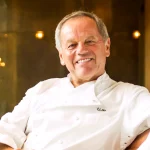
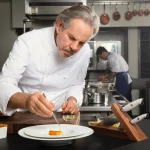


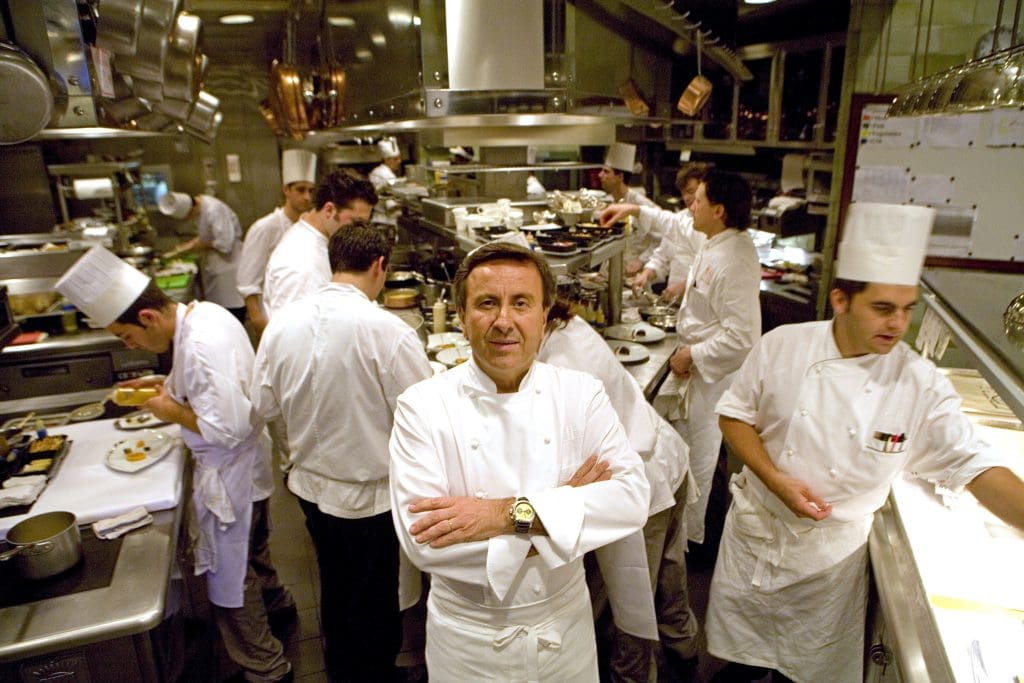
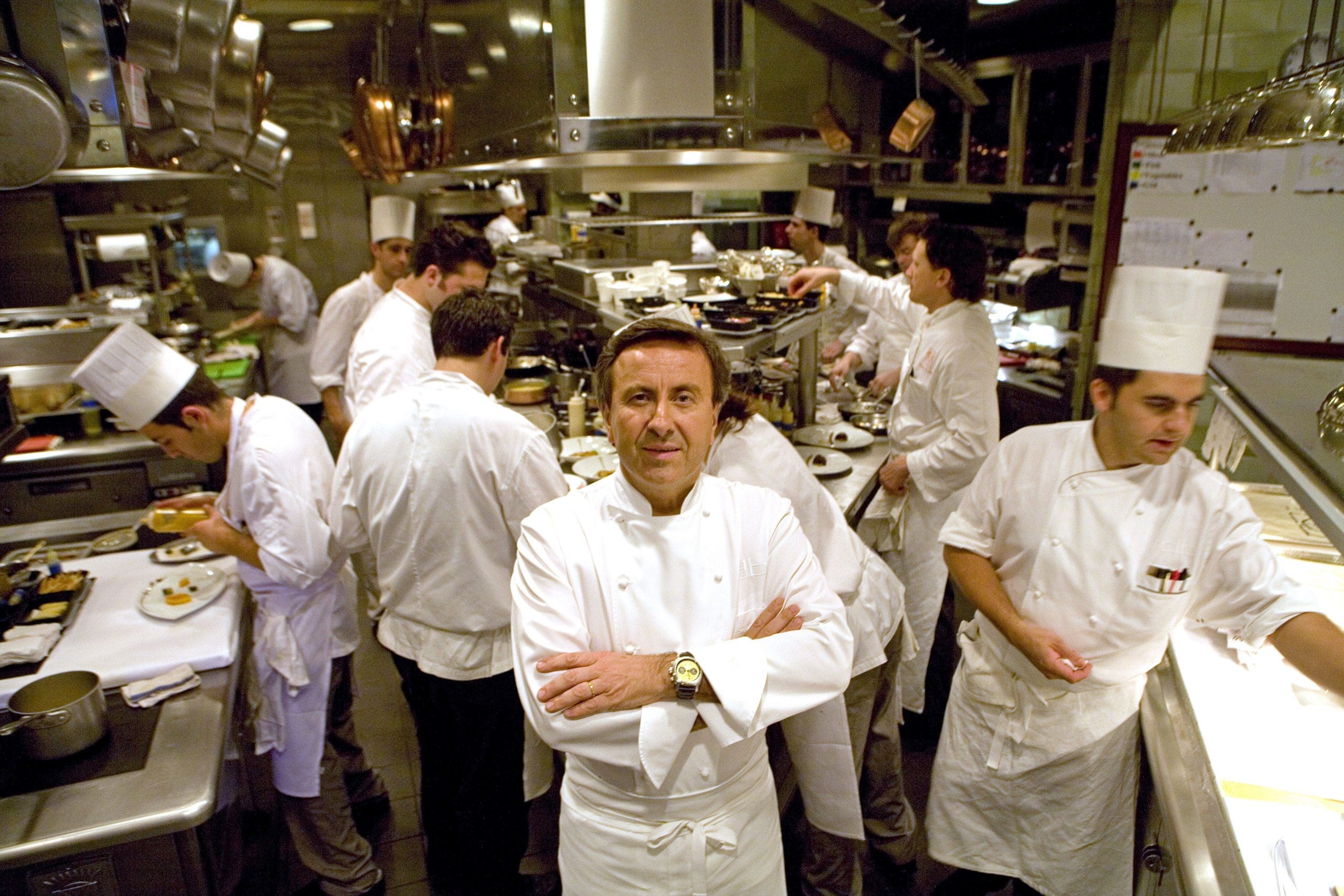
Daniel Boulud (USA) – Daniel
Net worth revealed after 6 slides
Begin the countdown ↓
How did Daniel Boulud build this fortune?
The answer unfolds through the career, earnings, deals and assets behind the headline estimate.
Daniel Boulud before the fame
The background and early turning points that shaped Daniel Boulud (USA) – Daniel’s route to prominence.
Daniel Boulud was born on March 25, 1955, in Saint-Pierre-de-Chandieu, a farming village near Lyon, France, where his family grew produce and raised livestock, giving him an early, hands-on relationship with seasonal ingredients. He entered professional kitchens at around age 15, training under three of France’s most celebrated chefs, Georges Blanc, Roger Vergé, and Michel Guérard, an apprenticeship rooted in classical Lyonnaise technique rather than any single mentor’s signature style. He moved to the United States in 1982 to continue his career, arriving with a grounding in French fine dining that he would spend the next decade adapting for New York. This early biography is documented on his Wikipedia page and on his own official biography.
In New York, Boulud worked his way through a string of high-profile hotel kitchens, including the Polo Lounge restaurant at the Westbury Hotel and Le Régence at the Hotel Plaza Athénée, building a reputation among the city’s fine-dining insiders. His defining early role came in 1986, when he was named executive chef at Le Cirque, then one of the most powerful dining rooms in New York, a position he held until 1992. Under his direction, Le Cirque earned a rare four-star review from The New York Times, a rating that put Boulud on the map as one of the city’s most closely watched chefs years before he had a restaurant to call his own. This stretch of his career is detailed on Wikipedia and in Wine Spectator’s profile of his rise.
Daniel Boulud’s breakthrough years
The career decisions and defining moments that turned recognition into sustained earning power.
In 1993, Boulud left Le Cirque to open his own restaurant, Daniel, on Manhattan’s Upper East Side, founding The Dinex Group as the holding company behind it the same year. Daniel relocated to a larger Park Avenue address in 1998 and earned three Michelin stars once the New York guide launched in 2005, a rating it held for over a decade before a later downgrade to the one star it holds today. The restaurant’s early acclaim gave Boulud the credibility and capital to expand for the first time beyond a single dining room, opening Café Boulud in the same building move and adding db Bistro Moderne and Bar Boulud within a few years, extending the Daniel name into more casual formats. Wine Spectator’s profile and Boulud’s official biography cover this founding period.

What Daniel Boulud’s work can earn
Reported pay, contracts, royalties and performance income reveal how the fortune was funded.
Boulud’s honors span both sides of the Atlantic. The James Beard Foundation has named him Best Chef New York (1992), Outstanding Chef of the Year (1994), and Outstanding Restaurateur (2006), and separately gave Daniel its Outstanding Restaurant Award in 2010, a rare sweep across the Foundation’s top individual and restaurant categories. France made him a Chevalier de la Légion d’Honneur in 2006, and the World’s 50 Best Restaurants organization gave him its Lifetime Achievement Award in 2015. He has also authored eight cookbooks, including the definitive Daniel: My French Cuisine and the mentorship-focused Letters to a Young Chef, extending his authority from the kitchen onto the page. These achievements are catalogued on his Wikipedia page.
Beyond his own dining rooms, Boulud has become one of the more visible ambassadors of French cooking in American media. He has judged Top Chef Canada, hosted the online series After Hours with Daniel, and made cameo appearances in the television dramas Billions and The Bear, lending his name to two of the highest-profile shows built around the restaurant industry. That media presence sits alongside decades of coverage in the food and business press treating him as a benchmark figure for French fine dining in the United States, a status reinforced every time a new Boulud opening draws national attention. This side of his public profile is documented on his Wikipedia page.
Daniel Boulud’s business beyond the main career
Endorsements, ownership interests and investments can keep compounding long after the initial breakthrough.
Rather than the celebrity-athlete style of sponsorship, most of Boulud’s outside income runs through hospitality and culinary partnerships tied directly to his cooking. Since 2019, he has served as Celebrity Cruises’ Global Culinary Brand Ambassador, designing menus for the line’s suite-class Luminae restaurant and a five-course Chef’s Table experience across ships including Celebrity Summit, Celebrity Equinox, and Celebrity Millennium. In 2025, Evian brought him on for a U.S. Open tie-in, creating a limited-time menu at Restaurant Daniel inspired by tennis player Frances Tiafoe alongside a nationally distributed treat box sold through Goldbelly. He has also opened a Blue Box Café collaboration with Tiffany & Co. on Fifth Avenue. These partnerships are documented in PR Newswire’s coverage of the Celebrity Cruises partnership and MediaPost’s report on the Evian collaboration.
The Dinex Group has grown from the single Manhattan dining room Boulud opened in 1993 into a portfolio his own team describes as more than 20 establishments across the United States, Canada, the Bahamas, Singapore, Dubai, and Saudi Arabia, including Le Pavillon, Bar Boulud, Boulud Sud, several Café Boulud locations, and the fast-casual Épicerie Boulud chain. Its most recent additions include Le Gratin, a Lyonnaise bistro opened in 2022, and La Tête d’Or, an American-French steakhouse that opened at One Madison Avenue in late 2024. The group also briefly held a stake in Spyce, a robotic-kitchen fast-casual concept it helped develop before Spyce was acquired by Sweetgreen in 2021. The scale and structure of this restaurant group are detailed on Boulud’s official site and in Culinary Agents’ profile of The Dinex Group.
Daniel Boulud’s notable luxury item
A reported property or major asset offers a tangible glimpse of the wealth behind the public estimate.
Boulud’s most documented personal property is a weekend house in Bedford, in Westchester County, New York, which he and his wife Katherine renovated around an expanded, light-filled kitchen after knocking down interior walls to absorb a former dining room, den, and covered terrace. The rebuilt kitchen mixes Provencal-farmhouse touches, including robin’s-egg-blue cabinets and a flea-market chandelier, with professional Dacor induction and gas ranges. He also keeps a Manhattan apartment directly above Restaurant Daniel at Park Avenue and 65th Street, with a sleeker, chrome-finished kitchen that contrasts with the country house. Beyond these two documented homes, no further real estate holdings have been publicly reported. Both properties are profiled in Yahoo Lifestyle’s feature on Boulud’s home kitchens.
Daniel Boulud’s estimated net worth
Public estimates vary because private contracts, investments, taxes and liabilities are not fully disclosed.
How this estimate is calculated
The most concrete, dated net worth figure for Boulud published by a mainstream outlet is The Daily Meal’s 2017 ranking of America’s most successful chefs, which placed him eleventh among his peers with an estimated 12 million dollars, well behind contemporaries like Wolfgang Puck and Gordon Ramsay on the same list. That figure predates nearly a decade of subsequent expansion, including the additions of Le Gratin, La Tête d’Or, a new Beverly Hills Café Boulud, and a planned Riyadh location, alongside continued cookbook royalties and multi-year brand partnerships with Celebrity Cruises and Evian that did not exist in 2017. Aggregator sites circulate much higher figures, including one 2024 estimate putting his net worth as high as 90 million dollars, but that number and others like it are not attributed to any audited financial disclosure and should be treated as unverified secondary estimates rather than confirmed figures, since The Dinex Group is privately held and does not publish financial results. Weighing the confirmed 2017 baseline against the real, documented growth of his restaurant group since then, while discounting the unsourced higher aggregator numbers, produces a wide but defensible range rather than a single precise figure. The Daily Meal’s methodology can be reviewed on its 2017 most successful chefs feature, and the 90 million dollar aggregator estimate, cited here only as a secondary reference point, appears on Networthgraphy’s profile of Boulud.
Boulud has served on the board of Citymeals on Wheels, the organization that delivers meals to homebound elderly New Yorkers, since 2000, becoming co-president in 2013 and later rising to board chair. His signature fundraiser, the annual Sunday Supper at Restaurant Daniel, brings in a rotating cast of guest chefs each spring and has raised more than 17 million dollars for the organization over its history, including 1.3 million dollars at its 28th edition in 2026 alone. He also created the Daniel Boulud Scholarship Endowment Fund, which sends American culinary students to train in France, and helped establish the Bocuse d’Or USA Foundation to support the American team at the international cooking competition. This philanthropic record has helped position him as one of the industry’s elder statesmen rather than purely a business figure. It is detailed on Citymeals on Wheels’ recap of the 2026 Sunday Supper and his Wikipedia page.
Boulud’s restaurant group has faced discrimination allegations on two separate occasions. In 2007, he settled a federal lawsuit brought by seven current and former employees at Daniel, workers from Latin America and Bangladesh who alleged that white French staff were promoted ahead of them; the settlement included roughly 80,000 dollars in back pay, EEOC oversight of future promotion decisions, and mandatory sensitivity training for managers. In 2023, a former host at Le Pavillon filed a new lawsuit alleging the restaurant accommodated diners who did not want to be served by Black staff and that he was fired in retaliation for reporting the practice internally, a case The Dinex Group has said it intends to contest. These two episodes are covered in Nation’s Restaurant News’ report on the 2007 settlement and The Daily Beast’s report on the 2023 Le Pavillon lawsuit.