
 How Much Are They Worth?
Celebrity fortunes, explained
How Much Are They Worth?
Celebrity fortunes, explained




How did José Andrés build this fortune?
The answer unfolds through the career, earnings, deals and assets behind the headline estimate.
José Andrés before the fame
The background and early turning points that shaped José Andrés’s route to prominence.
José Ramón Andrés Puerta was born on July 13, 1969, in Mieres, in the Asturias region of Spain, and grew up mostly in a town outside Barcelona after his family relocated there, according to Wikipedia’s biography of the chef. He enrolled in culinary school in Barcelona at age 15 and later completed Spanish military service, where he was assigned as a cook for a naval admiral — an early posting that gave him large-scale kitchen experience well before he ever worked in a professional restaurant.
Andrés married Patricia “Tichi” Fernández de la Cruz in September 1995, and the couple have three daughters. The family has lived for decades in Bethesda, Maryland, just outside Washington, D.C., the city where Andrés built the bulk of his restaurant career. He became a naturalized U.S. citizen in December 2013, more than two decades after first arriving in the country.
Between 1988 and 1990, Andrés trained under chef Ferran Adrià at El Bulli, the Catalonian restaurant widely credited with pioneering molecular gastronomy, an experience that shaped his experimental, technique-driven approach to cooking. According to Wikipedia’s account, Adrià fired him in December 1990, after which Andrés moved to New York City at age 21 with, by his own retelling, only about $50 to his name.
In 1993, restaurateurs Rob Wilder and Roberto Álvarez recruited Andrés to Washington, D.C. to lead the kitchen at a new tapas restaurant called Jaleo, according to Jaleo’s official history page. Jaleo helped introduce American diners to Spanish small plates and launched Andrés’s career as a restaurateur in the United States, beginning a business partnership with Wilder that would eventually grow into a multi-city restaurant group.
José Andrés’s breakthrough years
The career decisions and defining moments that turned recognition into sustained earning power.
Following Jaleo, Andrés and his team opened Café Atlántico, the Mediterranean restaurant Zaytinya, and the Mexican-inspired Oyamel in the Washington, D.C. area through the late 1990s and early 2000s. In 2006, Andrés and Wilder folded their growing portfolio into a parent company, ThinkFoodGroup (later rebranded José Andrés Group), which now operates roughly 25 to 40 venues across multiple U.S. cities including Washington, D.C., Miami, Las Vegas, Los Angeles, New York, and Orlando, per NBC Insider’s rundown of José Andrés’s restaurants. His tasting-menu restaurant minibar by José Andrés earned two Michelin stars in 2016, and he was named Outstanding Chef by the James Beard Foundation in 2011, following an earlier Best Chef: Mid-Atlantic award in 2003, as reported at the time by The Washington Post.
In 2010, following the Haiti earthquake, Andrés founded World Central Kitchen (WCK), a nonprofit organization that deploys chefs and volunteers to cook meals for communities hit by natural disasters, war, and other crises. WCK has since operated in Puerto Rico after Hurricane Maria, across the United States during the COVID-19 pandemic, in Ukraine following the 2022 Russian invasion, and in Gaza, among many other responses. WCK is a separate 501(c)(3) nonprofit with its own budget, staff, and leadership — Andrés serves as founder and board member rather than as a salaried executive — and its finances are legally and functionally distinct from his personal wealth.

What José Andrés’s work can earn
Reported pay, contracts, royalties and performance income reveal how the fortune was funded.
José Andrés does not publicly disclose a personal salary or annual income figure, and no year-by-year earnings breakdown for him has been made public by ThinkFoodGroup/José Andrés Group. His income is understood to come from a mix of restaurant-group profit distributions as a co-owner alongside partner Rob Wilder, book royalties, television and documentary fees, speaking engagements, and licensing or consulting arrangements such as his José Andrés Group’s foodservice partnership with Compass Group USA. None of these income streams have individually disclosed dollar figures, so any annual-earnings figure attributed to him should be treated as an estimate rather than a confirmed number.
Andrés’s clearest documented commercial contract is the exclusive, multi-year foodservice partnership his company, ThinkFoodGroup, signed with Compass Group USA in 2017, under which the two companies collaborated on concept development for venues such as museums, stadiums, and corporate dining programs, according to Compass Group USA’s announcement of the deal. On the media side, Andrés has hosted the Spanish-language cooking show Vamos a Cocinar (2005-2007), the PBS series Made in Spain, and the Discovery+ series José Andrés & Family in Spain (2022), and he was the subject of the Ron Howard-produced National Geographic documentary We Feed People (2022). His book deals, primarily with HarperCollins imprints, span titles including Tapas: A Taste of Spain in America (2005), Made in Spain (2008), We Fed an Island (2018), Vegetables Unleashed (2019), and Zaytinya and Change the Recipe (both 2023); none of these publishing or television agreements have disclosed advance or fee amounts publicly.

José Andrés’s business beyond the main career
Endorsements, ownership interests and investments can keep compounding long after the initial breakthrough.
Unlike many celebrity chefs, Andrés has not built a large public roster of third-party consumer endorsement deals for products like cookware, appliances, or beverages. His most direct commercial branding runs through José Andrés Foods, a retail line of Spanish pantry products such as olive oil, saffron, and paella rice sold through his own online shop and partners like La Tienda. In 2023, he joined the board of directors of Wonder Group, the food-delivery and meal-hall company founded by Marc Lore, in an advisory role focused on chef partnerships and growth strategy rather than a paid spokesperson arrangement, as announced by Business Wire. No compensation figures for the board seat have been disclosed.
Andrés’s primary business is José Andrés Group (formerly ThinkFoodGroup), the restaurant company he co-founded with Rob Wilder in 2006, which today spans roughly 25 to 40 restaurants across concepts including Jaleo, minibar, The Bazaar, Zaytinya, and Oyamel, plus consulting and design work through its THINKfoodTANK division. The group has also announced The Bazaar House, a hotel concept slated to open in 2027 that extends the Andrés brand into hospitality beyond restaurants, according to Boutique Hotelier’s coverage of the project. It is important to separate the restaurant group’s gross revenue — the total sales generated across dozens of venues before costs, partner shares, and taxes — from Andrés’s personal net worth, which reflects only his own equity stake and take-home earnings after those deductions.
José Andrés’s notable luxury item
A reported property or major asset offers a tangible glimpse of the wealth behind the public estimate.
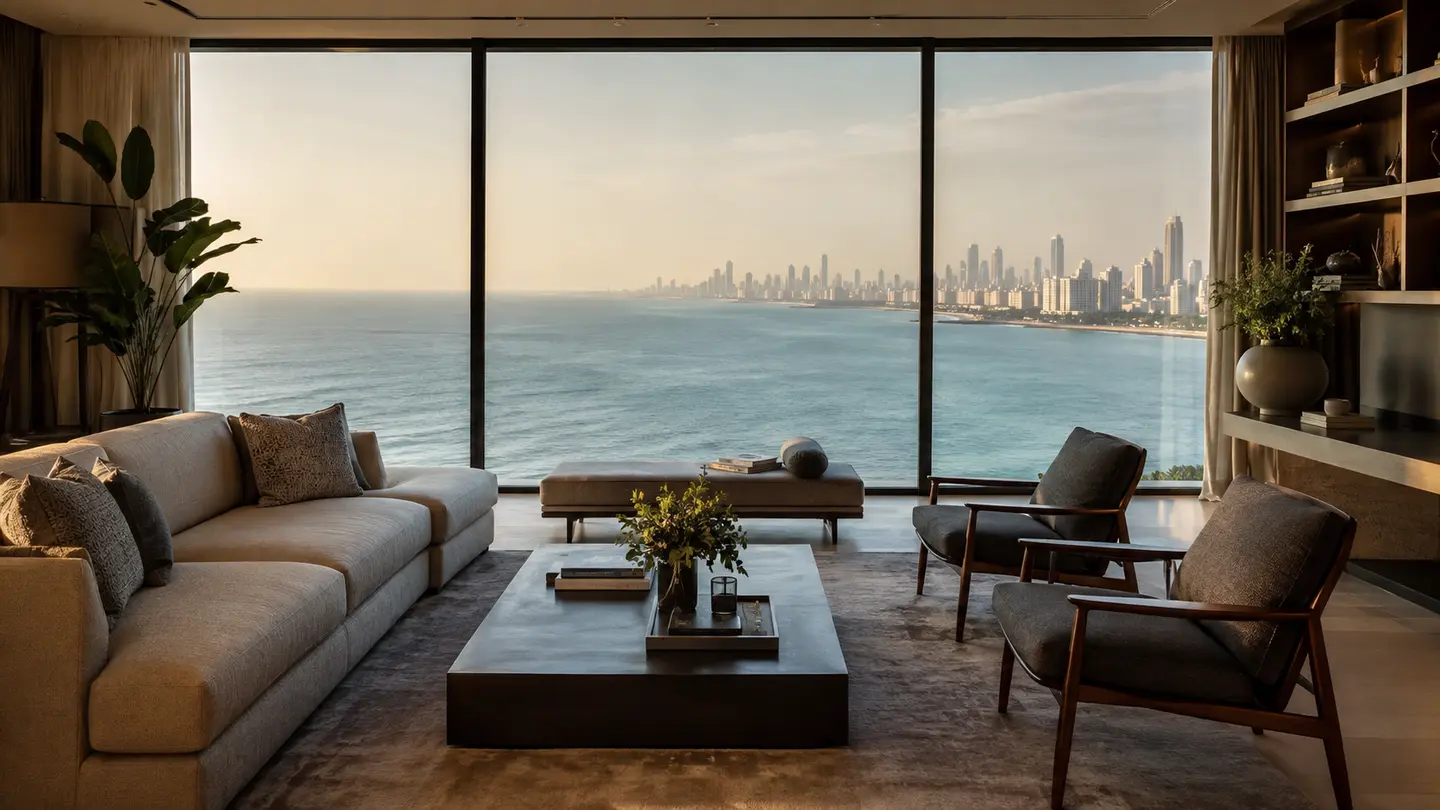
Public reporting on Andrés’s real estate is limited to his longtime family home in Bethesda, Maryland, a modernist stucco house built by architect David Jameson that Andrés purchased in 2006 for roughly $2.675 million, per Virtual Globetrotting’s profile of the property and Washingtonian’s feature on Washington’s notable homes; automated valuation estimates have since placed it anywhere from roughly $1.85 million to over $2.7 million. No other residences, vehicles, aircraft, or major luxury assets are documented in public reporting, and no figures for any such holdings should be assumed. Relative to the scale of his restaurant group and public profile, Andrés’s known personal asset footprint is comparatively modest.
José Andrés’s estimated net worth
Public estimates vary because private contracts, investments, taxes and liabilities are not fully disclosed.
How this estimate is calculated
Public estimates of José Andrés’s net worth cluster in a fairly narrow band. Celebrity Net Worth, used here only as a secondary, cross-check source rather than a primary one, lists a figure of roughly $50 million, while several other aggregator sites and entertainment-business outlets have cited figures closer to $70 million. No court filing, audited personal financial statement, or first-party disclosure from Andrés or José Andrés Group has ever put a precise number on his personal wealth, so the range above should be read as a reasonable estimate built from converging aggregator figures rather than a confirmed total.
The estimate rests primarily on Andrés’s equity stake in José Andrés Group’s restaurant portfolio, alongside book royalties, television and documentary fees, and speaking income, built up over more than three decades in the restaurant business. It is critical to keep two very different sets of dollar figures separate: José Andrés Group’s gross restaurant revenue across dozens of venues, and World Central Kitchen’s charitable fundraising — which totaled roughly $327.8 million in revenue in fiscal year 2024, according to WCK’s own audited 2024 financial statements — are both entirely distinct from Andrés’s personal net worth. WCK is a registered 501(c)(3) nonprofit, its funds are legally restricted to charitable disaster-relief operations, and public tax filings do not list Andrés among the organization’s highly compensated staff, so none of WCK’s hundreds of millions in annual revenue should be read as part of his personal fortune.
| 1990 | Leaves El Bulli and moves to New York City at age 21 with reportedly about $50 |
| 1993 | Hired to lead the kitchen at Jaleo in Washington, D.C., launching his U.S. restaurant career |
| 2006 | Co-founds ThinkFoodGroup (now José Andrés Group) with Rob Wilder |
| 2010 | Founds World Central Kitchen following the Haiti earthquake |
| 2011 | Named Outstanding Chef by the James Beard Foundation |
| 2016 | Minibar by José Andrés earns two Michelin stars |
| 2017 | ThinkFoodGroup signs exclusive multi-year foodservice partnership with Compass Group USA |
| 2018 | Named James Beard Humanitarian of the Year; publishes We Fed an Island on WCK’s Puerto Rico response |
| 2020-2022 | WCK raises roughly $250 million (2020, pandemic response) and $519 million (2022, Ukraine response); receives a $100 million gift from Jeff Bezos in 2021 — all WCK funds, not personal income |
| 2023 | Joins Wonder Group’s board of directors |
| 2025 | Awarded the Presidential Medal of Freedom for humanitarian work |
| 2026 | José Andrés Group continues expanding, including plans for The Bazaar House hotel; personal net worth estimated in the $50 million-$70 million range by public aggregators |
Among celebrity chefs, Andrés is most often grouped with Wolfgang Puck and Gordon Ramsay as figures who parlayed a fine-dining reputation into a multi-city restaurant group, though his path has diverged from both in one key respect: Ramsay’s and Puck’s fortunes have been amplified heavily by television production deals and consumer product licensing, while Andrés has built comparatively few third-party endorsement deals and instead channeled much of his public platform into World Central Kitchen, a nonprofit that generates no personal income for him. That makes direct net-worth comparisons difficult — WCK’s hundreds of millions of dollars in annual disaster-relief fundraising has nothing to do with Andrés’s personal balance sheet, even though it dominates his public profile far more than his restaurant holdings do. Within the humanitarian-chef space, he is sometimes compared to the late Anthony Bourdain for cultural influence, though Bourdain’s wealth was built almost entirely through media and publishing rather than restaurant ownership, a further point of contrast with Andrés’s operator-heavy business model.
Sources and references
- Wikipedia — José Andrés
- Celebrity Net Worth — José Andrés net worth estimate
- World Central Kitchen — 2024 Consolidated Financial Statements
- Charity Navigator — World Central Kitchen Incorporated rating
- The Washington Post — José Andrés wins James Beard Outstanding Chef award
- Michelin Guide — José Andrés: The Story on Your Plate
- Jaleo — Our Story
- NBC Insider — All of José Andrés’s Restaurants and Their Locations
- GW Today — José Andrés Awarded Presidential Medal of Freedom
- Virtual Globetrotting — José Andrés’s house in Bethesda, MD
- Business Wire — Chef José Andrés joins Wonder Group’s Board of Directors
- Compass Group USA — ThinkFoodGroup and Compass Group USA exclusive partnership
- Boutique Hotelier — The Bazaar House by José Andrés luxury hotel to open in 2027