 How Much Are They Worth?
Celebrity fortunes, explained
How Much Are They Worth?
Celebrity fortunes, explained

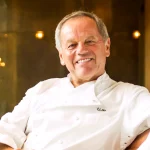
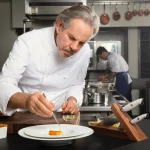




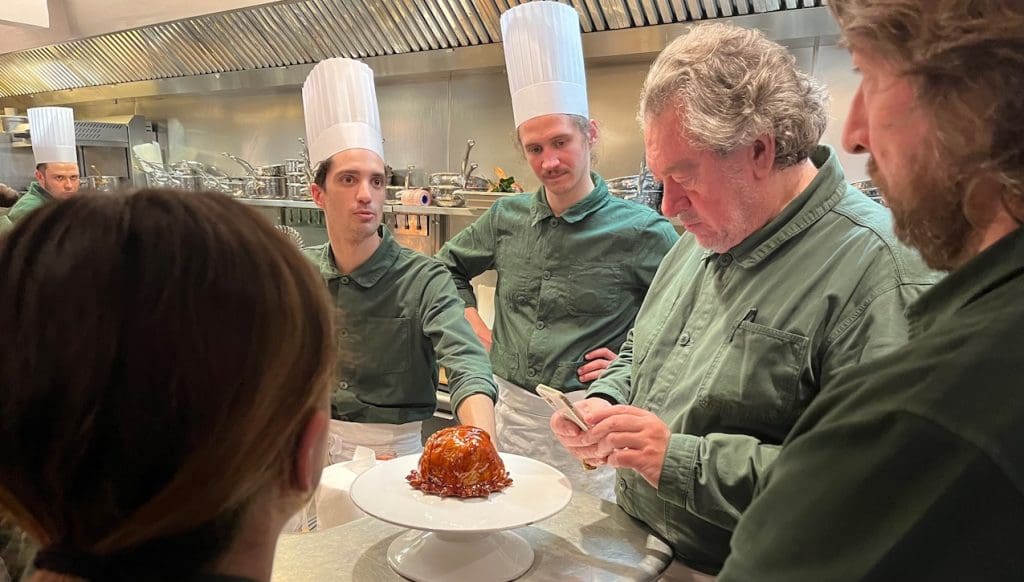
Bruno Verjus (France) – Table
Net worth revealed after 6 slides
Begin the countdown ↓
How did Bruno Verjus (France) – Table build this fortune?
The answer unfolds through the career, earnings, deals and assets behind the headline estimate.
Before the fame
The background and early turning points that shaped Bruno Verjus (France) – Table’s route to prominence.
Bruno Verjus was born in October 1959 in Renaisson, near Roanne in the Loire region of France, according to Gastromondiale. He studied medicine in Lyon, stopping short of completing a full medical career, before an unusually varied run of jobs that took him to Los Angeles as an advertising photographer and then to China, where he headed a medical device and packaging company for nearly two decades, working across China, Japan, Indonesia, the United States and Europe, per the same profile and Gault&Millau. He sold that company in 2005, a sale that would later help fund his move into restaurants. He is married to the novelist and food writer Ingrid Astier, with whom he later co-authored cookbooks, and the couple have a son, Stanislav, who worked as a server during one of his father’s earliest restaurant ventures, according to Gastromondiale.
On returning to France in 2003, Verjus spent seven years running the Chateau Yvonne wine estate near Saumur, developing an interest in natural wine that would later shape his approach to sourcing, per Gault&Millau. He also began writing, running the blog Food Intelligence from December 2004 to 2017 and contributing to publications including Le Fooding, Omnivore and Identita Golose, according to Gastromondiale. From around 2010 to 2012 he joined the editorial team at L’Omnivore and co-hosted the France Culture radio programme On ne parle pas la bouche pleine with Alain Kruger, spending years visiting professional kitchens as a critic rather than a cook, per Restaurant Times. He picked up cooking technique informally, including guidance from Frederick Ernestine Grasser Herme, the former wife of pastry chef Pierre Herme, and ran an early, low-key restaurant venture on the Ile d’Yeu before settling in Paris, according to Gastromondiale.
The breakthrough years
The career decisions and defining moments that turned recognition into sustained earning power.
Verjus opened Table on April 11, 2013, at 3 rue de Prague in Paris’s then-overlooked 12th arrondissement, near the Marche d’Aligre, self-funding the venture with proceeds from the 2005 sale of his China-based company, according to Jancis Robinson and Restaurant Times. He was 54 years old, had no formal culinary training and had never worked a service in another restaurant’s kitchen, building the 24-seat room around a single tin counter and an open kitchen with no back-of-house, per The National. The original lunch menu was priced at 25 euros, and low rent in the then-unfashionable district gave him room to learn the trade; he has said it took roughly eighteen months to feel he had mastered running a kitchen and a dining room at the same time, according to Restaurant Times.

What the work can earn
Reported pay, contracts, royalties and performance income reveal how the fortune was funded.
Table earned its first Michelin star in 2018, a Michelin Green Star for sustainability in 2020, and a second Michelin star in 2022, according to Reporter Gourmet. The restaurant entered The World’s 50 Best Restaurants list inside the top ten on its first appearance in 2023, held that position through 2024, and rose to number 8 in 2025, making it the highest-placed restaurant in France on that year’s list, per Jubilee Talent and The World’s 50 Best Restaurants. Gault&Millau rates Table at three toques with a score of 16 out of 20, its “remarkable restaurant” tier, according to Gault&Millau.
Table is now booked out for months at a time, though Verjus deliberately holds back a handful of seats each service for same-day, walk-up diners rather than filling the room entirely in advance, according to Fine Dining Lovers, which profiled him under the headline “I’m the oldest, youngest chef” in reference to his decades as a diner and critic before ever cooking professionally. Pricing has climbed sharply alongside the restaurant’s reputation, from the original 25-euro lunch in 2013 to a tasting menu reported at around 400 euros per person in a 2024 profile by The National, and closer to 480 euros per person in Gault&Millau’s current listing. Food press coverage consistently frames Verjus’s path from gastronomic critic to two-star chef as one of the more unusual career reversals in modern French dining.

The business beyond the main career
Endorsements, ownership interests and investments can keep compounding long after the initial breakthrough.
Verjus has not put his name behind consumer product campaigns or brand ambassador deals in the way many celebrity chefs do. His outside commercial relationships are professional rather than promotional: his advisory role with agri-food investor Astanor is a paid position tied to his food-industry expertise rather than a marketing endorsement, according to Astanor, and his book deals with publisher Gallimard function as authorship income rather than sponsorship, per Reporter Gourmet. No outlet reviewed for this profile documents a paid partnership with a food, drinks or lifestyle brand of the kind common among chefs with a television profile.
Verjus has kept his core business deliberately small: Table has never expanded beyond its original 24 covers or its four-day operating week, and he has not opened a second restaurant under his own name. His broader business activity sits outside the kitchen. He serves as an advisor on the value creation team at Astanor, an investment firm focused on agri-food and sustainability, drawing on his network of producers and his food-industry credibility, according to Astanor. He is also a published author with Gallimard, including the 2021 book The Art of Nourishment, which traces his path from critic to chef, per Reporter Gourmet, and he has co-authored earlier cookbooks with his wife, novelist Ingrid Astier, according to Gastromondiale. Before Table, his seven years running the Chateau Yvonne wine estate near Saumur was itself a standalone business venture, per Gault&Millau.
Notable luxury item
A reported property or major asset offers a tangible glimpse of the wealth behind the public estimate.
No outlet reviewed for this profile has published details of a personal home or property portfolio belonging to Verjus. His clearest identifiable asset from before Table was the Chateau Yvonne wine estate near Saumur, which he ran for seven years in the 2000s before turning to the restaurant business, according to Gault&Millau. His major asset today is effectively the Table business itself, the 24-seat site at 3 rue de Prague that he built out and has operated continuously since 2013, financed originally from the proceeds of selling his China-based medical device and packaging company in 2005, per Jancis Robinson. Any equity or compensation tied to his advisory role at Astanor is not publicly disclosed.
Bruno Verjus (France) – Table’s estimated net worth
Public estimates vary because private contracts, investments, taxes and liabilities are not fully disclosed.
How this estimate is calculated
Bruno Verjus does not publicly disclose his personal finances, and no celebrity net worth aggregator or financial outlet reviewed for this profile appears to carry a published estimate for him, so this figure is built from indirect business signals rather than adjusted from an existing public number. Those signals include the undisclosed but presumably meaningful proceeds from the 2005 sale of his China-based medical device and packaging company, which he has said funded the opening of Table; ownership of a single two-Michelin-star restaurant whose per-person pricing has risen roughly sixteen-fold since 2013 and which has sat in the top ten of The World’s 50 Best Restaurants list since 2023; a paid advisory role with agri-food investor Astanor; and royalty income from multiple books published with Gallimard. Working against a higher figure is the fact that Table has deliberately stayed capped at 24 covers and a four-day operating week for more than a decade, a scale that limits annual revenue compared with chefs who run multi-site groups, and there is no evidence in the record of a television deal, a licensed product line, or the kind of global brand partnerships that push celebrity-chef fortunes into eight figures. Taken together, these signals point to a comfortably wealthy chef-owner whose fortune rests on a prior business exit and a single, high-demand restaurant rather than a broad commercial empire.
Verjus has not attached his name to a public charitable foundation, and philanthropy is not a documented part of his profile. His public image instead centers on his relationship with the small producers who supply Table, which he has described as “the sacred alliance of a material and a character,” and on his belief that, as he put it, “our food choices shape our world,” according to The World’s 50 Best Restaurants. That producer-first ethos, built over years spent as a critic visiting farms and markets rather than training in kitchens, is consistently presented by food press as the defining trait behind his cooking, per Reporter Gourmet. His household is also a working literary partnership, with his wife Ingrid Astier a published novelist and food writer in her own right, according to Gastromondiale.
Verjus has not been linked to any personal scandal, and the scrutiny around him is almost entirely about the tension between his sustainability image and his sourcing in practice. Despite winning a Michelin Green Star in 2020, critics have pointed to a contradiction between that recognition and specific dishes, including a tableside presentation involving the discarding of part of a sole and the sourcing of ingredients such as lettuce from more than 1,200 kilometers away, according to Gastromondiale. Separately, despite his Michelin stars and top-ten World’s 50 Best placement, Table has not been recognized by La Liste, the French government-linked restaurant ranking, a gap noted by Fine Dining Lovers. The steep rise in pricing, from a 25-euro lunch in 2013 to a tasting menu near 400 to 480 euros a decade later, has also drawn the kind of value-for-money debate common to ultra-fine dining, per The National.