 How Much Are They Worth?
Celebrity fortunes, explained
How Much Are They Worth?
Celebrity fortunes, explained








How did Imaqtpie (Michael Santana) build this fortune?
The answer unfolds through the career, earnings, deals and assets behind the headline estimate.
Before the fame
The background and early turning points that shaped Imaqtpie (Michael Santana)’s route to prominence.
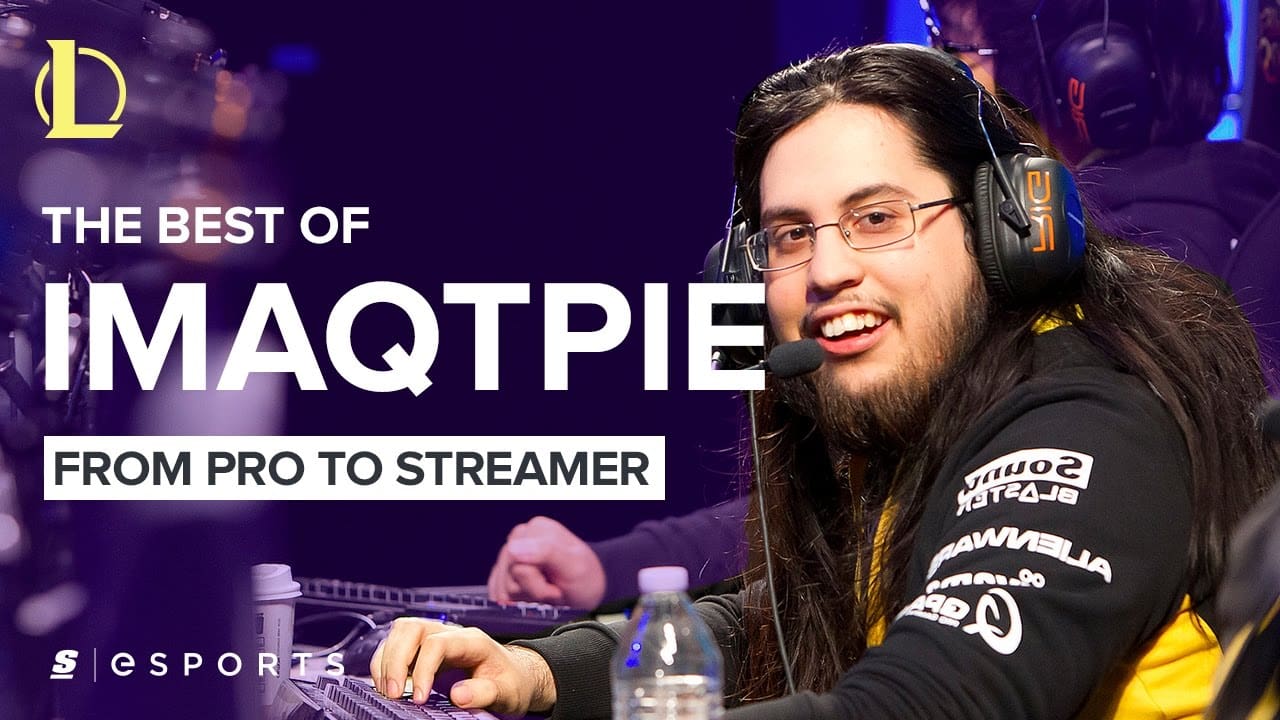
Michael Santana, known to millions of League of Legends fans as Imaqtpie, was born on February 21, 1992, and grew up in Florida, according to biographical details compiled by Famous Birthdays. He built his name during the earliest years of competitive League of Legends in North America, first as an amateur AD carry and then as the starting bot laner for Team Dignitas from 2011 to 2014. When he stepped away from competitive play in his early twenties, he did something unusual for the time: he kept broadcasting anyway, turning what had been a side activity into one of the longest-running personal brands in League of Legends history. More than a decade later, he remains one of the game’s most recognizable streaming personalities, known for off-meta champion picks, deadpan commentary, and a fan base that has followed him since Twitch’s earliest days.
Santana’s path into professional League of Legends began in 2011, when he played for the amateur roster Oh God Bears before being recruited by fellow player Scarra to join Rock Solid as its starting AD carry, according to Wikipedia. Rock Solid’s early tournament success caught the attention of Team Dignitas, which acquired the roster in September 2011 and brought Santana into the North American League Championship Series ecosystem just as it was forming. Those first two years established the playstyle that would define his career: unconventional item and champion choices delivered with enough mechanical consistency to hold his own against more conventional rosters. His early results, including a first-place finish at IGN Pro League Season 3 in October 2011 and another first-place finish at the LoLPro.com Curse Invitational in February 2012, documented by Esports Earnings, gave him his first real recognition in the scene.
The breakthrough years
The career decisions and defining moments that turned recognition into sustained earning power.
Dignitas’s acquisition of Santana’s roster in September 2011 marked the true breakthrough of his career, positioning him as the team’s starting AD carry heading into the newly formed North American League Championship Series in 2013. He held that starting role through the league’s inaugural seasons, a period covered on his Liquipedia profile, competing against the first generation of NA LCS rosters that would go on to define the region for years afterward. His run included a fourth-place finish in the NA LCS 2013 Summer Split, per Wikipedia, giving him a consistent competitive platform that he used to build a personal streaming audience alongside his team results, a combination that few players of his era managed as effectively.

What the work can earn
Reported pay, contracts, royalties and performance income reveal how the fortune was funded.
Over his competitive career, Santana reached the Season 2 World Championship in October 2012, placed second at the IEM Season VI World Championship in March 2012, and finished second at the Season 2 NA Regional Finals in September 2012, according to his full results history on Esports Earnings, which lists his career tournament total at $39,130.98 across 28 tournaments. That figure reflects the smaller prize pools of League of Legends’ early competitive years rather than a lack of results, and his tournament history on Liquipedia confirms a run of consistent top-finishes with Dignitas between 2011 and 2014. His final major achievement came off the Rift entirely: since transitioning to full-time streaming, he has maintained one of the longest continuously active channels in League of Legends, having registered on Twitch on September 22, 2011, per TwitchTracker, only months after the platform itself launched.
Santana’s profile grew well beyond competitive League of Legends results. He won the Domino’s Streamer of the Year award at the 2016 Esports Industry Awards and was nominated for Choice Gamer at the 2017 Teen Choice Awards, both noted on his Wikipedia page, putting him among the small group of esports figures recognized by mainstream entertainment award shows. That same year, Rolling Stone profiled him under the headline that he earned “$2 million a year” from streaming alone, a piece that pushed his name into general pop-culture coverage well outside gaming press, as archived on Rolling Stone. The combination of a mainstream magazine profile and entertainment-award recognition marked him as one of the first League of Legends personalities to break into wider celebrity coverage.

The business beyond the main career
Endorsements, ownership interests and investments can keep compounding long after the initial breakthrough.
Unlike some of his streaming peers, there is no public record of Santana signing a headline-grabbing individual endorsement deal with a major hardware or lifestyle brand. His monetization has stayed centered on platform revenue instead: Twitch subscriptions and advertising as a longtime Partner, plus YouTube ad revenue from a channel that had surpassed 1.6 million subscribers by November 2020, per Wikipedia. Gear-tracking sites such as GmrPC document Razer peripherals, BenQ ZOWIE monitors, and a high-end custom PC build used on his stream, but these listings track visible equipment rather than confirmed paid sponsorship agreements, and no press coverage of a formal brand partnership turned up in his case.
Santana’s main business has remained his own streaming brand rather than outside companies. After retiring from Dignitas in October 2014, he built a full-time Twitch and YouTube career that has run continuously for well over a decade. More recently, he has re-entered organized competition on the business side of the industry: he joined Disguised Toast’s content organization, Disguised, in December 2024 and competed for the roster at the TFT Macao Open that same month, a $308,500 prize-pool event where he finished 385th in a large international field, according to Esports Charts. He also sells apparel through a branded storefront, Imaqtpie Merch, a direct-to-consumer revenue stream typical of long-running streaming personalities.
Notable luxury item
A reported property or major asset offers a tangible glimpse of the wealth behind the public estimate.
There is no public record of Santana purchasing notable real estate, and unlike several top-tier streamers he has not documented a “streamer house” or major property acquisition on his channels. His most substantial documented physical asset is the production setup behind his own income: GmrPC’s equipment breakdown lists an AMD Ryzen 7 7800X3D processor, an NVIDIA GeForce RTX 4090 graphics card, and multiple BenQ ZOWIE monitors as part of his current streaming rig. That is a meaningful but modest asset next to a home or investment portfolio, and it functions primarily as the tool that generates his ongoing income rather than as a store of wealth in its own right. No independent reporting has surfaced a vehicle purchase, real estate holding, or investment portfolio attributed to him.
Imaqtpie (Michael Santana)’s estimated net worth
Public estimates vary because private contracts, investments, taxes and liabilities are not fully disclosed.
How this estimate is calculated
Santana’s net worth estimate draws on several verifiable data points rather than a single disclosed figure, since he has never published his personal finances. His documented competitive earnings are modest, $39,130.98 across 28 tournaments per Esports Earnings, reflecting the small prize pools of League of Legends’ 2011 to 2014 era rather than his true earning power. The far larger and better-documented income stream is his streaming career: Rolling Stone reported in 2017 that he earned “over $2 million a year” from Twitch alone, before sponsorships, a figure from one of his peak years as one of the platform’s highest-profile League of Legends personalities. TwitchTracker data shows his channel has been continuously active since September 22, 2011, holds Twitch Partner status, and has drawn an all-time high of 9,693 active subscribers, though his recent average viewership sits well below his historical peak, indicating that his current streaming income is very likely lower than his 2017 figure. Layered on top of that are YouTube ad revenue from a channel of over 1.6 million subscribers, a branded merchandise store, and a modest return to competitive relevance through the Disguised TFT roster. Third-party net worth trackers vary widely as a result, with public estimates ranging from roughly $1 million to as high as $5 million depending on the site’s methodology; none of these secondary aggregator estimates cite verified financial records, and they should be treated as rough approximations rather than confirmed figures. Weighing a documented multi-million-dollar peak income year against a long but declining viewership trend, no confirmed real estate or investment holdings, and modest competitive earnings, a broad range is the most defensible estimate.
Santana has not established a dedicated charitable foundation or run a headline fundraising campaign of the kind associated with some higher-profile streamers, and no major individual donation under his name turned up in public reporting. His public image instead rests on longevity and likability: more than fourteen years after he first started broadcasting, he remains active and relevant enough in the League of Legends community to be recruited into Disguised Toast’s Teamfight Tactics organization in December 2024, per Esports Charts, a sign that his standing among peers and fans has held up well past his competitive playing days. His reputation has centered consistently on humor, off-meta gameplay, and an easygoing on-stream persona rather than any manufactured brand image.
Santana’s most notable public dispute did not involve his own conduct but a decision made about him by Riot Games. In June 2022, fellow retired pro Shiphtur revealed on Doublelift’s podcast that both his and Santana’s applications for Riot’s high-elo Champions Queue had been declined despite both meeting the rank requirements, prompting both to shift their focus toward Valorant instead, as reported by RealSport101. The decision drew public criticism from Doublelift and other former LCS pros, who argued that players with Santana’s competitive résumé should have automatically qualified. Outside of that episode, his public record has stayed largely free of the chat-log controversies, contract disputes, or platform bans that have affected other long-tenured streamers, with scrutiny of his career centered almost entirely on how the industry has treated him rather than on his own behavior.