 How Much Are They Worth?
Celebrity fortunes, explained
How Much Are They Worth?
Celebrity fortunes, explained









How did Meteos build this fortune?
The answer unfolds through the career, earnings, deals and assets behind the headline estimate.
Before the fame
The background and early turning points that shaped Meteos’s route to prominence.
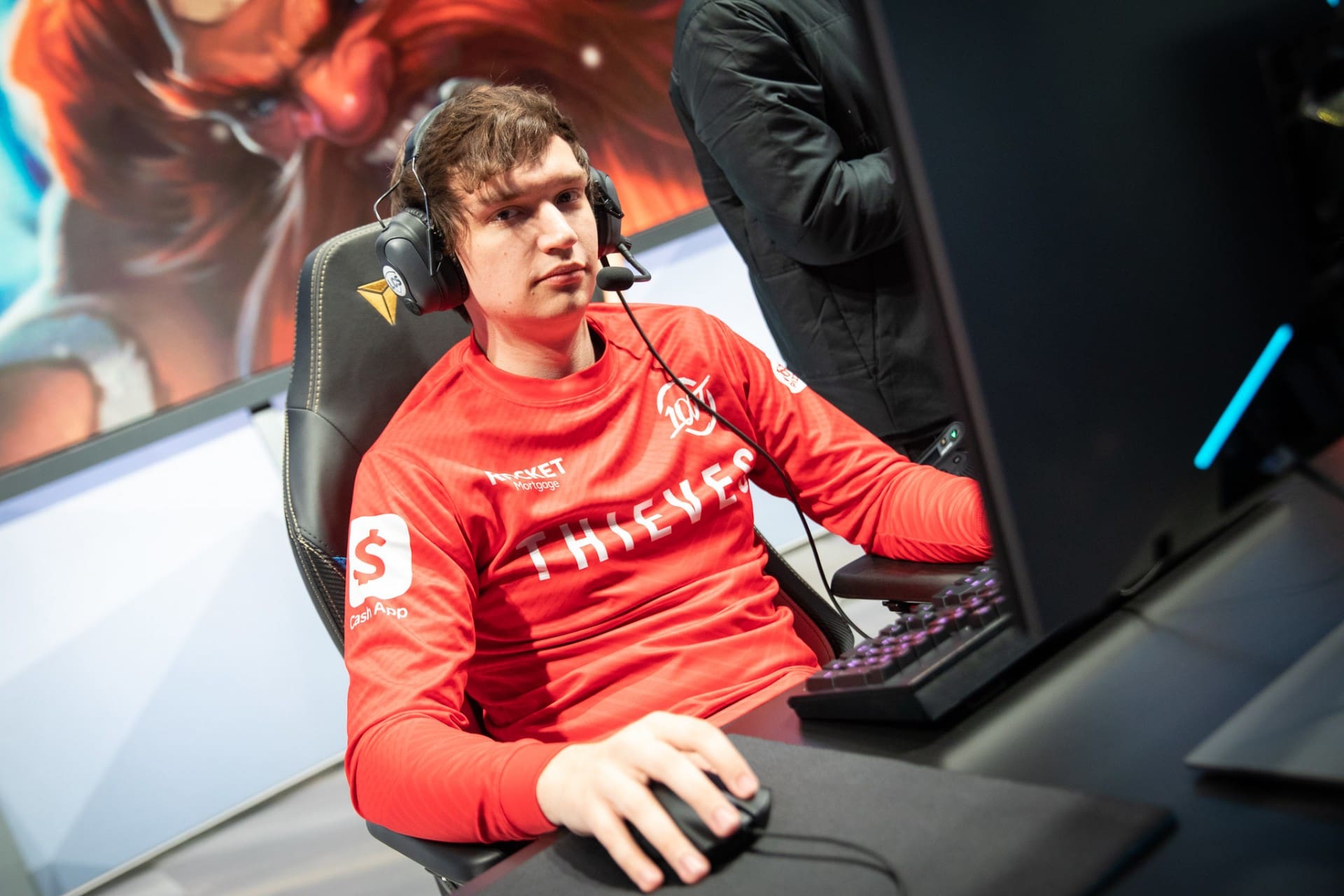
William Hartman, known worldwide by his in-game handle Meteos, was born on June 13, 1993, in the United States. He rose to prominence as a jungler in North American League of Legends esports, most famous for being part of the original Cloud9 roster that helped define the region’s competitive scene in the early 2010s. According to his Wikipedia biography, his professional career spanned from 2012 to 2020, during which he played for six different organizations and became one of the more recognizable and, at times, polarizing personalities in North American League of Legends. Since stepping away from competitive play, he has remained active as a full-time streamer, continuing to build a following around the same game that made him famous.
Hartman’s path to the professional stage began on Team Normal Stars in 2012 and 2013, one of many small amateur rosters competing in North America’s early, unstructured League of Legends scene. He briefly joined compLexity Gaming in 2013 before the roster move that changed the trajectory of his career: a signing with Cloud9 in 2013, joining a young roster built around Hai Lam, Daerek “LemonNation” Hall, William “Balls” Ho Peng Xie, and Zachary “Sneaky” Scuderi. That group would go on to be remembered as one of the most influential rookie rosters in North American League of Legends history, and Hartman’s jungle play, particularly his mastery of the champion Elise, quickly became one of the roster’s defining traits, a point highlighted in ESPN’s retrospective on his career.
The breakthrough years
The career decisions and defining moments that turned recognition into sustained earning power.
Cloud9’s 2013 Summer Split run was the breakthrough that turned Hartman into a star. The newly formed roster went undefeated through the regular season of the inaugural NA LCS Summer Split and captured the championship, an outcome ESPN’s career retrospective describes as built partly on Hartman’s efficient farming and jungle pathing, which produced a 12.7 KDA across his first professional split. That early dominance, paired with his willingness to play a patient, resource-focused style rather than the more aggressive approach favored by teammate Hai, gave Cloud9 a jungler who could both carry games and set up his teammates, and it established Hartman as one of the region’s most talked-about young players almost overnight.

What the work can earn
Reported pay, contracts, royalties and performance income reveal how the fortune was funded.
Over his time with Cloud9, Hartman won two NA LCS championships, the 2013 Summer title and the 2014 Spring title, and represented the organization at the League of Legends World Championship multiple times. His deepest international run came at the 2016 World Championship, where Cloud9 advanced to the quarterfinals; per Esports Earnings, that tournament alone paid him $40,560, by far the largest single payout of his career, out of a documented career total of $140,081.43 across 24 tournaments. A team-by-team breakdown from Esports Earnings shows Cloud9 alone accounted for $119,326.67 of that total, or roughly 85 percent, underlining how central his Cloud9 years were to his competitive earnings.
Hartman’s public profile has always been tied closely to the Cloud9 “golden era” narrative, and he remains one of the more discussed figures from that period of North American League of Legends. ESPN’s feature on his career describes his legacy as “confusing” in the best sense: a player who was, at his statistical peak, among the most dominant junglers in the West, yet whose abrupt mid-2015 step-down from Cloud9’s starting roster, and the online parody and meme culture that followed it, ended up defining his public image as much as his results did. That combination of on-stage success and a very online, self-aware fan following has kept him a recognizable name in League of Legends culture well after his playing days peaked.

The business beyond the main career
Endorsements, ownership interests and investments can keep compounding long after the initial breakthrough.
As a starting jungler on Cloud9 during the organization’s most visible years, Hartman was a featured face of the team’s hardware and lifestyle sponsorships, including gear partners like Logitech and HyperX that supplied peripherals to the roster throughout his tenure, relationships summarized in secondary profile coverage from CollegeNetWorth’s player profile. As with most LCS-era sponsorships, these deals were negotiated primarily through the team rather than as personal endorsement contracts, meaning the bulk of that sponsorship value flowed through Cloud9 rather than directly to Hartman as personal income. Since moving to full-time streaming, his monetization has shifted toward standard Twitch revenue streams such as subscriptions and platform ad share rather than headline personal endorsement deals.
Hartman has not launched an outside company or product line under his own name. His main post-competitive activity has been building his personal streaming brand on Twitch, a platform he has used continuously since December 2012, according to viewership tracking site TwitchStats, which credits his channel with more than 508,000 followers. Rather than diversifying into merchandise lines, apps, or a media company the way some of his peers have, his commercial activity has stayed centered on day-to-day content creation, treating streaming itself as his primary post-retirement business.

Notable luxury item
A reported property or major asset offers a tangible glimpse of the wealth behind the public estimate.
There is no public record of Hartman purchasing real estate or other major physical assets, and neither his Wikipedia biography nor contemporary esports reporting documents a home purchase, streamer house, or investment property under his name. His financial profile instead points toward income accumulated through a mix of tournament winnings and team salary. When Riot Games franchised the LCS in 2018, the league covering his final two organizations, OpTic Gaming and 100 Thieves, it set a league-wide minimum player salary of $75,000 with average pro salaries around $150,000, according to Wikipedia’s history of the LCS, though Hartman’s own individual salary figures have never been disclosed by any of his former teams. In the absence of any documented property or investment portfolio, his most valuable assets are best understood as his career earnings and ongoing streaming income rather than any specific physical holding.
Meteos’s estimated net worth
Public estimates vary because private contracts, investments, taxes and liabilities are not fully disclosed.
How this estimate is calculated
Hartman’s net worth estimate is built from several documented and semi-documented income streams rather than a single disclosed figure, since neither Hartman nor any of his former teams have ever published his personal finances. The clearest number available is his career tournament total of $140,081.43 across 24 tournaments, tracked in full by Esports Earnings, the large majority of which came from his seven years with Cloud9. That figure by itself understates his real career income, since LCS rosters also draw base salaries and revenue shares that are not publicly broken out by team; CollegeNetWorth’s profile cites typical LCS salaries in the $75,000 to $300,000 per year range for players of his profile, which, applied across roughly seven seasons on LCS or LCS-affiliated rosters, would plausibly add several hundred thousand dollars in salary income on top of his tournament winnings. Layered on top of that is his ongoing streaming income: TwitchStats data shows a channel active since December 2012 with more than 508,000 followers, though a comparatively modest subscriber base, suggesting a meaningful but not top-tier ongoing revenue stream from subscriptions and advertising. Secondary net worth aggregators vary widely on a final figure, with some floating a single estimate near $500,000 and others giving a broad $100,000 to $1 million range; these secondary estimates should be treated as rough approximations rather than verified figures, since none of them cite primary financial documentation.
No major individual charitable foundation, large personal donation, or headline philanthropic campaign under Hartman’s own name turned up in public reporting. His public image has instead been shaped largely by his on-stage competitive record and by the very active, sometimes self-deprecating community that grew around him during and after his Cloud9 years, a dynamic ESPN’s retrospective describes as a “cult following” that carried over into his streaming career. That image has been a mostly positive one within the League of Legends community, with fans and former teammates generally remembering him as a talented, if occasionally polarizing, competitor rather than someone associated with any negative personal cause.
Hartman’s most publicized controversy came at the tail end of his playing career. After being benched in the 2020 LCS Summer Split following a 1-5 start for 100 Thieves, he criticized the team’s coaching staff on Twitter, writing that his teammates “didn’t know about or agree with the decision,” a moment documented by Forbes. The posts drew criticism for being unprofessional, and Hartman later apologized in a Twitlonger statement, saying “I let my emotions get the best of me and made some angry tweets which were a mistake.” Roughly three weeks later, 100 Thieves and Hartman mutually parted ways, as confirmed by a follow-up Forbes report, which noted he chose to sit out the rest of the season rather than sign with another LCS team mid-split. Outside of that episode, his career has been free of doping violations, match-fixing allegations, or other integrity-related controversies.