 How Much Are They Worth?
Celebrity fortunes, explained
How Much Are They Worth?
Celebrity fortunes, explained


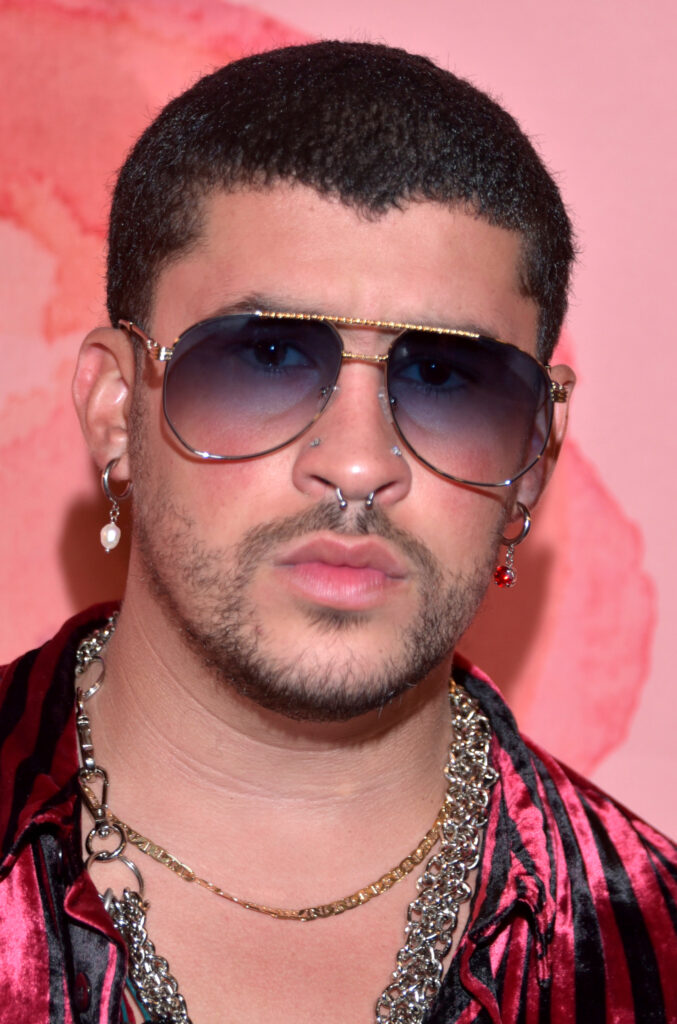
How did Bad Bunny build this fortune?
The answer unfolds through the career, earnings, deals and assets behind the headline estimate.
Before the fame
The background and early turning points that shaped Bad Bunny’s route to prominence.
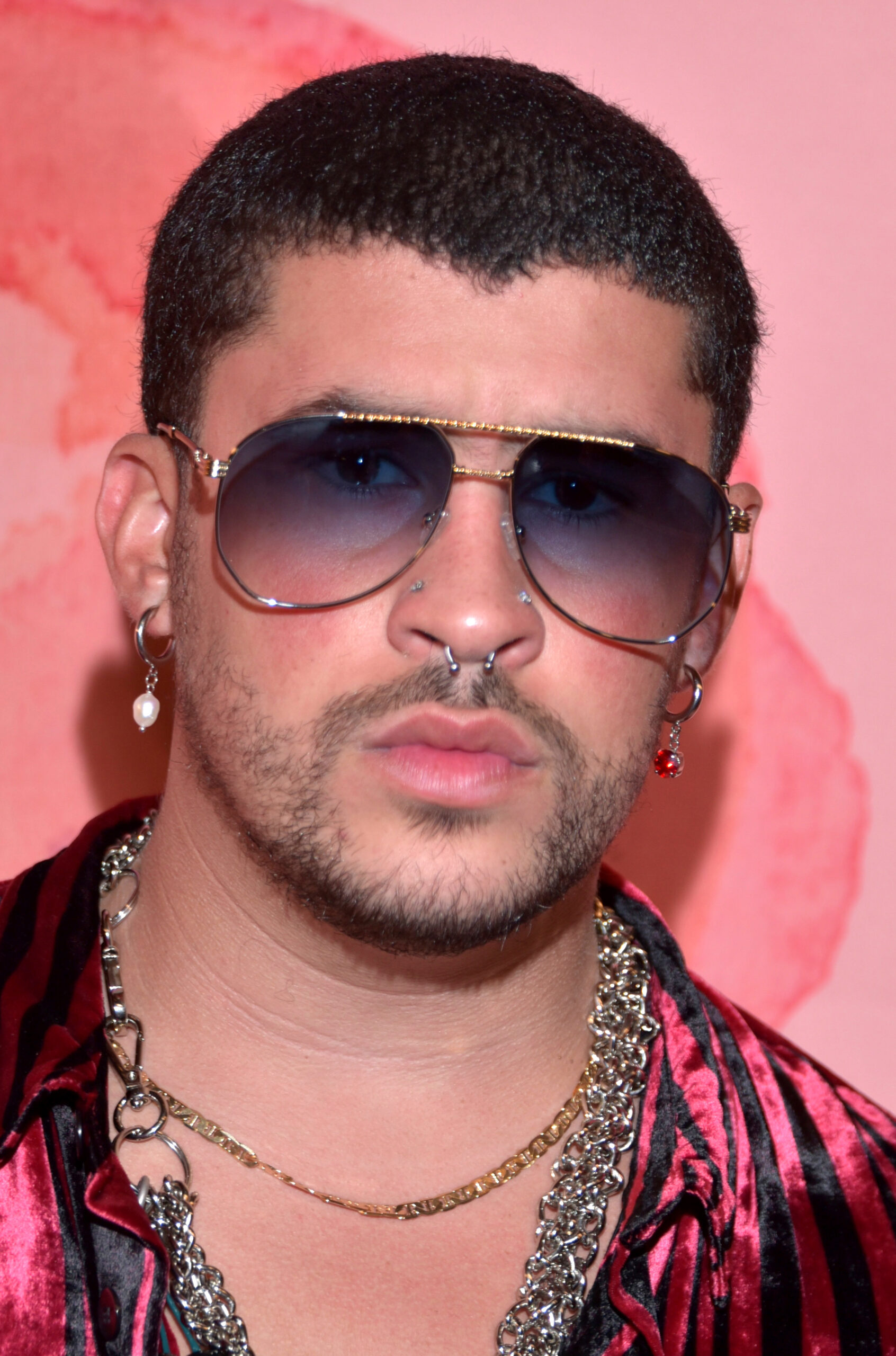
Bad Bunny was born Benito Antonio Martínez Ocasio on 10 March 1994 in Bayamón, Puerto Rico, and raised in the Almirante Sur neighbourhood of Vega Baja. His father, Benito “Tito” Martínez, worked as a truck driver, and his mother, Lysaurie Ocasio Declet, was a schoolteacher. He studied audiovisual communication at the University of Puerto Rico at Arecibo and worked as a supermarket bagger while writing and recording music at night. His stage name grew out of a childhood photo of himself sulking in a rabbit costume, which he later used as the profile picture for the Twitter account where he first shared his songs, according to Wikipedia.
Bad Bunny uploaded his song “Diles” to SoundCloud on 25 January 2016, and its rapid online popularity caught the attention of producer and DJ Luian, who signed him to his label, Hear This Music, later that year. He followed it with “Soy Peor” in December 2016, which reached number 22 on Billboard’s Hot Latin Songs chart and established the moody, trap-influenced sound that set him apart from the reggaetón mainstream of the period, according to Wikipedia. He continued working his supermarket job for months after signing, releasing music independently online before labels outside Puerto Rico took serious notice.
The breakthrough years
The career decisions and defining moments that turned recognition into sustained earning power.
His debut studio album, “X 100PRE,” arrived as a surprise release on Christmas Eve 2018 and was widely praised for its genre-hopping ambition, but it was his second album, “YHLQMDLG,” released in February 2020, that reset expectations for what a Spanish-language record could achieve commercially. It debuted at number two on the all-genre Billboard 200 with 179,000 equivalent album units, making it the highest-charting all-Spanish-language album in the chart’s history at the time, surpassing marks previously held by Shakira and Maná, according to Billboard. He followed it with “El Último Tour del Mundo” that November, which debuted at number one and became the first all-Spanish-language album ever to top the Billboard 200 outright.
What the work can earn
Reported pay, contracts, royalties and performance income reveal how the fortune was funded.
“Un Verano Sin Ti,” released in May 2022, became the first predominantly Spanish-language album ever nominated for the Grammy Award for Album of the Year and won Best Música Urbana Album at the 2023 ceremony, while also standing as Spotify’s most-streamed album globally that year. He surpassed that run with “DeBÍ TiRAR MáS FOToS,” released in January 2025, which brought him six Grammy nominations, including the first time a Spanish-language artist had ever been nominated for Album, Record and Song of the Year in the same ceremony. At the 2026 Grammy Awards, the album won Album of the Year outright, making it the first entirely Spanish-language project ever to take music’s top honour, according to Variety.
Bad Bunny was Spotify’s most-streamed artist worldwide in 2020, 2021 and 2022, lost the top spot to Taylor Swift for two years, then reclaimed it in 2025 with 19.8 billion streams, becoming the first artist ever to top the platform’s annual Wrapped ranking four separate times, according to Spotify’s own Newsroom announcement. That standing helped fuel his selection to headline the Apple Music Super Bowl LX Halftime Show at Levi’s Stadium on 8 February 2026, his second appearance on the Super Bowl stage after a guest slot during Shakira and Jennifer Lopez’s 2020 performance, according to the NFL’s official announcement.
The business beyond the main career
Endorsements, ownership interests and investments can keep compounding long after the initial breakthrough.
Adidas has been Bad Bunny’s longest-running and most visible brand partnership, beginning in 2021 and expanding into a five-year creative collaboration that produced his own signature silhouette, the BadBo 1.0, which he debuted in an all-white colourway during the Super Bowl LX halftime show; the partnership was celebrated with a retrospective exhibition at the Museo de Arte de Puerto Rico featuring more than 115 previously unseen sneaker samples, according to Adidas’s own newsroom. In August 2020 he fronted Corona’s “La Vida Más Fina” campaign alongside Snoop Dogg, a push the brand described as an ode to its Hispanic heritage and one of its most prominent Latino-focused advertising efforts, according to Constellation Brands’ own press release.
Bad Bunny’s music, recording and management affairs run through Rimas Entertainment, the Puerto Rico-based company he has been signed to since early in his career. Rimas was originally capitalised by Venezuelan-born investor Rafael Ricardo Jiménez Dan, but a 2023 restructuring saw Sony Music take a minority stake and Bad Bunny’s manager, Noah Assad, move to take majority control, with Bad Bunny understood to hold an ownership interest of his own as part of that arrangement; the company’s overall valuation was put at more than 300 million dollars during the dealmaking, according to Billboard. Away from music, he co-founded the Japanese-inspired steakhouse Gekkō in Miami’s Brickell district in 2022 alongside restaurateur David Grutman, a venture that anchors a retail space refinanced for 23.5 million dollars in a 2026 loan, according to Miami New Times.
Notable luxury item
A reported property or major asset offers a tangible glimpse of the wealth behind the public estimate.
In January 2023, Bad Bunny paid 8.8 million dollars for a contemporary mansion above the Sunset Strip in Los Angeles’s Hollywood Hills, a roughly 7,300 square foot property on just over half an acre with eight bedrooms and seven bathrooms split between a main house and separate guest house. He added a second Hollywood Hills property in 2024, buying a smaller, more private home from singer Ariana Grande for approximately 8.3 million dollars, according to Hola. His primary residence is understood to remain in Puerto Rico, where he has spoken repeatedly and at length about his attachment to his home island, though no specific Puerto Rico property purchase has been documented with a public price the way his two Los Angeles homes have been.
Bad Bunny’s estimated net worth
Public estimates vary because private contracts, investments, taxes and liabilities are not fully disclosed.
How this estimate is calculated
Forbes credited Bad Bunny with 66 million dollars in 2025 earnings on its Highest-Paid Musicians list, built mainly from around 40 million dollars in ticket revenue tied to his history-making, more than thirty date Puerto Rico residency, “No Me Quiero Ir de Aquí,” plus roughly 30 million dollars in streaming royalties from his record-setting 19.8 billion Spotify streams that year, according to Forbes. That single year sits inside a much larger touring history: his 2022 “World’s Hottest Tour” alone grossed 435.38 million dollars, a record for any tour in a single calendar year, and by mid-2026 his combined career touring revenue had passed 1.08 billion dollars, making him the first Latin artist ever to cross that threshold, according to Billboard. Layered on top of that are his roughly 17 million dollars in known Los Angeles property purchases, his five-year Adidas partnership, and an ownership interest in Rimas Entertainment, a company valued above 300 million dollars in 2023 dealmaking, though the size of his personal stake has not been made public. Because touring net margins, endorsement values and any equity stake remain undisclosed, a precise figure is not possible. Celebrity Net Worth, used here only as a secondary, non-primary cross-check, lists his fortune at approximately 100 million dollars.
The working supports a range of $85 million to $105 million. The figure we publish is its midpoint.
Bad Bunny founded the Good Bunny Foundation in 2018 to widen access to music, arts and sports programming for children and teenagers facing economic hardship in Puerto Rico, running initiatives including the “Bonita Tradición” holiday gift drive and the “Un Verano Contigo” summer camp. In 2018 he donated 100,000 dollars to SER de Puerto Rico to support rehabilitation services for children with autism and muscular disabilities, and in 2022 the foundation launched the 500,000 dollar “Deja Tu Huella” fund, awarding 25,000 dollars each to twenty individuals working to uplift Hispanic communities across Puerto Rico and the mainland United States, according to Hola. He has consistently used his platform to champion Puerto Rican identity and culture on the global stage, most visibly through his 2025 island-wide residency and the imagery running through “DeBÍ TiRAR MáS FOToS.”
A recreation of a real Humacao home, nicknamed “La Casita,” became a centrepiece stage element of Bad Bunny’s “DeBÍ TiRAR MáS FOToS” short film and his subsequent Puerto Rico residency. In 2025, the homeowner who inspired it, Román Carrasco Delgado, filed a one million dollar lawsuit in Puerto Rico’s Court of First Instance, alleging his salmon-coloured house was used without proper compensation and that the attention turned it into an unwanted tourist attraction; the suit also claims Carrasco, who cannot read or write, was asked to sign contracts he had not been able to review, according to wire reporting carried by Fox 4 Dallas-Fort Worth.
The episode drew broader commentary because “DeBÍ TiRAR MáS FOToS” itself addresses gentrification and the displacement of working-class Puerto Rican communities by outside wealth, a theme critics noted sat uneasily alongside the real disruption experienced by the family whose home became a prop for that message. Separately, sections of his 2025 to 2026 world tour drew criticism over exclusive front-stage guest lists seen as favouring a narrow, conventionally attractive slice of fans, prompting debate in both Puerto Rican and international press about access and representation at his shows.