 How Much Are They Worth?
Celebrity fortunes, explained
How Much Are They Worth?
Celebrity fortunes, explained








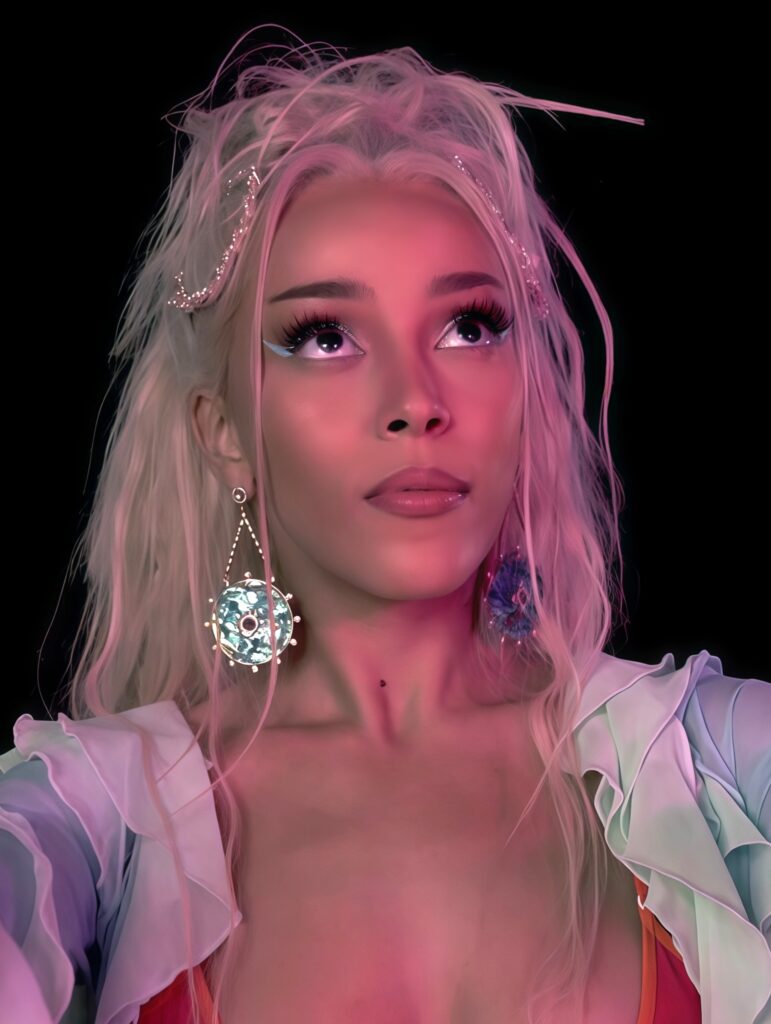
How did Doja Cat build this fortune?
The answer unfolds through the career, earnings, deals and assets behind the headline estimate.
Before the fame
The background and early turning points that shaped Doja Cat’s route to prominence.
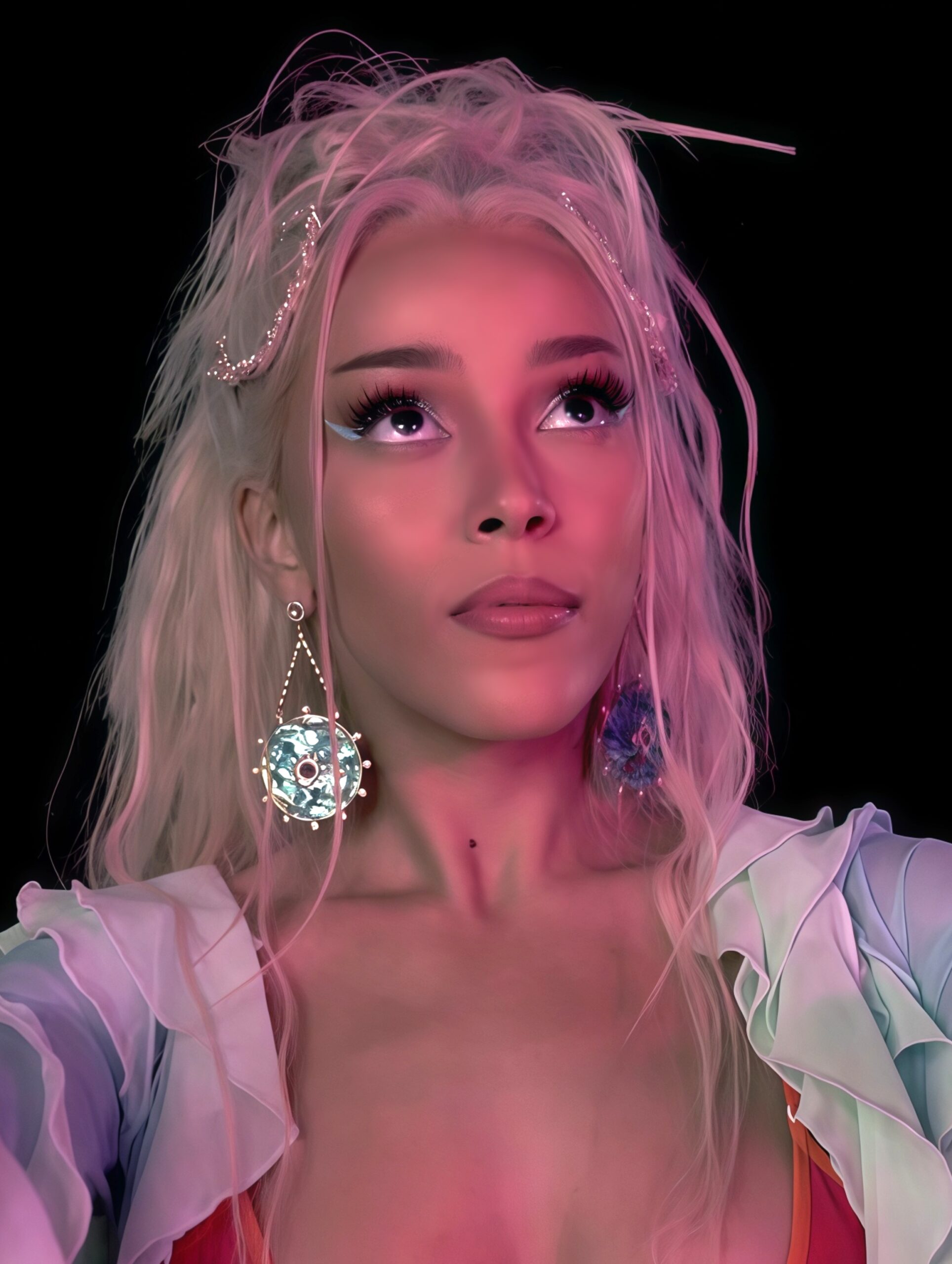
Doja Cat, born Amala Ratna Zandile Dlamini on 21 October 1995 in the Tarzana neighbourhood of Los Angeles, is an American singer, rapper and songwriter known for blending pop, hip hop and R&B into a string of chart-topping hits, a background documented on Wikipedia. Her mother, Deborah Sawyer, is an American painter and graphic designer of Jewish heritage, while her father, Dumisani Dlamini, is a South African performer of Zulu descent who starred in the Broadway production and 1992 film adaptation of Sarafina!. Doja Cat has said she never met her father, who left the family for South Africa when she was young, though he has disputed that account.
She spent part of her early childhood in Rye, New York, before returning with her mother to Oak Park, California, where she grew up skating, surfing and taking ballet, tap and jazz lessons. That grounding in performance and movement fed directly into the theatrical, high-concept visuals that would later become a signature of her music videos and live shows.
Doja Cat began uploading music to SoundCloud as a teenager, with the track “So High” becoming her first properly circulated release in late 2012, a period covered on Wikipedia. Performing around Los Angeles’s underground hip hop scene brought her to the attention of producer Jerry Powell, who introduced her to Yeti Beats, and in turn to Kemosabe Records, the RCA-affiliated label run by producer Dr Luke. She signed a joint publishing and recording deal at 17, releasing her debut EP, Purrr!, in 2014.
Her first full-length album, Amala, arrived in March 2018 but failed to chart and drew little attention, leaving her without the breakout moment her early buzz had promised. That commercial quiet proved short-lived: within months, a single homemade video would change the trajectory of her career entirely.
The breakthrough years
The career decisions and defining moments that turned recognition into sustained earning power.
In August 2018, Doja Cat self-released the music video for “Mooo!”, a low-budget clip of her rapping in a cow costume in front of a green screen. The video became an overnight internet meme, racking up more than three million views within a week and proving, almost by accident, that she could hold an audience’s attention on her own terms, a moment recorded on Wikipedia. The clip reset how labels and fans alike viewed her, setting up the run of releases that followed.
Her true mainstream arrival came with “Say So”, released on her second album, Hot Pink, in November 2019. The song found a second life on TikTok, climbing to number five on the Billboard Hot 100 in its original form before a remix featuring Nicki Minaj, released in May 2020, pushed it to number one, becoming the first ever all-female rap collaboration to top the chart, a milestone detailed by Rolling Stone.

What the work can earn
Reported pay, contracts, royalties and performance income reveal how the fortune was funded.
Doja Cat has won a Grammy Award, taking home Best Pop Duo/Group Performance at the 2022 ceremony for “Kiss Me More”, her collaboration with SZA from Planet Her, a win confirmed by Grammy.com. She has also collected five American Music Awards, including New Artist of the Year in 2020, and, per American Songwriter, four Billboard Music Awards from 14 nominations, alongside six MTV Video Music Awards.
On the charts, Planet Her, released in June 2021, became her commercial high point, opening at number two on the Billboard 200 and eventually surpassing 11.9 million equivalent album units in the US while spending 200 weeks on the chart. In 2022 she also reached number one on the Billboard Artist 100 for the first time, a career milestone reported by Billboard, cementing her as one of the most consistently charting acts of her generation.
Doja Cat headlined Coachella in April 2024 alongside Tyler, the Creator and Lana Del Rey, bringing out guests including 21 Savage and A$AP Rocky during a widely covered Sunday-night set, a booking that placed her among a small handful of women ever to headline the festival. Her run of albums after Hot Pink, Planet Her in 2021, Scarlet in September 2023 and Vie in September 2025, have each debuted inside the top five of the Billboard 200, a consistency that has kept her name near the top of year-end critics’ lists and streaming charts alike.
That sustained visibility has been matched by an unusually distinctive public persona: a willingness to shift genre, aesthetic and even appearance dramatically between eras, from the pastel maximalism of Planet Her to the more stripped-back, industrial style of Scarlet, a reinvention pattern chronicled extensively on Wikipedia. Her outspoken, frequently unfiltered social media presence has become as central to her public image as her music itself.
The business beyond the main career
Endorsements, ownership interests and investments can keep compounding long after the initial breakthrough.
Doja Cat partnered with BMW for the 2022 Coachella season under the brand’s long-running Road to Coachella campaign, working with photographer David LaChapelle to design a custom Planet Her-themed livery for a BMW iX, with the collaboration and her own comments on it detailed in a BMW Group press release. That same year, Taco Bell signed her as the face of its campaign to bring back the Mexican Pizza, which included a Super Bowl LVI advertisement and a viral, self-mocking Instagram Live “jingle” session, a partnership announced in the brand’s own newsroom.
In 2023, Skechers named her its first ever Artist-in-Residence, a multi-year creative role that produced her own signature sneaker, the Doja’Lite, alongside a full apparel collection, a deal confirmed via Business Wire. Earlier in her career she also fronted a Pepsi advertising campaign built around a modern reworking of a Grease-style musical number, and collaborated with Marc Jacobs on a campaign built around her single “Jealous Type”, further widening her endorsement portfolio beyond music.
In April 2021, Doja Cat launched Juicy Drops, her own NFT marketplace tied to her music and visual work, one of the earlier moves by a mainstream pop artist into digital collectibles, a venture noted on Wikipedia. The project let her experiment directly with a new, artist-owned revenue channel outside the traditional label and touring structure.
She has also put money behind other people’s ventures: in April 2022, Doja Cat took part in a $5 million seed funding round for Songfinch, a personalised music platform that lets users commission custom songs, investing alongside The Weeknd and producer Quincy Jones, a raise reported by Digital Music News. The deal reflected a broader pattern among her business activity of backing music-adjacent technology rather than launching conventional product lines.

Notable luxury item
A reported property or major asset offers a tangible glimpse of the wealth behind the public estimate.
Doja Cat’s clearest disclosed real estate move came in 2021, when she bought a home in Beverly Hills for $2.2 million shortly after “Say So” turned her into a chart-topping act, a purchase reported by L’Officiel USA. She went on to sell that property in September 2022 for $2.5 million, a relatively quick turnaround that points to an approach built more around short-term flexibility than a long-held family estate.
Beyond that single documented transaction, she has not published a wider real estate portfolio, and no cars, aircraft or other major tangible assets have been formally disclosed. Her major financial assets instead appear concentrated in her music catalogue, touring income and the endorsement and business deals detailed elsewhere in this profile.
Doja Cat’s estimated net worth
Public estimates vary because private contracts, investments, taxes and liabilities are not fully disclosed.
How this estimate is calculated
Doja Cat’s income draws on several distinct streams, each of which can be estimated even without an official disclosed figure. Her recorded music remains the foundation: four studio albums since 2018, two of which, Hot Pink and Planet Her, have combined for hundreds of millions of streams and multiple platinum certifications, generate ongoing royalty income alongside songwriting credits and her Grammy-winning “Kiss Me More” collaboration with SZA. Touring adds a further, harder-to-verify layer, with headline slots including her 2024 Coachella booking and supporting arena and festival dates across the Scarlet and Vie album cycles.
Brand income is a significant and unusually diverse contributor by pop-star standards, spanning her BMW, Taco Bell, Skechers, Pepsi and Marc Jacobs partnerships, her own Juicy Drops NFT venture, and her seed-stage investment in Songfinch, none of which carry disclosed dollar values individually. Published secondary net worth estimates vary widely: Celebrity Net Worth, used here only as a secondary, supplementary source, currently lists her net worth at $22 million, while other aggregator sites carry figures anywhere from roughly $8 million to $36 million depending on how touring and endorsement income are modelled. Weighing her sustained chart presence and unusually broad endorsement slate against that wide published spread, a range set around the more frequently cited estimates is used below.
In June 2020, Doja Cat donated $100,000 to the Breonna Taylor Justice Fund, supporting the family of the Louisville woman killed by police, a contribution she announced on Instagram and which was reported by NME. In January 2025, as wildfires devastated parts of Los Angeles, she released a limited merchandise collection with all proceeds directed to the American Red Cross’s relief efforts for the city, a campaign covered by Billboard.
Her public image, however, has never been built around conventional philanthropic branding. She is far better known for a blunt, often confrontational relationship with her own fan base and the press, treating social media as a space for unfiltered opinion rather than careful image management, a dynamic explored at length on Wikipedia. That candour has made her one of the more unpredictable, closely watched figures in mainstream pop.
Doja Cat’s most damaging controversy dates back to 2015, when old tweets using a racial slur associated with alt-right message boards resurfaced online in 2020, prompting widespread backlash and reports that she had spent time in explicitly racist chat rooms, an episode covered by Fashion Magazine. She apologised, deleted the tweets and denied direct involvement in racist conversations, though NME had already labelled her its “Milkshake Duck” of 2018 for the speed with which her image soured following the earlier reveal.
More recent scrutiny has centred on her combative relationship with fans rather than any single scandal. In March 2022, after a rained-out show in Paraguay and a tense fan interaction, she tweeted that “everything is dead to me, music is dead,” suggesting she was quitting, before retracting the comments days later. In 2023, a Threads post in which she said she was not obligated to say she “loved” fans she had never met cost her more than 250,000 Instagram followers virtually overnight, a reaction chronicled on Wikipedia, cementing her reputation as an artist unwilling to perform gratitude on demand.