 How Much Are They Worth?
Celebrity fortunes, explained





How did Paul McCartney build this fortune?
The answer unfolds through the career, earnings, deals and assets behind the headline estimate.
Paul McCartney before the fame
The background and early turning points that shaped Paul McCartney’s route to prominence.
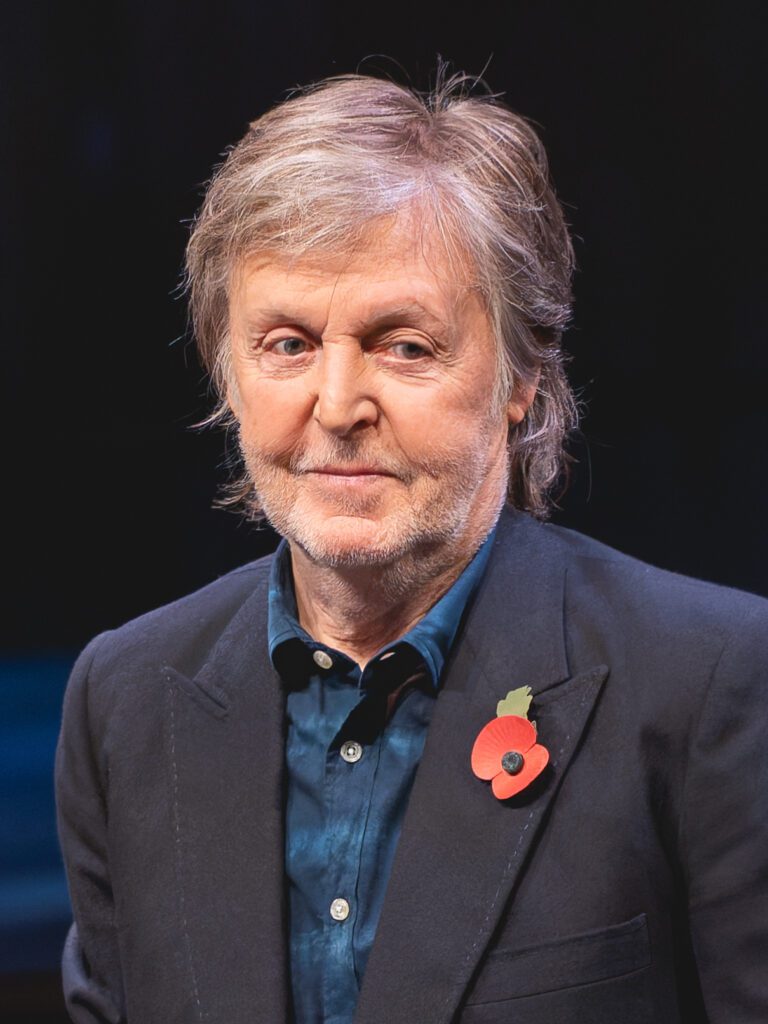
Paul McCartney was born on 18 June 1942 in Liverpool. He wrote or co-wrote most of the Beatles catalogue with John Lennon, and has recorded and toured continuously in the six decades since. He was knighted at Buckingham Palace on 11 March 1997 for services to music (CBS News). The defining feature of his finances is not how much he earned but what he was permitted to own: for most of his working life he did not hold the copyrights in the songs he had written.
McCartney met Lennon in July 1957 and joined the Quarrymen, the skiffle group that became the Beatles. Long residencies in Hamburg between 1960 and 1962 turned an amateur band into a working one, and Parlophone released Love Me Do in October 1962 (Rock & Roll Hall of Fame).
The publishing paperwork signed around those years shaped everything that followed. Lennon and McCartney assigned their compositions to a publishing company in which the two writers held only a minority position – an arrangement that was unremarkable for unknown teenagers from Liverpool and ruinous for what became the most valuable songbook in popular music.
Paul McCartney’s breakthrough years
The career decisions and defining moments that turned recognition into sustained earning power.
The Beatles’ commercial breakthrough was immediate and worldwide, and by the time the band stopped touring in 1966 McCartney was writing at a rate that few songwriters sustain for a decade, let alone a career. The group was inducted into the Rock & Roll Hall of Fame in 1988 (Rock & Roll Hall of Fame).
What the breakthrough did not bring was control. The publishing passed out of the band’s hands and was eventually bought by Michael Jackson in 1985, then folded into Sony/ATV (Billboard). McCartney tried repeatedly to buy it back and was refused every time.

What Paul McCartney’s work can earn
Reported pay, contracts, royalties and performance income reveal how the fortune was funded.
After the Beatles he formed Wings, and he has remained a touring act at the top of the market ever since. His Got Back tour was the highest-grossing tour of November 2025, taking $51.7 million from eleven shows, and had reported $410.7 million and 2.4 million tickets across its legs since 2022 (Billboard).
Those figures sit on top of a touring history that pushed his reported career Billboard Boxscore total past $1 billion in gross, placing him among a very small group of acts to have reached that level (Billboard). Touring, rather than recording, has been the reliable engine of his income for forty years.
McCartney holds a knighthood awarded in 1997 (CBS News) and was made a Companion of Honour, an order limited to sixty-five living members, in the 2018 New Year Honours. He has been inducted into the Rock & Roll Hall of Fame twice, with the Beatles in 1988 and as a solo artist in 1999 (Rock & Roll Hall of Fame).
Recognition of this kind has no direct cash value, but it underwrites the demand that keeps a man in his eighties selling out stadiums.

Paul McCartney’s business beyond the main career
Endorsements, ownership interests and investments can keep compounding long after the initial breakthrough.
This is a thin section for McCartney, and honestly so. He has not built an endorsement portfolio of the kind that supports the earnings of younger performers, and has largely declined to attach his name to consumer brands. His commercial relationships run instead through his own catalogue, his tours and the licensing of Beatles music for film and television, none of which is disclosed deal by deal. No reliable published figure exists for his endorsement income, so none is used here.
McCartney’s principal business is MPL Communications, the private publishing company he founded in 1970. MPL administers a large catalogue of songs written by other people, including the Buddy Holly compositions he acquired in the early 1970s and the scores of Broadway musicals such as Guys and Dolls, A Chorus Line, Annie, Grease and The Music Man (MPL Communications).
The more consequential venture was reclaiming his own work. The US Copyright Act of 1976 gave authors who had signed away rights before 1978 a right to reclaim them after fifty-six years, and that right cannot be contracted away (Billboard). Love Me Do was written in 1962, so McCartney’s share began reverting from 2018. He sued Sony/ATV in January 2017 for a declaration that he could exercise it, covering 178 songs (Music Business Worldwide), and the parties settled confidentially that June (The Hollywood Reporter). The terms have never been made public.

Paul McCartney’s notable luxury item
A reported property or major asset offers a tangible glimpse of the wealth behind the public estimate.
McCartney’s holdings were set out in public on one occasion, in the 2008 High Court judgment ending his second marriage. Mr Justice Bennett recorded real property of about £34 million, business interests valued by Ernst & Young at about £240.9 million, investments of about £34.3 million, artwork and chattels of about £32.3 million, and pension assets of about £36.3 million (McCartney v Mills McCartney [2008] EWHC 401 (Fam)).
The properties named in that judgment included his London home in Cavendish Avenue, houses in New York and on Long Island, and land in Scotland and East Sussex. Nothing comparable has been published since.
Paul McCartney’s estimated net worth
Public estimates vary because private contracts, investments, taxes and liabilities are not fully disclosed.
How this estimate is calculated
There is one hard anchor. In February 2008 the High Court found that McCartney’s total wealth amounted to approximately £400 million, built up from itemised real property, business interests, investments, chattels and pensions, and expressly rejected a claim that he was worth £800 million (McCartney v Mills McCartney [2008] EWHC 401 (Fam)). That is a court’s finding about his own money rather than a magazine’s guess, and it is the starting point used here.
Rolling it forward needs three inputs. Touring: his reported Boxscore total has since passed $1 billion in gross, of which the artist’s share after production, promoter splits and tax is a fraction rather than a multiple (Billboard, Billboard). Publishing: MPL’s own catalogue and the Beatles share reverting under the 1976 Act both generate income, though MPL publishes no accounts detailed enough to value it (MPL Communications). Investment: seventeen years of compounding on a £400 million base at ordinary returns is by itself enough to approach the billion mark, which is roughly where the Sunday Times Rich List placed him when it named him Britain’s first billionaire musician (Fox Business).
What is not disclosed: the June 2017 settlement with Sony/ATV, MPL’s balance sheet, and each tour’s net profit as distinct from its gross. Fifty years of argument over who owned those copyrights ended behind a confidentiality clause in June 2017, which means the better his lawyers did that month, the less anyone outside the settlement can ever know about what he holds today.
The working supports a range of $1 billion to $1.3 billion. The figure we publish is its midpoint.
Confidence: Partly documented — anchored to a 2008 High Court valuation of his own assets and rolled forward on published tour grosses, with the publishing values modelled rather than disclosed.
Think you know Paul McCartney? Take the quiz: Easy · Medium · Legendary
McCartney’s best-known philanthropic act is an institution rather than a cheque. He is founding patron and lead patron of the Liverpool Institute for Performing Arts, which opened in 1996 in the buildings of his old school after he found them derelict and intervened (Liverpool Institute for Performing Arts).
He has also spent decades campaigning on animal welfare and diet, and launched the Meat Free Monday campaign with his daughters in 2009 (Meat Free Monday). His public image – genial, hard-working, faintly unfashionable – has survived sixty years of scrutiny with remarkably little damage.
The two episodes that drew the most scrutiny were both legal. On 31 December 1970 McCartney sued the other three Beatles and Apple Corps in the High Court to dissolve the partnership, an action his bandmates treated as a betrayal and which he has since described as the way he saved the catalogue from the management of Allen Klein (NBC News).
The second was his 2008 divorce, conducted in public and decided in a judgment that valued his assets in detail and rejected the far higher figure his former wife had advanced (McCartney v Mills McCartney [2008] EWHC 401 (Fam)). Neither episode involved wrongdoing on his part; both put his private accounts in front of a court.