
 How Much Are They Worth?
Celebrity fortunes, explained
How Much Are They Worth?
Celebrity fortunes, explained









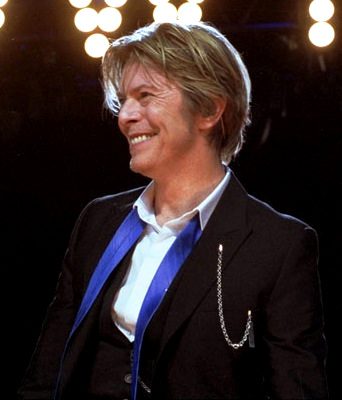
How did David Bowie build this fortune?
The answer unfolds through the career, earnings, deals and assets behind the headline estimate.
David Bowie before the fame
The background and early turning points that shaped David Bowie’s route to prominence.
David Bowie was born David Robert Jones on 8 January 1947 in Brixton, London, and became one of the most inventive figures popular music has produced – a songwriter who reinvented his own act roughly once a decade and took his audience with him each time. He died on 10 January 2016, two days after his sixty-ninth birthday and the release of his final album, Blackstar.
He was also an original thinker about money: the structure he invented in 1997 is still copied.
Bowie spent the mid-1960s cycling through London mod and R&B bands, changing his name to avoid confusion with the Monkees’ Davy Jones, and released a first album on Deram in 1967 that sold almost nothing. Space Oddity, issued in 1969 to coincide with the Apollo 11 landing, gave him a hit but not yet a career.
Those lean years shaped his commercial thinking: he had seen how little of a hit record’s money reaches the person who wrote it.
David Bowie’s breakthrough years
The career decisions and defining moments that turned recognition into sustained earning power.
The breakthrough was The Rise and Fall of Ziggy Stardust and the Spiders from Mars in 1972, a record that invented a character, a look and an audience at once. It made him a headline act in Britain and then America, and established the method he used for the rest of his life: build a persona, exhaust it, discard it (Rock & Roll Hall of Fame).
By the end of the 1970s the Berlin albums had given him critical standing to match the sales; by 1983 Let’s Dance had made him a stadium artist.

What David Bowie’s work can earn
Reported pay, contracts, royalties and performance income reveal how the fortune was funded.
Bowie released twenty-six studio albums in his lifetime. The scope of that work was set out plainly when his estate sold the publishing: the Warner Chappell agreement covered every one of them plus the posthumous Toy, and songs including Heroes, Changes, Fame and Let’s Dance (Variety).
Blackstar, recorded in his final year and released on his birthday, went on to win five Grammy Awards in 2017, the first Grammys for music he had made under his own name (Billboard).
What the music paid him. Our estimate is that Bowie’s own craft – recording, songwriting and playing live – earned him roughly $250 million to $400 million gross across forty-seven working years. Three things drive it: on the order of 100 million records sold worldwide, a catalogue he wrote almost entirely himself, and close to a thousand headline shows between Ziggy Stardust in 1972 and A Reality Tour in 2004. The workings are below. The main assumption is the royalty rate, blended at the middle of industry norms across five decades of very different contracts – the 1970s deals were poor, and the manager of that period, Tony Defries, took half of Bowie’s gross until they separated in 1975.
He was inducted into the Rock & Roll Hall of Fame in 1996. Wider recognition arrived by an unlikely route: the Victoria and Albert Museum’s David Bowie is, drawn from his own archive, opened in London in 2013 and toured internationally for five years (Victoria and Albert Museum).
That he kept the archive at all is a financial fact. He treated his own material as property from the start, which is why there was something to exhibit, to securitise and to sell.

David Bowie’s business beyond the main career
Endorsements, ownership interests and investments can keep compounding long after the initial breakthrough.
Bowie licensed himself rarely and expensively. The most visible example was the 2013 Louis Vuitton campaign L’Invitation au Voyage, in which he performed a harpsichord arrangement of his own I’d Rather Be High (DavidBowie.com). Earlier he had appeared in a Vittel advertisement built around Never Get Old.
There were few enough of these deals, spread across forty years, that endorsement income is a minor line beside the music.
In 1997 Bowie did something no musician had attempted. With the banker David Pullman he securitised the future royalties on the twenty-five albums recorded between 1969 and 1990 – 287 songs – and sold the notes to Prudential Insurance for 55 million dollars at a 7.9 per cent coupon over ten years (Billboard, Forbes).
The structure is often described loosely: he did not sell his catalogue. He borrowed against it, the royalties serviced the debt, and ownership returned to him when the notes matured. A year later he launched BowieNet, an internet service provider sold direct to his own fans and recognised by Guinness World Records as the first created by an artist (Guinness World Records).

David Bowie’s notable luxury item
A reported property or major asset offers a tangible glimpse of the wealth behind the public estimate.
Bowie’s main home was a penthouse at 285 Lafayette Street in Manhattan, bought in 1999 for $3.81 million and sold by his estate in July 2021 for $16.8 million. He also held property in upstate New York and, at times, in London and Switzerland.
The far larger asset was intangible: the recordings and compositions he retained after the bonds matured were worth more at his death than any building.
David Bowie’s estimated net worth
Public estimates vary because private contracts, investments, taxes and liabilities are not fully disclosed.
How this estimate is calculated
Two figures about Bowie’s own money are on the record, and both bracket the estimate rather than supply it. The 1997 bond issue raised 55 million dollars against royalties he had already earned; it is a loan, so it is excluded here, since counting it alongside those royalties would count the same money twice. In January 2022 his estate sold the songwriting catalogue to Warner Chappell at a price trade publications put at upwards of $250 million (CBS News). If the compositions alone fetched that six years after his death, the catalogue he held at the end of his life was the dominant item on his balance sheet, ahead of the Manhattan penthouse his estate sold for $16.8 million (The Irish Times).
The career earnings, line by line. Recordings: roughly 100 million units sold worldwide at a blended net artist royalty of $0.75 to $1.25 a unit gives $75 million to $125 million. Songwriting: the 2022 Warner Chappell price implies, at the eighteen-to-twenty-two-times multiple that market ran on, compositions throwing off $11 million to $14 million a year at the peak; averaging a far lower $2 million to $4 million a year across forty-five active years gives $90 million to $180 million. Touring: about a thousand headline shows, from the Ziggy tours through Serious Moonlight and Glass Spider to A Reality Tour, at a net to the artist of $70 million to $120 million once production, crew, trucking and promoters are paid. Those three lines total $235 million to $425 million, rounded above to $250 million to $400 million, gross of UK and US tax at the top rates of their day and of representation. The figure below is what survived that, held mostly as catalogue.
Confidence: Partly documented — bracketed by a 1997 bond issue and a 2022 catalogue sale by his estate, with his career music earnings given as our estimate.
Think you know David Bowie? Take the quiz: Easy · Medium · Legendary
Bowie did not run a foundation, and it would be padding to pretend otherwise. What he did do was use his standing directly: in a 1983 MTV interview he pressed the network on why it played so little music by Black artists.
His public image was managed with the same care as his catalogue: few interviews in his last decade, Blackstar released without warning, and an archive a national museum could build an exhibition around.
Bowie spent the mid-1970s making remarks about politics and authority that he spent much of the rest of his life repudiating, describing that period as one in which he was not in a fit state to be taken seriously.
The financial scrutiny came in 2004. Moody’s had graded the Bowie notes A3, investment grade; in March 2004 it cut them to Baa3, one notch above junk, citing falling recorded-music sales and a downgrade of the guarantor (Billboard). The ending is still widely reported wrongly. The bonds did not fail. Holders received their 55 million dollars back with the agreed interest when the notes matured in 2007 (Billboard). He had sold ten years of income at 1997 prices just before the internet reduced its value – an excellent trade on which investors were still paid in full. James Brown, Rod Stewart and the Isley Brothers followed with comparable deals (NPR).