
 How Much Are They Worth?
Celebrity fortunes, explained
How Much Are They Worth?
Celebrity fortunes, explained




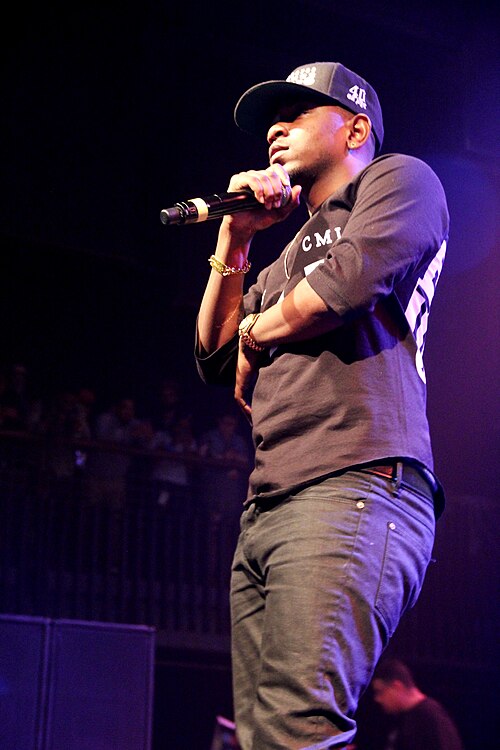
How did Kendrick Lamar build this fortune?
The answer unfolds through the career, earnings, deals and assets behind the headline estimate.
Before the fame
The background and early turning points that shaped Kendrick Lamar’s route to prominence.
Kendrick Lamar Duckworth was born on 17 June 1987 in Compton, California, the eldest child of Kenneth “Kenny” Duckworth and Paula Oliver, both of whom had relocated from Chicago’s South Side before he was born, a background detailed on Wikipedia. He grew up alongside two younger brothers and a younger sister amid poverty, periods of Section 8 housing and the gang tensions that defined much of Compton in the late 1980s and 1990s, experiences that would later become the raw material for his songwriting.
He attended Centennial High School in Compton, graduating in 2005 as a straight-A student, and began writing rhymes as a teenager after witnessing the effects of gang violence firsthand. A spiritual turn towards Christianity in his mid-teens, following the death of a close friend, became another recurring theme he would return to throughout his catalogue.
Lamar began releasing music under the stage name K.Dot while still in high school, self-issuing a run of mixtapes that circulated locally before he retired the alias around 2009 in favour of his own name, per Wikipedia. He signed to Compton independent label Top Dawg Entertainment (TDE) in 2005, becoming one of its first artists alongside Jay Rock, and later co-founded the hip-hop supergroup Black Hippy with Jay Rock, Ab-Soul and Schoolboy Q.
His independent mixtape work built a devoted regional following and drew the attention of Dr Dre, whose co-sign helped set up his major-label debut. That grassroots foundation, built entirely outside the major-label system, established the credibility that carried into his first studio album.
The breakthrough years
The career decisions and defining moments that turned recognition into sustained earning power.
Section.80, released independently through TDE in July 2011, introduced Lamar to a wider audience, but the true breakthrough arrived with good kid, m.A.A.d city on 22 October 2012 through Interscope, TDE and Aftermath Entertainment. The concept album debuted at number two on the Billboard 200 with 242,000 first-week copies, the highest hip-hop first-week sales by a male artist that year, and was later certified triple platinum by the RIAA, a run of figures documented on Wikipedia’s good kid, m.A.A.d city page. It went on to spend 520 weeks on the Billboard 200, the first hip-hop studio album to do so.
Lamar followed it with To Pimp a Butterfly in March 2015, a jazz- and funk-inflected record that debuted at number one and earned five Grammy Awards, cementing his reputation as one of the most ambitious voices in contemporary hip-hop.

What the work can earn
Reported pay, contracts, royalties and performance income reveal how the fortune was funded.
Lamar won the 2018 Pulitzer Prize for Music for his album DAMN., becoming the first artist outside the classical and jazz genres to receive the honour, a milestone recorded on Wikipedia’s DAMN. page. He has since won 27 Grammy Awards in total, the most of any rapper in the award’s history, spanning ceremonies from 2014 through to early 2026.
“Not Like Us” swept all five categories it was nominated for at the 67th Annual Grammy Awards in February 2025, including Record of the Year and Song of the Year, tying it with the 5th Dimension’s “Up, Up and Away” as the most-awarded song in Grammy history, according to Wikipedia’s Not Like Us entry. His surprise 2024 album GNX added to the tally at the 68th Annual Grammy Awards, winning Best Rap Album while its single “Luther” took Record of the Year, as detailed on Wikipedia’s GNX page.
Lamar headlined the Super Bowl LIX halftime show on 9 February 2025 at the Caesars Superdome in New Orleans, joined by SZA, Samuel L. Jackson, Serena Williams and Mustard. The performance drew 133.5 million domestic viewers, surpassing Michael Jackson’s 1993 Super Bowl XXVII show as the most-watched halftime performance in US history, a record confirmed on Wikipedia’s Super Bowl LIX halftime show page. The show later won a Primetime Emmy Award for Outstanding Music Direction.
He was named to Time magazine’s list of the 100 most influential people in the world in 2016, and has since become one of only a handful of hip-hop artists to be recognised with a Pulitzer alongside sustained mainstream chart dominance, a combination that has repeatedly placed him at the centre of conversations about hip-hop’s cultural legitimacy.
The business beyond the main career
Endorsements, ownership interests and investments can keep compounding long after the initial breakthrough.
Lamar signed with Reebok Classics in December 2014, fronting the brand’s “I Am” campaign and designing a capsule collection of Ventilator sneakers to mark the shoe’s 25th anniversary, a deal covered by Complex. He described himself as a lifelong Reebok fan dating back to the seventh grade, and the partnership carried an explicit anti-gang-violence message through its imagery.
More recently, pgLang has brokered brand collaborations with Calvin Klein, Converse and Cash App, folding Lamar’s endorsement work into the same creative pipeline that produces his music and film projects rather than treating sponsorships as a separate revenue stream, according to Wikipedia.
In March 2020, Lamar co-founded the creative company pgLang with his longtime collaborator and former TDE co-president Dave Free, describing it as neither a record label nor a movie studio but a multidisciplinary “service company” spanning music, film, television and publishing, per Wikipedia’s pgLang page. The company has produced Lamar’s own releases, including Mr. Morale & the Big Steppers and GNX, as well as projects for labelmate Baby Keem and the widely covered Pop Out: Ken & Friends concert film.
pgLang won six Cannes Lions Awards in 2023, including Independent Agency of the Year for Craft, and launched a further creative venture, Project 3, in July 2025, extending Lamar’s business interests well beyond recording and touring.
Notable luxury item
A reported property or major asset offers a tangible glimpse of the wealth behind the public estimate.
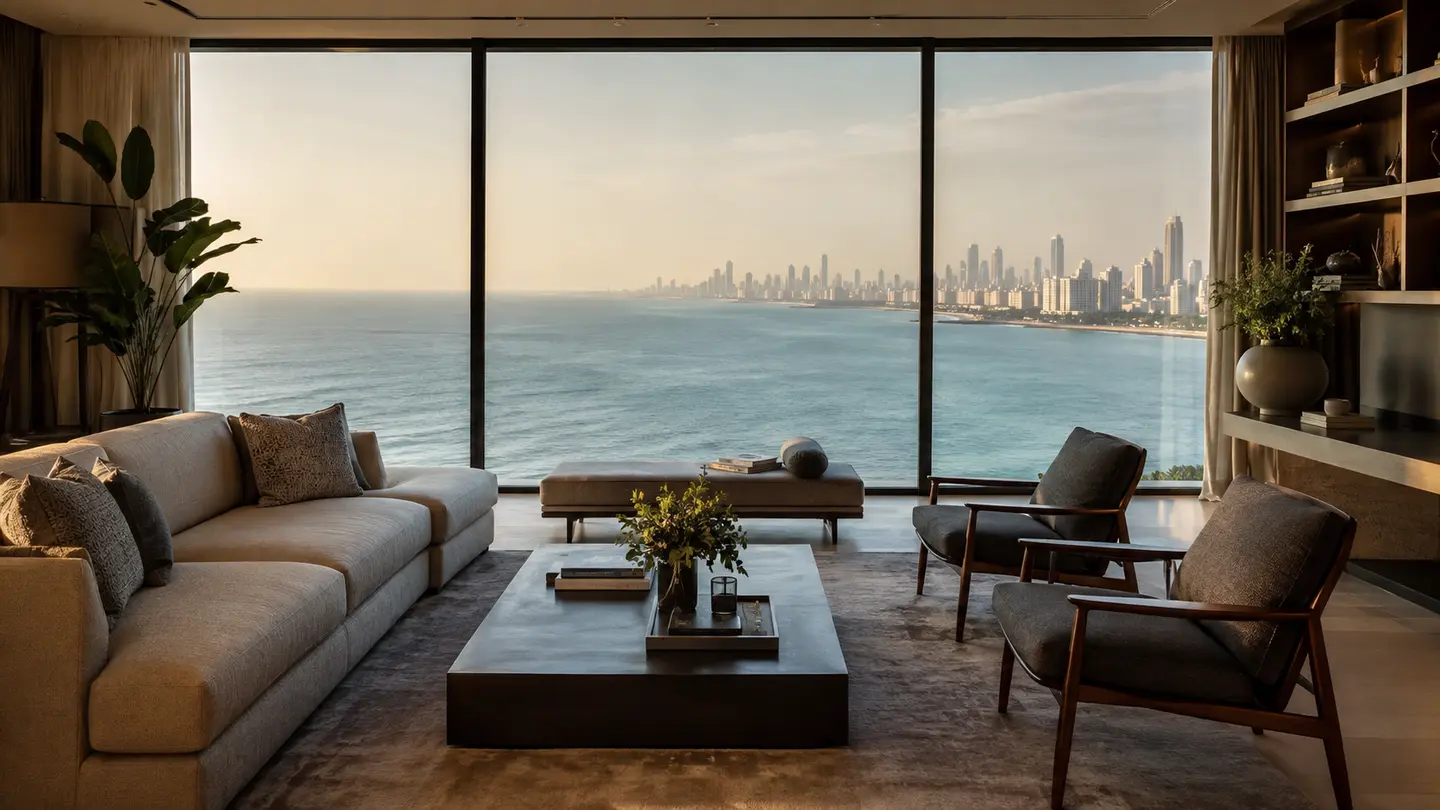
Lamar has assembled a real estate portfolio reported to be worth around $79 million, beginning with a $523,400 house in Eastvale, California, bought in 2013, and expanding through a $2.65 million Calabasas property in 2018 and a $9.7 million Manhattan Beach beach house in 2019, according to Hello Magazine. In 2022 he added a $15.9 million Bel Air estate designed by architect Edward Fickett, followed by an $8.6 million penthouse at Pierhouse in Brooklyn Bridge Park in 2023.
His most significant single purchase came in 2024, a $42 million Brentwood compound built around a roughly 16,200 square foot modern farmhouse with a separate guest house, the same reporting notes, making it by far the largest disclosed asset in his portfolio.
Kendrick Lamar’s estimated net worth
Public estimates vary because private contracts, investments, taxes and liabilities are not fully disclosed.
How this estimate is calculated
Touring has become Lamar’s most substantial documented income stream. His Big Steppers Tour grossed a reported $110.9 million between 2022 and 2024, and he subsequently co-headlined the Grand National Tour with SZA through 2025, which became the highest-grossing co-headlining tour in history at roughly $332 million in total revenue, according to Billboard, though that sum is split between the two headliners and their respective teams rather than accruing to Lamar alone.
Layered on top of touring are royalties from a catalogue that includes multiple platinum and triple-platinum certified albums, a Pulitzer Prize and 27 Grammy Awards that continue to drive streaming and licensing income, pgLang’s brand and production revenue, and a real estate portfolio worth roughly $79 million. Published secondary net worth estimates vary considerably: Celebrity Net Worth, used here only as a secondary, supplementary source, currently lists his net worth at $200 million following the commercial explosion of “Not Like Us” and the Grand National Tour, while some other aggregator figures from before that 2024-2025 surge sit closer to $140 million. Weighing the scale of his most recent touring, catalogue and brand income against that spread of published estimates, a range grounded in the more current figures is used below.
The working supports a range of $160 million to $200 million. The figure we publish is its midpoint.
Lamar and pgLang, working with the organisation Free Lunch, donated $200,000 to Los Angeles charities and community initiatives following his Juneteenth Pop Out concert, a gift reported by Billboard as part of the concert’s wider ripple effect on the local community. The donation reflected a pattern of channelling proceeds from his large-scale live events back into the neighbourhoods that shaped his early life.
Beyond direct giving, Lamar’s public image has been built on a reputation for selectivity and restraint, granting relatively few interviews and letting his albums, which have repeatedly grappled with faith, trauma, fame and Compton’s legacy, do the talking on his behalf.
Lamar’s highest-profile controversy of recent years was his feud with Drake, which had simmered since a combative verse on Big Sean’s “Control” in 2013 before escalating sharply in 2024 with a rapid exchange of diss tracks, culminating in “Not Like Us” on 4 May 2024, a timeline set out on Wikipedia’s Drake-Kendrick Lamar feud page. The song’s lyrics, which accused Drake of predatory behaviour, prompted Drake to file petitions against Universal Music Group in November 2024 alleging defamation and streaming manipulation, followed by a formal federal defamation lawsuit in January 2025.
A New York federal judge, Jeannette Vargas, dismissed Drake’s lawsuit on 9 October 2025, ruling that the lyrics amounted to “nonactionable opinion” protected under New York law, with Drake filing an appeal later that month, according to the same Wikipedia entry. Lamar performed “Not Like Us” during his Super Bowl LIX halftime show three months after the suit was first filed, an inclusion widely read as a direct reference to the ongoing litigation.