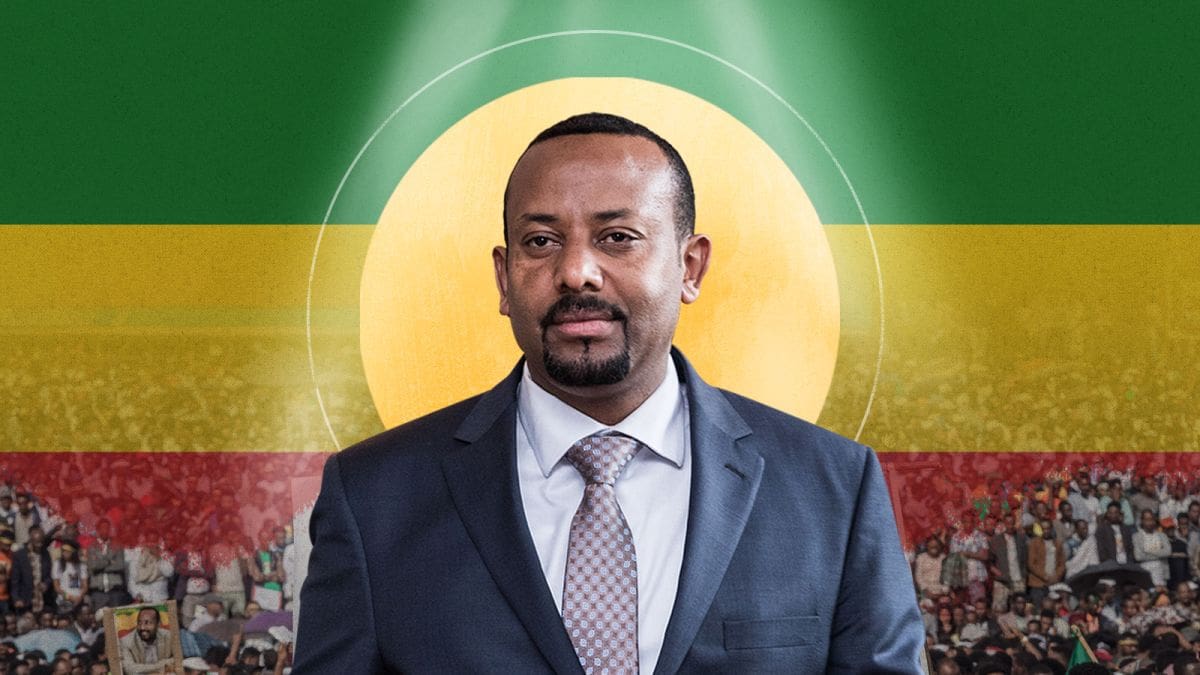
 How Much Are They Worth?
Celebrity fortunes, explained
How Much Are They Worth?
Celebrity fortunes, explained






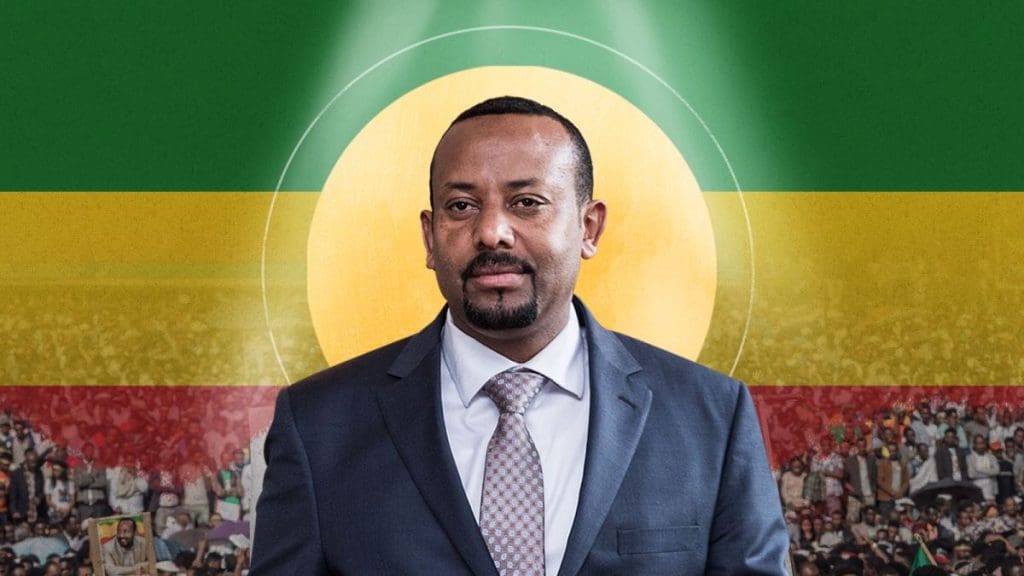
How did Abiy Ahmed build this fortune?
The answer unfolds through the career, earnings, deals and assets behind the headline estimate.
Before the fame
The background and early turning points that shaped Abiy Ahmed’s route to prominence.
Abiy Ahmed Ali was born in Beshasha, in Ethiopia’s Oromia region, in 1976. His family background bridged Muslim and Christian traditions, a detail that later complemented his image as a politician able to speak across Ethiopia’s religious and ethnic divisions. The Nobel Prize’s biographical profile traces his route from military service and intelligence work to federal politics. He studied computer engineering, business administration, and leadership, eventually earning a doctorate focused on peace and security. That combination of military, technical, and political experience distinguished him from many contemporaries in the Ethiopian People’s Revolutionary Democratic Front.
Abiy joined the armed struggle against the Derg regime as a teenager and later served in Ethiopia’s military after the change of government. He worked in signals and intelligence and helped establish the Information Network Security Agency, Ethiopia’s cyber-security organization. He entered parliament in 2010 as a member of the Oromo People’s Democratic Organization and later held ministerial and regional party roles. A Britannica account of Abiy’s career describes his rapid advancement inside the ruling coalition. These were salaried state and party positions; the public record does not identify a parallel private conglomerate or inherited fortune behind his rise.
The breakthrough years
The career decisions and defining moments that turned recognition into sustained earning power.
Large anti-government protests, political paralysis, and Prime Minister Hailemariam Desalegn’s resignation created an opening in 2018. Abiy won the internal contest to lead the ruling coalition and became prime minister in April. He moved quickly to release political prisoners, invite exiled opposition groups home, loosen restrictions on the media, and appoint women to senior offices. His early reforms generated enormous domestic and international optimism. Abiy also accepted the border ruling that had long divided Ethiopia and Eritrea, allowing direct talks with Eritrean president Isaias Afwerki and formally ending the state of hostility between the countries.

What the work can earn
Reported pay, contracts, royalties and performance income reveal how the fortune was funded.
The Eritrea initiative was his defining early achievement. Flights and communications resumed and separated families were briefly able to reconnect. Abiy also encouraged regional mediation and promoted a large national tree-planting campaign. In 2019 the Norwegian Nobel Committee awarded him the Peace Prize, citing his peace and international-cooperation efforts; the official Nobel Peace Prize announcement explains the committee’s reasoning. Domestically, he reorganized most of the old ruling coalition into the Prosperity Party and later secured a parliamentary mandate in the delayed 2021 election, although voting did not take place normally in every part of the country.
Abiy’s Nobel made him one of Africa’s most internationally recognized leaders. His speeches about Medemer, commonly translated as synergy or coming together, supported a personal brand centered on unity and renewal. A contemporary Guardian profile of the Nobel decision also detailed his military and political ascent. The accolade brought prestige, but the Nobel medal and award are personal honors rather than evidence of continuing commercial wealth. Public appearances, state travel, security, and official residences are funded through government structures and cannot be booked as privately owned assets. As conflict later engulfed northern Ethiopia, the contrast between the peace-prize image and the record of his government became a major part of global coverage.

The business beyond the main career
Endorsements, ownership interests and investments can keep compounding long after the initial breakthrough.
Abiy is not known for conventional brand endorsements or commercial sponsorships. Political endorsements from parties, religious leaders, civic groups, or foreign governments are not personal income. The Nobel Prize included a monetary award in the year it was granted, but that one-time prize is different from a recurring sponsorship contract and must be considered alongside possible taxes, donations, spending, and undisclosed allocation. There is no substantiated basis for adding influencer fees, advertising contracts, or brand-ambassador earnings to his balance sheet.
No reliable corporate filings or audited disclosures show Abiy owning a large operating company. Books published under his name and the public promotion of his political philosophy may have generated royalties, but available records do not disclose contracts or receipts. State enterprises such as Ethiopian Airlines, Ethio Telecom, power utilities, and industrial parks belong to the Ethiopian state, not to the prime minister. Investments attracted by his government likewise remain the property of investors or public bodies. A credible estimate must therefore avoid assigning him equity in national companies merely because his administration directs policy affecting them.

Notable luxury item
A reported property or major asset offers a tangible glimpse of the wealth behind the public estimate.
Public reporting does not provide a complete, independently verified register of Abiy’s personally owned property, investments, bank accounts, and liabilities. The prime minister’s offices, official residences, vehicles, aircraft access, and security infrastructure are state resources. They remain public property regardless of how frequently he uses them. Assets held by his wife, relatives, the Prosperity Party, charitable organizations, or state-linked institutions also require separate title evidence before they can be attributed to him. In the absence of that evidence, this estimate assumes only ordinary residential and financial assets consistent with a senior public-service career.
Abiy Ahmed’s estimated net worth
Public estimates vary because private contracts, investments, taxes and liabilities are not fully disclosed.
How this estimate is calculated
The estimate begins with Abiy’s long record of military, intelligence, parliamentary, ministerial, and prime-ministerial employment. It allows for accumulated savings, ordinary family property, publishing income, and the one-time Nobel award, but no unsupported premium is added for political power. State enterprises, official residences, vehicles, security services, party funds, national projects, and resources owned by relatives or institutions are excluded. There is no current audited public asset declaration that permits a precise calculation, and neither public salary nor prize money establishes what remains after taxes, living costs, donations, or liabilities. The final range is therefore deliberately conservative and carries low confidence.
Abiy Ahmed’s estimated net worth is $1 million to $3 million. This range reflects a senior public-service career, possible property and savings, publishing income, and the Nobel award while excluding every state, party, and third-party asset. It is an editorial estimate rather than a verified disclosure, and no reliable evidence supports the much larger figures sometimes repeated by unsourced celebrity-finance sites.
Abiy’s public campaigns have included environmental restoration, civic volunteering, and fundraising for national projects. These initiatives can enhance reputation without proving that he personally contributed the money involved. Government budgets, public donations, and resources controlled by foundations must remain outside his private net-worth calculation. Early images of a reformer and peacemaker were later challenged by war, displacement, food insecurity, and restrictions on journalists. The evolution of his reputation is documented in Human Rights Watch’s Ethiopia country assessment, which discusses abuses by multiple actors and constraints on accountability.
The war that began in Tigray in November 2020 transformed Abiy’s premiership. Ethiopian federal forces, Eritrean troops, Tigrayan forces, and allied militias were accused of grave abuses. Amnesty International’s investigation of killings in Axum attributed a massacre to Eritrean troops, while the government of Eritrea rejected accusations against its forces. The conflict caused mass displacement and humanitarian crisis. A cessation-of-hostilities agreement signed in Pretoria in November 2022 brought major fighting between the federal government and Tigrayan forces to a halt; the African Union’s agreement announcement records that breakthrough. Fighting and insecurity nevertheless continued elsewhere, including Amhara and Oromia. Reuters reporting on continuing security tensions illustrates the persistent regional risks. Claims about responsibility remain politically contested, so allegations must be attributed rather than stated as personal financial misconduct.