How did Cyril Ramaphosa build this fortune?
The answer unfolds through the career, earnings, deals and assets behind the headline estimate.
Before the fame
The background and early turning points that shaped Cyril Ramaphosa’s route to prominence.
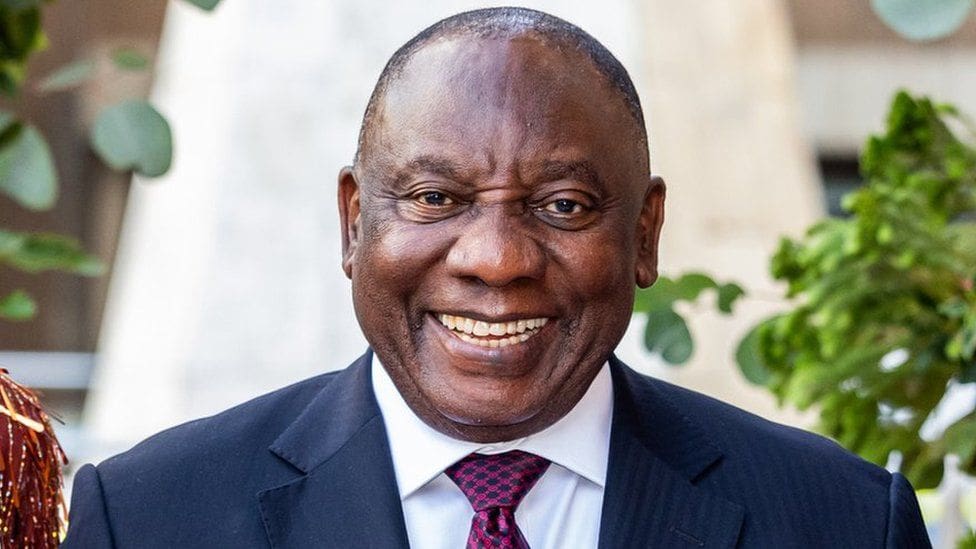
Matamela Cyril Ramaphosa was born on November 17, 1952, in Soweto, Johannesburg, the son of a police officer. He studied law at the University of the North and became active in the South African Students Organisation and Black People’s Convention. Apartheid authorities detained him in 1974 for organising pro-FRELIMO rallies and again after the 1976 Soweto uprising. He later completed legal studies through the University of South Africa.
His education, detentions and early activism are documented by the South African Government’s official biography and the Presidency.
Ramaphosa joined the Council of Unions of South Africa as a legal adviser and in 1982 became the first general secretary of the National Union of Mineworkers. He built it into one of the country’s most powerful unions and led major industrial action. In 1991 he was elected ANC secretary-general and headed the organisation’s negotiating team during the transition from apartheid to democracy.
The union and negotiation milestones appear in the official government career record.
The breakthrough years
The career decisions and defining moments that turned recognition into sustained earning power.
Following the 1994 democratic election, Ramaphosa chaired the Constitutional Assembly responsible for drafting South Africa’s new constitution. Although sometimes discussed as a possible successor to Nelson Mandela, he left senior politics in 1996 and entered business. This shift ultimately made him one of South Africa’s wealthiest politicians, providing capital and corporate experience before his later return to government.
His constitutional role and move into business are recorded by the Presidency and described in Euronews’s career profile.
What the work can earn
Reported pay, contracts, royalties and performance income reveal how the fortune was funded.
Ramaphosa returned to frontline politics, became ANC deputy president in 2012, deputy president of South Africa in 2014 and ANC president in 2017. Parliament elected him national president after Jacob Zuma resigned in February 2018. He won a full term after the 2019 election and was re-elected in 2024 through support from a broader coalition after the ANC lost its parliamentary majority. He also chaired the African Union during the COVID-19 period.
The official sequence is set out by the South African Government; his 2024 re-election and current salary are discussed by BusinessTech.
Ramaphosa received the Olof Palme Prize in 1987 for his labour and anti-apartheid work, was included in the Time 100 in 2007 and received South Africa’s Order of the Baobab in Silver in 2009 for his contribution to negotiations and the constitution. His reputation as a negotiator has remained central to his political image, though his later corporate wealth complicated his relationship with the labour movement that launched him.
The awards are listed on his official government profile.
The business beyond the main career
Endorsements, ownership interests and investments can keep compounding long after the initial breakthrough.
Unlike an entertainer, Ramaphosa does not build wealth through conventional endorsements. His commercial value came from investment stakes, board positions, empowerment transactions and franchise rights before his return to high office. The McDonald’s South Africa interest and financial holdings were business assets, not sponsorship payments. As president, outside commercial activity is constrained by ethics and disclosure rules, and his government salary forms only a small part of wealth accumulated earlier.
The distinction between investment wealth and presidential income is supported by BusinessTech’s financial history.
Ramaphosa founded Shanduka Group in 2001 as a black-owned investment holding company. Its portfolio included interests in mining, finance, telecommunications, Coca-Cola bottling and McDonald’s South Africa. He also held senior roles connected with companies including MTN and Lonmin. Before becoming deputy president, he exited his business interests in 2014 to address conflicts between private ownership and public office.
Shanduka’s sectors are summarised by Forbes’s profile. The Presidency explicitly states that he exited the business in November 2014 in an official government statement.
Notable luxury item
A reported property or major asset offers a tangible glimpse of the wealth behind the public estimate.
Ramaphosa has been associated with property and livestock interests, most prominently the Phala Phala game farm in Limpopo. The farm breeds and sells high-value game, but Ramaphosa has said it operates largely at a loss and is funded from his own resources. Public reporting also points to wealth held through investment structures after the Shanduka era, but current beneficial ownership, debt and private valuations are not comprehensively disclosed.
Ramaphosa’s statement about Phala Phala’s losses is reported by News24.
Cyril Ramaphosa’s estimated net worth
Public estimates vary because private contracts, investments, taxes and liabilities are not fully disclosed.
How this estimate is calculated
The estimate is anchored in Ramaphosa’s documented creation and disposal of Shanduka, historical stakes across major listed and private businesses, franchise and board income, and continuing property and game-farming assets. It does not multiply his presidential salary into a large fortune, nor assume that every former Shanduka asset remains his. Reported sale proceeds are treated cautiously because deal terms, taxes, debt and trusts are not fully public.
Forbes historically classified his wealth as self-made investments, while BusinessTech collates available sale estimates and his most recent disclosed interests. Because transparent current asset declarations are limited, the result is a broad band rather than a precise present-day valuation.
Ramaphosa established the Shanduka Foundation, now the Cyril Ramaphosa Foundation, to support education and small-business development. Government reporting states that the foundation and partners committed substantial funding to school projects, including work in the Free State. The philanthropy supports his image as a business leader investing in social mobility, though it is separate from his personal net worth.
The foundation’s creation and school funding are detailed in the Presidency’s official statement.
Ramaphosa’s wealth and corporate record have produced sustained scrutiny. His position as a Lonmin director during the 2012 Marikana strike remains politically damaging. The later Phala Phala scandal concerned foreign currency stolen from his farm in 2020 and questions about the sale, storage and reporting of the money. Prosecutors decided in 2024 not to charge him, and other authorities reached findings in his favour, but subsequent court and investigative developments kept the impeachment issue alive. Ramaphosa denies wrongdoing.
The prosecution decision and competing findings are reported by Reuters. The Reserve Bank’s exchange-control conclusion is covered by SABC News.
JavaScript is off, so all sections are displayed together.