 How Much Are They Worth?
Celebrity fortunes, explained
How Much Are They Worth?
Celebrity fortunes, explained






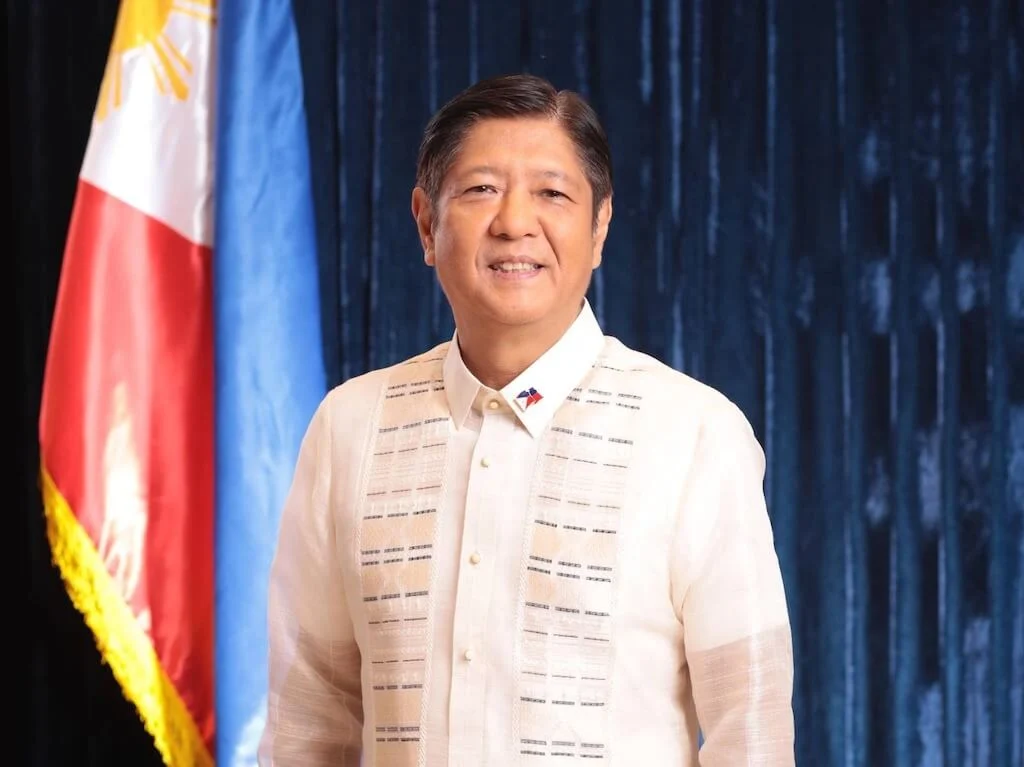
How did Ferdinand Marcos Jr. build this fortune?
The answer unfolds through the career, earnings, deals and assets behind the headline estimate.
Before the fame
The background and early turning points that shaped Ferdinand Marcos Jr.’s route to prominence.
Marcos was born in 1957 to Ferdinand Marcos Sr. and Imelda Marcos. He grew up inside the country’s most powerful political family while his father ruled the Philippines, first as an elected president and later under martial law. His education in the United Kingdom and United States became a recurring subject of public scrutiny because claims about completed qualifications were disputed.
A Time account of Marcos’s 2022 election victory and family history explains the dynasty’s return to Malacañang and the historical controversies surrounding his father’s rule.
Marcos entered elected politics in Ilocos Norte, serving as vice governor, governor, congressional representative and later senator. His career relied on the family’s regional base and continuing political organization after the Marcoses returned from exile.
Public salaries form only one part of his financial history. Inherited and donated property, investments, artworks and jointly owned assets are more significant in recent disclosures, while assets belonging to his mother, siblings or the wider estate cannot be automatically assigned to him.
The breakthrough years
The career decisions and defining moments that turned recognition into sustained earning power.
His national breakthrough came through the Senate and a 2016 vice-presidential campaign, which he narrowly lost to Leni Robredo. He contested the result without overturning it. Six years later he formed the “UniTeam” ticket with Sara Duterte and won the presidency by a large margin.
The result reflected effective coalition-building, family loyalty and a sophisticated social-media campaign. Critics argued that online narratives minimized abuses and corruption associated with the dictatorship, while supporters emphasized continuity, unity and regional pride.

What the work can earn
Reported pay, contracts, royalties and performance income reveal how the fortune was funded.
As president, Marcos prioritized infrastructure, food security, investment incentives and closer defence cooperation with the United States, Japan and other partners. A Reuters report on his corporate tax and investment-incentive reform describes one major economic measure.
His administration also strengthened maritime partnerships amid disputes with China. A Reuters report on the first Philippines–India joint sail places that policy within a wider network of security relationships. In 2026, an Associated Press report on a new offshore gas discovery highlighted an energy-security development announced by Marcos.
Marcos is globally recognized both as president and as the son and namesake of a deposed ruler. That dual identity shapes nearly every assessment of his leadership. His public image benefits from the Marcos family’s loyal base while remaining burdened by unresolved debates about memory, restitution and accountability.
Recognition gives him political influence but does not itself create endorsement income. Presidential travel, diplomatic events and state communications are official activities rather than personal commercial work.

The business beyond the main career
Endorsements, ownership interests and investments can keep compounding long after the initial breakthrough.
No dependable evidence shows major paid product endorsements as a source of Marcos’s wealth. Campaign endorsements from parties, celebrities or local politicians are political support, and campaign donations are not personal income.
The assessment therefore assigns no speculative value to sponsorships. Any brand relationship would require a contract or financial disclosure before being included.
Marcos’s recent filings list investments, but the public record does not establish that he runs a large operating company while in office. Financial assets declared jointly with his wife should be treated as investments, not evidence that every company connected to the Marcos name belongs to the president.
His wife’s legal and academic income is also distinct. A joint filing combines marital assets for disclosure purposes, so a profile should not describe the whole amount as generated by his political career.

Notable luxury item
A reported property or major asset offers a tangible glimpse of the wealth behind the public estimate.
The latest available filing is unusually informative. A GMA News report on the couple’s 2025 SALN and independent appraisal lists real property, cash, investments, paintings, jewellery and vehicles, while noting that the spouses reported no liabilities.
The Philippine News Agency’s explanation of SALN acquisition cost versus appraised value clarifies why the statutory declaration and professional market estimate differ. A Philippine Star breakdown of the preceding appraisal identifies the role of inherited, donated and purchased properties. Official residences and government vehicles remain excluded.
Ferdinand Marcos Jr.’s estimated net worth
Public estimates vary because private contracts, investments, taxes and liabilities are not fully disclosed.
How this estimate is calculated
The calculation uses the latest joint SALN and the attached professional appraisal rather than an unsourced celebrity estimate. The appraisal is more useful for current market value, while the statutory figure reflects reporting rules based largely on acquisition cost.
The result remains joint with Liza Araneta-Marcos. It excludes state assets, wealth held solely by other relatives, disputed assets not in the filing and any assumed value for political influence. Because no liabilities were reported, the appraised asset total also functions as the appraised joint net figure.
Ferdinand Marcos Jr. and Liza Araneta-Marcos reported a joint professionally appraised net worth of approximately ₱1.457 billion as of December 2025. This is the strongest current public benchmark, but it represents conjugal wealth and should not be presented as Marcos Jr.’s solely owned fortune.
Government aid and presidential social programs are public spending rather than Marcos’s philanthropy. Charity undertaken by foundations or other family members also cannot be treated as his personal giving without evidence of his contribution.
His image combines polished international diplomacy with domestic efforts to rehabilitate the family name. The continuing debate over historical truth affects reputation but should not alter the arithmetic of a documented asset declaration.
The principal scrutiny concerns the Marcos dictatorship, tax litigation, contested educational claims, disinformation and the distinction between legally held family property and wealth ordered returned to the state. Allegations against earlier generations do not automatically prove that every asset currently disclosed by Marcos Jr. is unlawful.
His alliance with the Duterte family later fractured. A Reuters report on the 2028 succession contest and Marcos–Duterte split documents the political rivalry without treating allegations in impeachment proceedings as established facts. South China Sea policy has also generated tension; an Associated Press report on Marcos’s response to Chinese pressure over US missiles illustrates the dispute.