 How Much Are They Worth?
Celebrity fortunes, explained
How Much Are They Worth?
Celebrity fortunes, explained

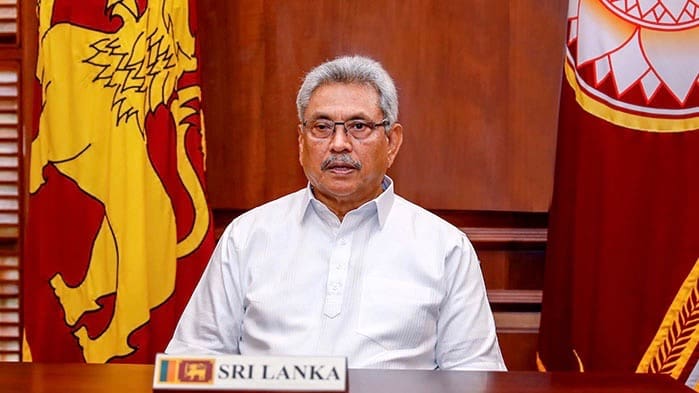
How did Gotabaya Rajapaksa build this fortune?
The answer unfolds through the career, earnings, deals and assets behind the headline estimate.
Before the fame
The background and early turning points that shaped Gotabaya Rajapaksa’s route to prominence.
Nandasena Gotabaya Rajapaksa was born in 1949 in Sri Lanka’s Southern Province into a family already established in national politics. His father, D. A. Rajapaksa, served in parliament and government, while several brothers later occupied senior political posts. Rajapaksa attended Ananda College and entered the army in 1971. A Sri Lankan government account of his background and first presidential year records his military education, later defence studies and role in urban-development projects.
Family prominence helped place him near political power, but it does not establish personal ownership of assets associated with the wider Rajapaksa family. This distinction is particularly important because press coverage often discusses the family as a political network rather than publishing separate verified balance sheets for each member.
Rajapaksa served for roughly two decades in the Sri Lankan Army, including with the Gajaba Regiment during the civil war and the late-1980s insurrection. He rose to lieutenant colonel before leaving active service in 1991. After a period in the private technology sector in Colombo, he moved to the United States and worked in information technology at Loyola Law School in Los Angeles.
Those years provide plausible sources of salary and pension income, but no reliable public record quantifies his accumulated savings. Military rank, an American technology job and eventual pension are relevant to an estimate; they are not evidence for the extravagant personal-fortune figures sometimes repeated online.
The breakthrough years
The career decisions and defining moments that turned recognition into sustained earning power.
His decisive career breakthrough came after returning to Sri Lanka in 2005, when his brother Mahinda Rajapaksa won the presidency and appointed him secretary to the Ministry of Defence. Gotabaya became one of the most powerful unelected officials in the country. He oversaw defence policy during the final phase of the conflict with the Liberation Tigers of Tamil Eelam and later gained responsibility for urban development.
Supporters credited him with security and redevelopment projects, while critics associated his authority with alleged abuses and weak accountability. The role produced influence and a government salary, but budgets, military procurement, public land and urban projects administered by his ministry were state resources rather than personal property.

What the work can earn
Reported pay, contracts, royalties and performance income reveal how the fortune was funded.
Rajapaksa’s supporters regard the defeat of the LTTE in 2009 as his defining achievement. His defence portfolio also encompassed post-war security and highly visible changes to public spaces in Colombo. After years outside elected politics, he won the 2019 presidential election on a platform emphasizing security, centralized administration and technocratic management.
His presidency later became inseparable from economic collapse. A Reuters examination of the lasting effects of his fertilizer ban describes how the abrupt agricultural policy damaged yields and livelihoods. Other factors—including tax cuts, debt, lost tourism and the pandemic—also contributed to the crisis, so it would be simplistic to attribute every economic problem to one decision.
Rajapaksa achieved national recognition first as defence secretary and then as president. Admirers presented him as a disciplined administrator who helped end a long war; opponents viewed him as an emblem of militarized and family-centered government. His election made him the first person with his particular military and technocratic profile to reach Sri Lanka’s presidency without previously holding elected office.
Public recognition did not translate into conventional celebrity commerce. There is no dependable evidence of major book royalties, paid entertainment work or global speaking contracts comparable to the post-office careers of some Western leaders.

The business beyond the main career
Endorsements, ownership interests and investments can keep compounding long after the initial breakthrough.
There is no solid evidence that commercial endorsements or sponsorships formed a meaningful part of Rajapaksa’s income. Campaign support, party resources and political advertising are not personal endorsement earnings. Likewise, diplomatic hospitality and state-funded travel belong to official activity, not private sponsorship.
This category therefore contributes little to a defensible wealth assessment. Any claim that a brand paid him personally would require a contract, company disclosure or credible reporting, none of which is available in the reviewed record.
Before returning to government, Rajapaksa worked in technology, including in the United States. Public records do not identify a major operating company, investment portfolio or privately held business empire owned by him. Political authority exercised through the defence ministry or presidency should not be described as a business venture.
The absence of transparent corporate holdings is not proof that he has no investments. It means an estimate cannot responsibly assign large values to invented companies or presume that businesses linked to relatives belong to him.

Notable luxury item
A reported property or major asset offers a tangible glimpse of the wealth behind the public estimate.
Rajapaksa used official residences, vehicles, staff and security while in office and continued to receive former-president support after leaving power. Those benefits cannot be capitalized as personally owned property. In 2025, Sri Lanka changed that system: an Associated Press report on the abolition of former-presidential privileges explains that housing, allowances, transport and staff support were withdrawn from living former leaders.
There is insufficient reliable public information about title, market value, liabilities and beneficial ownership of any private homes or investments held by Rajapaksa. Assets belonging to his wife, son, siblings, political party or the state must remain outside his personal total unless ownership evidence says otherwise.
Gotabaya Rajapaksa’s estimated net worth
Public estimates vary because private contracts, investments, taxes and liabilities are not fully disclosed.
How this estimate is calculated
The calculation considers a career military salary and pension, private technology employment, a decade as defence secretary, presidential compensation and any lawful savings those roles could support. It does not count official residences, government vehicles, security details, ministry budgets, family businesses or assets attributed only to other Rajapaksa relatives.
There is no comprehensive public asset declaration, verified property schedule or corporate-ownership record sufficient to construct a reliable personal balance sheet. Sanctions, allegations and political power do not themselves prove ownership of a particular asset. Because the evidence cannot support a precise valuation, assigning a confident figure would create false precision.
Gotabaya Rajapaksa’s personal net worth is not publicly disclosed and cannot be reliably estimated from the available evidence. His documented career supports the existence of salary, pension and savings, but current assets, debts and beneficial ownership remain too opaque for a responsible numerical estimate.
Rajapaksa’s public image rests far more on war, security, nationalism and economic policy than on a separately endowed charitable foundation. Government welfare, reconstruction and urban projects conducted during his tenure were financed and owned by the state. They should not be listed as personal philanthropy.
By 2022, shortages and inflation transformed his public standing. A Reuters retrospective on the Aragalaya protest movement describes the revolt that drove him from office and continued to shape Sri Lankan politics. The reputational reversal helps explain why claims about his influence must be dated rather than treated as permanent.
Rajapaksa has faced grave allegations concerning the civil war, journalists, activists and accountability. A Human Rights Watch assessment of justice under his administration argued that his government obstructed accountability for serious past abuses. In 2023, Canada sanctioned Gotabaya and Mahinda Rajapaksa; a Human Rights Watch explanation of those Canadian sanctions sets out the stated human-rights basis. Rajapaksa and his supporters have rejected or disputed many allegations, and allegations should not be presented as criminal convictions.
The economic crisis produced the immediate end of his presidency. The Guardian’s report on his resignation after fleeing mass protests records the shortages, public anger and transfer of power. Later coverage of Sri Lanka’s election noted that his collapse remained central to voters; a Reuters account of the 2024 presidential contest places his departure within the country’s continuing reform debate.