Lee Hsien Loong

How Much Are They Worth? Celebrity fortunes, explained
Lee Hsien Loong
Net worth story

Lee Hsien Loong

Net worth revealed after 6 slides

Begin the countdown
The countdown
1 of 7
#
Lee Hsien Loong
The fortune behind the fame

How did Lee Hsien Loong build this fortune?

The answer unfolds through the career, earnings, deals and assets behind the headline estimate.

#
Lee Hsien Loong
6 slides until the reveal

Before the fame

The background and early turning points that shaped Lee Hsien Loong’s route to prominence.

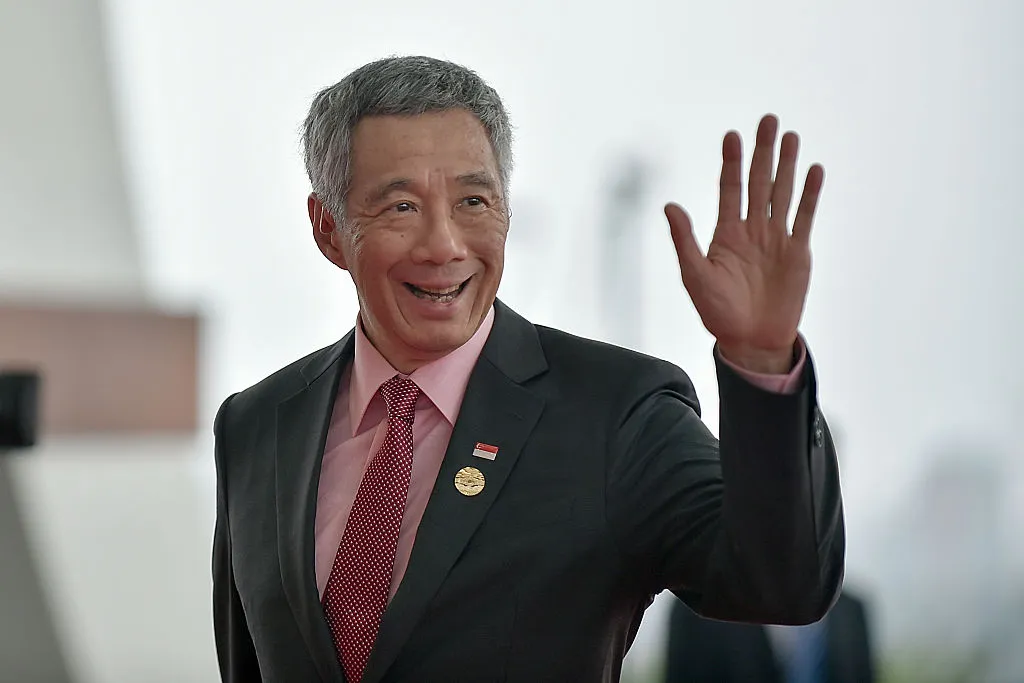
Lee was born in 1952, the eldest son of Singapore’s founding prime minister, Lee Kuan Yew. He studied mathematics at Trinity College, Cambridge, earned a diploma in computer science and later completed a public-administration degree at Harvard. The Singapore Prime Minister’s Office biography of Senior Minister Lee gives the official chronology of his education, family and government appointments.

His political lineage gave him exceptional visibility, yet property and investments belonging to his father, siblings, wife or children cannot be folded into his own finances.

Lee joined the Singapore Armed Forces and rose to brigadier-general before leaving for electoral politics. He entered parliament in 1984 and held roles in trade and industry, defence and finance. He also chaired the Monetary Authority of Singapore before becoming prime minister.

The military and ministerial careers provided transparent categories of earned income. They did not give him personal ownership of defence resources, central-bank reserves or government companies.

#
Lee Hsien Loong
5 slides until the reveal

The breakthrough years

The career decisions and defining moments that turned recognition into sustained earning power.

Lee’s breakthrough came through senior economic portfolios and appointment as deputy prime minister. He became prime minister in August 2004, succeeding Goh Chok Tong, and secretary-general of the People’s Action Party later that year. He led the PAP through four general elections.

An official PMO account of Lee’s premiership highlights SkillsFuture and Smart Nation, two programs closely associated with his governing approach.

Advertisement
#
Representative illustration of contracts and earnings
Representative image
4 slides until the reveal

What the work can earn

Reported pay, contracts, royalties and performance income reveal how the fortune was funded.

During Lee’s premiership, Singapore consolidated its position as a financial, logistics and technology hub while expanding public transport, skills programs and digital government. His administration also navigated the global financial crisis and the COVID-19 pandemic.

Leadership succession was a significant final achievement. A Reuters profile of Lawrence Wong’s succession records the first prime-ministerial handover in twenty years. Lee remained in cabinet, providing continuity without retaining the top office.

Lee is recognized internationally as one of Asia’s longest-serving democratic heads of government and a prominent advocate of rules-based trade and strategic balance between major powers. His technical training and occasional coding demonstrations reinforced an image of analytical leadership.

The transition received broad attention; an Associated Press report on Lee remaining as senior minister summarized his two decades in office and the economic growth credited to his government.

#
Representative illustration of endorsements and business growth
Representative image
3 slides until the reveal

The business beyond the main career

Endorsements, ownership interests and investments can keep compounding long after the initial breakthrough.

There is no credible evidence that Lee built income through brand endorsements. Political campaigning, official conferences and government communications are not commercial sponsorships. Paid product promotion would also sit uneasily with the conflict-of-interest expectations applied to Singaporean ministers.

His economic profile is therefore driven by public compensation and possible private saving or investment, not celebrity advertising.

Lee’s career has been overwhelmingly governmental. He chairs GIC, but GIC manages Singapore’s reserves for the state. Its portfolio is not his investment account, and its assets must be excluded from any personal calculation.

His wife Ho Ching’s former leadership of Temasek likewise does not make Temasek assets family property. No reliable public record identifies a major private company founded or controlled by Lee.

Advertisement
#
Representative illustration of a high-value property asset
Representative image
2 slides until the reveal

Notable luxury item

A reported property or major asset offers a tangible glimpse of the wealth behind the public estimate.

Public attention has focused on 38 Oxley Road, the home of Lee Kuan Yew. The property was inherited by Lee Hsien Loong and later transferred to his brother. A Straits Times report on the Oxley Road transfer and charitable donations explains that Lee sold it at market value and that both brothers made donations linked to the transaction.

That history means the house should not be listed as a current Lee Hsien Loong asset. Official residences and vehicles are also government resources. Public information does not provide a complete schedule of his current homes, investments, debts and jointly held assets.

#
Lee Hsien Loong
The reveal

Lee Hsien Loong’s estimated net worth

Estimate unavailable

Public estimates vary because private contracts, investments, taxes and liabilities are not fully disclosed.

How this estimate is calculated

The assessment begins with Lee’s long military and ministerial career, including twenty years receiving Singapore’s publicly structured prime-ministerial compensation. It allows for disciplined savings and investment growth while accounting for taxation, family expenses, philanthropy and uncertainty about portfolio returns.

It excludes GIC, Temasek, state property, official transport and assets owned by relatives. Without a current asset declaration, securities portfolio, property schedule and liability statement, converting lifetime gross salary into a precise fortune would be guesswork.

Lee Hsien Loong’s personal net worth is not independently verified. His long record of high public compensation makes substantial accumulated wealth plausible, but available evidence does not support a responsible numerical figure.

The Oxley Road transaction produced documented charitable donations, but state social programs launched under Lee are taxpayer-funded policies rather than his personal philanthropy. The distinction matters when assessing both reputation and wealth.

His public image combines administrative competence with criticisms that Singapore’s political system constrains opposition and dissent. The orderly handover to Wong strengthened the continuity narrative; a South China Morning Post account of the planned transition describes the long preparation and PAP support behind it.

Lee’s salary has long attracted scrutiny because Singapore deliberately pays ministers at levels benchmarked to high private-sector earners. A summary of Singapore cabinet remuneration and the 2012 pay changes records the structure and reduction, though official salary white papers are preferable for legal detail. High gross pay over many years supports significant saving potential but does not reveal spending, taxes or portfolio performance.

The Oxley Road dispute became a public argument over Lee Kuan Yew’s wishes and alleged use of state power. Lee denied his siblings’ allegations and addressed parliament. A chronology of the 38 Oxley Road dispute records both the allegations and denials. Another recurrent issue is Lee’s use of defamation litigation; legal victories establish specific findings but do not settle broader debates about speech and political power.

HMW uses research and editorial tools to assist production. Every profile is independently sourced, fact-checked, edited and reviewed before publication. Estimates are editorial assessments and not audited financial statements.

Browse the full collection

Explore by category

Sports Athletes, records and earnings Actors & Entertainment Film, television and fame Business Founders, deals and ownership Musicians Tours, catalogues and royalties Influencers Audiences, brands and ventures Gamers Streaming, esports and sponsors DJs Festivals, releases and labels Politicians Careers, disclosures and assets Chefs Restaurants, awards and ventures Models Campaigns, runways and brands YouTube Channels Views, partnerships and businesses American Football Contracts, teams and endorsements Soccer Salaries, transfers and sponsorships Football Players, clubs and commercial deals Cricket Contracts, leagues and endorsements Tennis Prize money, tours and sponsors Golf Winnings, tours and partnerships Boxing Purses, promotions and endorsements Martial Arts Fight purses, bonuses and brands F1 Contracts, teams and sponsorships Basketball Salaries, sneakers and investments Motorsport Racing careers, teams and sponsors Comedians Tours, specials and production deals TV Personalities Broadcast careers and ventures Podcasts Audiences, advertising and ownership CEOs Leadership, equity and compensation Billionaires Ownership, investments and major assets Companies Valuations, ownership and performance Restaurants Hospitality groups and expansion Night Clubs Venues, ownership and nightlife Festivals Events, audiences and commercial scale Criminal Cases Documented cases and asset scrutiny