 How Much Are They Worth?
Celebrity fortunes, explained

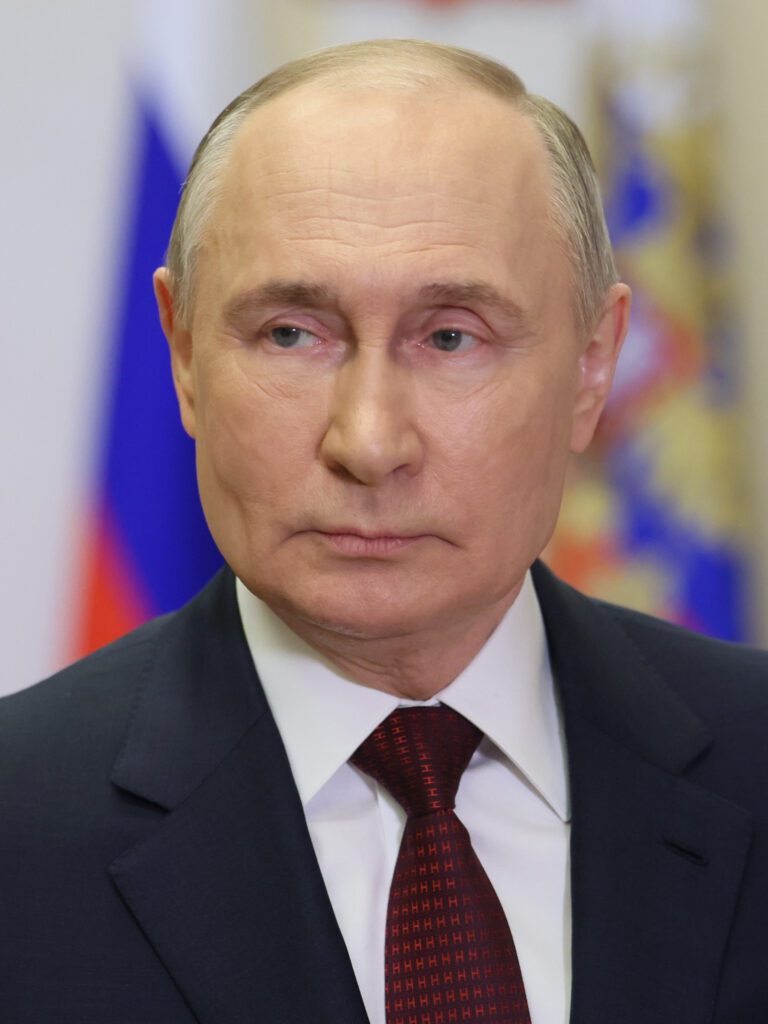
How did Vladimir Putin build this fortune?
The answer unfolds through the career, earnings, deals and assets behind the headline estimate.
Vladimir Putin before the fame
The background and early turning points that shaped Vladimir Putin’s route to prominence.
Vladimir Vladimirovich Putin was born on 7 October 1952 in Leningrad, the city now called St Petersburg, the youngest son of a factory foreman who had served in the navy and of a mother who worked a succession of manual jobs. The family shared a communal flat on Baskov Lane. He took up sambo and then judo in his teens and earned a black belt. He read law at Leningrad State University, graduating in 1975; his thesis supervisor was Anatoly Sobchak, whose later election as mayor of the city gave Putin his route into public administration. It was a salaried household with no private capital behind it.
On leaving university in 1975 Putin joined the KGB, where he served for sixteen years, including a posting to Dresden in East Germany from 1985. He resigned with the rank of lieutenant colonel in 1991 and joined Sobchak’s administration at Leningrad City Hall, running the committee for external relations and rising to first deputy mayor by 1994. Soviet and early post-Soviet officials were paid on published state scales, and the combined pay of a lieutenant colonel and a senior city deputy came to the equivalent of a few thousand dollars a year at the exchange rates of the period. A military pension from that service is still one of the income lines in his declarations.
Vladimir Putin’s breakthrough years
The career decisions and defining moments that turned recognition into sustained earning power.
Putin moved to Moscow in 1996, worked inside the presidential property directorate, was made director of the Federal Security Service in 1998, appointed prime minister in August 1999, and became acting president when Boris Yeltsin resigned on 31 December 1999. He was inaugurated as president in May 2000.
The money attached to that career is a salary, and it is on the record. The Kremlin puts the presidential salary at about 8.9 million roubles a year, roughly $95,000. His declared income for 2021 was 10,202,000 roubles, about $106,300, as reported by Ukrainska Pravda. The Central Election Commission disclosure published when he registered as a candidate in January 2024, and carried by The Moscow Times, put his total declared income for the six years to 2022 at 67,591,875 roubles — about $753,000. On our estimate, twenty-six years in the premiership and the presidency at an average of roughly $95,000 a year comes to about $2.5 million in gross official pay across the two top offices.
What Vladimir Putin’s work can earn
Reported pay, contracts, royalties and performance income reveal how the fortune was funded.
The electoral record is the substance here: presidential elections won in 2000, 2004, 2012, 2018 and 2024, with the interval from 2008 to 2012 spent as prime minister, which makes him the longest-serving Russian leader since Joseph Stalin. He has also published. Judo: History, Theory, Practice is a coaching manual written with Vasily Shestakov and Alexei Levitsky, and First Person is the book-length set of interviews issued as he took office in 2000. Royalties on both are small beside the salary — our estimate puts the cumulative gross across editions and translations at around $150,000 — but they are his sole earnings from outside the state payroll since 1975.
Time made him its Person of the Year in 2007. Forbes placed him at the head of its annual ranking of the world’s most powerful people four times between 2013 and 2016. He holds an honorary eighth dan in judo, has collected honorary doctorates from several universities, and became honorary president of the European Judo Union in 2008. None of that recognition carries a fee: a serving president is paid by the state and by nothing else, which is why the recognition column and the earnings column look so different in his case.
Vladimir Putin’s business beyond the main career
Endorsements, ownership interests and investments can keep compounding long after the initial breakthrough.
The commercial value of a serving head of state’s name goes unused by convention and by Russian law on state service; the nearest thing to brand income in his 2024 filing is the authorship described above. Sport is where his name has always had the most commercial pull, and he has left it unmonetised: the judo manual came out through a specialist Russian sports imprint rather than a trade publisher. For a profile of this kind the section is genuinely thin, and the thinness is part of the answer. The earnings side of Vladimir Putin’s balance sheet is a salary, two pensions and a little deposit interest.
Russian law on state service bars the holder of the presidency from paid commercial work, and the 2024 filing reflects that. The securities holding listed in it is 230 ordinary shares in Bank Saint Petersburg, valued in the document at 280.49 roubles each, so about 64,500 roubles in total, or roughly $720 at the rate of the day. The other income lines in the same filing are interest on bank deposits, a military pension, a civilian pension and proceeds from property sales. The documented commercial footprint is therefore a few hundred dollars of bank stock and the interest on his savings.
Vladimir Putin’s notable luxury item
A reported property or major asset offers a tangible glimpse of the wealth behind the public estimate.
The 2024 disclosure lists a 77-square-metre flat and an 18-square-metre garage in St Petersburg, plus a parking space in the same city, and records his use of a 153.7-square-metre apartment in Moscow held on a state lease, not owned. The vehicle list is unusual for a head of state: two GAZ M-21 Volgas built in 1960 and 1965, a 2009 Lada Niva, and a Skif trailer from 1987. Cash and deposits came to 54.5 million roubles, about $606,000, spread across ten Russian bank accounts. The residences the office actually uses — Novo-Ogaryovo outside Moscow, the Kremlin apartment, Bocharov Ruchei at Sochi — are federal property run by the presidential estate service. They belong to the Russian state and are not counted as his.
Vladimir Putin’s estimated net worth
Public estimates vary because private contracts, investments, taxes and liabilities are not fully disclosed.
How this estimate is calculated
The working uses the one record of his own money that exists as a document, the January 2024 Central Election Commission disclosure, and prices the assets in it. Cash and deposits are taken at the filed 54.5 million roubles, about $606,000. The 77-square-metre St Petersburg flat, at the city’s 2024 rate of roughly 200,000 roubles per square metre, gives about 15.4 million roubles, or $170,000. The garage and the parking space add about $25,000 and the vehicle list about $45,000. The 230 bank shares add about $700. That sums to roughly $845,000.
Widening it for the spread in St Petersburg property prices and in classic-car valuations, the working supports a range of $0.7 million to $1.5 million. The figure we publish is that midpoint, rounded to the nearest step we publish at. The billions attributed to him in the section above describe assets registered to other people and other entities; a net-worth figure has to describe what the subject himself owns, so those numbers stay where they belong, as reported allegations.
Confidence: Documented — built from the Central Election Commission’s January 2024 disclosure of his declared income, bank accounts, property and vehicles.
Putin’s public patronage runs through sport and science rather than through a foundation in his own name. He became chairman of the board of trustees of the Russian Geographical Society in 2009, took the honorary presidency of the International Judo Federation in 2008, and has lent his name to Russian judo and sambo programmes for young athletes. There is no charitable trust of his own on the register and no disclosed personal donation attached to any of that activity. The image is managed centrally, through the presidential press service, at state expense.
Figures far larger than the ones in his filings circulate widely, and they come from investigations and from former insiders rather than from any document he has signed. Stanislav Belkovsky, once an adviser inside the Kremlin, said in 2007 that Putin controlled stakes worth at least $40 billion through offshore companies and trusts. Bill Browder told the United States Senate Judiciary Committee in July 2017 that he put the figure at $200 billion, in testimony filed with the committee. In January 2021 Alexei Navalny’s Anti-Corruption Foundation published an investigation into an estate at Gelendzhik on the Black Sea coast which it said had cost at least 100 billion roubles, about $1.35 billion, to build; the Kremlin’s spokesman, Dmitry Peskov, said Putin did not own it, as RFE/RL reported.
Each of those is an allegation, attributed to the person or organisation that made it. None has been audited, filed with any authority or tested in a court, and none of the assets they describe sits in a declaration in his name. An allegation is not added to a filed figure.