
 How Much Are They Worth?
Celebrity fortunes, explained
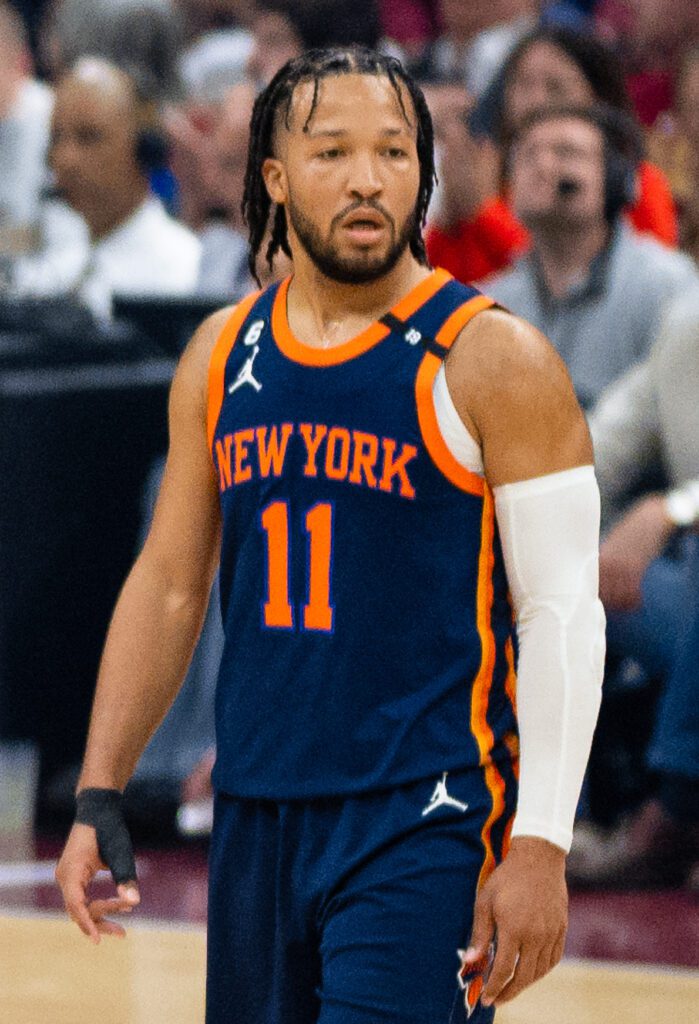
How did Jalen Brunson build this fortune?
The answer unfolds through the career, earnings, deals and assets behind the headline estimate.
Jalen Brunson before the fame
The background and early turning points that shaped Jalen Brunson’s route to prominence.
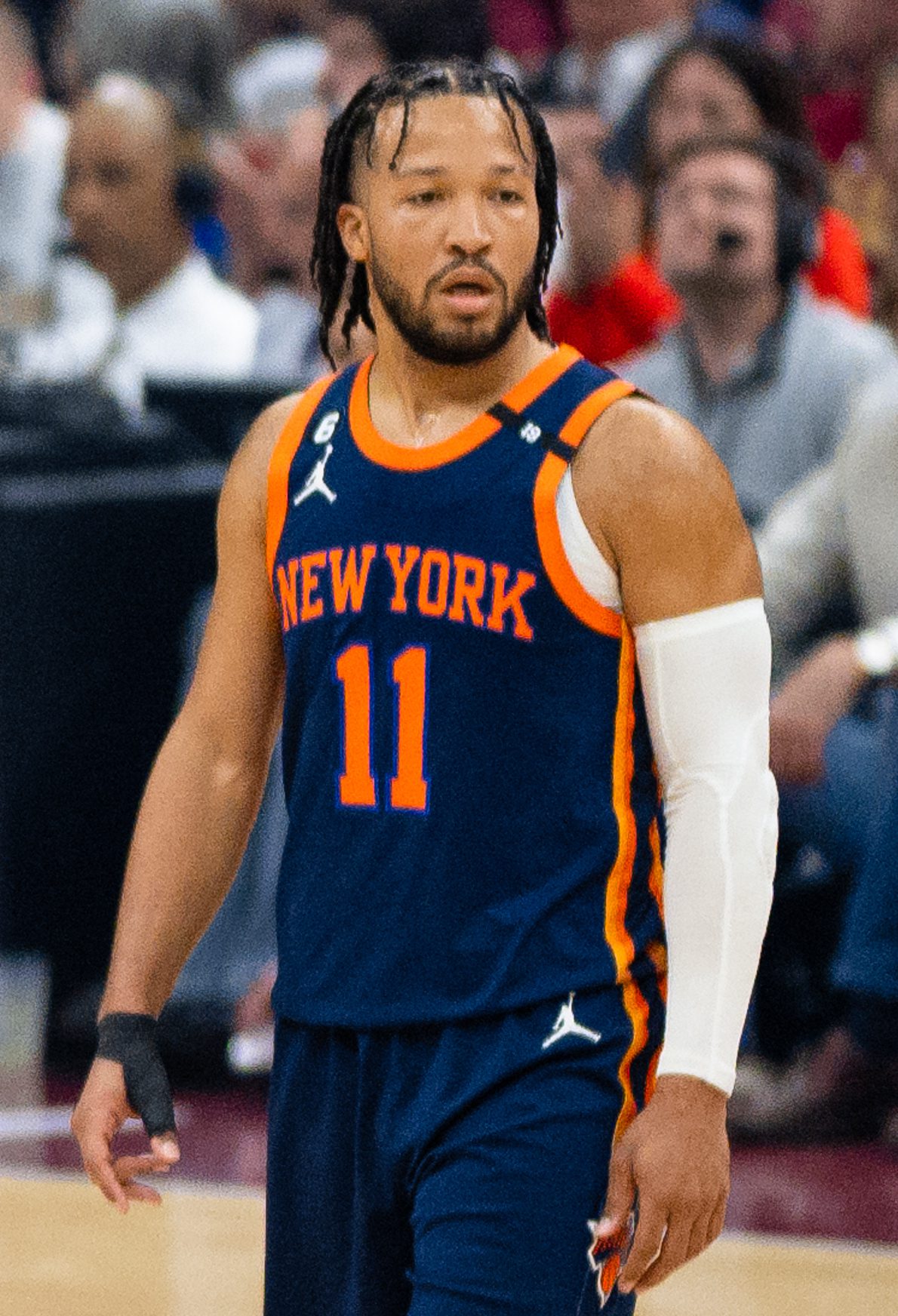
Jalen Brunson was born on 31 August 1996 in New Brunswick, New Jersey, the son of Rick Brunson, who played nine seasons in the NBA and later coached in it. He grew up inside the business he now works in, which is part of why his contract decisions read as deliberate rather than sentimental.
He joined the New York Knicks in 2022 and captained the team (NBA.com). Unusually for this site, most of the money in his profile is a matter of public record: NBA contracts are filed with the league and reported in full, so the salary side of the estimate does not have to be inferred.
Brunson played high school basketball in Illinois before spending three seasons at Villanova, where he won national championships in 2016 and 2018. He left after his junior year (CBS Sports).
College basketball pays nothing directly in the era he played it, so the financial clock starts in June 2018. Four Wildcats were selected in that draft, the most in the programme’s history, and Brunson went 33rd overall to the Dallas Mavericks – the first pick of the second round (Villanova University).
Jalen Brunson’s breakthrough years
The career decisions and defining moments that turned recognition into sustained earning power.
Going 33rd matters more than it sounds. A second-round pick receives no guaranteed rookie scale, so his first four seasons in Dallas were played on modest money relative to his production.
The breakthrough was financial before it was sporting. In the summer of 2022 he signed with the Knicks on a four-year contract worth 104 million dollars, with a player option on the final season (NBA.com, CBS Sports). He had been the consensus national player of the year in 2018 (CBS Sports); it took four years for the pay to catch up with the billing.

What Jalen Brunson’s work can earn
Reported pay, contracts, royalties and performance income reveal how the fortune was funded.
In 2024 Brunson signed a four-year extension worth 156.5 million dollars – 113 million dollars less than the maximum he would have been eligible to sign a year later (ESPN). ESPN described it as a largely unprecedented financial concession.
The purpose was mechanical. The lower figure kept the Knicks below the second apron of the salary cap, a threshold that sharply restricts a team’s ability to trade, sign and use draft picks. With that room the club re-signed OG Anunoby on a five-year deal reported at 212 million dollars, acquired Mikal Bridges in a trade whose package ESPN reported as five first-round picks, and completed the Karl-Anthony Towns trade (ESPN). Descriptions of the Bridges package vary depending on whether pick swaps and other assets are counted.
In 2026 the Knicks won their first championship in 53 years and Brunson was named Finals MVP, averaging 32.6 points across the series and scoring 45 in the clinching game (NBA.com, Forbes).
He was named Eastern Conference finals MVP on the way to the title, then took the Bill Russell trophy for the finals itself (NBA.com). Brunson said at the time of the extension that he was completely comfortable with what he had given up (ESPN), and the 2026 result turned that sentence into the defining line of his public image.
Recognition of this kind has a commercial value that is separate from salary. Sportico reported before the title that his profile in the New York market already positioned him as one of the league’s more marketable players; a championship and a finals MVP award are the two things that convert that position into signed contracts.

Jalen Brunson’s business beyond the main career
Endorsements, ownership interests and investments can keep compounding long after the initial breakthrough.
His anchor endorsement is with Nike, and he has appeared in the brand’s campaigns without taking a signature shoe of his own. The terms of that deal have not been published, and neither have the terms of his other partnerships.
Sportico assessed his endorsement standing before the 2026 title, arguing that a New York point guard with his profile was positioned for a considerably larger portfolio than he then held. No figure for his annual off-court income has been disclosed by him, his agency or any brand, so none is asserted here.
Brunson has not built an operating business, and it would be inventing a story to suggest he has. He is 30, still under contract, and his ventures so far are media rather than equity: a podcast made with a team-mate, and appearances that sit alongside his playing career rather than replacing it.
For a player at this stage that is the normal position. The honest reading is that his balance sheet is salary and endorsements, not holdings.

Jalen Brunson’s notable luxury item
A reported property or major asset offers a tangible glimpse of the wealth behind the public estimate.
Nothing is documented. There is no reported property purchase, no filed company and no public record of investments held in his name.
This is genuinely normal for a player four years into his first large contract, and the absence is itself informative: it means the range below is a calculation about retained pay, not a valuation of assets anybody has seen.
Jalen Brunson’s estimated net worth
Public estimates vary because private contracts, investments, taxes and liabilities are not fully disclosed.
How this estimate is calculated
Documented. The 2022 contract of four years and 104 million dollars (NBA.com), and the 2024 extension of four years and 156.5 million, 113 million below the available maximum, with a fourth-year player option (ESPN). NBA contracts are public, which makes this one of the few sports profiles resting on disclosed figures.
Estimated. Endorsement income, which is not published by any party (Sportico).
Deductions. Federal, New York State and New York City tax, which together are among the heaviest burdens on any American athlete; agent fees, capped at four per cent; and the NBA’s escrow withholding.
The arithmetic. A second-round rookie contract from 2018 to 2022 at modest rates, then the four-year Knicks deal signed in 2022 (NBA.com), of which three seasons had been paid by 2025, and the first season of the extension – gross earnings to date on the order of 80 to 90 million dollars. New York is the heaviest tax jurisdiction in the league: federal, state and city rates together with duty days in other states take more than half. Agent fees and league escrow take more again. That leaves roughly 35 to 40 million of retained earnings before any spending, plus undisclosed endorsement income. Treat that as a scale rather than a sum: duty-day tax allocation varies season by season, and escrow is returned or withheld depending on league revenue in a way no outsider can model.
Why other estimates are lower. Published figures for Brunson run as low as 18 to 20 million. The difference is almost entirely an assumption about spending and about how much of the escrow has been returned, neither of which is knowable.
Contracted is not banked. The most common misreading of an NBA profile is to treat the headline value of a signed deal as money the player has. Brunson’s extension runs to 2028; the range below counts only what has actually been paid and retained since 2018, and it deliberately excludes both the unpaid years of the extension and the 113 million he chose not to sign for.
The working supports a range of $25 million to $45 million. The figure we publish is its midpoint.
Confidence: Partly documented — the salaries are filed and public, but spending, escrow returns and endorsement income are all modelled.
Think you know Jalen Brunson? Take the quiz: Easy · Medium · Legendary
The extension is the clearest public act of his career, and it was read in exactly those terms: a player leaving 113 million dollars on the table so his employer could build a better team around him (ESPN). Forbes framed it as a sacrifice rather than a negotiation, which is unusual language for a contract story.
He also runs community work through a foundation in his own name, alongside the Knicks’ own programmes. Neither publishes accounts, so no giving figure is quoted here.
There is no significant controversy on his record, and padding this section would be dishonest. Sustained criticism has attached only to the extension itself – a strand of analysis arguing that a player should not subsidise a franchise valued in the billions, whatever the sporting return.
That criticism is about the collective bargaining agreement rather than about Brunson’s conduct. The money is also not necessarily gone: the extension carries a player option in its fourth year, positioning him to recoup the difference on a later maximum deal.