How did Charles Oliveira build this fortune?
The answer unfolds through the career, earnings, deals and assets behind the headline estimate.
Before the fame
The background and early turning points that shaped Charles Oliveira’s route to prominence.
Charles Oliveira grew up in Guarujá, Brazil, and became UFC lightweight champion after one of the longest and most dramatic climbs in company history. His official UFC profile records his finishes, submissions and title bouts. Oliveira’s estimate relies on many years of disclosed bonus amounts and conservative championship-pay ranges. Record bonuses provide a useful floor, but they are only additions to undisclosed guarantees and cannot reveal current assets by themselves.
Oliveira began jiu-jitsu after childhood health problems, turned professional in Brazil and entered UFC unbeaten in 2010. His UFCStats ledger documents early inconsistency, featherweight bouts and the later lightweight streak. Initial show-and-win contracts were far below champion pay. HMW uses modest amounts for those years and does not apply later purse levels retroactively.
The breakthrough years
The career decisions and defining moments that turned recognition into sustained earning power.
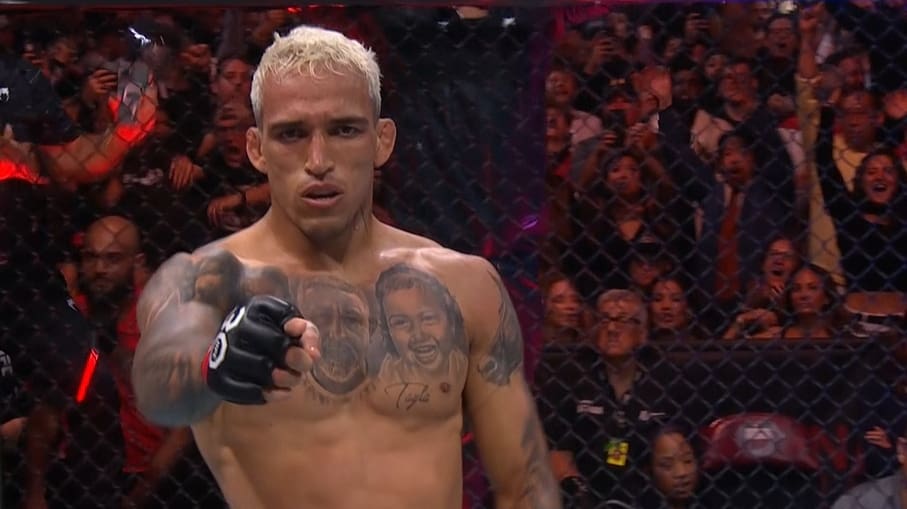
From 2018 Oliveira assembled an 11-fight winning streak. He stopped Michael Chandler at UFC 262 in 2021 to win the vacant lightweight title. UFC Brazil confirmed the title and a $75,000 performance bonus, his 17th post-fight award at the time. That exact bonus enters the ledger; the larger guarantee and PPV backend are modelled as ranges because they were not officially released.
What the work can earn
Reported pay, contracts, royalties and performance income reveal how the fortune was funded.
Oliveira submitted Dustin Poirier, defeated Justin Gaethje after missing championship weight, lost to Islam Makhachev and remained a leading contender. By UFC 289 he had the company records for finishes and post-fight bonuses. MMA Fighting documented the $50,000 Dariush bonus and his 19th award.
Oliveira’s principal inflows are UFC guarantees, win money, PPV participation on championship cards and a record number of bonuses. Nineteen standard awards at mostly $50,000, plus the $75,000 UFC 262 award, imply a bonus floor near $1 million before later events. Globo’s bonus report independently confirms the count. Gross fight pay remains far larger but less transparent.
The business beyond the main career
Endorsements, ownership interests and investments can keep compounding long after the initial breakthrough.
Oliveira has equipment, betting and Brazilian sponsor relationships, merchandise and appearance income. Individual terms are private and UFC uniform rules limit apparel exposure inside the cage. HMW therefore assigns a restrained annual sponsor amount during the title period and a lower level before it. No blue-chip contract is given an invented value.
Oliveira supports training and community activity in Guarujá and works through Chute Boxe Diego Lima. These relationships strengthen his brand but do not establish ownership of a valuable gym chain. His charitable spending is real: MMA Fighting reported his use of a $50,000 bonus for a children’s event. HMW treats that as expenditure, not an asset.
Notable luxury item
A reported property or major asset offers a tangible glimpse of the wealth behind the public estimate.
Brazilian and US withholding tax, management, coaching, travel and full camps materially reduce gross receipts. Oliveira has supported extended family and community projects. Property ownership, mortgages and investments are not publicly itemized. Currency conversion between dollars and reais adds timing uncertainty. The model therefore assumes a lower retention rate than a passive salaried investor would achieve.
Charles Oliveira’s estimated net worth
Public estimates vary because private contracts, investments, taxes and liabilities are not fully disclosed.
How this estimate is calculated
The ledger totals exact reported bonuses, conservative guarantees for 30-plus UFC appearances and higher ranges for the Chandler, Poirier, Gaethje, Makhachev and later premium bouts. Modest sponsor income is added only for active contract years. HMW then removes tax, manager and camp costs, family support, philanthropy and consumption, and adds restrained property and investment equity. UFC’s UFC 309 statistical preview verifies the scale and chronology of the Chandler rematch without pretending to disclose its purse. A separate currency reserve accounts for income earned in dollars but assets and expenditure held in Brazilian reais. Championship bouts are valued separately because opponent, location, PPV position and contractual status differ; the conservative midpoint is used only after known bonuses are removed. No gym or personal-brand enterprise value is included without ownership evidence.
“Do Bronx” built a large Brazilian and international following around his favela origins, aggressive style and comeback story. He headlines or co-headlines major events and sells merchandise, but audience size is not booked as an asset. A UFC interview before the Poirier defense traces the long route from teenage debut to champion and supports the chronology used in the income model.
Bonus amounts and counts are strong public evidence, while base purses and PPV shares are mostly estimates. Event pay reports often mix compliance money, discretionary awards and projected PPV. HMW separates those categories and uses title-event ranges that do not overlap with known bonuses. It avoids adopting a profession-based number or treating all reported career earnings as cash retained.

JavaScript is off, so all sections are displayed together.