
 How Much Are They Worth?
Celebrity fortunes, explained
How Much Are They Worth?
Celebrity fortunes, explained



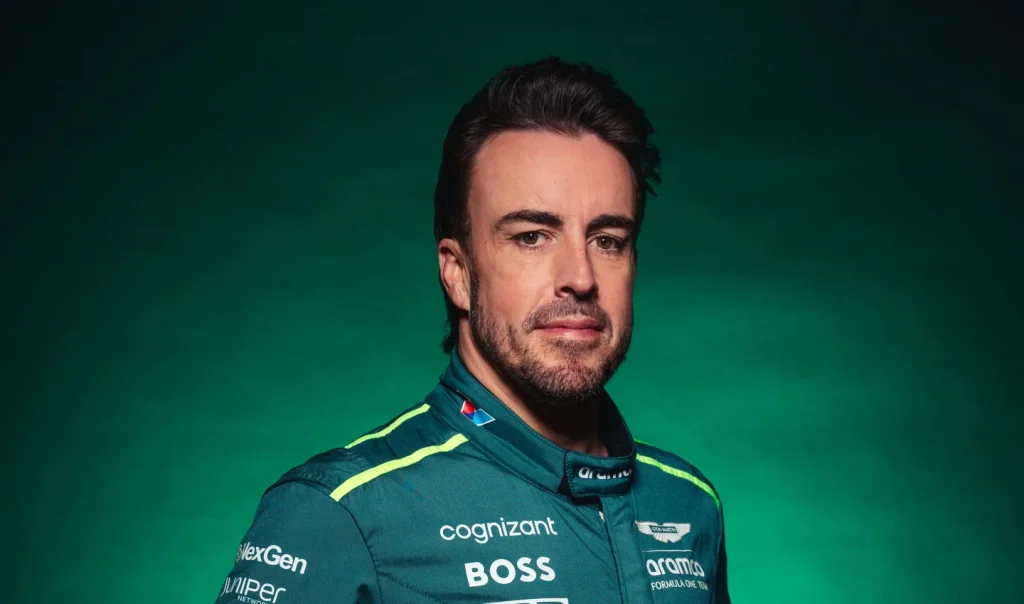
How did Fernando Alonso build this fortune?
The answer unfolds through the career, earnings, deals and assets behind the headline estimate.
Before the fame
The background and early turning points that shaped Fernando Alonso’s route to prominence.
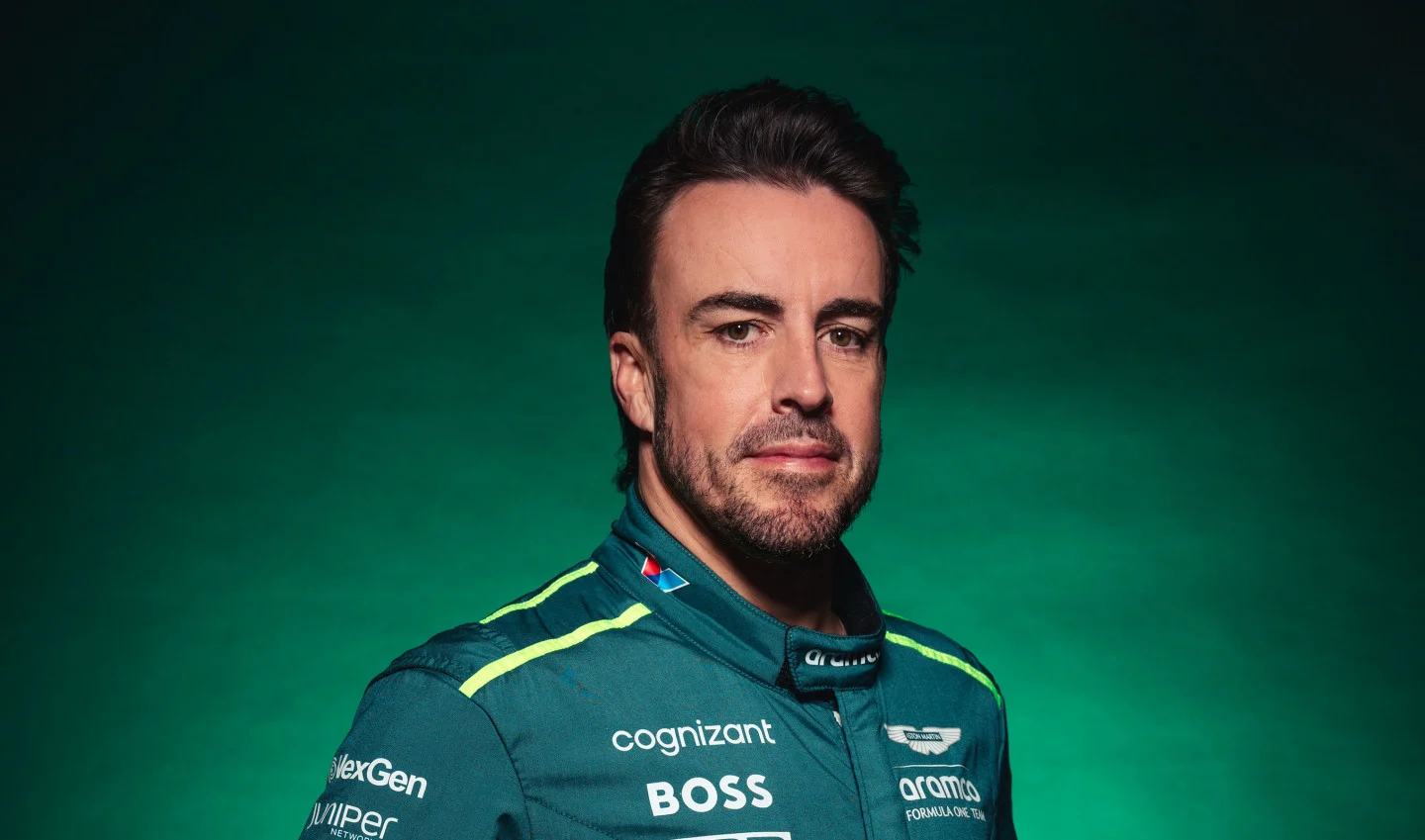
Fernando Alonso Diaz was born on July 29, 1981, in Oviedo, the capital of the Asturias region in northern Spain, to a modest family. His father, Jose Luis Alonso, was an amateur kart racer and a mechanic at an explosives factory in a mine shaft, while his mother, Ana Diaz, worked in a department store. He has an older sister, Lorena. His father built a pedal-powered kart originally intended for Lorena; when she showed no interest, three-year-old Fernando took it up instead, sparking the racing career that would eventually make him Spain’s most successful motorsport export. He attended local schools in Oviedo but left formal education in 2000 to focus fully on racing as his junior results made a professional career realistic.
Alonso won his first karting championship at age seven and went on to win consecutive Spanish junior karting titles from 1993 to 1996, as well as the Junior World Cup in 1996. He progressed rapidly through Formula Nissan and Formula 3000, winning the Euro Open by Nissan title in 1999 and the International Formula 3000 championship in 2000, which brought him to the attention of Minardi and then the Renault-backed Flavio Briatore management stable. He made his Formula 1 debut in 2001 with Minardi, spent 2002 as Renault’s test driver, and returned to a race seat with Renault in 2003, where his breakthrough arrived quickly: in 2005 he became, at the time, the youngest World Champion in F1 history, a title he defended successfully in 2006.
The breakthrough years
The career decisions and defining moments that turned recognition into sustained earning power.
After his championship years at Renault, Alonso signed for McLaren in 2007, a single, tension-filled season alongside rookie Lewis Hamilton that ended in a three-way title fight decided in Ferrari’s favor. He returned to Renault for 2008-2009 before signing with Ferrari, where he spent five seasons (2010-2014) as the team’s lead driver and finished championship runner-up three times (2010, 2012, 2013) without adding to his title count. He rejoined McLaren for 2015-2018, a difficult period defined by the team’s underpowered Honda engine partnership, and used a 2017-2018 sabbatical from full-season F1 commitments to pursue a “Triple Crown” bid, winning the 24 Hours of Le Mans in both 2018 and 2019 with Toyota and taking the World Endurance Championship title, while also attempting (but not winning) the Indianapolis 500. Alonso returned to F1 full-time with Renault’s rebranded Alpine team in 2021-2022, then joined Aston Martin for 2023, where he remains as of August 2026. Aston Martin’s 2026 season marked the team’s shift from Mercedes to a Honda works power unit partnership under a new set of technical regulations, and according to reporting from Marca in August 2026, Alonso has since agreed terms to extend his stay at the team through 2027.

What the work can earn
Reported pay, contracts, royalties and performance income reveal how the fortune was funded.
Alonso’s earnings have fluctuated with his competitiveness and team status across a career now in its third decade. His reported base salary rose from roughly $6-7 million a year during his first Renault title seasons to as much as $40 million annually during his 2015-2017 return to McLaren and his peak Ferrari years, driven by his status as one of the grid’s marquee names even without a title to show for it. His Alpine and early Aston Martin seasons saw base pay settle in the $20-24 million range. On Forbes’ 2025 list of Formula 1’s highest-paid drivers, Alonso ranked sixth on the grid with estimated earnings of $26.5 million (a $24 million salary plus roughly $2.5 million in bonuses), behind Max Verstappen, Lewis Hamilton, Lando Norris, Oscar Piastri and Charles Leclerc. Reporting around his 2026 Aston Martin terms puts his salary-plus-bonus package at a similar level, with total annual income, including sponsorship income, estimated in the mid-$30 million range.
Alonso’s contract history spans six F1 teams and more than 20 seasons. His first Renault deals paid modestly by modern standards, reported around $6-7 million a season during his 2005-2006 championship years. His 2007 move to McLaren was, at the time, one of the richest deals on the grid, reportedly worth around $20 million a year before the relationship collapsed amid the McLaren-Ferrari “Spygate” fallout and tension with teammate Hamilton. His return to Renault for 2008-2009 was signed at a reported base of roughly $15 million a season. Ferrari’s 2010 contract, signed in late 2009, was reported at a base salary in the $25-29 million range plus performance bonuses that could push total pay toward $35-40 million in a strong season, reflecting his status as the team’s undisputed number one. His second McLaren spell (2015-2018) reportedly paid in the $30-40 million range annually, among the highest on the grid despite the team’s uncompetitive Honda-engine years. His Alpine deals for 2021-2022 were reported at roughly $20 million a season, and his Aston Martin contracts since 2023 have been reported in the $20-24 million base range, with his most recent extension talks, per Marca, centered on a demand for a base salary in the region of 40 million euros to remain beyond 2026. Across his F1 career, cumulative documented driver salary is estimated at well over $450-500 million, among the highest of any driver in the sport’s history.

The business beyond the main career
Endorsements, ownership interests and investments can keep compounding long after the initial breakthrough.
Alonso has carried a broad personal sponsorship portfolio for most of his career, reflecting his standing as Spain’s most marketable athlete outside football. Reported deals across his career include TAG Heuer (a long-running watch partnership that has produced limited-edition Alonso timepieces), Banco Santander, Adidas racewear, Hugo Boss, Bang & Olufsen, and car-rental and mobility brands including Europcar and, more recently, Spanish platform Flexicar. Earlier in his career he also carried Spanish regional sponsors including Cajastur and Liberbank, reflecting his Asturian roots. Coverage of his 2017 launch of his own lifestyle brand Kimoa noted that he gave up a reported $10 million in personal third-party sponsorship inventory to help promote it, a trade-off framed at the time as prioritizing long-term brand ownership over short-term endorsement income.
Alonso founded Kimoa, a Spanish lifestyle and surf-inspired apparel brand, in 2017, and remains its owner and public face; the brand sells clothing and accessories internationally and has been worn by Alonso in official team paddock and off-track appearances. In 2019 he became an investor in Motorsport Games, a publicly listed esports and racing simulation company, taking a board seat and launching the FA Racing by Alonso esports team in partnership with Logitech G; Motorsport Games subsequently suffered heavy financial losses and a collapsing share price in the years that followed, and Alonso’s board involvement wound down as the company’s leadership turned over, though the size of any personal gain or loss from his stake has not been publicly disclosed. In 2023, reporting linked Alonso to an investment in Ombre Men, a US men’s grooming and personal-care brand. His most significant non-racing project is the Museo y Circuito Fernando Alonso in Llanera, Asturias, a museum and FIA-homologated karting circuit that he financed and helped design, which he has described as a legacy project for his home region rather than a conventional commercial venture.

Notable luxury item
A reported property or major asset offers a tangible glimpse of the wealth behind the public estimate.
Alonso has held residences in several countries over his career, tracking the location of his F1 teams and his preference for favorable tax jurisdictions. Lifestyle and motorsport press have reported homes in Oxfordshire, England (near Renault and Alpine’s Enstone base), in Lugano and later Mont-sur-Rolle, Switzerland, and a long-standing preference for Monaco, where many F1 drivers are tax resident. More recent reporting has also linked him to a residence in Dubai. As with most driver property reporting, specific purchase prices circulating in celebrity press are not corroborated by public land-registry filings, so this profile does not repeat unverified dollar figures for individual homes. His best-documented physical asset is his personal car and memorabilia collection housed at the Museo y Circuito Fernando Alonso, which includes more than 400 items spanning his karting through F1 career; among the individual pieces documented by collector and auction press is a Ferrari Enzo (chassis #1) whose comparable examples have sold at auction for more than $4 million.
Fernando Alonso’s estimated net worth
Public estimates vary because private contracts, investments, taxes and liabilities are not fully disclosed.
How this estimate is calculated
This estimate is built primarily from more than two decades of documented F1 driver salaries across six teams — cumulatively estimated at well over $450-500 million in gross salary alone — combined with a long-running personal sponsorship portfolio and the Kimoa brand he owns outright. Forbes tracks Alonso’s annual earnings on its Formula 1 highest-paid drivers list but, unlike its billionaires rankings, does not publish a standing net worth figure for him. Aggregator site Celebrity Net Worth lists a comparable estimate of $260 million, which this profile treats as a secondary cross-check rather than a primary source, since aggregator sites do not publish their underlying calculations. Some outlets have circulated figures as high as $400 million; those numbers are not corroborated by the team-by-team salary reporting this profile relies on and are treated with caution rather than adopted outright.
It is also worth distinguishing between Alonso’s gross career earnings and his realized net worth. A near quarter-century F1 career generates an enormous headline salary total, but drivers typically surrender significant portions of that gross figure to management commissions, race engineers and personal staff, travel costs, and taxes across the multiple jurisdictions in which they have been resident. Alonso’s net worth should be read in that context: a substantial fortune built methodically over one of the longest and most consistently well-paid careers in F1 history, rather than the product of a single dominant era or team-ownership windfall.
| Year | Milestone |
|---|---|
| 2001 | F1 debut with Minardi |
| 2003 | Race seat at Renault; first grand prix win (Hungary) |
| 2005-2006 | Back-to-back World Championships with Renault |
| 2007 | Reported ~$20 million McLaren deal, then acrimonious single-season exit |
| 2010-2014 | Ferrari years; base salary reported in the $25-35 million range |
| 2017 | Launches Kimoa lifestyle brand; peak McLaren-era salary near $40 million |
| 2018-2019 | Wins 24 Hours of Le Mans twice; WEC title; pursues Triple Crown |
| 2019 | Becomes investor and board member of Motorsport Games |
| 2021-2022 | Returns to F1 full-time with Alpine, reported ~$20 million per season |
| 2023 | Joins Aston Martin |
| 2025 | Ranked #6 on Forbes’ highest-paid F1 drivers list at $26.5 million |
| 2026 | Races for Aston Martin’s new Honda works team; reportedly agrees extension through 2027 |
Within the current F1 grid, Alonso’s estimated fortune trails only Lewis Hamilton, whose Mercedes-era earnings and Ferrari move put him in a different bracket, and sits well ahead of younger stars like Max Verstappen, whose wealth is still compounding despite dominant recent seasons. Among drivers of Alonso’s own generation who are still active or only recently retired, his wealth profile is broadly comparable to fellow multi-decade grid veterans such as Kimi Raikkonen and Jenson Button, both of whom similarly built their fortunes from long, well-paid F1 careers rather than a short peak followed by early retirement. What distinguishes Alonso within that peer group is career length: unlike most contemporaries, he has remained a paid, front-of-grid-caliber driver into his mid-forties, extending his earning window well beyond the point at which most F1 careers end.
Sources and references
- Forbes — Formula 1’s Highest-Paid Drivers 2025
- Forbes — Fernando Alonso profile
- F1.com — Alonso gives update on F1 future beyond 2026
- F1.com — 2026 Fernando Alonso driver standings
- Sky Sports — Alonso signs Aston Martin contract extension
- Marca (via F1oversteer) — The role Alonso wants in 2027 at the end of his Aston Martin contract
- Autosport — Fernando Alonso invests in Motorsport Games
- The SportsRush — Alonso gave up $10 million in personal sponsorship to promote Kimoa
- f1salaries.com — Fernando Alonso: Aston Martin salary and net worth
- Spotrac — Fernando Alonso contract and salary
- spain.info — Fernando Alonso Museum in Llanera
- Celebrity Net Worth (secondary cross-check) — Fernando Alonso Net Worth
- Wikipedia — Fernando Alonso