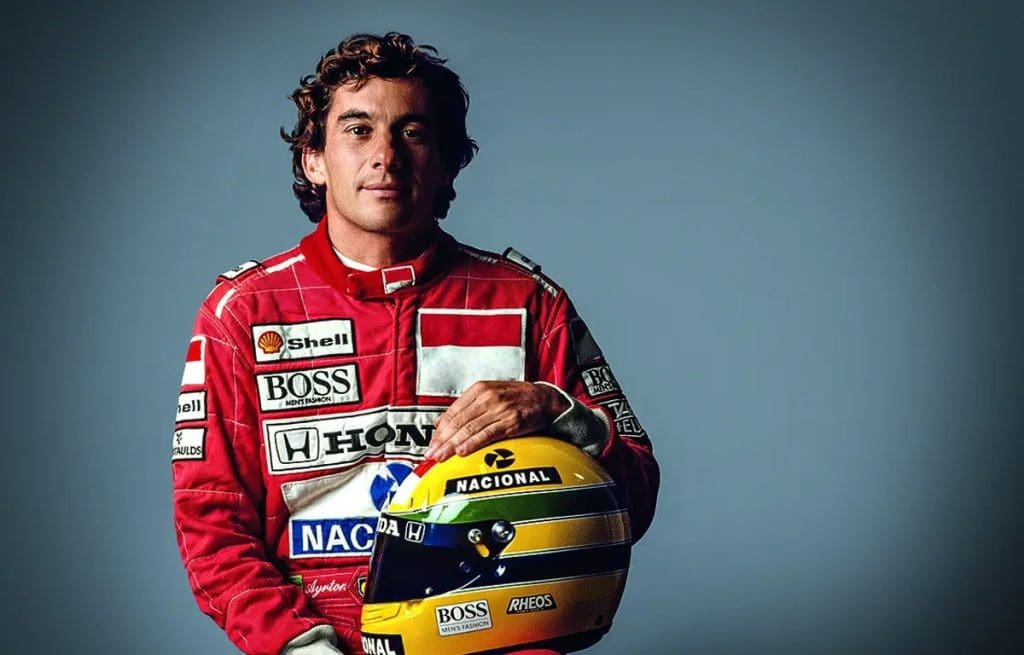
How did Ayrton Senna build this fortune?
The answer unfolds through the career, earnings, deals and assets behind the headline estimate.
Before the fame
The background and early turning points that shaped Ayrton Senna’s route to prominence.
Ayrton Senna was the Brazilian Formula One champion who died in 1994. This profile concerns the value historically attributed to his estate and continuing economic rights, not personal cash available to a living individual. Formula 1’s Hall of Fame profile documents his career. Because Senna died in 1994, “net worth as of 2026” can only mean an estimate of the legacy estate and associated economic rights. It must not be read as a living person’s balance sheet.
Senna moved from karting into British junior racing and won titles before joining Toleman in Formula One. McLaren’s heritage profile covers the route to his most famous team relationship. Junior-series success required relocation and family support before Formula One income arrived. Those early costs and arrangements are not material enough to estimate separately three decades later.
The breakthrough years
The career decisions and defining moments that turned recognition into sustained earning power.
His 1985 Portuguese Grand Prix victory with Lotus marked the first Formula One win; the later McLaren partnership delivered championship-level results and global recognition. The Lotus victory increased both team bargaining power and sponsor appeal. Senna’s later per-race compensation demonstrates how rapidly his economics changed after proving he could win.
What the work can earn
Reported pay, contracts, royalties and performance income reveal how the fortune was funded.
Senna won three drivers’ championships and 41 Grands Prix. The FIA’s Hall of Fame notice confirms the institutional record behind his lasting profile. His championships created an enduring identity closely linked with McLaren and Honda. That sporting record remains the basis for later documentaries, licensed products and commemorative partnerships.
During his life, income came from Formula One contracts, prize-related payments, endorsements and licensing. Exact tax, management and contract details remain largely private, so historical press totals require caution. Contemporary Brazilian reporting described exceptionally high racing income and significant insurance arrangements. Insurance proceeds, however, may have gone to different beneficiaries and are not assumed to remain in the estate today.
The business beyond the main career
Endorsements, ownership interests and investments can keep compounding long after the initial breakthrough.
Senna worked with brands including Honda and TAG Heuer, while later media projects use his story and likeness. TAG Heuer’s partnership page demonstrates continuing commercial association without revealing royalty terms. Later brand collaborations demonstrate demand for Senna’s name. They may benefit family companies, the institute or contractual partners in different proportions, so gross licensing activity is not estate equity.
Senna Brands manages a global licensing programme. Its 2025 Licensing Expo report confirms active expansion, though no audited brand valuation is published. Senna Brands and the Ayrton Senna Institute are legally and economically distinct. The institute’s charitable resources cannot be assigned to heirs or counted in a private estate estimate.
Notable luxury item
A reported property or major asset offers a tangible glimpse of the wealth behind the public estimate.
Historical reporting described property in Brazil and Europe plus aircraft, but changes across more than three decades are not transparent. The Ayrton Senna Institute is a separate social organisation and its resources should not be counted as family wealth. The institute’s official site explains its mission. Historical properties and aircraft help explain the scale of wealth at death, but they may since have been sold, transferred or donated. Their original values are not rolled forward automatically.
Ayrton Senna’s estimated net worth
Public estimates vary because private contracts, investments, taxes and liabilities are not fully disclosed.
How this estimate is calculated
The calculation uses the widely reported value attributed to the estate around Senna’s death as an anchor and treats later licensing as helping preserve, rather than automatically multiplying, that value. Senna Brands’ official biography supports the legacy context; the calculation excludes the charitable institute and makes no unsupported claim about heirs’ personal holdings. The displayed amount keeps that documented historical anchor in nominal dollars rather than inflating it and then claiming the inflation-adjusted total is a current private estate. Continuing licensing is treated as offsetting some dispersal and charitable transfer, not as proof of growth.
Documentaries, the Netflix drama Senna, merchandise and annual commemorations have introduced the name to later generations. Netflix’s official announcement confirms the modern screen production but does not disclose estate participation. Legacy media renews attention, but production budgets and viewing figures do not reveal what rights holders receive. The profile therefore avoids turning Netflix reach into an invented royalty.
The headline estate figure repeated in reference works is not supported by a public probate inventory accessible here. Continuing brand strength is real, but ownership shares, distributions, tax and charitable flows are unknown; the result should be read as an estate estimate. Formula 1’s official profile specifically records the historical personal-fortune estimate used as the anchor. It also notes substantial giving, making clear that the original sum was not necessarily preserved for heirs.
JavaScript is off, so all sections are displayed together.