
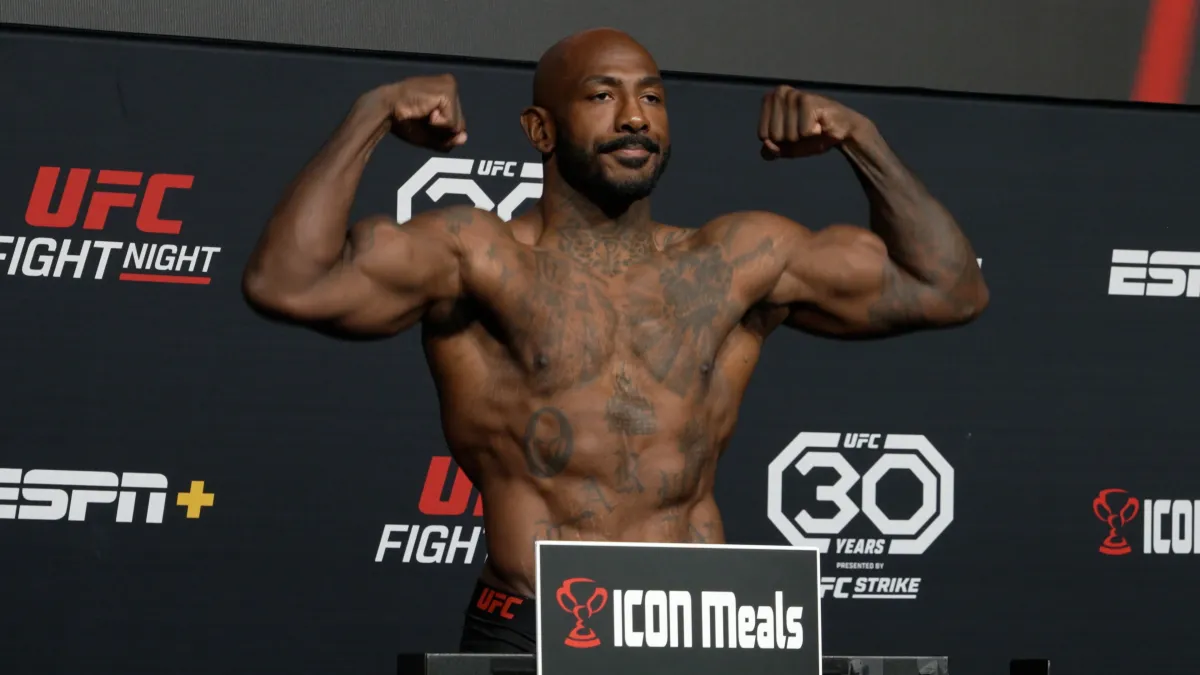
 How Much Are They Worth?
Celebrity fortunes, explained
How Much Are They Worth?
Celebrity fortunes, explained

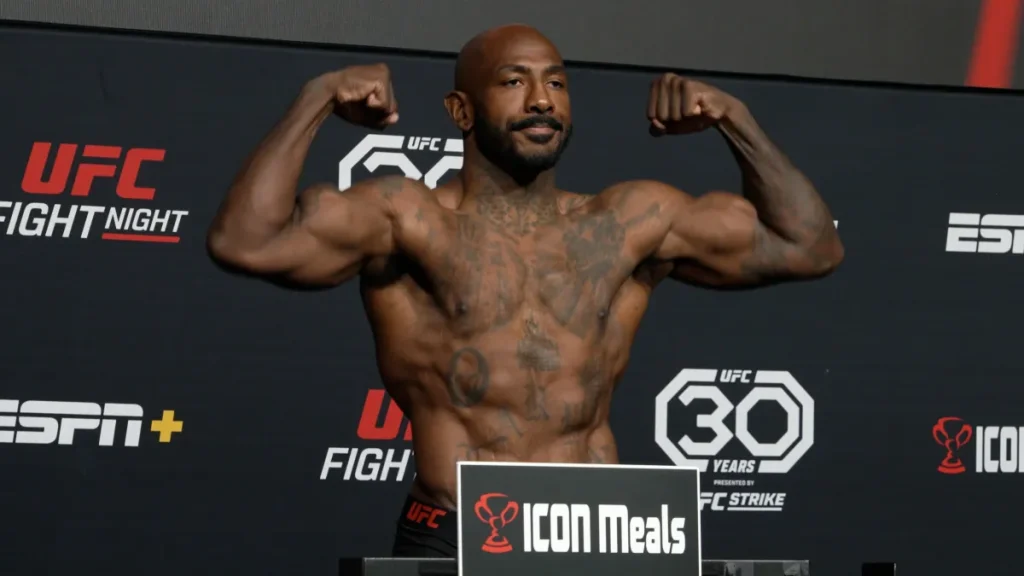
How did Khalil Rountree Jr. build this fortune?
The answer unfolds through the career, earnings, deals and assets behind the headline estimate.
Before the fame
The background and early turning points that shaped Khalil Rountree Jr.’s route to prominence.
Khalil Rountree Jr. was born on February 6, 1990, in Los Angeles, California. When he was two years old, his father, who worked as a tour manager for the R&B group Boyz II Men, was shot and killed during an attempted robbery, according to Wikipedia’s account of his life. Raised by his single mother, Rountree has said he struggled with his weight, with depression and with a lack of direction as a teenager, at one point weighing over 300 pounds. Those early hardships, described in UFC’s own profile of his path into the sport, later became a defining part of the story he tells about how he found mixed martial arts. Because his early life is described mainly through his own retrospective interviews rather than independent verification, some emotional detail should be read as personal narrative, though the core outline of his father’s death, his single-parent upbringing and his struggles with weight and mental health is corroborated across multiple outlets.
Rountree began training for weight loss in 2010, at age 20, and compiled a 6-0 amateur record fighting as a middleweight under the Tuff-N-Uff and King of the Cage banners, winning the Tuff-N-Uff Amateur Middleweight Championship in 2013, per Wikipedia’s career summary of his amateur run. He turned professional in June 2014 with a unanimous-decision win over Livingston Lukow for Resurrection Fighting Alliance, then added knockout wins over Blake Troop and Justin Polendey before UFC came calling. His path to the promotion ran through The Ultimate Fighter season 23, where he beat Muhammed DeReese, lost to Cory Hendricks, was brought back as an injury replacement in the semifinal, beat Josh Stansbury and then lost the tournament final to Andrew Sanchez in July 2016, a sequence confirmed by Sherdog’s fight-by-fight record. The unusual return to the bracket after an early loss meant his UFC opportunity came from resilience as much as a clean run through the tournament.
The breakthrough years
The career decisions and defining moments that turned recognition into sustained earning power.
Rountree’s first several years in the UFC were uneven. He lost the TUF 23 final, was submitted by Tyson Pedro, and needed until 2018 to record his first standout UFC win, a first-round knockout of Gokhan Saki that earned a Performance of the Night bonus. Over his first five years in the organization he went a modest 4-4, a stretch UFC itself has described candidly rather than glossing over, per its retrospective profile of him. The turnaround began in September 2021, when Rountree opened a five-fight winning streak that included four knockouts and one of the more unusual finishes in UFC history, a TKO produced by an oblique kick to the knee, the first stoppage of its kind in the promotion. That run rebuilt his standing in the light heavyweight division and set up the biggest opportunities of his career.

What the work can earn
Reported pay, contracts, royalties and performance income reveal how the fortune was funded.
By the UFC’s own current listing, Rountree holds a 15-7 professional record and is ranked among the top five fighters in the light heavyweight division, per the promotion’s official athlete profile. He has collected four Performance of the Night and two Fight of the Night bonuses, and he shares the UFC light heavyweight record for career knockdowns landed, 14, with Chuck Liddell and Mauricio Rua, having also set the single-fight record of four knockdowns against Eryk Anders in 2019. His signature achievement was a UFC light heavyweight title challenge against Alex Pereira at UFC 307 in October 2024, a fight he lost by fourth-round TKO but which still earned a Fight of the Night bonus, cementing him as a legitimate title contender rather than a gatekeeper.
Beyond bonuses awarded inside the cage, Rountree’s fights have repeatedly drawn outside recognition. His 2024 title challenge against Pereira and his 2025 headline bout against Jiri Prochazka at UFC 320 were both nominated for the UFC’s President’s Choice Fight of the Year and ranked among the top fights of their respective years in UFC.com’s own year-end awards. The Prochazka fight in particular was named 2025 Fight of the Year by multiple independent MMA outlets, including Combat Press’s year-end awards, even though Rountree lost by third-round knockout. That pattern, being repeatedly honored for fights he did not win, reflects a reputation built on how he fights rather than solely on his record, which carries value for future bookings and endorsements even without a title.
The business beyond the main career
Endorsements, ownership interests and investments can keep compounding long after the initial breakthrough.
Like all UFC athletes since 2021, Rountree fights in gear supplied under the promotion’s exclusive outfitting deal with Venum, but in June 2025 he received a rarer honor, his own signature fight kit. According to UFC’s own writeup of the release, the shorts were designed in close collaboration with Rountree and incorporate Thai script honoring his Muay Thai training, mountain imagery representing Las Vegas and a yin-yang symbol, and they are sold commercially through the UFC Store. That kind of signature product deal is a meaningful in-kind and royalty benefit, though the promotion has not disclosed specific dollar terms. Outside of the UFC’s own outfitting and merchandise structure, there is no confirmed evidence of a major independent personal sponsor, such as a supplement, insurance or apparel brand paying him directly, which is common for fighters below true stardom.
There is no reliable public record of Rountree founding, owning or holding a stake in a company outside his fighting career. Purse-tracking and profile sites that catalogue his earnings, including one detailed breakdown of his fight-by-fight compensation, describe his income as coming from UFC purses and sponsorship, with no gym ownership, media company or product line attributed to him. That distinguishes him from UFC contemporaries who have built restaurants, apparel labels or coaching academies alongside their fighting careers. Absent verified evidence of an independent venture, this estimate treats his income as earned almost entirely through the sport itself rather than through diversified business interests.

Notable luxury item
A reported property or major asset offers a tangible glimpse of the wealth behind the public estimate.
No reliable public record identifies a home, vehicle collection or other major asset owned by Rountree. He trains out of Las Vegas with Syndicate MMA, per Sherdog’s fighter profile, which places him in a city many fighters use as a training and tax-friendly base, but that reflects a residency choice rather than a documented property purchase. He married model Mia Kang in a small ceremony in Thailand in January 2024, a detail confirmed across independent coverage of the pair, but neither has publicly disclosed real estate holdings. Given the absence of any court filing, deed record or verified interview describing specific property, this estimate assigns no separate value to real estate or vehicles and treats any such holdings as already reflected within general liquid savings.
Khalil Rountree Jr.’s estimated net worth
Public estimates vary because private contracts, investments, taxes and liabilities are not fully disclosed.
How this estimate is calculated
This estimate starts from documented UFC purses, which climbed from roughly $7,000 for his 2016 debut to a disclosed $500,000 guaranteed purse for his October 2024 title fight against Alex Pereira, with pay-per-view points and bonuses reported to push that payday toward $1.8 million, according to purse reporting on the card. His June 2025 headline bout against Jamahal Hill in Baku was separately estimated at roughly $1.38 million, per payout reporting on that event. Against those recent paydays, most of his roughly fifteen years fighting professionally were spent earning far smaller purses, often in the tens of thousands of dollars. After typical deductions for coaching and team splits, training camp costs and income tax, cumulative career earnings do not translate directly into net worth. Third-party aggregator sites publish widely varying net worth figures for Rountree, but none discloses a verifiable methodology beyond the same publicly reported purses, so those secondary figures are treated here only as a loose sanity check, per one such aggregator profile, rather than as the basis for this estimate. Weighing documented purses, a limited endorsement footprint and the absence of outside business income against two very large recent paydays, and applying standard deductions for taxes and team costs, produces a moderate range rather than a single point figure.
Based on the available evidence, Khalil Rountree Jr.’s estimated net worth is $1 Million to $3 Million. The middle of that range reflects a career built primarily on UFC purses that only became genuinely lucrative in the last two years, offset by roughly a decade of much smaller fight paydays, taxes and team costs. It is not a disclosed figure, and it could move higher if he lands another title opportunity or a personal sponsorship deal, or lower if his recent losses slow his earning trajectory.
Rountree has become one of the UFC’s more visible advocates for mental health, speaking openly about being severely depressed at 19 before finding direction through training a year later. In May 2026 he took part in a Mental Health Awareness Month campaign run jointly by the UFC, Paramount+ and the Child Mind Institute, and he appeared at the opening of the UFC Foundation’s first youth wellness center at the Boys and Girls Club in Newark, where he taught boxing to local kids, according to reporting on the event. His public message centers on normalizing professional help rather than promoting a hard-man persona, a positioning that has made him a recurring face of the UFC’s community and wellness programming even though he has not established a personal foundation of his own.
Rountree’s most significant public controversy came in May 2024, when he withdrew from a scheduled UFC 303 fight against Jamahal Hill after testing positive for a banned substance. According to ESPN’s reporting at the time, the positive test traced to a tainted, personalized supplement blend he had not intentionally taken, and Rountree self-reported the issue to UFC’s anti-doping staff as soon as he learned of it. Combat Sports Anti-Doping handed him a reduced two-month suspension that acknowledged the supplement company’s error, and he was subsequently cleared in time to challenge Alex Pereira for the title at UFC 307 later that year. There is no evidence of intentional doping or any other major scandal in his career; the episode is best read as a compliance failure involving a third-party supplement rather than a deliberate attempt to cheat.