How did Alexander Volkanovski build this fortune?
The answer unfolds through the career, earnings, deals and assets behind the headline estimate.
Before the fame
The background and early turning points that shaped Alexander Volkanovski’s route to prominence.
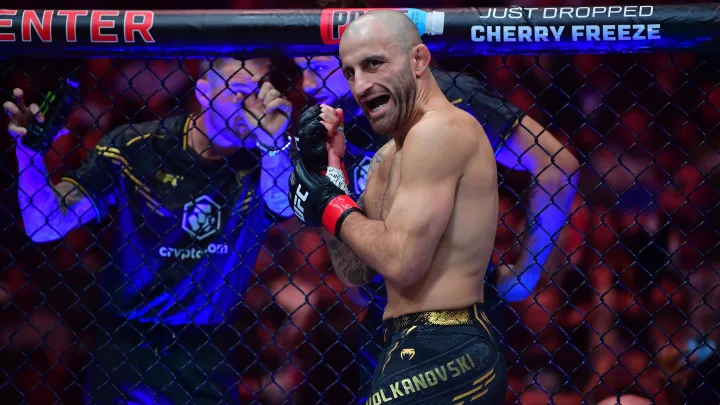
Alexander Volkanovski moved from semi-professional rugby league and construction work to become a two-time UFC featherweight champion. His official UFC profile records five defenses during his first reign and later title results. HMW estimates retained assets through an event-by-event fight ledger, disclosed commission purse, bonuses and named commercial work. Championship reputation alone receives no monetary value.
Volkanovski competed at heavier weights on Australia’s regional circuit after beginning MMA training in 2011. He won regional titles before joining UFC in 2016. UFCStats’ individual record verifies the ascent through Chad Mendes and José Aldo. Early UFC guarantees were small relative to championship income and are valued conservatively, even though the fights created later bargaining power.
The breakthrough years
The career decisions and defining moments that turned recognition into sustained earning power.
Volkanovski defeated Max Holloway at UFC 245 in 2019 to win the featherweight title, then beat him twice more. He defended against Brian Ortega, Chan Sung Jung and Yair Rodríguez. UFC’s first-title report identifies the decisive breakthrough. Champion status likely brought PPV participation, but the percentage and thresholds remain private.
What the work can earn
Reported pay, contracts, royalties and performance income reveal how the fortune was funded.
Volkanovski challenged lightweight champion Islam Makhachev twice, lost the featherweight belt to Ilia Topuria, then reclaimed the vacant title from Diego Lopes. Reuters documented the 2025 title recovery. Short-notice and champion-versus-champion events were commercially important, although reported total payouts are estimates rather than audited settlements.
UFC guarantees, win pay, title-fight PPV participation, bonuses and compliance pay are the main sources. California disclosed a $750,000 purse for Volkanovski at UFC 298, excluding other payments. MMA Junkie’s compliance report separately lists $42,000 champion pay for the event. HMW uses both without confusing uniform money with the fight guarantee.
The business beyond the main career
Endorsements, ownership interests and investments can keep compounding long after the initial breakthrough.
Volkanovski has undertaken betting, fitness, food and payments campaigns. A Tyro promotion included a publicly described $20,000 community bar tab; the campaign report proves the relationship but not his fee. Sponsor income is assigned conservative annual values rather than inferred from a promotion budget.
Cooking content, merchandise and fitness-related projects provide smaller income streams, while Freestyle Fighting Gym is his training base rather than an automatically owned asset. No audited accounts or sale supports a large private-company valuation. HMW recognizes digital revenue and plausible brand goodwill only to the extent that it can continue producing cash after active competition.
Notable luxury item
A reported property or major asset offers a tangible glimpse of the wealth behind the public estimate.
Australian tax, US withholding, management and high-level camps reduce gross pay. Volkanovski has family commitments and periods of injury and inactivity. Property, mortgages and investments are private. UFC’s UFC 298 result confirms the event tied to the disclosed guarantee. Estimated million-dollar championship totals receive discounts.
Alexander Volkanovski’s estimated net worth
Public estimates vary because private contracts, investments, taxes and liabilities are not fully disclosed.
How this estimate is calculated
The calculation assigns conservative early-UFC amounts, champion ranges to title bouts, the disclosed UFC 298 guarantee and specific bonuses and compliance payments. Sponsor and digital income is added only during documented commercial years. Deductions cover Australian and overseas tax, management, camps, travel and household consumption. UFC’s career review is used to distinguish defenses from non-title appearances before assigning ranges. The two Makhachev events are treated separately because one was accepted on short notice, and no projected PPV number is accepted without a settlement. Losses do not imply zero pay, while canceled events produce no income. A reserve covers injuries, time between fights and continued coaching costs. Restrained property and investment equity is included; no gym or social-media enterprise value is invented.
This cautious treatment avoids converting a successful Australian sporting career into an assumed investment portfolio. It leaves room for private debt, family expenditure, injury reserves and adverse market returns that fight records cannot reveal.
Volkanovski is a leading Australian combat-sports figure, with YouTube cooking and training content expanding his audience. Reach supports brand work but is not capitalized separately. His approachable image produced campaigns with Australian companies, while repeated home-region PPVs strengthened negotiating value. The model includes realized digital and sponsor income, not an arbitrary value per follower.
The $750,000 commission purse and $42,000 compliance payment are strong event-level inputs. Title-fight PPV participation, other guarantees and discretionary bonuses are less visible. HMW applies consistent ranges across the Holloway trilogy, defenses and Makhachev bouts, removes known overlap and refuses to use unsupported online career totals as a complete ledger. Australian home events may carry different tax, travel and PPV economics from US cards, while the short-notice Makhachev rematch likely followed unique terms. Neither factor is converted into an unsupported premium. The model also keeps champion compliance pay separate from purse and bonus money.

JavaScript is off, so all sections are displayed together.