 How Much Are They Worth?
Celebrity fortunes, explained
How Much Are They Worth?
Celebrity fortunes, explained

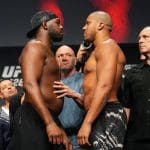

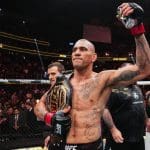

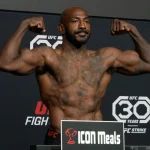




How did Derrick Lewis build this fortune?
The answer unfolds through the career, earnings, deals and assets behind the headline estimate.
Before the fame
The background and early turning points that shaped Derrick Lewis’s route to prominence.
Derrick Lewis, known to fans as “The Black Beast,” is an American mixed martial artist who competes in the UFC heavyweight division. His official UFC athlete profile lists a professional record of 29 wins and 14 losses, with 24 of those wins coming by knockout. HMW estimates retained assets from disclosed fight purses, confirmed bonus awards and limited endorsement income. It does not infer a figure from popularity or social reach, and it treats years without title-fight leverage as lower-value periods rather than assuming continuous peak earnings.
Lewis was born in New Orleans in 1985 and relocated to Houston as a teenager. After a probation violation, he served roughly three and a half years in prison, and a friend introduced him to mixed martial arts within a week of his release, as detailed in Wikipedia’s account of his early life. He supported himself as a tow-truck driver while training, turned professional in 2010 and signed with the UFC in 2014. Early UFC contracts paid far less than his later heavyweight-contender purses and are valued conservatively rather than backdated to peak-era figures.
The breakthrough years
The career decisions and defining moments that turned recognition into sustained earning power.
Lewis’s rise accelerated through a string of highlight-reel finishes, most notably his October 2018 knockout of Alexander Volkov, where he stopped a fight he was losing on the scorecards with only seconds left on the clock, a comeback ESPN’s review of his UFC knockouts ranks among the largest strike-differential finishes in UFC history. The win helped earn him an interim heavyweight title opportunity against Daniel Cormier at UFC 230 that November. He lost by submission, but the run established him as a consistent pay-per-view draw and moved his purses into six-figure territory.

What the work can earn
Reported pay, contracts, royalties and performance income reveal how the fortune was funded.
Lewis holds the UFC record for most knockouts in the promotion’s history and ranks second in UFC heavyweight history for total wins and total fights. He has collected eight post-fight bonuses, five Performance of the Night and three Fight of the Night awards, one short of the heavyweight division record, according to the Wikipedia list of UFC bonus award recipients. Bonus income is added to the estimate only where an award is documented rather than assumed for every appearance, and undisclosed win bonuses are treated as unknown.
Lewis built a following well beyond hardcore MMA audiences through unscripted, frequently funny post-fight interviews, a reputation that Yahoo Sports’ profile of his knockout record credits with making him one of the most recognizable figures the heavyweight division has produced. His combination of knockout power and personality has crossed into mainstream sports media coverage well beyond typical heavyweight contenders. Reach and viral moments are treated as brand equity in this estimate, not booked as a direct dollar value.

The business beyond the main career
Endorsements, ownership interests and investments can keep compounding long after the initial breakthrough.
Lewis’s best-known commercial tie-in is a 2018 promotional agreement with Popeyes ahead of his UFC 230 title fight, under which the chain offered free chicken to fans had he won the belt, along with a reported lifetime supply of food for Lewis personally, according to EssentiallySports’ breakdown of his payouts and endorsements. The same reporting notes Lewis earns roughly $21,000 annually through the UFC’s compliance pay program for photo shoots and promotional work, and that individual brand sponsorships beyond Popeyes are limited. This income is valued modestly rather than assuming a full commercial roster.
Lewis has not disclosed ownership of a gym, apparel line or other operating company with published accounts. His income outside fighting centers on appearance fees, brand promotion and the UFC’s compliance pay program rather than an independent business he controls. HMW does not assign enterprise value to training partnerships or informal ventures without financial disclosure, and no reliable public record establishes a business that Lewis owns outright.

Notable luxury item
A reported property or major asset offers a tangible glimpse of the wealth behind the public estimate.
Public property records for Lewis are not available, so no home or land value is claimed here. The one clearly documented high-value asset is a red Lamborghini, which surfaced when Lewis was cited for reckless driving in Houston in October 2023 after allegedly driving it 136 miles per hour in a 50 mph zone, according to CBS Sports’ report on the citation. Beyond that vehicle, no additional real estate, vehicles or luxury holdings are part of the public record reviewed here, and the model applies conservative resale value rather than retail price to the one asset that is confirmed.
Derrick Lewis’s estimated net worth
Public estimates vary because private contracts, investments, taxes and liabilities are not fully disclosed.
How this estimate is calculated
The model starts from disclosed UFC purses for Lewis’s recent fights, which have ranged from roughly $300,000 to over $500,000 per appearance including bonuses, and applies lower, undisclosed ranges to earlier-career bouts before his 2018 title shot. Confirmed bonus awards are added individually rather than assumed for every outing. Endorsement income is valued conservatively given the limited, largely non-cash nature of the Popeyes arrangement and modest compliance pay. The model then deducts estimated tax, management, coaching and training-camp costs, and adds only the one documented asset, the Lamborghini, at conservative resale value. Celebrity Net Worth’s estimate of roughly $1.5 million is used only as a secondary, lower-bound reference point, not as the basis for this figure. No home, business equity or unannounced sponsorship is included.
During Hurricane Harvey in August 2017, Lewis used his personal truck to rescue an estimated 100 people from floodwaters in Houston, working from early morning into the night, as ESPN reported at the time. He has since been described in Houston media as a community fixture rather than a philanthropist with a named foundation or formal charitable structure. HMW treats the rescue effort as reputational rather than financial, since it carried a personal cost in time and fuel rather than a disclosed charitable donation.
Lewis has drawn public scrutiny mainly from isolated incidents rather than a pattern of legal trouble. In May 2021, he physically restrained a man attempting to break into his SUV in Houston, striking and pinning the suspect until police arrived, an incident confirmed to Fox News by Houston police, which drew mixed commentary about the use of force by a professional fighter against an unarmed suspect. He was also cited for reckless driving in Houston in October 2023, as noted above. Outside these episodes, criticism of Lewis has centered on his blunt, sometimes crude post-fight commentary rather than any unresolved litigation or financial dispute.