 How Much Are They Worth?
Celebrity fortunes, explained
How Much Are They Worth?
Celebrity fortunes, explained






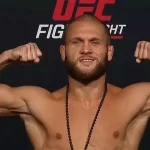
How did Henry Cejudo build this fortune?
The answer unfolds through the career, earnings, deals and assets behind the headline estimate.
Before the fame
The background and early turning points that shaped Henry Cejudo’s route to prominence.
Henry Cejudo, widely known by the nickname “Triple C,” was born on February 9, 1987, in Los Angeles, California, the second youngest of seven children born to Mexican immigrant parents. His father was deported when Henry was six years old, leaving his mother, Nelly, to raise the family largely on her own while working multiple jobs, and the family eventually settled in the Maryvale neighborhood of Phoenix, Arizona, where money was consistently tight. Details of his upbringing and family background are documented on Wikipedia.
Wrestling became the family’s anchor, with older brother Angel Cejudo serving as both training partner and early mentor as Henry worked his way up through youth and scholastic competition. That path from an undocumented, poverty-line household to Olympic and UFC gold later made him a symbol of immigrant achievement, an arc he detailed himself in his 2011 autobiography, “American Victory.”
Cejudo starred at Maryvale High School before finishing his scholastic career in Colorado, winning state championships in both states and becoming the first high school wrestler since 1983 to also win a U.S. Nationals title, an achievement that earned him ASICS National High School Wrestler of the Year honors in 2006. Rather than wrestle in college, he chose to move to the U.S. Olympic Training Center in Colorado Springs to train full time under coach Terry Brands, a decision aimed squarely at qualifying for the 2008 Olympics. His route out of Phoenix and into elite wrestling is covered by Cronkite News.
The gamble paid off quickly. At just 21 years old, and largely unknown outside wrestling circles compared to the sport’s established American stars, Cejudo made the 2008 U.S. Olympic team in the 55-kilogram freestyle division, setting up the breakthrough that would define the next stage of his career.
The breakthrough years
The career decisions and defining moments that turned recognition into sustained earning power.
Cejudo’s first breakthrough came at the 2008 Beijing Olympics, where he defeated Japan’s Tomohiro Matsunaga in the 55-kilogram freestyle final to win gold, becoming the youngest American Olympic wrestling champion in history. The National Wrestling Hall of Fame credits this feat, alongside his historic U.S. Nationals win, in its own record of his career, detailed on the National Wrestling Hall of Fame’s biography page.
After retiring from wrestling in 2012 when he failed to make a second Olympic team, Cejudo pivoted to mixed martial arts, turning pro in March 2013. His second breakthrough came years later in the UFC, where he ended Demetrious Johnson’s historic 11-fight title reign to win the flyweight championship at UFC 227 on August 4, 2018, a controversial split-decision win that instantly established him as a genuine title threat rather than a novelty Olympic name.

What the work can earn
Reported pay, contracts, royalties and performance income reveal how the fortune was funded.
Cejudo added a second title on June 8, 2019, stopping Marlon Moraes in the third round at UFC 238 to win the vacant bantamweight championship, a result covered in detail by CBS Sports. The win made him the UFC’s fourth simultaneous two-division “champ-champ,” joining a short list that at that point included only Conor McGregor, Daniel Cormier and Amanda Nunes.
He defended the bantamweight title with a 32-second knockout of former champion T.J. Dillashaw in January 2020, then defeated Dominick Cruz at UFC 249 on May 9, 2020, in his final fight before a surprise retirement announcement delivered in the cage moments after the win.
Cejudo was inducted into the National Wrestling Hall of Fame as a Distinguished Member of the Class of 2018, honored specifically for becoming the youngest U.S. Olympic wrestling gold medalist at the time and for his U.S. Nationals title, according to the hall’s own citation. Long before that, in 2009, the Carnegie Corporation of New York named him a “Great Immigrants” honoree, recognizing his journey from an undocumented household to Olympic champion, as detailed on the Carnegie Corporation’s honoree page.
His combination of Olympic pedigree and UFC gold has made him a regular reference point in combat sports media, cited by broadcasters and rival promotions alike as one of the rare athletes to reach the top of two entirely different sports on the world stage.

The business beyond the main career
Endorsements, ownership interests and investments can keep compounding long after the initial breakthrough.
Beyond fight purses, Cejudo has drawn on his profile for appearance and exhibition income, including a paid grappling exhibition in Kazakhstan against former Olympic wrestler Kairat Akhmetov, which he said brought in enough money to “survive” comfortably for the year, remarks reported by EssentiallySports. In the same appearance he argued that top combat sports athletes should be paid closer to NBA and NFL levels given the physical risk involved.
His move into Real American Freestyle came with its own financial upside; Cejudo publicly said the new promotion “pays good money” compared to standard UFC purses. Specific sponsor-by-sponsor dollar figures from his personal endorsement deals have not been independently disclosed.
Cejudo’s commercial activity is organized in part through Henry Cejudo LLC, a Phoenix-registered business entity tied to his personal brand, appearances and licensing. He has also stayed connected to Valiant College Preparatory, an Arizona wrestling-focused private academy where his brother Angel Cejudo works as head coach, giving him an ongoing footprint in competitive wrestling development.
Following his second UFC retirement in December 2025, Cejudo returned to competitive wrestling as a featured athlete for Real American Freestyle, a new professional freestyle wrestling league, as shown on his official Real American Freestyle athlete profile. The move gave him a new, active revenue stream built around the sport that first made him famous, separate from any UFC purse.

Notable luxury item
A reported property or major asset offers a tangible glimpse of the wealth behind the public estimate.
Cejudo owns a home in the Biltmore area of Phoenix, near State Route 51 and Bethany Home Road, a property that includes a separate detached studio building used for content production. The home drew unwanted attention in April 2025 when it was burglarized just days after Cejudo helped restrain a fleeing driver who had crashed into a neighbor’s house; thieves made off with his first UFC championship belt and roughly $10,000 in camera equipment, details reported by FOX 10 Phoenix.
Cejudo offered a $10,000 reward for the belt’s safe return, underscoring its personal rather than purely financial value to him. No additional real estate holdings, investment properties or luxury vehicle collection have been independently documented in public reporting at the time of writing.
Henry Cejudo’s estimated net worth
Public estimates vary because private contracts, investments, taxes and liabilities are not fully disclosed.
How this estimate is calculated
The starting point for estimating Henry Cejudo’s net worth is his disclosed UFC purse history, which varied enormously by fight and era. Commission-reported figures show a $100,000 win bonus for dethroning Demetrious Johnson in 2018, roughly $350,000 in disclosed pay for his UFC 249 win over Dominick Cruz in 2020 (a fight that reportedly grossed him around $1.2 million once bonuses and pay-per-view points were included), and a comparatively low $150,000 base purse for both his UFC 298 and UFC Seattle fight-night bouts later in his comeback, figures cited by TheSportster’s review of his fight-night pay.
Those purses sit alongside undisclosed exhibition and appearance income, including his paid grappling match in Kazakhstan and his new Real American Freestyle wrestling paydays, plus ongoing content and licensing revenue tied to his personal brand. Secondary estimates have pegged his career MMA earnings at a little over $3 million gross before taxes and management fees, with net worth estimated around $2 million once those deductions are applied, a figure published by Celebrity Net Worth and used here only as a secondary, supplementary source alongside the primary reporting above. Weighing his disclosed career purses, his newer wrestling and exhibition income streams, standard deductions for taxes and management, and the fact that he remains an active earner post-UFC rather than fully retired, a reasoned range is used below rather than a single unverified number.
Cejudo’s most visible act of public good in recent years came outside the cage entirely. On April 4, 2025, he physically restrained a driver who had crashed into a neighbor’s Phoenix home at roughly 80 miles per hour and then tried to flee, holding the suspect until police arrived, an incident covered by AZFamily. The moment earned him local recognition as a real-life hero in his own neighborhood, separate from anything he had done in competition.
Publicly, Cejudo is a polarizing but hard-to-ignore personality, embracing what fans dubbed his “King of Cringe” persona of exaggerated trash talk and self-promotion rather than fighting it, a dynamic explored in depth by ESPN’s profile of his rise and reinvention. Away from the cameras, he is married to Karolina Cejudo, with whom he has young children, including a daughter, America, born in November 2021.
The most consistent source of scrutiny around Cejudo has been fighter pay rather than any personal scandal. His $150,000 disclosed purse for the UFC 298 loss to Merab Dvalishvili in February 2024, lower than several fighters without his championship resume earned on the same card, drew widespread criticism from fans and media at the time.
The same tension resurfaced after his final UFC fight, a decision loss to Payton Talbott at UFC 323 in December 2025, when UFC CEO Dana White gave him a $50,000 personal bonus plus his win money despite the loss, a gesture that split opinion rather than settled it, with many fans arguing a fighter of Cejudo’s stature should never have been on a standard show-and-win contract in the first place, as reported by EssentiallySports. His 0-4 record across his 2023-2025 comeback run, and skepticism from some fans over whether his repeated retirement announcements would actually stick, added further public debate around his later career.