
 How Much Are They Worth?
Celebrity fortunes, explained
How Much Are They Worth?
Celebrity fortunes, explained



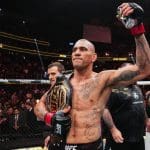

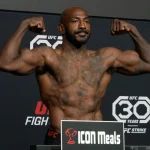


How did Marlon Vera build this fortune?
The answer unfolds through the career, earnings, deals and assets behind the headline estimate.
Before the fame
The background and early turning points that shaped Marlon Vera’s route to prominence.
Marlon Andres Vera Delgado, known throughout the sport as “Chito,” is an Ecuadorian mixed martial artist and one of the longest-tenured contenders in the UFC bantamweight division. Born December 2, 1992, in Chone, a city in Ecuador’s Manabi province, Vera grew up in a middle-class family before discovering Brazilian jiu-jitsu at age 16 in Guayaquil, the country’s largest city. His full biography, fight record and career timeline are documented on Wikipedia.
Vera now splits his time between Ecuador and the United States, training out of RVCA Training Center in Southern California while maintaining close ties to his home country, where he is widely regarded as one of the nation’s most recognizable athletes. He is married to Maria Paulina Escobar, and the couple have three children together, including his eldest daughter Ana Paula, whose medical needs have shaped much of his public life outside the cage.
Vera made his amateur MMA debut in 2011 and turned professional in February 2012, building his early record on the Ecuadorian and South American regional circuit. His raw finishing ability and jiu-jitsu background got him noticed quickly, and by late 2014 he had earned a spot on the UFC roster, a rare feat for a fighter from Ecuador at the time given the country’s limited MMA infrastructure.
He made his UFC debut on November 15, 2014, losing a decision to Marco Beltran, but rebounded to win his next fight and began stringing together the kind of high-volume, high-finish-rate run that would come to define his career. Unlike many prospects who are brought along carefully, Vera was thrown into frequent, short-notice bookings early in his UFC tenure, a pattern detailed in his Wikipedia career record that helped him rack up UFC appearances faster than almost any of his peers.
The breakthrough years
The career decisions and defining moments that turned recognition into sustained earning power.
Vera’s career-defining moment came on August 15, 2020, at UFC 252, when he faced Sean O’Malley, then an undefeated, heavily hyped prospect being fast-tracked toward stardom. O’Malley suffered a non-contact ankle injury after Vera landed a leg kick that affected his opponent’s peroneal nerve, and Vera finished the fight with ground strikes and elbows for a first-round TKO. Bleacher Report’s fight recap called it the biggest win of Vera’s six-year UFC career at the time, and Vera himself said afterward that the result should put him in the division’s top five.
The win looked significant in the moment, but it became historic in hindsight: when O’Malley went on to become UFC bantamweight champion in 2023, the 2020 result stood as the only loss on O’Malley’s record, and Vera’s name became permanently tied to one of the sport’s most talked-about upsets. That storyline carried directly into a rematch for the undisputed title years later, cementing Vera’s breakthrough fight as the launching point for the biggest opportunity of his career.

What the work can earn
Reported pay, contracts, royalties and performance income reveal how the fortune was funded.
Vera’s professional MMA record stands at 23 wins, 12 losses and 1 draw, and according to his Wikipedia profile he holds UFC bantamweight division records for most fights and most finishes, having won five Performance of the Night and three Fight of the Night bonuses across his tenure. His standout finishes include a front-kick knockout of former lightweight champion Frankie Edgar and a highlight-reel head-kick knockout of former bantamweight champion Dominick Cruz.
Those wins, layered on top of victories over ranked contenders like Rob Font, Pedro Munhoz and Cory Sandhagen, earned Vera his first crack at UFC gold at UFC 299 on March 9, 2024, where he challenged Sean O’Malley for the undisputed bantamweight championship. O’Malley won a lopsided unanimous decision, landing 230 significant strikes, the most ever thrown in a bantamweight title fight, a result documented in ESPN’s coverage of the title fight. Even in defeat, reaching a UFC title fight after a decade on the roster stands as the high point of Vera’s competitive career.
Vera’s win over O’Malley and subsequent title challenge turned him into a genuine national figure in Ecuador, a country with little MMA tradition before his UFC run. He is frequently described in Ecuadorian and international media as the face of the sport in his home country, and his fights routinely draw outsized local attention relative to Ecuador’s small footprint in combat sports.
His profile within the UFC itself also grew substantially through the sustained rivalry and media build-up around both O’Malley fights, which ESPN’s reporting noted helped drive one of the promotion’s bigger pay-per-view gates of the year. Vera has built a reputation as a durable, fan-friendly fighter who rarely turns down a booking, a trait that has made him a consistent presence in bantamweight rankings discussions even outside title contention.

The business beyond the main career
Endorsements, ownership interests and investments can keep compounding long after the initial breakthrough.
Vera’s sponsorship portfolio has grown alongside his UFC profile. His biggest and longest-running commercial deal has been with Pepsi, which signed him for an Ecuador-wide billboard and advertising campaign in 2017, making him one of the few Ecuadorian athletes to carry a major multinational endorsement. He has since added deals with fight-gear brand Venum, electronics company TCL, jewelry brand Jaxxon and Ecuadorian betting company Ecuabet, details compiled in a FirstSportz profile of his career earnings and endorsements.
He has also carried an apparel collaboration through RVCA, the Southern California clothing brand connected to his training camp, and has been sponsored at various points by supplement and energy-drink companies typical of the UFC’s fighter-sponsorship ecosystem. As with most fighters outside the promotion’s pay-per-view headliners, exact financial terms of Vera’s individual endorsement contracts have not been made public.
After competing for the undisputed title in 2024, Vera made a deliberate decision to stop training out of commercial gyms and instead built a private training facility of his own in the United States, financed personally rather than through a gym partnership or franchise deal. According to El Comercio’s coverage of the project, the space includes a custom octagon, murals honoring Ecuador and jerseys from the Ecuadorian national football team, and Vera described the move by saying that “privacy and a space of my own were crucial for my development, to keep improving and achieve mental clarity.”
Vera also maintains a public association with UFC GYM’s first Ecuador location, where he is listed as a featured trainer holding scheduled classes, according to the facility’s own UFC GYM Ecuador profile page. The arrangement functions primarily as a licensing and brand-ambassador relationship rather than an ownership stake, consistent with how UFC GYM franchises typically use star fighters to anchor international locations.

Notable luxury item
A reported property or major asset offers a tangible glimpse of the wealth behind the public estimate.
Vera has kept most of his real estate holdings private, though he has spoken about maintaining a home base in Ecuador alongside his training residence in the United States. A dedicated financial profile of the fighter reported that he “currently stays in his Big House in Ecuador with his beautiful small family,” featuring a large lawn he has used for outdoor training, according to thesportslite’s review of his properties and assets, though no public valuation of the property has been disclosed.
On vehicles, Vera has been candid that his taste runs toward older, classic cars rather than new luxury models, telling interviewers he previously sold a BMW M5 Competition specifically to fund older vehicles he preferred, explaining plainly that he prefers old cars and has little interest in newer ones. The same reporting lists a Chevrolet Caprice, a Ford F-150 and a Jeep Compass among vehicles he has owned, a modest collection by the standards of many UFC titleholders.
Marlon Vera’s estimated net worth
Public estimates vary because private contracts, investments, taxes and liabilities are not fully disclosed.
How this estimate is calculated
Vera’s net worth estimate starts with his documented UFC purse history rather than any single disclosed total, since the UFC does not publish full fighter compensation. Individual reported paydays include $410,000 for his 2022 win over Rob Font, including a $50,000 Fight of the Night bonus, $370,000 against Cory Sandhagen, $326,000 against Pedro Munhoz, and $300,000 for his knockout of Dominick Cruz, figures compiled by FirstSportz. His UFC 299 title challenge added a reported $187,000 payday, according to figures discussed by EcuadorTimes’ breakdown of that fight’s purse structure, well below the roughly $1.3 million some outlets had projected before the bout given typical PPV and bonus structures for a first-time title challenger.
Adding earlier-career purses, six-figure bonus payouts and recent fights such as his bout against Aiemann Zahabi, career UFC earnings are estimated at over $1.9 million, a figure referenced by EssentiallySports and used here only as a secondary, supplementary source alongside the primary purse reporting above. Layering on endorsement income from Pepsi, Venum, TCL, Jaxxon and Ecuabet, and accounting for the standard deductions of coaching, management and training expenses that reduce a fighter’s take-home pay well below gross purse figures, independent estimates of Vera’s net worth vary widely, from roughly $1-2 million on the low end to $4-5 million on the high end depending on the source, which is why a conservative range grounded in his documented purses is used below rather than a single unverified figure.
The defining cause of Vera’s public life outside competition has been his eldest daughter Ana Paula, who was born with Mobius syndrome, a rare neurological condition that prevents facial muscle movement, including the ability to smile. Vera and his wife launched a fundraising campaign to cover a corrective surgery performed in Beverly Hills, California, in 2018, with the GoFundMe raising roughly $19,000 toward a total procedure cost of about $43,500, the remainder covered by family savings, according to MixedMartialArts.com’s coverage of the surgery and fundraiser.
Fellow UFC fighters including Carlos Condit, Fabricio Werdum, Derek Brunson and Bec Rawlings publicly donated to the cause, and Vera has described the experience as transformative, saying the support “helped me become a better person” and “see the good side of the world.” That episode, more than any single win, has shaped Vera’s public image as a fighter whose career has always been intertwined with providing for his family.
Vera has no record of legal trouble or disciplinary action from the UFC, and most of the scrutiny he has faced has come through the ordinary trash talk of a combat-sports career rather than genuine scandal. His rivalry with Sean O’Malley produced years of back-and-forth ahead of both fights, and after his lopsided UFC 299 loss, bantamweight contender Umar Nurmagomedov publicly criticized his composure, saying Vera was “a lion when he’s dominating, and chicken when he’s dominated.”
Vera has also occasionally waded into other fighters’ feuds on social media, including a brief exchange with Khamzat Chimaev after Chimaev claimed to have repeatedly beaten Sean Strickland in sparring; Vera dismissed the claim with a four-word reply, “Training doest count bud,” a moment covered by Deadly Art of Survival. Taken together, Vera’s public scrutiny is largely confined to normal fight-week friction rather than any pattern of off-cage controversy.