 How Much Are They Worth?
Celebrity fortunes, explained
How Much Are They Worth?
Celebrity fortunes, explained




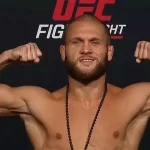

How did Robert Whittaker build this fortune?
The answer unfolds through the career, earnings, deals and assets behind the headline estimate.
Before the fame
The background and early turning points that shaped Robert Whittaker’s route to prominence.
Robert John Whittaker, known to fans as “The Reaper,” is a mixed martial artist competing in the Ultimate Fighting Championship (UFC). He was born on December 20, 1990, in Otahuhu, Auckland, New Zealand, and moved to Australia with his family at one month old, growing up in Sydney’s Menai area. His father is of European Australian descent and his mother has Samoan and Maori heritage, a dual background Whittaker has said he carries into the octagon, representing both Australia and New Zealand. He is a former UFC Middleweight Champion and the first Australian based fighter to win a UFC title, a milestone documented on his Wikipedia biography.
Whittaker began training in Goju-ryu karate at age seven under his father’s guidance, earning a black belt roughly eight years later before moving into hapkido and eventually mixed martial arts once his coach, Henry Perez, converted his gym into an MMA facility. He holds black belts in karate, hapkido and Brazilian jiu-jitsu, and has also represented Australia on the national freestyle wrestling team. Whittaker is married to Sofia Whittaker, with whom he has six children, and the couple also serve as legal guardians to his younger half-sister and half-brother.
Whittaker made his professional MMA debut in March 2009 with a TKO win over Chris Tallowin, then spent his early career fighting in Australian regional promotions including Xtreme Fighting Championships and Cage Fighting Championships, compiling a 9-2 record before catching the UFC’s attention. In 2012 he was selected for the first season of The Ultimate Fighter: The Smashes, the Australia versus United Kingdom edition of the reality competition, where he entered the welterweight tournament.
He knocked out Luke Newman in just 19 seconds in the quarterfinal, a finish that earned him a $25,000 Knockout of the Season bonus, then stopped Xavier Lucas in the semifinal before winning the tournament final by unanimous decision over Brad Scott at UFC on FX 6 in December 2012, a result recorded in the official UFC athlete profile that anchors his fight history.
The breakthrough years
The career decisions and defining moments that turned recognition into sustained earning power.
Whittaker spent his first two UFC years at welterweight before moving up to middleweight in November 2014 with a TKO win over Clint Hester that earned his first Fight of the Night bonus. The division change unlocked a run of dominant performances, including a 44 second knockout of Brad Tavares, decision wins over Uriah Hall and Rafael Natal, and a first round stoppage of Derek Brunson that collected both Performance and Fight of the Night honors.
The breakthrough that defined his career came at UFC 213 in July 2017, when Whittaker outpointed the heavy handed Yoel Romero over five rounds to win the interim UFC Middleweight Championship, becoming the first Australian born fighter to hold UFC gold, a milestone the promotion itself later revisited in its 30th anniversary retrospective on his rise. He was elevated to undisputed champion five months later when Georges St-Pierre vacated the title after a colitis diagnosis.

What the work can earn
Reported pay, contracts, royalties and performance income reveal how the fortune was funded.
Whittaker defended his title against Romero in an immediate rematch at UFC 225 in June 2018, winning a split decision in a non-title bout after Romero missed weight, a Fight of the Night effort that paid him a $100,000 bonus. He lost the belt at UFC 243 in October 2019, stopped in the second round by then undefeated Israel Adesanya in front of a UFC record 57,127 fans at Melbourne’s Marvel Stadium, an event that generated a $5.47 million gate and broke the promotion’s own prior attendance mark, according to the event’s official record.
Across his career Whittaker has collected nine post-fight bonuses (five Fight of the Night and four Performance of the Night awards), the second most in UFC middleweight division history behind only Anderson Silva. His professional record stands at 28 wins and 9 losses, per the UFC’s own athlete listing, and now includes a 2026 move up to light heavyweight, where he stopped Nikita Krylov in his debut at that new weight class.
Whittaker’s UFC 213 title win made him a genuine sporting star in Australia, and he backed it up with major industry honors, including 2017 Fighter of the Year recognition from Sherdog and the World MMA Awards, and GQ Australia’s 2018 Sportsman of the Year award. His two championship fights against Israel Adesanya, at UFC 243 and again at UFC 271 in February 2022, became the defining rivalry of his career and consistently ranked among the promotion’s highest profile pay-per-view main events.
He has carried that profile beyond the cage as well, appearing as a Team Australia competitor on the reality competition series Physical: Asia in 2025, and he is regularly cited by outlets covering Australian combat sports as the country’s most recognizable UFC export, a status Elite Sports’s profile of his career attributes as much to his approachable public persona as to his results inside the cage.
The business beyond the main career
Endorsements, ownership interests and investments can keep compounding long after the initial breakthrough.
Whittaker has built a sponsorship portfolio typical of a long tenured champion level fighter, anchored by an ongoing partnership with Musashi Sports Nutrition, which features him on a dedicated athlete page recommending its supplement stack, confirmed on Musashi’s own athlete profile. He has also worn Reebok and Venum branded fight gear at different stages of his UFC run, both being among the promotion’s official apparel partners during his active years.
Secondary reporting on his finances estimates his combined annual endorsement income at roughly $400,000 to $1 million depending on the year and how many partners are active at once, a range compiled from his publicly known brand relationships by outlets tracking fighter pay such as GlimmerSports. Exact contract terms and durations for these deals have not been made public.
Outside the cage, Whittaker has put his “Reaper” nickname to commercial use through ReaperGear, a personal branded apparel and merchandise line he operates alongside his fighting career. Coverage of his finances describes it as a modest, direct-to-fan operation rather than a large standalone company, run in a similar vein to the personal brand ventures many top UFC athletes maintain, detailed in Sportszion’s breakdown of his career earnings and business interests.
Whittaker has not publicly disclosed any formal company structure, franchise stake or outside equity investment beyond that merchandise line and his fight income. Like many fighters he also maintains a YouTube and social media presence built around training content, camp vlogs and behind the scenes footage, functioning as an extension of his personal brand rather than a distinct commercial venture.

Notable luxury item
A reported property or major asset offers a tangible glimpse of the wealth behind the public estimate.
Whittaker has kept his personal real estate and major assets largely out of public view. What is confirmed is that he lives in Sydney, New South Wales, with his wife Sofia, their six children, and the two younger half-siblings the couple have legal guardianship of, a family picture referenced in profiles of his career and finances including Sportszion’s earnings summary. No property addresses, purchase prices or vehicle details have been independently confirmed by a primary outlet.
This is consistent with how Whittaker discusses money generally. He has never publicized a car collection or real estate portfolio the way some UFC contemporaries do, and specific figures circulating for his property holdings on some secondary net worth sites are unconfirmed estimates rather than documented purchases, so they are not treated as fact in this profile.
Robert Whittaker’s estimated net worth
Public estimates vary because private contracts, investments, taxes and liabilities are not fully disclosed.
How this estimate is calculated
The starting point for Whittaker’s net worth is his documented UFC purse history. Disclosed and reported base salaries across his recent title eliminator and main event fights range from around $300,000 to $350,000 per appearance, with bonus fights such as his UFC 298 win over Paulo Costa adding a further $100,000 win bonus on top, figures reported respectively by TheSportsRush’s UFC 298 payout breakdown and KhelNow’s reporting on his UFC Abu Dhabi purse against Reinier de Ridder. Earlier in his championship run, his UFC 225 rematch with Yoel Romero alone paid an estimated $660,000 once the Fight of the Night bonus was included, and his two pay-per-view headline losses to Israel Adesanya are widely reported to be the highest paydays of his career once PPV points are factored in.
Totaling his publicly tracked UFC purses across more than three dozen fights puts his documented fight income at a little over $3.1 million, before accounting for his pre-UFC purses, TUF prize money, and roughly a decade of ongoing endorsement income from partners like Musashi, Reebok and Venum, which independent compilers estimate at $400,000 to $1 million a year depending on the period. Secondary aggregator sites have placed his overall net worth anywhere between $4 million and $6 million in recent years, a spread that includes a $5.7 million estimate from GlimmerSports, used here only as a supplementary cross-check rather than a primary source. Accounting for typical deductions for coaching, management and taxes that reduce a fighter’s take-home pay well below gross purse figures, a reasoned range is used below rather than a single unverified number, since Whittaker, like most active fighters, has never published an audited net worth figure.
Whittaker is widely described by Australian and MMA media as a soft spoken, grounded champion who avoids trash talk and lets his fighting do the talking, a reputation reinforced by his role as legal guardian to his half-siblings and his six children with wife Sofia. He runs youth martial arts clinics at his home gym, Gracie Jiu-Jitsu Smeaton Grange, and has made visits to remote Indigenous Australian communities in New South Wales as part of that community outreach, activity referenced in his biographical profile.
He has spoken about wanting to be a positive role model for young athletes and for men more broadly, and his public image has remained consistently positive across a fifteen year professional career, with no reported disciplinary issues inside or outside competition. That reputation is part of why Whittaker is frequently cited by Australian outlets as the face of MMA in the country, a status underlined by his continued selection for high profile main events well into his mid thirties.
Whittaker has not been involved in any personal scandal, legal dispute or disciplinary action during his career, and no source reviewed for this profile documents one. The scrutiny he has faced has been strictly competitive, including repeated questions from fans and media about a rematch with Israel Adesanya after losing twice, and criticism during a mid-career stretch when hernia surgery and other injuries forced him out of scheduled title fights, a run of health setbacks covered in his career history.
More recently, a run of losses in his mid to late thirties, including a 2024 submission defeat to Khamzat Chimaev that left him with a dislocated jaw and a 2025 split decision loss to Reinier de Ridder, prompted public debate among fans and analysts about his durability and title prospects, discussion that surrounded his coverage on outlets like EssentiallySports ahead of the Chimaev fight. Whittaker answered that scrutiny directly by moving up to light heavyweight in 2026 and picking up a stoppage win over Nikita Krylov in his debut at the new weight class.