
 How Much Are They Worth?
Celebrity fortunes, explained
How Much Are They Worth?
Celebrity fortunes, explained







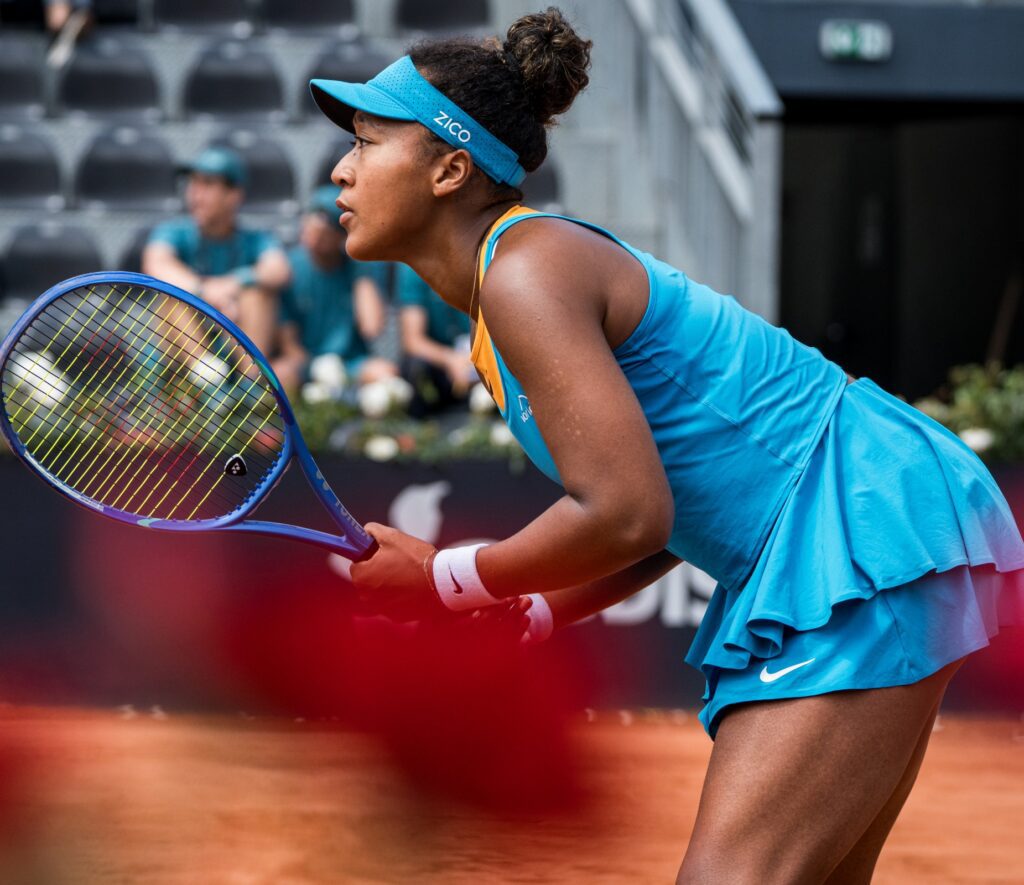
How did Naomi Osaka build this fortune?
The answer unfolds through the career, earnings, deals and assets behind the headline estimate.
Before the fame
The background and early turning points that shaped Naomi Osaka’s route to prominence.
Naomi Osaka was born on 16 October 1997 in Chuo-ku, Osaka, Japan, to a Japanese mother, Tamaki Osaka, and a Haitian father, Leonard François. The family moved to Long Island, New York, when Naomi was three years old, before relocating again to Florida in 2006 so that she and her older sister Mari could train more seriously. Osaka has always credited both sides of her heritage as central to her identity, representing Japan on the professional tour while growing up largely in the United States.
Her father first became interested in coaching tennis after watching the Williams sisters compete at the French Open, and he took charge of Naomi’s earliest training himself, modelling much of his approach on Richard Williams’ methods with Venus and Serena. Further biographical detail on her upbringing and family background is set out by the Encyclopaedia Britannica.
Osaka turned professional in 2013 and spent her first two years grinding through the ITF Women’s Circuit, working with coach Patrick Tauma at the ISP Academy before a period training under former world number five Harold Solomon in 2014. Her big breakthrough onto the wider tennis stage came in March 2014, when, still an unranked qualifier, she beat two top-50 players and pushed eventual finalist Samantha Stosur close in the third round of the Stanford Classic, a run that immediately marked her out as a serious future prospect.
She continued to build her ranking through 2015 and 2016, reaching her first WTA final at the 2016 Pan Pacific Open in Tokyo and cracking the world’s top 50 before the end of that season. Her rapid rise from the ITF circuit to WTA main draws is documented by Yahoo Sports.
The breakthrough years
The career decisions and defining moments that turned recognition into sustained earning power.
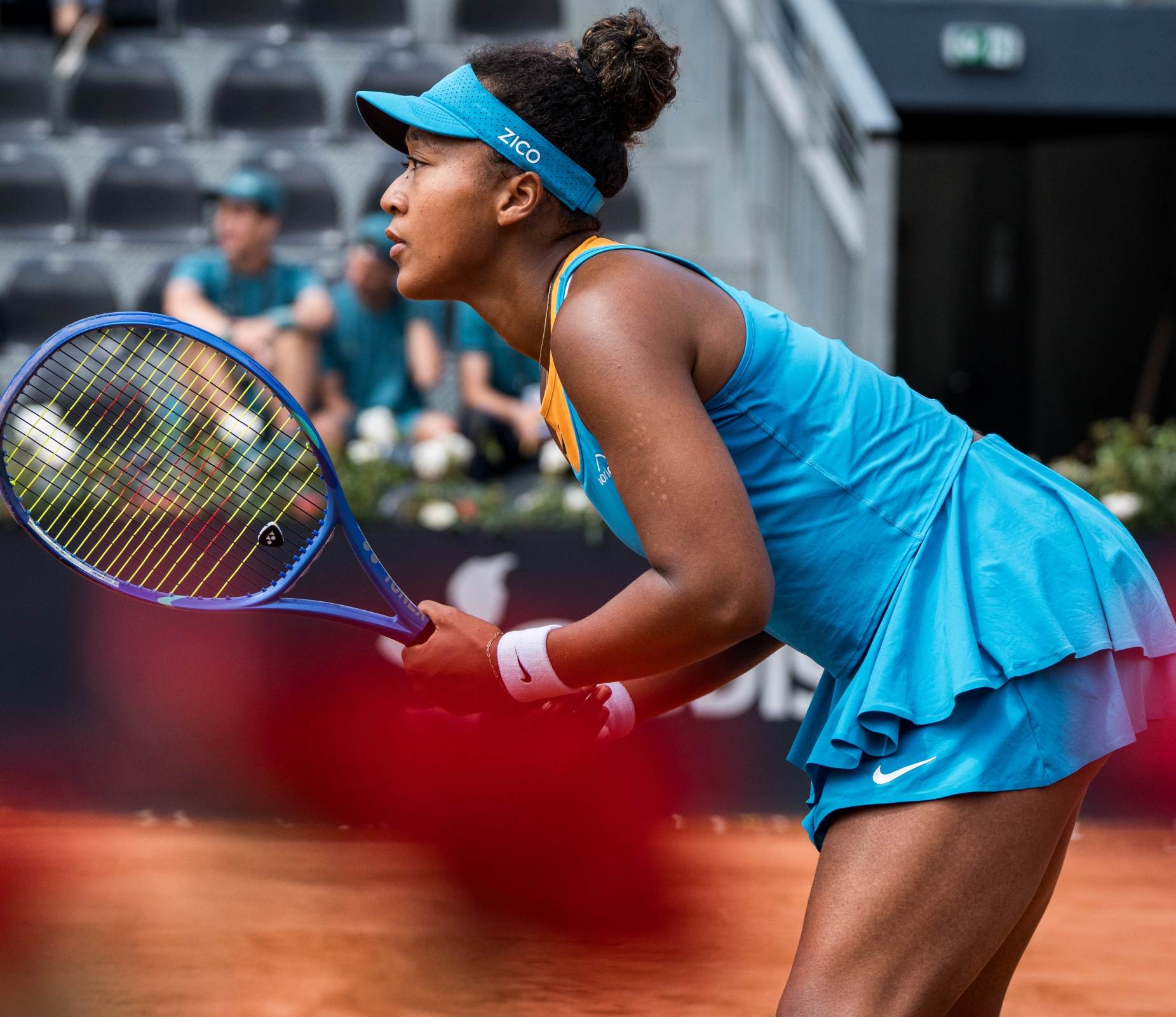
Osaka won her first WTA title at Indian Wells in March 2018, beating Daria Kasatkina in the final without dropping a set throughout the tournament, a result that immediately vaulted her into the world’s top 25. Six months later she produced by far the biggest result of her career, defeating her childhood idol Serena Williams 6-2, 6-4 in the final of the 2018 US Open to become the first Japanese player, male or female, to win a Grand Slam singles title.
The match itself became one of the most talked-about finals in modern tennis history after a series of code violations were issued against Williams during the second set, overshadowing Osaka’s own achievement in the immediate aftermath and forcing the 20-year-old to process a life-changing win amid a booing crowd and a subdued trophy ceremony. The WTA’s own report on the final captures both the scale of the result and the unusual circumstances surrounding it.

What the work can earn
Reported pay, contracts, royalties and performance income reveal how the fortune was funded.
Osaka has since gone on to win four Grand Slam singles titles in total: the 2018 US Open, the 2019 Australian Open, the 2020 US Open and the 2021 Australian Open, a record that makes her the most successful Asian singles player, male or female, in the history of the sport. Her win at the 2019 Australian Open also carried a separate piece of history, as it took her to world number one, making her the first Asian player ever to top the WTA singles rankings.
Beyond her Grand Slam record, Osaka was chosen to light the Olympic cauldron as the final torchbearer at the opening ceremony of the Tokyo 2020 Olympic Games in July 2021, a high-profile honour reflecting her status as one of Japan’s most recognisable sportspeople. A fuller rundown of her titles, rankings milestones and Olympic role is provided by NBC Olympics.
Osaka’s on-court success translated quickly into commercial recognition. In May 2020, Forbes named her the highest-paid female athlete in history, reporting that she had earned an estimated $37.4 million over the previous twelve months from prize money and endorsements combined, overtaking Serena Williams’ previous record. She repeated the feat the following year, setting a new all-time record for a female athlete with earnings of roughly $60 million in the twelve months to May 2021.
That combination of grand-slam-winning form and record-breaking commercial appeal made her one of the most recognisable athletes in the world for several consecutive years, a status confirmed in detail by Sky Sports‘ coverage of the Forbes rankings.

The business beyond the main career
Endorsements, ownership interests and investments can keep compounding long after the initial breakthrough.
Nike has been Osaka’s principal apparel and footwear sponsor since 2019, and the brand publicly reaffirmed its backing of her even as she withdrew from the 2021 French Open, a show of support during a difficult period that was widely reported, including by CNN Business. Mastercard signed her as a global ambassador in 2019, making her the first reigning world number one tennis player on its roster, and in 2021 Louis Vuitton named her a brand ambassador as part of a reported seven-figure deal.
Her wider endorsement portfolio has also included Yonex, TAG Heuer, Beats by Dre, Panasonic, Shiseido, Hyperice, Nissan and Nissin, reflecting a deliberately broad mix of equipment, luxury, beauty and consumer partners built up over the course of her career.
In 2022, Osaka co-founded the media and production company Hana Kuma with her longtime agent Stuart Duguid, initially launching in partnership with LeBron James and Maverick Carter’s SpringHill Company before spinning out independently with a $5 million seed round backed by SpringHill, Epic Games, the Kinoshita Group and Fenway Sports Group. The company has built a slate of scripted and unscripted projects spanning television, documentary film, anime and publishing, as detailed by the Hollywood Reporter.
She also serves as founder and chief executive of KINLÒ, a skincare brand launched in 2021 and formulated specifically for melanin-rich skin tones, a segment of the market Osaka has said is routinely overlooked by sun-care research. Activist and athlete Colin Kaepernick made a seed investment in the company and joined its board, and the brand later secured a retail partnership placing its products in thousands of Walmart stores. The launch and mission of the brand are covered by Vibe.

Notable luxury item
A reported property or major asset offers a tangible glimpse of the wealth behind the public estimate.
Osaka bought a modernist home in Beverly Hills from singer Nick Jonas for roughly $6.9 million in 2019, a three-bedroom, three-and-a-half-bathroom property built in 1965 and extensively rebuilt in 2016, set on half an acre with an infinity pool and a separate guest house. She sold the property in an off-market deal in August 2022 for $8.7 million to technology entrepreneur Milun Tesovic, a sale reported in detail by Fox Business.
That same year, she added a further Los Angeles-area property, purchasing a home in Tarzana for around $6.3 million, giving her a continued base in Southern California close to the training facilities and business connections she has built on the West Coast throughout her career.
Naomi Osaka’s estimated net worth
Public estimates vary because private contracts, investments, taxes and liabilities are not fully disclosed.
How this estimate is calculated
Estimating Naomi Osaka’s net worth means weighing more than two decades’ worth of documented income streams: WTA prize money of roughly $22 to 25 million across her career, endorsement and business income that Forbes has placed at a combined total of around $230 million between 2019 and 2025 alone, and equity stakes in ventures she has personally founded or co-founded, including Hana Kuma, KINLÒ and the Evolve talent management agency.
Because the large majority of that income comes from private endorsement contracts and business equity rather than disclosed prize money, exact figures are not publicly available, and taxes, agent fees, business running costs and personal spending all reduce the gap between gross career earnings and net worth. Estimates therefore rely on publicly reported deal values, Forbes’ annual athlete-earnings rankings and aggregation by financial-tracking outlets such as Celebrity Net Worth (used here as a secondary, cross-checking source rather than a primary one), cross-referenced against her known property purchases and business stakes. Given the scale and diversity of her income since 2018, the figure below should be read as an informed estimate rather than an audited total.
The working supports a range of $100 million to $150 million. The figure we publish is its midpoint.
Osaka has used her platform to speak out on racial justice and mental health, most visibly at the 2020 US Open, where she wore seven different face masks across the tournament, each bearing the name of a Black victim of police or racially motivated violence, drawing global attention to the Black Lives Matter movement over the course of her title run.
The following year, she withdrew from the French Open after being fined $15,000 for declining to attend a mandatory post-match press conference, explaining that she had experienced long bouts of depression and anxiety around media appearances since her 2018 US Open win. All four Grand Slam organisers warned she could face expulsion from future majors if she continued to skip media duties, a stand-off covered by Al Jazeera, and her decision to speak openly about her struggles is widely credited with reshaping the conversation around athlete mental health across professional sport.
Osaka has attracted relatively little sustained controversy given her profile, though one moment drew significant criticism in August 2025, when she lost the Canadian Open final in Montreal to eighteen-year-old Victoria Mboko and, in her runner-up speech, did not congratulate Mboko on the milestone win. The omission prompted a wave of criticism from fans and commentators, and Osaka later acknowledged at a US Open media day that she had mishandled the moment, saying she had simply forgotten in the emotion of the loss, and that she had since spoken privately with Mboko to clear the air, as reported by Sports Illustrated.
Aside from that episode, most scrutiny of Osaka has centred on her outspokenness around mental health and social issues rather than any conduct off the court, with even her critics generally acknowledging that she has been unusually candid, for an athlete of her stature, about the pressures that come with sustained global fame.