
 How Much Are They Worth?
Celebrity fortunes, explained
How Much Are They Worth?
Celebrity fortunes, explained

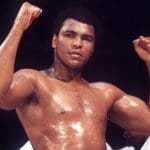








How did Vasiliy Lomachenko build this fortune?
The answer unfolds through the career, earnings, deals and assets behind the headline estimate.
Before the fame
The background and early turning points that shaped Vasiliy Lomachenko’s route to prominence.
Lomachenko was born on February 17, 1988, in Bilhorod-Dnistrovskyi, Ukraine, to Anatoly Lomachenko, a boxing trainer, and Tetiana Lomachenko, a gymnastics coach (Wikipedia). His father put him through several years of Ukrainian folk dance classes before allowing him into the gym, a decision credited with giving Lomachenko the footwork and balance that later defined his style, and Anatoly has remained his lead coach for his entire career. Lomachenko built an amateur record of 396 wins against a single loss, a defeat to Albert Selimov that he avenged twice, and captured gold at the 2008 European Championships, the 2009 and 2011 World Championships, and the 2006 Junior World Championships along the way (Wikipedia).
Lomachenko’s amateur career peaked with back-to-back Olympic gold medals, winning the featherweight title at the 2008 Beijing Games, where he was also awarded the Val Barker Trophy as the tournament’s outstanding boxer, and the lightweight title at the 2012 London Games with a 19-9 win over South Korea’s Han Soon-Chul (Wikipedia). He turned professional with Top Rank in 2013, stopping Jose Ramirez in the fourth round of his debut, then made an unusually aggressive move by challenging Orlando Salido for a world title in only his second professional fight, a bid that ended in a split-decision loss amid a fight in which Salido landed dozens of low blows (Wikipedia).
The breakthrough years
The career decisions and defining moments that turned recognition into sustained earning power.
Lomachenko answered that setback by beating Gary Russell Jr. for the WBO featherweight title in his very next fight, his third as a professional, matching the record for fewest fights needed to win a world title (Wikipedia). He moved up to super featherweight in 2016, stopping Roman Martinez for a second divisional title, then reeled off four consecutive stoppage or corner-retirement wins, including a dominant defeat of previously unbeaten Guillermo Rigondeaux in December 2017. His jump to lightweight in 2018 produced a tenth-round stoppage of Jorge Linares for the WBA and Ring titles, followed by a unification win over Jose Pedraza and a unanimous-decision win over Luke Campbell in August 2019 that made him the WBC’s lightweight champion as well, putting three of the four major belts in his hands.

What the work can earn
Reported pay, contracts, royalties and performance income reveal how the fortune was funded.
Lomachenko’s bid for full undisputed status ended in October 2020, when Teofimo Lopez won a clear unanimous decision that stripped him of the WBA, WBC, WBO and IBF titles, a result that led to shoulder surgery and a period of reassessment (Wikipedia). He rebuilt with wins over Masayoshi Nakatani and Richard Commey through 2021, then, after his career was interrupted by the outbreak of war, returned in October 2022 to beat Jamaine Ortiz. A close, disputed unanimous-decision loss to Devin Haney in May 2023 was followed by his final fight, an eleventh-round stoppage of George Kambosos Jr. in May 2024 that dropped Kambosos twice and won Lomachenko the IBF lightweight title, closing a professional record of 18 wins, three losses and 12 knockouts before he announced his retirement in June 2025 (ESPN).
Lomachenko was named The Ring and Boxing Writers Association of America Fighter of the Year for 2017 and also won that year’s Sugar Ray Robinson Award, recognition that cemented his reputation as boxing’s most complete technician during his featherweight and super featherweight reign (Sports Illustrated). He spent long stretches ranked among the top two or three pound-for-pound fighters in the world by ESPN and other major outlets through the late 2010s. Announcing his retirement, Lomachenko said he was “grateful for every victory and every defeat, both in the ring and in life,” a statement Top Rank promoter Bob Arum echoed by calling him a “generational champion” (ESPN).

The business beyond the main career
Endorsements, ownership interests and investments can keep compounding long after the initial breakthrough.
In September 2019, Italian luxury label Billionaire named Lomachenko its first international brand ambassador, dressing him in a custom crocodile-embroidered robe for his ring walk against Anthony Crolla, with founder Philipp Plein calling him “one of the best fighters in the world” (VingtSept Magazine). He has also carried equipment and apparel sponsorships typical of a champion boxer, including deals connected to Everlast gear used in training and fight camps, though the financial terms of these arrangements were not publicly disclosed (EssentiallySports).
Lomachenko’s public commercial activity has stayed close to boxing rather than expanding into outside companies or media ventures the way some contemporaries have. His most visible business-adjacent move was signing with Top Rank as an exclusive promotional partner for his entire professional career, a long-term arrangement that shaped his purse structure and pay-per-view participation across more than a decade (Wikipedia). No independently verified company, ownership stake, or media venture beyond his promotional and endorsement contracts turned up in the sourcing for this profile, a pattern consistent with a fighter whose father and management team kept his career tightly focused on training and competition throughout.

Notable luxury item
A reported property or major asset offers a tangible glimpse of the wealth behind the public estimate.
Lomachenko has kept a famously modest real-estate profile relative to his earnings. For years he rented a “large, sparsely furnished suburban house” in Oxnard, California, choosing the quiet Ventura County farming community over Los Angeles or Miami specifically because it helped him focus on training, commuting to the gym in a white SUV rather than accumulating a visible fleet of cars (The Spokesman-Review). His primary family home has remained in Ukraine, near Odesa, and no significant luxury property purchase, in the United States or Ukraine, has been independently documented in the reporting available on his career.
Vasiliy Lomachenko’s estimated net worth
Public estimates vary because private contracts, investments, taxes and liabilities are not fully disclosed.
How this estimate is calculated
HMW’s estimate starts from Lomachenko’s documented purse history, which ranged from a $631,000 payday against Orlando Salido in 2014 up through guaranteed purses of $1.25 million or more for title fights against Rigondeaux and Linares, $3 million against Anthony Crolla, $3.5 million against Luke Campbell, and $3.25 million plus a PPV share against Teofimo Lopez, with reporting placing his total career ring earnings above $20 million across 21 professional fights (EssentiallySports). Layering in his later purses against Ortiz, Haney and Kambosos, plus endorsement income from Billionaire and his equipment sponsors since 2019, gross career earnings plausibly land in the low-to-mid $20 million range. The model then deducts the trainer, cutman, promotional and management percentages that a Top Rank fighter with his father as head trainer typically pays, along with US and Ukrainian tax exposure, which together consume roughly a third to half of a touring boxer’s gross purses over a career. That approach places HMW’s estimate above Celebrity Net Worth’s separate $8 million figure, a secondary estimate that appears conservative relative to Lomachenko’s fully documented 2018-2024 purse totals (Celebrity Net Worth).
Lomachenko’s public image shifted permanently in February 2022, when Russia’s full-scale invasion of Ukraine began while he was traveling in Greece. He flew to Bucharest, crossed overland through Romania, and joined a territorial defense battalion near his family’s home outside Odesa rather than remaining abroad to continue his boxing career, a decision that put a scheduled June 2022 unification fight against George Kambosos Jr. on hold indefinitely (ESPN). WBC Ukraine president Mykola Kovalchuk said at the time that “we are so proud of our boxers, our real champions in boxing and champions in this war,” and reporting on Lomachenko’s status noted he had been considered the leading candidate to fight for the undisputed lightweight title before the invasion derailed those plans (CBS Sports).
Lomachenko has no history of legal trouble or off-ring scandal; the closest thing to controversy in his career is the judging of two of his losses. His October 2020 defeat to Teofimo Lopez included a 119-109 scorecard from judge Julie Lederman that was widely criticized as too lopsided for a fight CompuBox showed Lomachenko winning on connect percentage, even as he lost clearly on the other cards (Wikipedia). His May 2023 unanimous-decision loss to Devin Haney drew even sharper pushback: CompuBox had the two fighters within four punches of each other landed, several rounds were widely viewed as competitive or leaning Lomachenko’s way, and fighters including Shakur Stevenson and Jorge Linares publicly questioned the scoring, though the result stood and was never appealed (Wikipedia).