
 How Much Are They Worth?
Celebrity fortunes, explained
How Much Are They Worth?
Celebrity fortunes, explained

How did Malala Yousafzai build this fortune?
The answer unfolds through the career, earnings, deals and assets behind the headline estimate.
Before the fame
The background and early turning points that shaped Malala Yousafzai’s route to prominence.
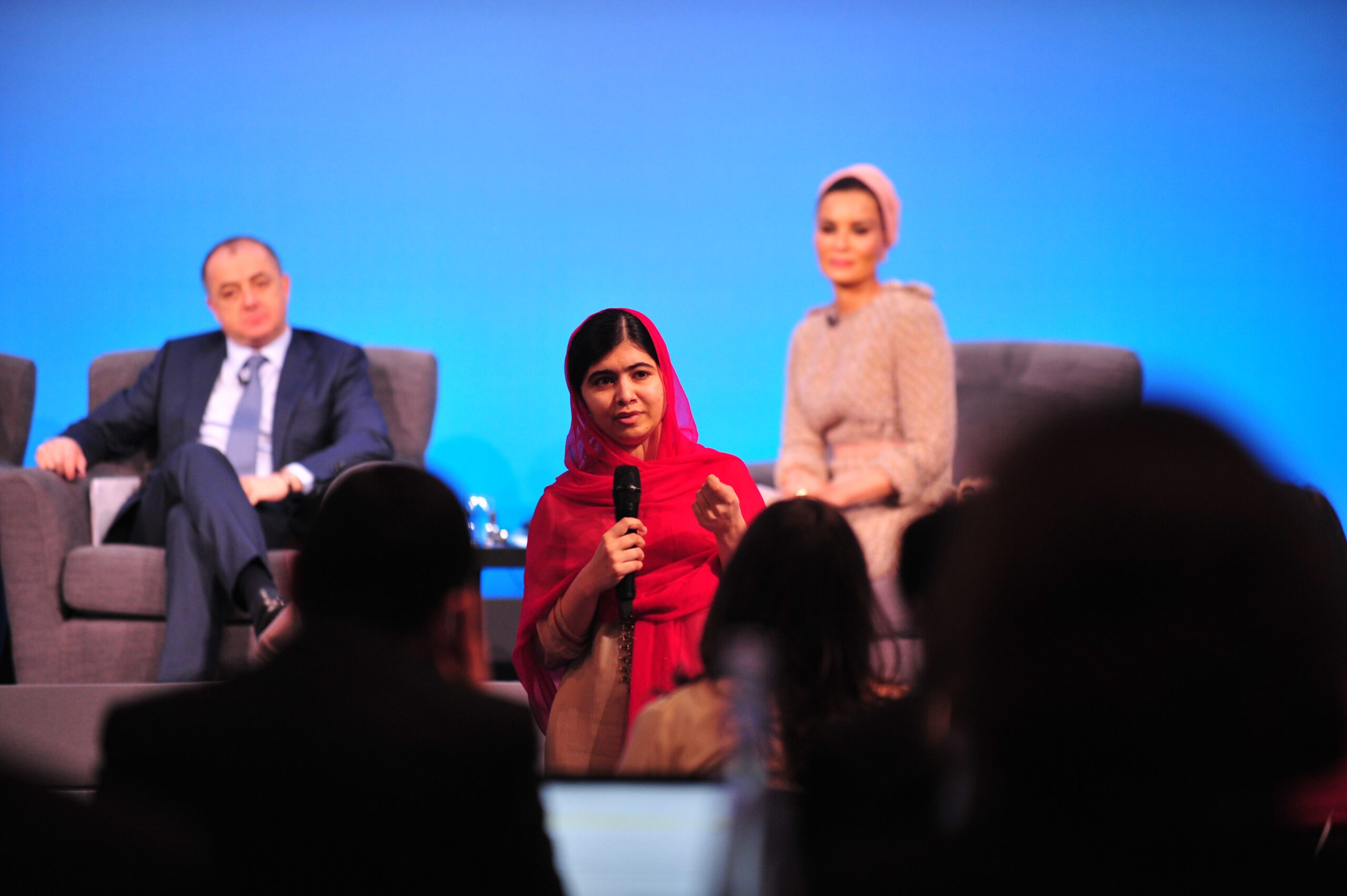
Malala was born in Mingora, in Pakistan’s Swat Valley, to Ziauddin Yousafzai, an education activist and school administrator, and Toor Pekai Yousafzai. Her father ran a chain of schools in the region and was a vocal advocate for girls’ education, an influence that shaped Malala’s own activism from a young age. Beginning at age 11, she wrote an anonymous blog for BBC Urdu describing life under Taliban rule in Swat, which had banned girls from attending school. In October 2012, at age 15, she was shot by a Taliban gunman while riding a school bus, an attack that drew worldwide attention to her activism and nearly killed her. She was airlifted for treatment in the United Kingdom and her family later relocated to Birmingham, England, where she continued her education and recovery.
Malala’s survival and continued advocacy following the 2012 attack turned her into a globally recognized figure almost overnight. She addressed the United Nations on her 16th birthday in 2013, co-founded the Malala Fund with her father the same year, and published her bestselling memoir, “I Am Malala,” co-written with journalist Christina Lamb. In 2014, she was awarded the Nobel Peace Prize jointly with Indian children’s rights activist Kailash Satyarthi, becoming the youngest Nobel laureate in the prize’s history. She went on to study Philosophy, Politics and Economics at Oxford University, graduating in 2020.
Photo: DFID – UK Department for International Development via Wikimedia Commons (CC BY 2.0)
The breakthrough years
The career decisions and defining moments that turned recognition into sustained earning power.
Since Oxford, Malala has continued to build her public career around the Malala Fund, which advocates and raises money for girls’ secondary education in countries where access is limited. She has published additional books, including “We Are Displaced” (2019), a children’s picture book, and a follow-up memoir. She has also moved into media production, signing a content partnership with Apple TV+ through her production company, Extracurricular, to develop documentaries, dramas, and children’s programming. She remains a sought-after speaker at global forums, universities, and conferences on education and human rights.

What the work can earn
Reported pay, contracts, royalties and performance income reveal how the fortune was funded.
Malala’s annual income is drawn primarily from book royalties, speaking fees, and payments tied to her Apple TV+ production deal, rather than a fixed salary. Because much of her public work is channeled through the nonprofit Malala Fund, a significant share of the funds associated with her platform go toward the organization’s programming rather than her personal income. Compared to entertainers or athletes of similar global recognition, her personal annual earnings are relatively modest, consistent with a career built on activism rather than commercial entertainment.
Malala’s 2013 memoir “I Am Malala” was a major international bestseller, and publishing-industry reporting at the time described her book deal as one of the largest ever given to a teenage author, with some outlets reporting an advance in the region of several million dollars split across worldwide rights. The book has sold millions of copies and been translated into dozens of languages. Beyond book income, Malala commands substantial fees for keynote speeches and appearances at universities, corporations, and international conferences, a common and legitimate revenue stream for high-profile authors and public figures.
The business beyond the main career
Endorsements, ownership interests and investments can keep compounding long after the initial breakthrough.
Unlike entertainers or athletes, Malala has not pursued traditional commercial endorsements, and she is not the face of consumer brands or advertising campaigns. The closest equivalent in her career is her partnership with Apple TV+, which functions more as a content and production agreement than a conventional celebrity endorsement. This absence of sponsorship income is consistent with her broader effort to keep her public platform focused on education advocacy rather than commercial promotion, a deliberate choice she has discussed in interviews about protecting her credibility as an activist.
Malala’s main commercial venture is Extracurricular, the production company she launched with her Apple TV+ partnership to develop film and television content, including the documentary series “Malala.” She has generally avoided endorsement deals or commercial sponsorships of the kind common among entertainers and athletes, keeping her commercial activity closely tied to publishing, media production, and public speaking rather than broader business investments. The bulk of funds raised in connection with her public profile continue to flow into the Malala Fund’s education programs rather than into personal business holdings.
Notable luxury item
A reported property or major asset offers a tangible glimpse of the wealth behind the public estimate.
Malala and her family have lived in Birmingham, England, since relocating there for her medical treatment and education following the 2012 attack. She has kept her personal lifestyle relatively low-key relative to her level of global fame, and there is no substantial public reporting of a luxury property portfolio, car collection, or other high-value asset holdings, consistent with her public identity as an education advocate rather than a wealth-focused public figure.
Photo: DFID – UK Department for International Development via Wikimedia Commons (CC BY 2.0)
Malala Yousafzai’s estimated net worth
Public estimates vary because private contracts, investments, taxes and liabilities are not fully disclosed.
| 2009 | Begins writing an anonymous BBC Urdu blog about life under Taliban rule at age 11 |
| 2012 | Survives a Taliban assassination attempt; relocates to the UK for treatment |
| 2013 | Co-founds the Malala Fund; publishes bestselling memoir “I Am Malala” with a reported multi-million-dollar advance |
| 2014 | Becomes the youngest-ever Nobel Peace Prize laureate at age 17 |
| 2020 | Graduates from Oxford University with a degree in Philosophy, Politics and Economics |
| 2021 | Signs a content partnership with Apple TV+ through her production company, Extracurricular |
| 2026 | Estimated net worth widely reported in the $2m-$4m range, built on book income, speaking fees, and media production |
Malala’s net worth is far smaller than that of entertainment or sports figures on this site, reflecting the fundamentally different, advocacy-driven nature of her public career. Among fellow young activists and public intellectuals, her financial profile is broadly comparable to peers such as Greta Thunberg, whose income is similarly derived from books, speaking, and foundation-linked work rather than commercial ventures. Compared to Nobel laureates in general, her net worth is relatively high thanks to her bestselling memoir and media deals, though it remains modest next to the celebrities most commonly covered for their business empires or entertainment salaries.
Sources and references
Sources referenced for this article include reporting from the Nobel Prize organization, the Malala Fund, Apple TV+ press announcements, and publishing-industry coverage of “I Am Malala.” Net worth figures are estimates compiled from public reporting. Last updated: August 2026.
From a schoolgirl blogging anonymously about the right to an education to the youngest Nobel Peace Prize laureate in history, Malala Yousafzai has built a modest but meaningful fortune around a cause rather than a career — proof that global fame does not always translate into entertainment-industry wealth.
Answer 5 questions about Malala Yousafzai and get a free offer
Take the Quiz