
 How Much Are They Worth?
Celebrity fortunes, explained
How Much Are They Worth?
Celebrity fortunes, explained










How did Acharya Prashant build this fortune?
The answer unfolds through the career, earnings, deals and assets behind the headline estimate.
Before the fame
The background and early turning points that shaped Acharya Prashant’s route to prominence.
Acharya Prashant was born Prashant Tripathi in Agra in 1978. He studied engineering at IIT Delhi and management at IIM Ahmedabad, cleared the Indian civil-services examination and briefly pursued conventional professional work before turning toward teaching. His official long-form biography describes his education, theatre activity, early career and development as a Vedanta teacher. Because that biography is published by his own organization, its personal narrative is useful but is balanced here with publisher, institutional and independent coverage.
After graduating from IIT Delhi, Tripathi entered IIM Ahmedabad and explored theatre alongside management study. He later worked in corporate roles and was selected through India’s civil-services process, but did not make government service his long-term path. In 2006 he established Advait Life-Education and developed educational programs for students. These early programs combined philosophical inquiry with contemporary questions rather than presenting ritual instruction. The career shift is financially important: leaving a conventional professional path reduced predictable salary income and redirected his effort toward an education mission whose institutional revenue cannot simply be called personal earnings.
The breakthrough years
The career decisions and defining moments that turned recognition into sustained earning power.
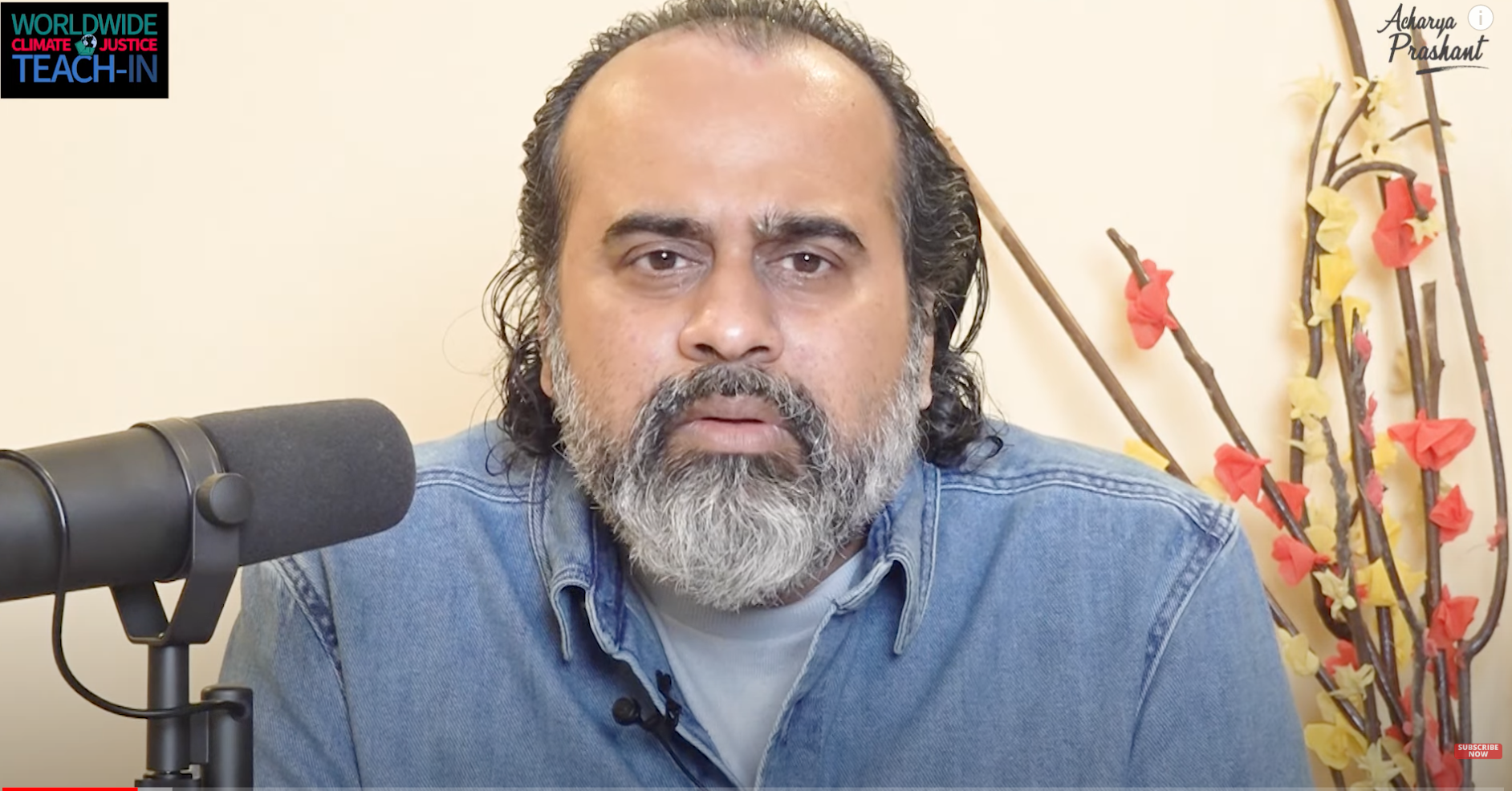
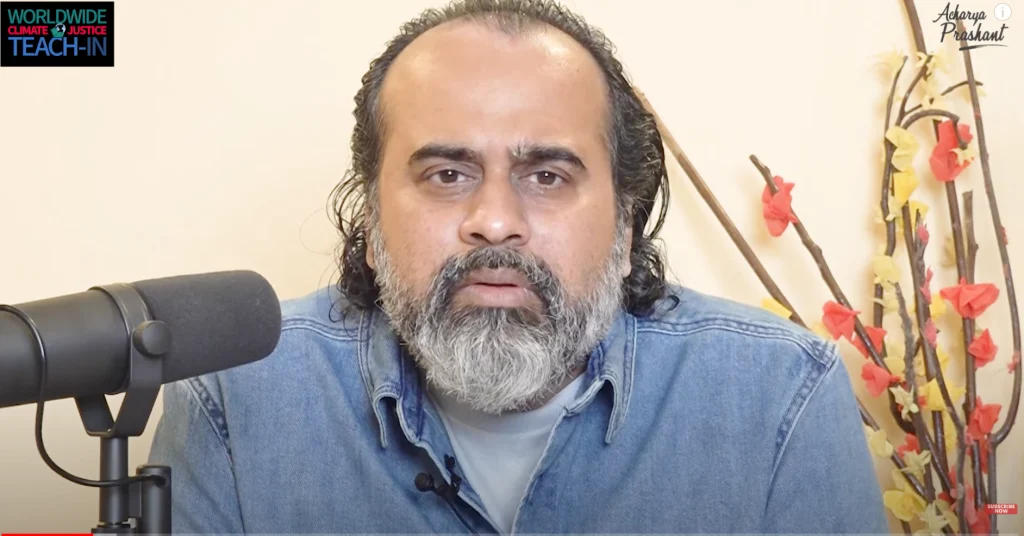
The breakthrough was gradual rather than a single viral moment. Recorded talks began circulating online, an English YouTube channel was followed by Hindi content, and volunteers transcribed sessions into books. By explaining the Bhagavad Gita, Upanishads and Buddhist and Western thought in everyday language, he reached viewers beyond traditional religious institutions. The Entrepreneur profile of his digital growth examines how a very large YouTube audience developed around long-form philosophical material. Audience scale belongs to the mission’s channels, however, and is not cash personally held by the teacher.

What the work can earn
Reported pay, contracts, royalties and performance income reveal how the fortune was funded.
Prashant has written or generated from talks a large catalogue of books covering Vedanta, relationships, fear, work and social questions. Penguin Random House India’s author page identifies his IIT and IIM background, extensive bibliography and bestselling titles. His organization also runs live teaching, examinations and a substantial online community. India Book of Records recognized the Foundation’s large online Bhagavad Gita examination, documented on the record organization’s exact achievement page. Such scale establishes impact, not his private ownership of participant fees or donations.
Recognition has increasingly come from educational, environmental and animal-welfare bodies. IIT Delhi’s alumni community honored him for contribution to national development, reported in the IIT Delhi alumni award announcement, while media describe him as a major spiritual voice on YouTube. PETA India named him its Most Influential Vegan for 2022; PETA India’s interview and award account links that recognition to his advocacy for animals.

The business beyond the main career
Endorsements, ownership interests and investments can keep compounding long after the initial breakthrough.
Prashant’s public work differs from conventional influencer marketing. His message criticizes consumerism, superstition and status seeking, making ordinary product endorsements potentially inconsistent with the brand. His official English-language YouTube channel demonstrates distribution scale but not personal receipts. There is no solid evidence of a large recurring sponsorship portfolio, so one is not inserted. Platform advertising and book sales do not prove gross receipts flow directly to him. This conservative treatment prevents follower count from being converted mechanically into endorsement income.
The central institution is PrashantAdvait Foundation, formally organized as a nonprofit. It distributes books and digital media, operates educational programs and supports the technical infrastructure required for a worldwide community. The distinction between founder and owner is essential: a nonprofit’s bank accounts, donations, offices, apps and intellectual-property arrangements are not automatically the founder’s personal assets. His commercial publishing relationships may generate author royalties, but terms are private. The official Acharya Prashant book catalogue demonstrates the range of publications without disclosing how receipts are divided among author, publisher and Foundation.

Notable luxury item
A reported property or major asset offers a tangible glimpse of the wealth behind the public estimate.
The official biography states that Prashant sold a house in Noida to support the work and committed savings to the Foundation. It also says the organization’s headquarters property came from his father for the mission. Those statements argue against treating the headquarters as Prashant’s private real estate. No audited personal asset declaration identifies current homes, securities or valuable vehicles. The estimate therefore recognizes the possibility of ordinary savings and book royalties while excluding Foundation facilities, donated property, equipment, channel value and community funds. An institution’s operational scale is not a proxy for its founder’s spendable fortune.
Acharya Prashant’s estimated net worth
Public estimates vary because private contracts, investments, taxes and liabilities are not fully disclosed.
How this estimate is calculated
The calculation begins with plausible personal income from earlier employment, author royalties, speaking or teaching compensation and any savings retained over a long career. It then applies a strong nonprofit-ownership discount: donations, program fees, video revenue, app receipts and property controlled by PrashantAdvait Foundation are excluded unless personal entitlement is evidenced. It also accounts for his organization’s assertion that he contributed personal property and savings to the mission. Subscriber counts are not multiplied by standard advertising rates because geography, monetization, operating costs and institutional allocation are unknown. The result is deliberately narrower than celebrity-wealth sites that conflate mission scale with private wealth.
Acharya Prashant’s estimated personal net worth is $500,000 to $2 million, with a central estimate near $1 million. This cautious range allows for book royalties and personal savings but excludes the PrashantAdvait Foundation’s funds, property, platforms and operating assets. It is not a disclosed figure. If reliable accounts later show substantial personally retained publishing or media income, the estimate could rise; if most earnings have been donated as his biography says, it could be lower.
Animal welfare, veganism, environmental responsibility and opposition to social conditioning are prominent themes in Prashant’s work. His direct, adversarial style attracts students who value rational inquiry while alienating some traditionalists. The Foundation’s education activity has a charitable or public-benefit orientation, but using institutional resources for programs is not the same as making personal gifts. Recognition from PETA relates to advocacy rather than wealth. His public image is therefore best understood as a teacher leading a nonprofit movement, not a lifestyle guru marketing luxury, a distinction that materially limits assumptions about personal accumulation.
Prashant’s critiques of ritual religion, popular spirituality, caste, consumer culture and conventional relationships regularly provoke opposition online. Critics question his interpretations and the intensity or scale of digital promotion; supporters argue that his method makes demanding texts accessible. Contentious philosophical claims should be evaluated separately from financial allegations. No reliable public judgment establishes fraud, diversion of charitable property or a personal fortune derived from the Foundation. This estimate therefore does not repeat unsourced accusations. It treats organizational claims cautiously and relies on independently attributable recognition where available.