 How Much Are They Worth?
Celebrity fortunes, explained
How Much Are They Worth?
Celebrity fortunes, explained



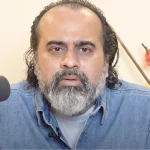
How did Kwebbelkop build this fortune?
The answer unfolds through the career, earnings, deals and assets behind the headline estimate.
Before the fame
The background and early turning points that shaped Kwebbelkop’s route to prominence.
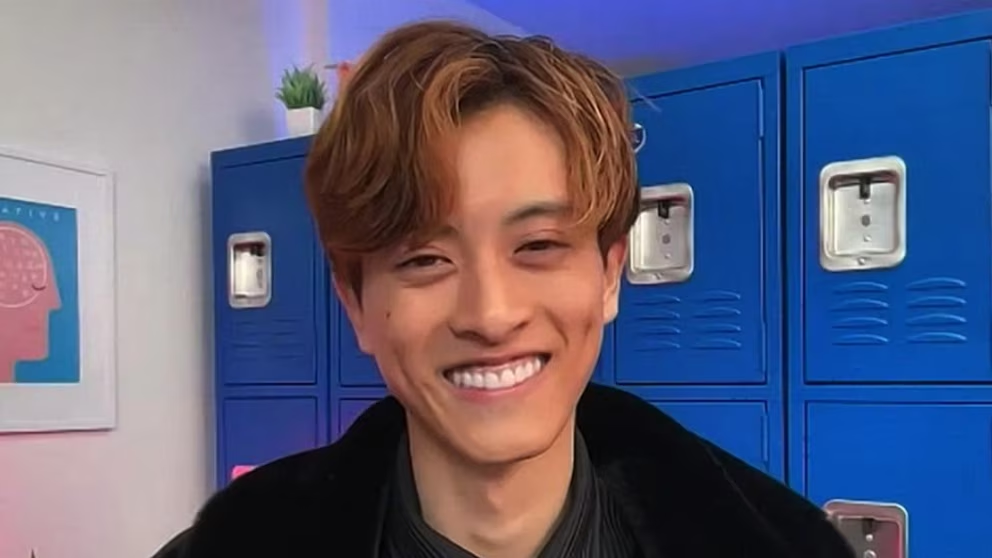
Jordi Maxim van den Bussche, better known online as Kwebbelkop, was born on June 1, 1995, in Amsterdam, Netherlands. His nickname is a playful Dutch word that loosely translates to “chatterbox,” a fitting handle for a creator who built his career on fast-paced commentary over video game footage. According to his Wikipedia biography, his parents divorced when he was two years old, and his father passed away in February 2017. Van den Bussche grew into one of the earliest gaming YouTubers to build a multi-million subscriber audience, and he later became one of the few creators of his generation to pivot from being a full-time on-camera personality into running his own media and artificial intelligence company.
Van den Bussche created his YouTube channel in April 2008 but did not begin uploading in earnest until 2011, starting with Call of Duty commentary before expanding into Let’s Play content across Minecraft, Grand Theft Auto V, and Roblox, per Wikipedia. His consistent, near-daily upload schedule steadily built an audience through the first half of the 2010s. By November 2017, when the UK-based agency Kairos Talent signed him for exclusive management, he commanded roughly 8.7 million subscribers across his channels, according to Tubefilter’s coverage of the signing, which the agency framed as a deal meant to help him “continue to grow his online presence.”
The breakthrough years
The career decisions and defining moments that turned recognition into sustained earning power.
A major turning point came in 2014, when van den Bussche co-founded the collective Robust alongside fellow YouTubers Jelly and Slogoman, moving in together and cross-promoting content in a way that was common among gaming creators of that era and highly effective for subscriber growth, according to his Wikipedia biography. The collaboration helped push all three creators’ channels into the millions of subscribers and cemented Kwebbelkop’s place among the first wave of gaming YouTubers to reach that scale. He eventually left Robust in 2019, citing the toll continuous collaboration and daily content demands had taken on his mental health.
What the work can earn
Reported pay, contracts, royalties and performance income reveal how the fortune was funded.
By June 2019, when the Vancouver-based multi-channel network BroadbandTV (BBTV) signed him as part of a six-creator announcement, Kwebbelkop’s channel had grown to 10.9 million subscribers, according to Tubefilter’s report on the deal. His subscriber count would later climb past 15 million. At his peak, before shifting toward AI-generated content, his channel was regularly drawing more than 100 million monthly views, a benchmark cited in coverage of his 2026 channel relaunch. That combination of longevity and reach put him among the most-watched gaming personalities to emerge from YouTube’s first decade.
Van den Bussche’s profile expanded well beyond gaming commentary as he became a recurring voice in creator-economy and AI-content industry conversations. His speaker biography on the Amsterdam Dance Event artists and speakers listing introduces him as the founder and CEO of JVDB Studios and credits him as the creator of the virtual influencers Bloo and Kwebbelkop AI, alongside the video tools DubDash and Project V, describing him as someone “always looking to push the boundaries of multimedia.” That combination of a long-running YouTube career and a public role as an AI-content entrepreneur has made him a recognizable figure at the intersection of gaming, streaming, and emerging media technology.
The business beyond the main career
Endorsements, ownership interests and investments can keep compounding long after the initial breakthrough.
Kwebbelkop’s income from partnerships has largely flowed through professional representation rather than individually negotiated one-off endorsements. Kairos Talent’s November 2017 signing gave him access to expanded brand and sponsorship opportunities as part of its management services, according to Tubefilter. His June 2019 move to BroadbandTV brought a broader monetization relationship, giving him access to BBTV’s advertising, licensing, ecommerce, and content distribution services, per Tubefilter’s coverage of that deal, at a time when BBTV reported serving 575 million monthly unique viewers across its partner network.
Van den Bussche is the founder and CEO of JVDB Studios, an Amsterdam-based company he describes as “a global, multi-disciplinary digital studio revolutionizing content creation with AI,” according to the JVDB Studios about page. Under that umbrella sits Bloo, a blue-haired virtual influencer he launched as a way to keep running a personality-driven channel without the burnout that comes from being permanently on camera; by August 2022, Bloo’s flagship channel had reached 500,000 subscribers and more than 139 million views, per Tubefilter’s profile of the project. JVDB Studios also encompasses the game development label Phantom Coast and AI production tools including DubDash and Project V, as listed on his Amsterdam Dance Event speaker page. Earlier in his career he also released the mobile and PC games Impossible Runner (2018) and Havocado (2019), both credited on his Wikipedia page.
Notable luxury item
A reported property or major asset offers a tangible glimpse of the wealth behind the public estimate.
There is no public record of van den Bussche purchasing notable real estate or documenting a “creator house” of the kind common among his streaming peers. His most significant and best-documented asset is intangible: full ownership of JVDB Studios, the Amsterdam-based company through which he holds the Bloo virtual influencer brand, the Phantom Coast game studio, and AI production tools DubDash and Project V, as described on the JVDB Studios about page. Because JVDB Studios is privately held, neither its valuation nor van den Bussche’s personal equity stake in it has ever been publicly disclosed, meaning this asset almost certainly carries real value that is not captured in ad-revenue-based net worth calculators.
Kwebbelkop’s estimated net worth
Public estimates vary because private contracts, investments, taxes and liabilities are not fully disclosed.
How this estimate is calculated
Van den Bussche has never published his personal finances, and third-party estimates of his net worth vary enormously as a result. On the conservative end, ad-revenue-only calculator NetworthSpot, a secondary aggregator, puts his YouTube advertising income alone at only around $55,000 to $99,000 a year based on roughly 30,600 daily views on his main channel, a figure that only accounts for one narrow income stream. At the other extreme, secondary celebrity-net-worth-style tracker InfluencerFee estimates his total net worth at around $10 million once brand deals, equity in his business ventures, and merchandise are factored in, citing estimated monthly earnings above $50,000 and annual income between $600,000 and $2.1 million. Between those two extremes sit several verifiable, if undisclosed in exact dollar terms, income sources: more than a decade of YouTube advertising revenue from a channel that peaked past 15 million subscribers and 100 million-plus monthly views, formal monetization and management relationships with Kairos Talent and BroadbandTV, additional advertising revenue from the Bloo channel’s 500,000 subscribers and 139 million-plus views, and full private ownership of JVDB Studios, which holds the Phantom Coast game studio and the DubDash and Project V AI tools. None of the public trackers fully account for that combination of legacy ad revenue and privately held business equity, so both NetworthSpot’s and InfluencerFee’s figures should be treated as rough secondary approximations rather than verified numbers.
No dedicated charitable foundation or headline philanthropic campaign under van den Bussche’s name turned up in public reporting. His public image instead rests on an unusually candid relationship with his own struggles: his Wikipedia biography notes his father’s death in February 2017 and his 2019 departure from the Robust collective over mental health concerns, and he has spoken openly about the burnout, including “twitchy eyes and back pain,” that came from nine straight years of daily uploads, according to Tubefilter’s reporting. That openness has generally been well received, even as his more recent business decisions have drawn sharp criticism.
Kwebbelkop’s most significant controversy began in August 2023, when he debuted an AI-generated version of himself, “The Digital Kwebbelkop,” built through JVDB Studios technology, as chronicled by Know Your Meme’s timeline of the backlash. Fellow creators including Slogo, Justicul, and Cr1TiKaL released reaction videos that collectively drew millions of views criticizing the move as an abandonment of authentic content creation. He acknowledged the misstep, saying “I made a mistake. I decided to share a Kwebbelkop AI with the world when he wasn’t 100% ready,” and released an “AI 2.0” version in September 2023 using his real face and voice enhanced by AI, which still drew renewed criticism. The strategy ultimately backfired: viewership fell to roughly a tenth of his peak-era numbers, prompting him to announce in February 2026 that he was returning as a live, human host with a full production team and collaborators including Crainer and Jelly, according to coverage of his 2026 relaunch.