 How Much Are They Worth?
Celebrity fortunes, explained
How Much Are They Worth?
Celebrity fortunes, explained
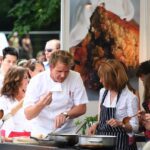





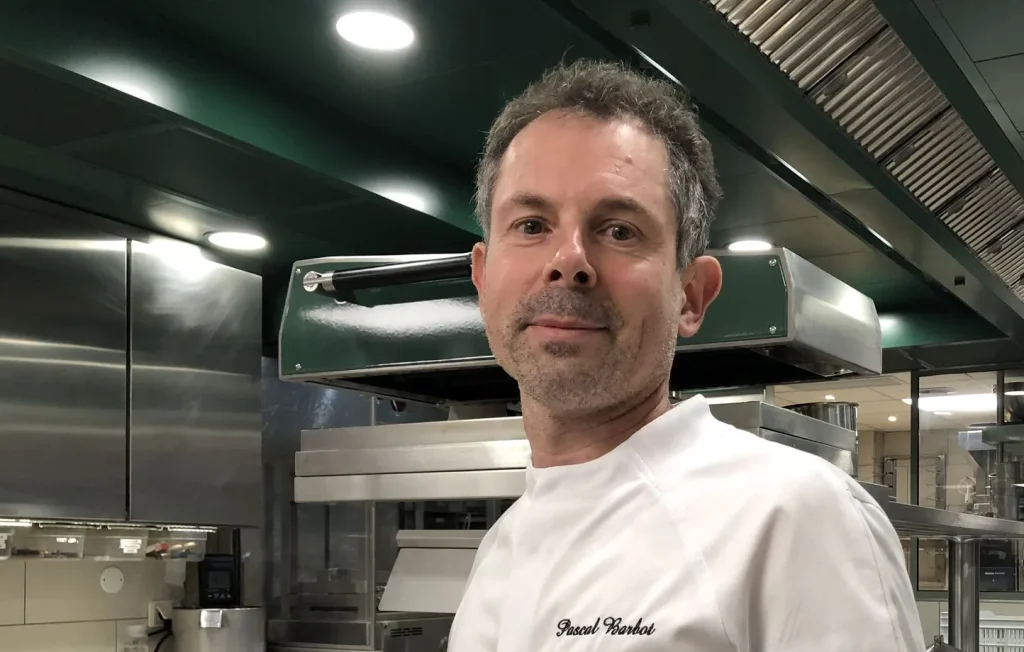
Pascal Barbot (France) – L’Astrance
Net worth revealed after 6 slides
Begin the countdown ↓
How did Pascal Barbot (France) – L’Astrance build this fortune?
The answer unfolds through the career, earnings, deals and assets behind the headline estimate.
Before the fame
The background and early turning points that shaped Pascal Barbot (France) – L’Astrance’s route to prominence.
Pascal Barbot was born on June 7, 1972, in Vichy, a spa town in the Auvergne region of central France, according to Wikipedia’s sourced account of his life. He grew up close to his grandmother’s vegetable garden and to farms in the surrounding Bourbonnais countryside, an upbringing that instilled in him an early respect for seasonal produce and local sourcing, according to a career profile by Gault&Millau. That same profile traces his formal culinary studies back to age 14, when he entered the hotel management program at his hometown school in Vichy, a grounding that would carry him from a rural French garden to the kitchens of some of the country’s most demanding chefs.
Barbot’s apprenticeship took him through a run of formative kitchens before he ever ran his own. He trained at the Buron de Chaudefour in the Puy-de-Dome, where a nature ranger introduced him to foraging for wild plants, then worked under chef Alain Clave in Clermont-Ferrand and under Joel Antunes in London, an experience he has credited with teaching him “gastronomy, hierarchy and catering excellence,” according to the same Gault&Millau profile. He also passed through the Troisgros brigade in Roanne before completing his military service in 1993 as a Navy cook for the Amiral du Pacifique in New Caledonia. From 1994 to 1998, he worked at Alain Passard’s L’Arpege in Paris, the restaurant where Passard himself held three Michelin stars, and it was there that Barbot met fellow cook Christophe Rohat, the man who would become his business partner, per American Express France’s profile of the pair.
The breakthrough years
The career decisions and defining moments that turned recognition into sustained earning power.
After leaving L’Arpege, Barbot took his first head chef position at Ampersand in Sydney, an experience that exposed him to Asian and Pacific ingredients and techniques he would later fold into his own cooking. In October 2000, at 28 years old, he and Rohat opened L’Astrance on rue Beethoven in Paris’s 16th arrondissement, a tiny restaurant built around a kitchen of roughly 16 square meters and a dining room that sat no more than 25 guests per service, according to the American Express profile. The restaurant earned its first Michelin star within five months of opening, an unusually fast start that set the tone for the following two decades.

What the work can earn
Reported pay, contracts, royalties and performance income reveal how the fortune was funded.
L’Astrance added a second Michelin star in 2005 and reached three stars in 2007, a jump that surprised much of the French gastronomy press given the restaurant’s small scale and informal service style. It went on to spend roughly a decade on the World’s 50 Best Restaurants list, reaching as high as 13th place in 2011, according to the list’s own Discovery database entry for the restaurant. Barbot held the three-star rating until 2019, when L’Astrance was demoted to two stars, and after a lengthy closure and relocation the restaurant reopened in December 2022 with one Michelin star, a rating it has held in every guide since, per the Michelin Guide’s own coverage of the chef.
Barbot was named Gault&Millau’s Chef of the Year in 2005 and had earlier been singled out in 2002 as one of the guide’s “great chefs of the future,” according to the guide’s own chef profile. L’Astrance currently carries an 18-out-of-20 Prestige Restaurant rating from Gault&Millau, and Barbot has become known within the industry as a trainer of future stars, with alumni of his kitchen including Adeline Grattard, Magnus Nilsson, Tatiana Levha, Agata Felluga, and Manon Fleury, several of whom went on to win their own Michelin stars. In March 2021, Barbot and Rohat appeared as guest chefs on the French television competition Top Chef, building a themed segment around rice, an ingredient rarely showcased in classical French haute cuisine, according to the Michelin Guide’s report on the appearance.

The business beyond the main career
Endorsements, ownership interests and investments can keep compounding long after the initial breakthrough.
Barbot’s commercial ties outside L’Astrance itself are modest and concentrated in professional kitchen equipment rather than mainstream celebrity endorsements. In 2018, he joined Spanish foodservice equipment brand Araven’s roster of collaborating chefs, a partnership in which Araven supplies gear for L’Astrance’s food handling and storage areas and Barbot demonstrates its use in his own kitchen, according to Araven’s own announcement of the deal. Outside that relationship and his occasional television guest spots, Barbot has not attached his name to a personal product line, a spirits brand, or a broader licensing business of the kind some of his celebrity chef peers have pursued.
Unlike many chefs of his stature, Barbot has not built a group of restaurants; L’Astrance, co-owned equally with Rohat since 2000, remains his central and effectively only business. That single venture became a major financial undertaking in its own right after 2019, when the partners closed the original rue Beethoven site, searched for four years for a larger space, and settled on the former home of Joel Robuchon’s Jamin at 32 rue de Longchamp, where Robuchon himself won his first three stars between 1981 and 1993. The move, delayed by the pandemic and construction setbacks, required paying five simultaneous rents, on two restaurants, two adjoining offices and a wine cellar, for roughly a year with no incoming revenue, and total investment in the new 380-square-meter site, including a 70-square-meter kitchen roughly four times the size of the original, has been reported at between 4 million and 5 million euros, according to trade publication L’Hotellerie Restauration. Barbot and Rohat also co-authored a two-volume cookbook, “Astrance: A Cook’s Book,” published in 2012 with photographer Richard Haughton and writer Chihiro Masui, pairing recipes with essays on Barbot’s sourcing and technique, per Kitchen Arts & Letters’ listing of the title.
Notable luxury item
A reported property or major asset offers a tangible glimpse of the wealth behind the public estimate.
No outlet has published verified details of a personal home or property portfolio belonging to Barbot, and he keeps a low public profile outside the restaurant itself. His largest identifiable financial commitment is tied directly to the business: the multi-million-euro investment in L’Astrance’s rue de Longchamp premises was funded in significant part through two state-backed emergency loans (Prets Garantis par l’Etat) taken out during the pandemic, and Barbot and Rohat drew no salary from the business for close to a year while construction was underway, according to the L’Hotellerie Restauration interview cited above. That financing detail matters for any assessment of Barbot’s wealth, since it indicates the restaurant’s flagship real estate commitment was leveraged with debt rather than funded outright from the partners’ personal capital.
Pascal Barbot (France) – L’Astrance’s estimated net worth
Public estimates vary because private contracts, investments, taxes and liabilities are not fully disclosed.
How this estimate is calculated
Pascal Barbot does not publicly disclose his personal finances, and L’Astrance, privately held and split evenly between Barbot and Rohat, has not published revenue or profit figures. One biography aggregator, TheCityCeleb, lists a broad one-to-five-million-dollar range for Barbot, but that figure appears to be a generic estimate rather than one grounded in disclosed L’Astrance financials, so it is treated here only as a secondary, low-confidence data point rather than a verified number. Building the estimate from business signals instead: in favor of a solid valuation are more than two decades as co-owner of a restaurant that held three Michelin stars for over a decade, a roughly ten-year run on the World’s 50 Best Restaurants list, a 2012 cookbook, an equipment brand partnership, and current pricing that runs from around 125 euros for lunch to 250 euros or more for dinner per Time Out Paris. Working against a higher figure are several concrete facts specific to Barbot: L’Astrance is his only restaurant rather than part of a multi-property group, the 2022 relocation was financed heavily through state-backed pandemic loans rather than personal capital, the partners drew no salary for close to a year during the rebuild, and the restaurant currently holds one star rather than its historic three. Fine-dining margins are notoriously thin even at the top tier, and a single-restaurant chef carrying recent restaurant debt is a materially different financial picture from a chef running a global, multi-venue empire. Taken together, these signals point to a comfortable but not spectacular personal net worth, built on decades of prestige and a valuable Paris restaurant asset, offset by real leverage taken on to keep that asset alive.
Barbot has not attached his name to a dedicated charitable foundation, and public commentary on him centers overwhelmingly on his cooking and his role as a mentor rather than on off-duty causes. Industry coverage repeatedly frames his tiny original kitchen on rue Beethoven as a training ground that produced a disproportionate number of chefs who went on to win their own Michelin stars, a legacy Gault&Millau and other trade outlets treat as central to his standing in French gastronomy. His philosophy, summarized in the American Express profile as placing “the producer” above “the chef,” has him working with roughly 100 farmers, fishermen and other small producers, a sourcing-first approach that has shaped how critics and peers describe his public image more than any personal branding effort has.
Barbot has not been linked to any personal scandal, and the scrutiny attached to his name is almost entirely about L’Astrance’s Michelin trajectory rather than his conduct. The 2019 demotion from three stars to two, followed by a near three-year closure and a reopening in December 2022 that returned the restaurant to just one star, was closely watched and debated in the French food press, given both the restaurant’s historic three-star run and the four-to-five-million-euro scale of the relocation investment behind it. Some critics who reviewed the rebuilt restaurant, including Time Out Paris, noted a still-developing dining room service in the early months at the new address even as they praised the kitchen, reflecting the pressure of relaunching a once-three-star name in a much larger space under close public and critical attention.