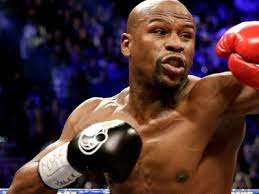
Floyd Mayweather Jr.

How Much Are They Worth? Celebrity fortunes, explained
Net worth story

Floyd Mayweather Jr.

Net worth revealed after 6 slides

Begin the countdown
The countdown
1 of 7
#
The fortune behind the fame

How did Floyd Mayweather Jr. build this fortune?

The answer unfolds through the career, earnings, deals and assets behind the headline estimate.

#
6 slides until the reveal

Before the fame

The background and early turning points that shaped Floyd Mayweather Jr.’s route to prominence.

Floyd Mayweather Jr. retired from sanctioned professional boxing with a 50-0 record and titles in five weight divisions. Britannica’s biography traces the family boxing background, 1996 Olympic bronze medal and ascent from “Pretty Boy” to “Money.” His finances are unusual even among champions because he ultimately acted as both fighter and promoter. The estimate therefore begins with documented event income, then discounts heavily for taxes, spending and the uncertainty surrounding private investments.

Mayweather was raised in Grand Rapids, Michigan, in a family that included professional fighters Floyd Sr., Roger and Jeff Mayweather. After the Atlanta Olympics he signed with Top Rank and won the WBC super-featherweight title by stopping Genaro Hernández in 1998; BoxRec’s bout ledger records the result and subsequent 50-0 sequence. Forbes later reported that the Hernández purse was $150,000. That figure establishes the scale of his first championship income and shows how sharply his economics changed once he controlled promotion and pay-per-view participation.

#
5 slides until the reveal

The breakthrough years

The career decisions and defining moments that turned recognition into sustained earning power.

The crucial business decision was Mayweather’s 2006 use of a $750,000 contractual buyout to leave Top Rank. Forbes’ reconstruction of his path to $1 billion in career earnings reports that his guarantee later reached at least $32 million per bout under Showtime. The 2007 Oscar De La Hoya fight moved Mayweather into boxing’s highest commercial tier and proved that his villain persona could sell enormous events.

Advertisement
#
Representative illustration of contracts and earnings
Representative image
4 slides until the reveal

What the work can earn

Reported pay, contracts, royalties and performance income reveal how the fortune was funded.

The 2013 Canelo Álvarez event generated $153 million in PPV revenue and paid Mayweather a $41.5 million guarantee plus more than $30 million in backend, according to the same Forbes investigation. The 2015 Manny Pacquiao bout then produced 4.6 million buys, approximately $440 million of PPV revenue and a Mayweather payday near $250 million. These are gross event earnings before tax, camp, staff and lifestyle expenditure; they are not presented as his current bank balance.

Forbes calculated that the McGregor event produced $275 million for Mayweather and placed his total 2018 income at $285 million including endorsements. Its event-economics report explains that Mayweather Promotions participated in gate, PPV, sponsorship, merchandise and international television. Exhibitions against Tenshin Nasukawa, Logan Paul and others added later income, but contractual claims about those events are less transparent and receive lower weight.

#
Representative illustration of endorsements and business growth
Representative image
3 slides until the reveal

The business beyond the main career

Endorsements, ownership interests and investments can keep compounding long after the initial breakthrough.

Mayweather historically earned less from conventional endorsements than athletes with comparable sporting reach. Before Pacquiao he added Hublot, Burger King and FanDuel relationships, while The Money Team sold branded merchandise. Forbes estimated roughly $30 million of career income outside the ring before the McGregor bout. That evidence prevents an unsupported assumption that endorsements equalled his vast boxing revenue.

Mayweather Promotions is the best-established business interest because it was directly involved in his record events and continues promoting fighters. Real-estate claims require more caution. Business Insider examined his claimed $402 million Manhattan apartment transaction and found property records did not show him purchasing the buildings outright, with evidence pointing instead toward a possible minority interest. HMW therefore does not book the headline figure as an owned asset.

Advertisement
#
Representative illustration of a high-value property asset
Representative image
2 slides until the reveal

Notable luxury item

A reported property or major asset offers a tangible glimpse of the wealth behind the public estimate.

Mayweather has publicly displayed Las Vegas and Los Angeles homes, aircraft, luxury cars and an extensive watch collection. Such items have resale value but generally depreciate or sell below retail; publicity prices can also include financed or promotional arrangements. His tax history is relevant: the IRS filed a substantial lien around the McGregor period. Exact liabilities, ownership structures, investment performance and distributions from Mayweather Promotions remain private, making retention rate the largest uncertainty in this estimate.

#
The reveal

Floyd Mayweather Jr.’s estimated net worth

Approximately $450 million as of August 2026 (HMW estimate).

Public estimates vary because private contracts, investments, taxes and liabilities are not fully disclosed.

How this estimate is calculated

HMW uses approximately $1 billion of well-documented career earnings as the gross anchor. It removes estimated federal and state tax, promotion and camp costs where they were borne personally, management and a substantial allowance for two decades of luxury consumption. Only conservative net values are added for Mayweather Promotions, verified property interests and liquid investments; the unverified $402 million real-estate headline is excluded. This methodology explains why the final figure is far below gross career earnings without guessing from his celebrity status.

Mayweather converted the “Money” identity into an attention business: social media, worldwide appearances, exhibition fights and public displays of watches, cars and cash. The visibility supports appearance fees and merchandise, but it also documents exceptional consumption. His 50th professional win over Conor McGregor was a crossover entertainment event rather than a normal title defense, demonstrating how the audience followed Mayweather’s persona as much as the competitive stakes.

The strongest evidence is Forbes’ event-by-event accounting: more than $700 million in boxing earnings before McGregor, then another $275 million from that event, with later exhibitions on top. Those are gross earnings over many years, not audited net assets. Mayweather’s high spending, taxes and professional expenses justify a far larger discount than would be applied to a passive investor. Conversely, promotional ownership and investable capital mean it would be unreasonable to assume all income was consumed.

HMW uses research and editorial tools to assist production. Every profile is independently sourced, fact-checked, edited and reviewed before publication. Estimates are editorial assessments and not audited financial statements.

Browse the full collection

Explore by category

Sports Athletes, records and earnings Actors & Entertainment Film, television and fame Business Founders, deals and ownership Musicians Tours, catalogues and royalties Influencers Audiences, brands and ventures Gamers Streaming, esports and sponsors DJs Festivals, releases and labels Politicians Careers, disclosures and assets Chefs Restaurants, awards and ventures Models Campaigns, runways and brands YouTube Channels Views, partnerships and businesses American Football Contracts, teams and endorsements Soccer Salaries, transfers and sponsorships Football Players, clubs and commercial deals Cricket Contracts, leagues and endorsements Tennis Prize money, tours and sponsors Golf Winnings, tours and partnerships Boxing Purses, promotions and endorsements Martial Arts Fight purses, bonuses and brands F1 Contracts, teams and sponsorships Basketball Salaries, sneakers and investments Motorsport Racing careers, teams and sponsors Comedians Tours, specials and production deals TV Personalities Broadcast careers and ventures Podcasts Audiences, advertising and ownership CEOs Leadership, equity and compensation Billionaires Ownership, investments and major assets Companies Valuations, ownership and performance Restaurants Hospitality groups and expansion Night Clubs Venues, ownership and nightlife Festivals Events, audiences and commercial scale Criminal Cases Documented cases and asset scrutiny