
 How Much Are They Worth?
Celebrity fortunes, explained
How Much Are They Worth?
Celebrity fortunes, explained
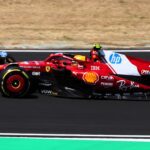
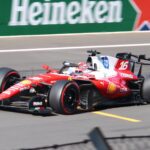
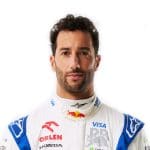

How did Felipe Massa build this fortune?
The answer unfolds through the career, earnings, deals and assets behind the headline estimate.
Before the fame
The background and early turning points that shaped Felipe Massa’s route to prominence.
Felipe Massa was born on 25 April 1981 in São Paulo, Brazil, and grew up in Botucatu, in the interior of São Paulo state. He is of Italian descent, with grandparents who emigrated from Cerignola, in the Apulia region of southern Italy. Massa began karting as a child, following a path shared by many of Brazil’s earlier F1 champions, and was racing competitively by his early teens.
Massa progressed through Brazilian and European karting before moving into single-seaters, winning the South American Formula 3 title in 1999 and the European Formula Renault 2000 championship in 2000. He was runner-up in the Formula 3000 championship in 2001, a result that brought him to the attention of Formula One teams. Sauber signed him for the 2002 season, and after a year as Ferrari’s test and reserve driver in 2003, he returned to Sauber for 2004 and 2005 before being promoted to a race seat at Ferrari itself for 2006.
The breakthrough years
The career decisions and defining moments that turned recognition into sustained earning power.
Massa drove for Ferrari from 2006 to 2013, taking all 11 of his career Grand Prix wins with the team. His career peak came in 2008, when he finished runner-up in the World Drivers’ Championship, losing the title to Lewis Hamilton by a single point after Hamilton passed Timo Glock at the final corner of the final lap of the season-ending Brazilian Grand Prix, in front of Massa’s home crowd. Massa had already crossed the line first in that race, and for several minutes was celebrated as champion before Hamilton’s late overtake was confirmed.
That title fight is now central to a legal case Massa filed in 2024, arguing that the 2008 championship was compromised by “Crashgate” — the deliberate crash orchestrated by the Renault team at that year’s Singapore Grand Prix, in which Nelson Piquet Jr crashed on team orders, triggering a safety car that disrupted the race for the leading Massa and helped Renault’s Fernando Alonso to victory. Massa was leading the Singapore race before the incident and finished 13th; he ultimately lost the drivers’ title to Hamilton by that single point. The affair was investigated by the FIA in 2009, after Piquet gave evidence, and Renault was found to have breached the sporting code, but the race result and championship standings were not revised. In 2023, former F1 chief executive Bernie Ecclestone said publicly that he and others had known about the deliberate crash during the 2008 season and chose not to act on it until it was too late to change the standings; Massa has said this admission prompted his legal action. See the “Career History” continuation below for the case’s current status.
At the 2009 Hungarian Grand Prix, Massa suffered a serious head injury when a suspension spring from Rubens Barrichello’s car struck his helmet at an estimated 162 mph during qualifying. He was placed in an induced coma, required surgery, and had a titanium plate inserted in his skull; he missed the remainder of the 2009 season but returned to racing for Ferrari in 2010. He remained with Ferrari through 2013 before moving to Williams for the 2014 to 2017 seasons, retiring from full-time Formula One racing at the end of 2017 with his home Brazilian Grand Prix as his final race for the team. He also competed in the all-electric Formula E championship from 2018 to 2020, driving for the Venturi team, and since 2021 has raced in Brazil’s Stock Car Pro Series, where he remained an active competitor as of the 2026 season, as well as making appearances in IMSA sports car competition. From 2017, Massa also served as President of the FIA’s International Karting Commission (CIK-FIA), a governance role overseeing global karting regulation.
Massa filed a High Court claim in London in March 2024 against Formula One Management (FOM), the FIA and Bernie Ecclestone personally, seeking damages reported at up to £64 million plus interest, covering the salary, sponsorship, bonuses and commercial opportunities he argues he would have earned as 2008 world champion, including an estimated £1.7 million Ferrari win bonus. The defendants sought to have the claim struck out. In a judgment delivered in late 2025, Mr Justice Jay ruled that Massa could not seek a declaration reinstating him as 2008 champion, and dismissed his breach-of-contract claim against the FIA over its 2009 investigation, but found that Massa had a real prospect of proving his separate claim of unlawful means conspiracy at trial, and the case was allowed to proceed; the court also ordered FOM, the FIA and Ecclestone to pay Massa’s legal costs of the preliminary hearing. In mid-2026, the UK Supreme Court agreed to hear a “leapfrog” appeal brought directly by FOM, the FIA and Ecclestone against that ruling, bypassing the Court of Appeal because of the case’s wider importance to how sporting governing bodies can be held liable in English courts. As of August 2026, the case remains unresolved: Massa’s damages claim has not gone to a full trial, and the Supreme Court appeal is pending, meaning both his legal costs and any eventual payout remain undetermined.

What the work can earn
Reported pay, contracts, royalties and performance income reveal how the fortune was funded.
Massa’s income has been dominated by Formula One driver salaries rather than a steady modern annual figure, since he has not held a top-tier F1 seat since 2017. During his peak Ferrari years in the late 2000s and early 2010s, reported annual driver income ran into eight figures; by his final Williams seasons his salary had fallen sharply as he moved into a lower-budget team and, later, a semi-retirement role. Since 2018 his income has come from Formula E and Stock Car Pro Series racing contracts, appearance and media fees, and his FIA Karting Commission role, none of which are reported to approach his F1-era earnings. No verified, single annual earnings figure for recent years is publicly available.
Massa’s best-documented contract figures come from his Ferrari and Williams years. Reporting on Ferrari’s driver pay in the late 2000s and early 2010s put his annual salary in the low-to-mid eight figures during his best-paid seasons, before it declined toward the end of his Ferrari tenure as the team’s driver budgets tightened; he signed a two-year extension with Ferrari in June 2010. When he moved to Williams for 2014, and through his contract renewals there, his salary was substantially lower than his Ferrari peak, reported at a guaranteed base in the single-digit millions, before falling further for his final, semi-retirement Williams season in 2017. Across his full Formula One career, Massa’s total driver salary earnings have been estimated at roughly $102 million, though this figure reflects gross contracted income rather than take-home wealth after tax, management fees and racing expenses.

The business beyond the main career
Endorsements, ownership interests and investments can keep compounding long after the initial breakthrough.
As a Brazilian driver at the front of the grid for Ferrari, Massa was a significant commercial asset for the team’s sponsors targeting the Brazilian and wider Latin American market. Santander’s decision to become a title sponsor of Ferrari from the 2010 season was reported at the time to be motivated in part by the bank’s push to expand in Brazil, where Massa’s popularity made him a valuable face for the partnership alongside teammate Fernando Alonso. Massa also carried personal and team endorsement exposure through Ferrari-era partners including Shell and Vodafone during his time at the team, and has featured in Brazilian domestic sponsorship and media deals tied to his Stock Car Pro Series career since 2021. Detailed values of Massa’s personal (as opposed to team) endorsement contracts have not been made public.
Massa’s activities outside driving have centered on motorsport governance and philanthropy rather than disclosed commercial ventures. He served as President of the FIA’s International Karting Commission (CIK-FIA) from 2017, a role focused on global karting regulation and development rather than a personal business. He has also been involved in charitable initiatives in Brazil, including fundraising auctions of racing memorabilia for education and community projects in his home state of São Paulo. No significant publicly disclosed business ownership stakes, startup investments or commercial ventures under Massa’s name have been documented in trade or financial press; his wealth remains attributable primarily to racing income rather than outside business activity.
Notable luxury item
A reported property or major asset offers a tangible glimpse of the wealth behind the public estimate.
Like a number of Formula One drivers past and present, Massa has been a long-term resident of Monaco, reportedly based in the Fontvieille district; Monaco’s absence of personal income tax has been widely reported as a factor in the Principality’s popularity with F1 drivers, including Massa (HelloMonaco). He has also maintained property in his native São Paulo state, including a residence used as a base for his Stock Car Pro Series commitments and a countryside property in the Botucatu area where he grew up, used for family time. No verified figures for the value of Massa’s individual properties or a broader vehicle or asset collection have been published, and no major recent asset purchases have been independently confirmed.
Felipe Massa’s estimated net worth
Public estimates vary because private contracts, investments, taxes and liabilities are not fully disclosed.
How this estimate is calculated
Public net worth estimates for Felipe Massa vary. Celebrity Net Worth lists a widely cited figure of $50 million (updated 2026), while other aggregator sites have put the figure as low as $30 million; these estimates should be treated as directional rather than precise, since none of the sites publish their underlying methodology or verified financial records. Our range reflects the documented scale of Massa’s F1 driver income — an estimated $102 million in gross career salary across Sauber, Ferrari and Williams — offset by the reality that gross contracted salary is not the same as net personal wealth: taxes, management and agent fees, racing-related expenses, and years of lower post-Ferrari earnings from Formula E and Stock Car Pro Series racing all reduce the gap between career gross income and current net worth. Aggregator figures such as Celebrity Net Worth’s are included here as a secondary, unverified data point rather than a primary source. Massa’s ongoing “Crashgate” litigation against FOM, the FIA and Bernie Ecclestone, seeking damages reported at up to £64 million, remains unresolved as of August 2026 and is not reflected in current net worth estimates, since no trial verdict or settlement has been reached.
| Year | Milestone |
|---|---|
| 2002 | Formula One debut with Sauber |
| 2006 | Promoted to a race seat at Ferrari |
| 2008 | Runner-up, World Drivers’ Championship, losing the title by one point; peak F1 salary years begin |
| 2009 | Serious head injury at the Hungarian Grand Prix; missed remainder of season; FIA investigates “Crashgate” from the 2008 Singapore GP |
| 2010 | Returns to Ferrari; Santander becomes Ferrari title sponsor in a deal linked partly to Massa’s Brazilian market appeal |
| 2013 | Leaves Ferrari after eight seasons; joins Williams |
| 2017 | Retires from full-time Formula One; becomes President of the FIA’s CIK-FIA karting commission |
| 2018 – 2020 | Competes in Formula E with Venturi |
| 2021 | Begins racing in Brazil’s Stock Car Pro Series |
| 2024 | Files High Court claim in London against FOM, the FIA and Bernie Ecclestone over the 2008 “Crashgate” title, seeking damages reported at up to £64 million |
| 2025 | High Court rules Massa’s conspiracy claim can proceed to trial, though a declaration naming him 2008 champion is ruled out; defendants ordered to pay preliminary legal costs |
| 2026 | UK Supreme Court agrees to hear a “leapfrog” appeal from FOM, the FIA and Ecclestone; case remains unresolved, Massa still racing in Stock Car Pro Series |
Among former Ferrari title contenders, Massa’s estimated fortune sits well below teammate-era rivals who won championships and stayed at the top of the grid for longer, such as Fernando Alonso or Sebastian Vettel, whose longer stays in top-paying seats produced substantially higher career F1 earnings. It is broadly comparable to other long-serving, race-winning but non-champion drivers of his generation, such as Rubens Barrichello or Nico Hulkenberg-tier earners, whose wealth also derives mainly from a long F1 career without a title. Massa’s case is unusual in that his single closest brush with a championship — 2008 — is also now the subject of active, high-profile litigation that could theoretically affect his reported earnings and legacy figures, something not shared by any comparable driver.
Sources and references
- Sky Sports — Felipe Massa sues FIA, F1 and Bernie Ecclestone over 2008 Singapore GP
- Sky Sports — Crashgate court hearing begins
- RaceFans — Massa’s Crashgate claim heads to the UK Supreme Court (July 2026)
- GPFans — F1, FIA and Ecclestone head to Supreme Court over Crashgate
- Motor Sport Magazine — How Crashgate led to Massa’s court battle
- Spotrac — Felipe Massa Contract, Salary & Cap Hit
- Celebrity Net Worth — Felipe Massa Net Worth
- HelloMonaco — F1 Drivers Who Became Residents of Monaco
- FIA — Interview with FIA Karting Commission President Felipe Massa
- RaceFans — Ferrari confirm 2010 Santander deal
- Wikipedia — Felipe Massa