
 How Much Are They Worth?
Celebrity fortunes, explained







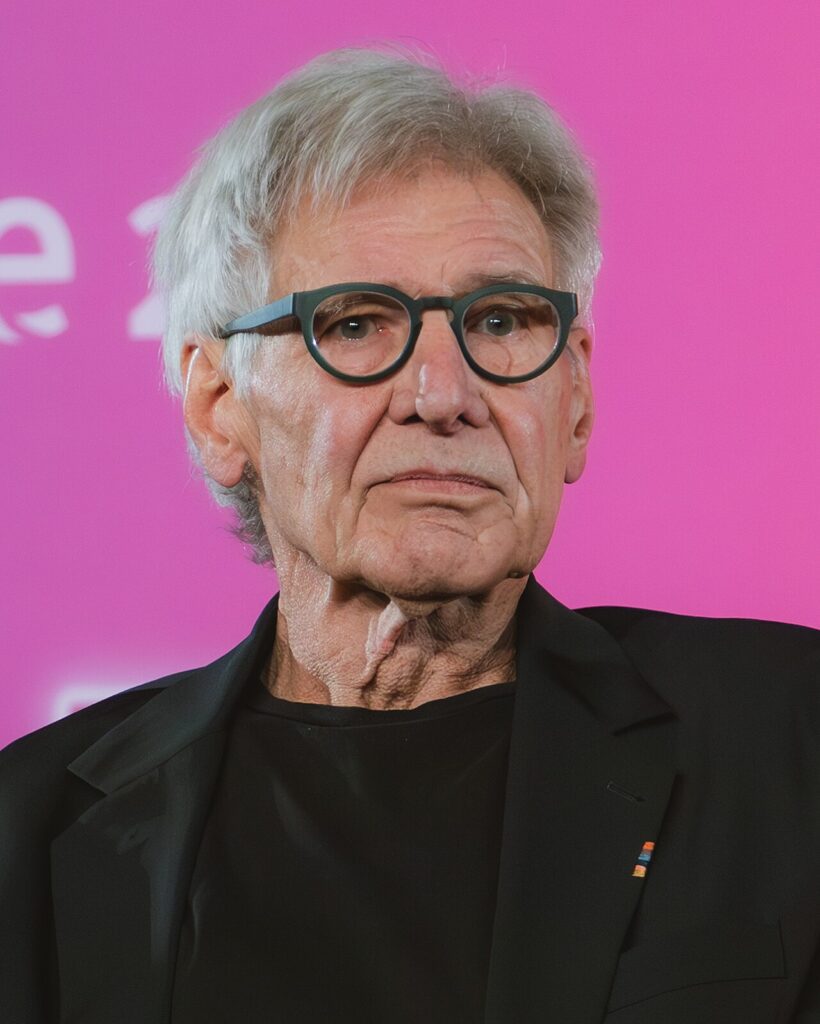
How did Harrison Ford build this fortune?
The answer unfolds through the career, earnings, deals and assets behind the headline estimate.
Harrison Ford before the fame
The background and early turning points that shaped Harrison Ford’s route to prominence.
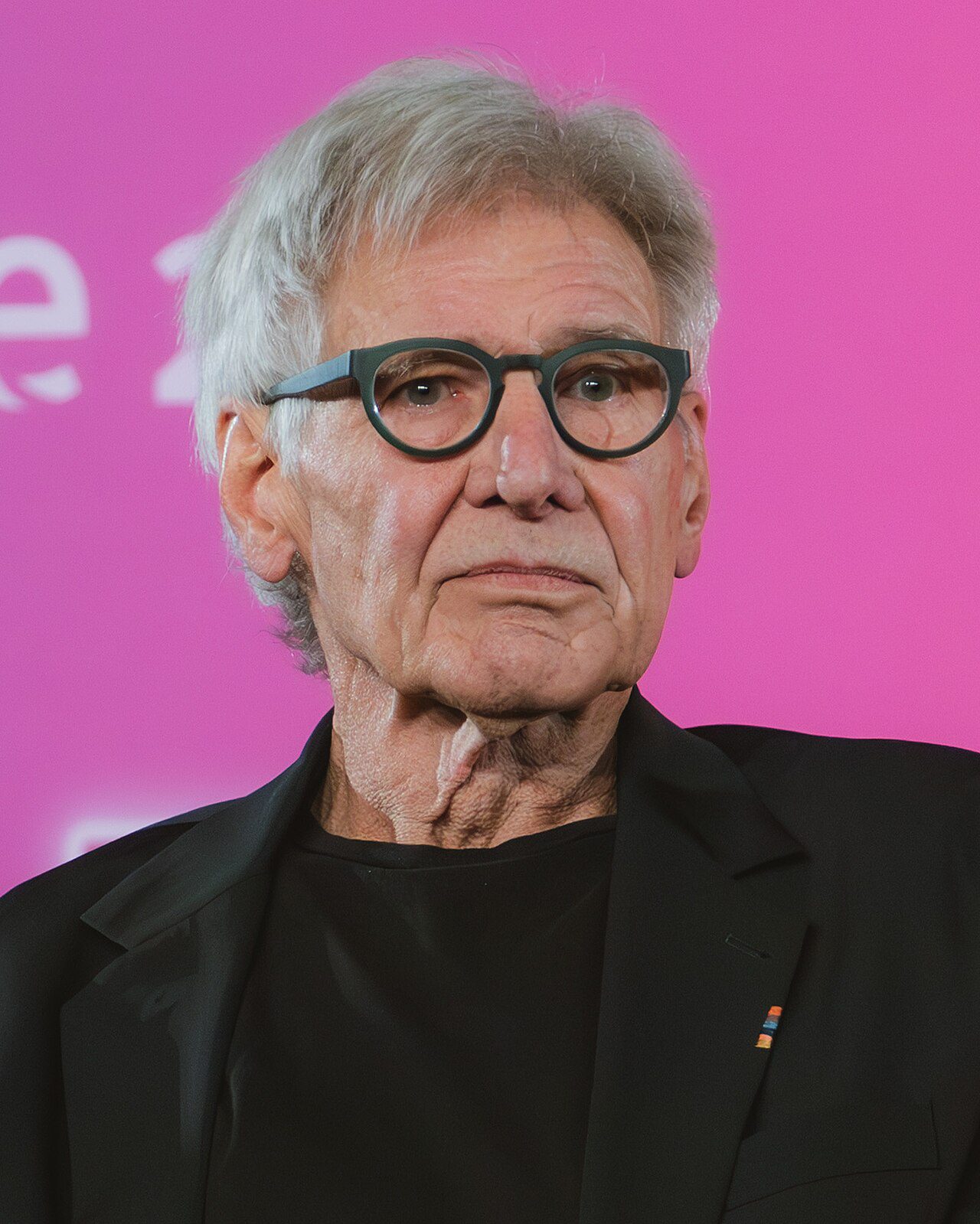
Harrison Ford was born on 13 July 1942 in Chicago. He was working as a carpenter when he was cast as Han Solo in Star Wars in 1977, and went on to front two of the highest-grossing franchises in cinema alongside a long run of thrillers.
The most valuable thing he ever negotiated was not a salary. It was the right to a share of films that would still be selling tickets forty years later, and that distinction runs through every section below.
He signed a studio contract in the mid-1960s and spent several years in small television and film parts that went nowhere. The carpentry was not a colourful detail but an actual second income; he built cabinets for people in the industry while the acting work dried up.
The break came through George Lucas, who cast him in American Graffiti in 1973 and then, four years later, in the film that changed everything. His fee for the original Star Wars was small by any standard, which is the most important fact about how his wealth was actually built.
Harrison Ford’s breakthrough years
The career decisions and defining moments that turned recognition into sustained earning power.
Star Wars made him famous; Raiders of the Lost Ark in 1981 made him bankable across two franchises at once, an unusual position that has persisted for four decades.
Through the 1980s and 1990s he carried Blade Runner, Witness, The Fugitive and Air Force One, and became for a stretch the highest-grossing leading man in Hollywood. Reported fees for the early Indiana Jones films run into single-digit millions each, figures that look modest until they are set against decades of re-release, home video, television and streaming licensing on titles in which he holds a share.

What Harrison Ford’s work can earn
Reported pay, contracts, royalties and performance income reveal how the fortune was funded.
The clearest published account of his pay concerns The Force Awakens in 2015. Variety reported that Ford was paid dramatically more than the young leads Daisy Ridley and John Boyega – by a factor reported in the dozens.
Reported base figures for that film range from $10 million to $25 million depending on the outlet, which is a good illustration of how soft this category of number is. What is better attested is the participation: Forbes reported he banked $15 million from the film in a single year, on a deal understood to include a percentage that only engaged once the picture passed $1 billion worldwide – which it comfortably did.
Television has become the other pillar. He has taken continuing roles in 1923 and Shrinking, on per-episode terms that have been reported but never confirmed.
He was given an honorary Palme d’Or at the Cannes Film Festival in May 2023, presented before the premiere of Indiana Jones and the Dial of Destiny, his fifth and final outing in the role (The Hollywood Reporter, Festival de Cannes).
It is worth noting how rarely that kind of honour reflects his actual box-office standing. He has one acting Academy Award nomination, for Witness in 1986, against a filmography that has sold more tickets than almost any other actor’s – a gap between commercial and critical recognition that has followed him throughout.

Harrison Ford’s business beyond the main career
Endorsements, ownership interests and investments can keep compounding long after the initial breakthrough.
For most of his career he did no advertising at all in the English-speaking market, which is why the exception drew so much attention: he fronted Amazon’s ninety-second Alexa commercial at the 2019 Super Bowl, playing a dog owner defeated by a voice-activated collar (Sports Illustrated, Footwear News).
The fee was not disclosed, and no continuing ambassadorial contract has been reported since. On the evidence available, endorsement income is a rounding error in his finances rather than a pillar of them.
He has not built a business, and this section would be padding if it pretended otherwise. There is no production company of consequence, no consumer brand and no investment vehicle in his name.
His one serious enterprise outside acting is aviation. He holds a pilot’s licence, maintains a personal aircraft collection and has flown search-and-rescue missions in Wyoming; it is an expensive interest rather than a source of income, and it belongs on the cost side of the calculation rather than the revenue side.

Harrison Ford’s notable luxury item
A reported property or major asset offers a tangible glimpse of the wealth behind the public estimate.
His principal known asset is a large ranch near Jackson, Wyoming, bought in the 1980s, roughly half of which he placed under conservation easement – a legal restriction that permanently limits development on the protected portion.
That detail cuts against the usual assumption. An easement reduces what land can later be sold for, so the most-reported asset in his name is deliberately worth less than its acreage implies. No purchase price, valuation or aircraft register total appears in a source solid enough to quote, so no property figure is carried into the calculation below.
Harrison Ford’s estimated net worth
Public estimates vary because private contracts, investments, taxes and liabilities are not fully disclosed.
How this estimate is calculated
Documented. Almost nothing, which is the honest starting point. The one hard number is Forbes’ report that he banked $15 million from The Force Awakens in a single year (Forbes); the comparative pay reporting around that film is directional rather than precise (Variety).
The arithmetic. The reliable component is participation on two franchises that have grossed well over $10 billion combined at the box office before ancillary revenue. Even a fraction of a point of the right kind of profit definition, compounded across fifty years, outweighs any individual fee he has been paid. Add a documented $15 million from one year of one film (Forbes), assume nothing else about the others, and the franchise income alone runs to hundreds of millions across the career. Against that: US federal and California tax across five decades, representation, and the running cost of an aircraft collection.
Why the range is wide. Participation deals differ enormously in whether they pay on gross receipts or on a defined net that a studio controls, and none of Ford’s contracts is public. A first-dollar gross point and a net-profit point on the same film can differ by an order of magnitude, so the same filmography supports totals that are hundreds of millions apart.
What would settle it and does not exist. A single filed document – a contract, a probate valuation, a court exhibit – setting out one of his participation percentages and its definition. Until one surfaces, the most accurate statement about Harrison Ford’s wealth is that the mechanism generating it is well understood and the size of it is not, and the band below is drawn wide enough to admit that rather than narrow enough to look confident.
The working supports a range of $250 million to $400 million. The figure we publish is its midpoint.
Confidence: Indicative — our estimate, built from his reported fees and the profit participations that have defined his deals since 1977; the participation terms themselves are private, so the band is deliberately wide.
Think you know Harrison Ford? Take the quiz: Easy · Medium · Legendary
His sustained commitment is environmental. He has served on the board of Conservation International for more than three decades and is its vice chair, and he has used the film publicity circuit consistently to argue for biodiversity and climate action (Conservation International).
The Wyoming easement belongs in this section as much as the previous one: it is a permanent, self-imposed reduction in the value of his own land in exchange for a conservation outcome, which is a form of giving that never appears in a donation total.
The most significant matter on his public record was a workplace safety prosecution in which he was the injured party rather than the accused. During rehearsals at Pinewood Studios in June 2014, a hydraulic door on the Millennium Falcon set closed on him, breaking his leg.
Foodles Production (UK) Ltd, the Disney subsidiary making The Force Awakens, was fined £1.6 million at Aylesbury Crown Court in October 2016 after admitting health and safety breaches; the court heard the door had no automatic cut-out to stop it closing on a person (ITV News, Deadline, Variety, CBS News).
He has also been the subject of several aviation incidents investigated by the United States Federal Aviation Administration, none of which resulted in injury to anyone else. Neither strand has any bearing on the figures below.